
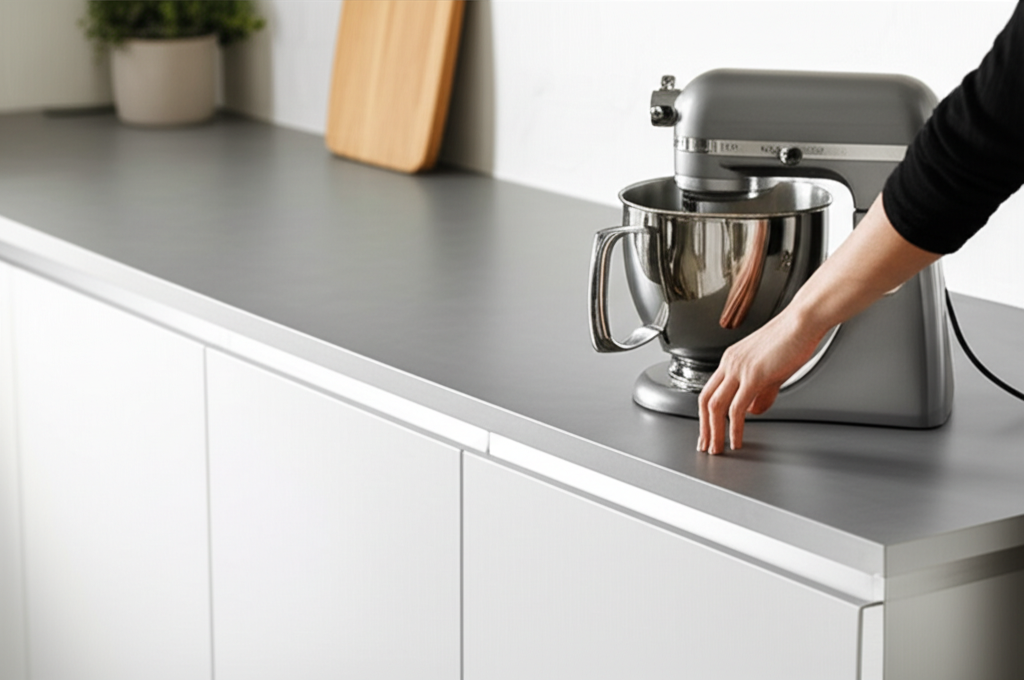
A standard kitchen counter height is typically 36 inches (91.4 cm) from the finished floor to the top surface. This measurement ensures comfortable use for most adults during common kitchen tasks.
Ever stood in your kitchen, prepping veggies or mixing dough, and felt a little… off? Maybe your arms ache, or you find yourself hunching over more than you’d like. You’re not alone! One of the most common kitchen frustrations isn’t a leaky faucet or a stubborn stain, but something much more fundamental: the height of your countertops. It might seem like a small detail, but the “how tall is a kitchen counter” question impacts everything from your comfort to your efficiency. Let’s uncover the surprisingly simple truth and make sure your kitchen works for you, not against you. Get ready to feel more at home in your kitchen than ever before!
The Shocking Truth: Why Counter Height Matters So Much
It’s easy to overlook, but the standard height of kitchen counters is a carefully considered design element. For decades, 36 inches has been the go-to measurement. But why 36 inches? And is it truly the perfect height for everyone? The truth is, this standard emerged from a combination of ergonomic studies, building codes, and what was most practical for mass-produced cabinetry. It’s a solid baseline, but as we’ll see, it might not be your personal perfect fit.
Think about it: your kitchen counter is where you’ll spend a significant amount of time. Whether you’re chopping, stirring, rolling out pastry, or just leaning for a moment with a cup of coffee, the height of this surface directly influences your posture, your comfort, and even your energy levels. A counter that’s too high can lead to shoulder strain and fatigue, while one that’s too low can cause back pain.
This is why understanding the “how tall is a kitchen counter” mystery is so important for any homeowner, especially if you’re planning a remodel or just want to make your current kitchen more enjoyable. We’re going to break down the standard, explore why it works (and when it doesn’t), and how you can figure out the ideal height for your kitchen.
The Magic Number: Understanding the Standard 36-Inch Counter Height
So, let’s dive into the most common answer to “how tall is a kitchen counter?” The widely accepted standard is 36 inches (or 91.4 centimeters) from the finished floor to the top of the countertop. This measurement typically includes:
- Base Cabinet Height: Standard base cabinets are usually 34.5 inches tall.
- Countertop Thickness: The countertop material itself adds the remaining 1.5 inches, bringing the total to 36 inches.
This 36-inch height was largely established to accommodate the average adult population for tasks like food preparation and washing dishes. It strikes a balance that allows most people to stand comfortably without excessive bending or reaching.
Why This Standard Works (For Most People)
The 36-inch height is a result of ergonomic principles and practical considerations:
- Elbow Height: For many people, a 36-inch counter allows their elbows to be at roughly a 90-degree angle when standing, which is considered a comfortable and efficient working posture.
- Accessibility: It’s a height that works well for a wide range of kitchen activities, from chopping vegetables to loading a dishwasher.
- Appliance Integration: Standard dishwashers are designed to fit under countertops of this height.
- Uniformity: Using a standard height simplifies manufacturing and installation of cabinets and countertops, making kitchen renovations more straightforward and cost-effective.
You can see this standard reflected in kitchen design guides and by manufacturers of cabinetry. For instance, the Occupational Safety and Health Administration (OSHA) provides guidelines for workplace ergonomics, which, while not specific to residential kitchens, underscore the importance of proper working heights to prevent strain and injury. Many of these principles translate directly to our home kitchens.
When 36 Inches Isn’t Quite Right: Personalized Counter Heights
While 36 inches is the norm, it’s not a one-size-fits-all solution. If you’re significantly taller or shorter than average, or if you have specific needs, you might find a different height more comfortable. This is especially relevant for:
- Taller Individuals: Those who are 6 feet or taller might find standard counters too low, leading to back strain.
- Shorter Individuals: People under 5’4” might prefer slightly lower counters to avoid reaching and hunching.
- Children or Those with Mobility Issues: Specific task areas might benefit from adjusted heights.
- Specialized Tasks: Bakers often prefer lower counters for tasks like kneading dough, while those who do a lot of standing and chopping might want slightly higher surfaces.
The beauty of custom cabinetry or thoughtful kitchen planning is the ability to deviate from the standard. This is where understanding your own needs becomes crucial.
How to Determine Your Ideal Counter Height
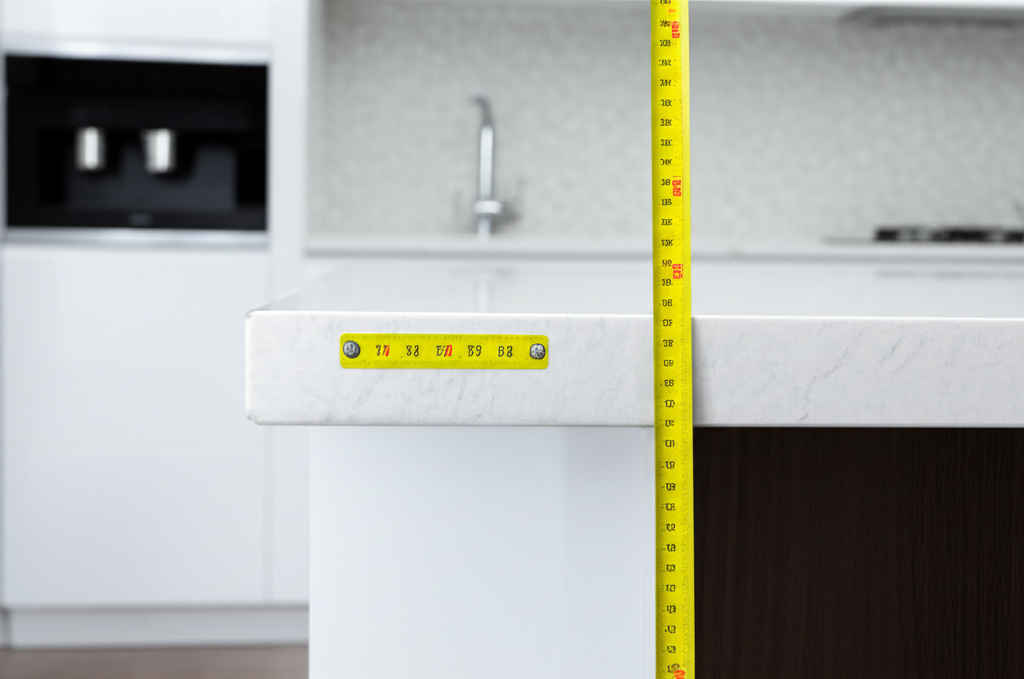
It’s surprisingly simple to find your personal sweet spot. You don’t need fancy equipment, just your kitchen space and a willingness to experiment!
- The Elbow Test: Stand naturally at your current counter (or a temporary surface like a sturdy table). Bend your elbow to a 90-degree angle. Your forearm should be roughly parallel to the floor, with a slight bend in your elbow. If you’re reaching up or bending down significantly, the height might not be ideal for you.
- Measure Your Comfort Zone: Measure from the floor to just below your elbow when your arm is bent at that comfortable 90-degree angle. This measurement gives you a target for your ideal countertop height.
- Consider Your Tasks: Think about what you do most in the kitchen. If you spend hours kneading dough, a slightly lower counter might be beneficial. If you’re always chopping and stirring, a height that allows for a relaxed shoulder posture is key.
- Test with Existing Surfaces: If you’re unsure, try working at different heights. Use sturdy boxes or blocks to elevate a cutting board or a tray to simulate different counter heights and see how it feels for your most common tasks.
For instance, if your elbow-bend measurement is 33 inches, you might aim for a counter height of around 33-34 inches. If it’s 38 inches, you might look at counters closer to 38-39 inches. Remember to factor in the thickness of your chosen countertop material.
Countertop Thickness: It All Adds Up!
When we talk about “how tall is a kitchen counter,” we’re not just talking about the base cabinet. The thickness of your countertop material plays a significant role in the final height. Countertops come in various thicknesses, and this can affect whether your 36-inch goal is met with standard cabinets.
Here’s a look at common countertop thicknesses:
| Material | Typical Thickness (inches) | Typical Thickness (cm) | Notes |
|---|---|---|---|
| Laminate | 1.25 – 1.5 | 3.18 – 3.81 | Commonly built over a particleboard or plywood substrate. |
| Granite | 2 – 3 | 5.08 – 7.62 | Often available in 2cm or 3cm (approx. 0.75″ or 1.18″). Thicker slabs offer a more substantial look. |
| Quartz | 1.25 – 2 | 3.18 – 5.08 | Most commonly 2cm or 3cm. Can be laminated for a thicker appearance. |
| Marble | 2 – 3 | 5.08 – 7.62 | Similar to granite, 2cm and 3cm are standard. |
| Solid Surface (e.g., Corian) | 0.5 – 1.5 | 1.27 – 3.81 | Can be fabricated to various thicknesses, including seamed to appear thicker. |
| Butcher Block / Wood | 1.5 – 3 | 3.81 – 7.62 | Thickness varies widely based on desired look and durability. |
| Concrete | 1.5 – 2 | 3.81 – 5.08 | Can be cast to custom thicknesses. |
As you can see, a granite countertop that is 3cm thick (about 1.18 inches) will contribute more to the final height than a standard laminate countertop. If you have 34.5-inch base cabinets and choose a 3-inch thick butcher block, your finished counter height will be 37.5 inches. This is why it’s essential to factor in countertop thickness when planning your kitchen, especially if you’re aiming for a non-standard height.
Beyond the Standard: Other Kitchen Dimensions to Consider
While “how tall is a kitchen counter” is a key question, a functional kitchen involves more than just one measurement. To truly optimize your space, consider these related dimensions:
Kitchen Cabinet Depth
Standard base cabinets are typically 24 inches deep. This depth provides ample storage space and a good work surface. Wall cabinets are usually 12 to 13 inches deep. Understanding these depths helps you plan for appliance placement and overall kitchen layout.
Kitchen Backsplash Height
The backsplash protects your walls from splashes and grease. Standard backsplash heights are often 4 inches (which comes up from the countertop) or can extend all the way to the underside of the upper cabinets, typically around 18 inches from the countertop. Some designs go even higher, covering the entire wall space.
Appliance Dimensions
Make sure your appliances fit! Standard ranges are usually 30 or 36 inches wide. Dishwashers are almost always 24 inches wide and designed to fit under standard 36-inch counters. Refrigerators vary greatly in size, but counter-depth models are designed to sit flush with your cabinets.
Countertop Overhang
The countertop usually extends beyond the front of the base cabinets. This overhang is typically 1 to 1.5 inches. It provides a comfortable place to stand and work without bumping into cabinet doors or drawers. An overhang is also essential for seating at island or peninsula countertops.
Making Your Kitchen Work for You: Practical Tips
Whether you’re embarking on a full kitchen renovation or just looking for ways to improve your current space, here are some practical tips related to counter height and overall kitchen ergonomics:
- For Bakers: Consider a lower dedicated baking station. This could be achieved with shorter base cabinets or by using a thick, free-standing rolling cart that can be tucked away. Many professional bakers swear by working on surfaces that allow their hips to be slightly higher than their countertop.
- For Taller Cooks: Opt for taller base cabinets (e.g., 36 inches, which results in a 39-inch counter height with a standard 1.5-inch countertop) or choose a thicker countertop material. This can make a world of difference in preventing back and shoulder strain.
- For Shorter Cooks: Look into shorter base cabinets (e.g., 30 inches, resulting in a 31.5-inch counter height). Alternatively, you can use thicker countertops on standard cabinets to slightly raise your working surface if you find the 36-inch standard too low.
- Consider Adjustable Solutions: For ultimate flexibility, some modern kitchens incorporate adjustable-height work surfaces or islands, though this is a more advanced solution.
- Don’t Forget Seating Height: If you have an island or peninsula with seating, ensure the counter overhang is sufficient (at least 10-15 inches for comfortable legroom) and that the counter height is appropriate for your chosen seating. Standard counter height (36 inches) works well with 24-inch-high bar stools, while bar height (42 inches) pairs with 30-inch-high stools.
A great resource for understanding kitchen design principles is the National Kitchen & Bath Association (NKBA), which offers guidelines on kitchen layouts and ergonomics to create functional and beautiful spaces.
Frequently Asked Questions About Kitchen Counter Height
Let’s tackle some common questions homeowners have about their kitchen counters.
Q1: What is the standard kitchen counter height in the UK?
A1: In the UK, the standard kitchen counter height is typically 900mm (approximately 35.4 inches). This is very close to the US standard of 36 inches and is designed for similar ergonomic reasons.
Q2: Can I change my kitchen counter height without replacing cabinets?
A2: Yes, you can! You can achieve a slightly higher counter by using a thicker countertop material. For a lower counter, you might need to adjust the cabinet legs or use a thicker sub-base, or consider a freestanding butcher block or worktable for a specific area.
Q3: How much overhang should my kitchen counter have?
A3: For standard countertop use, a 1 to 1.5-inch overhang is typical. If you plan to have seating at an island or peninsula, you’ll need a larger overhang, usually between 10 to 15 inches, to provide comfortable legroom.
Q4: What’s the best counter height for someone who is 5’2” tall?
A4: For someone 5’2” tall, a counter height slightly lower than the standard 36 inches might be more comfortable. Testing the elbow-bend method (aiming for a 90-degree angle) is the best way to find your personal ideal. You might find 33-34 inches to be a good target.
Q5: How much do custom-height kitchen cabinets cost?
A5: Custom-height cabinets will generally cost more than standard-sized cabinets. The price difference can vary significantly depending on the manufacturer, materials, and complexity of the design, but expect to pay anywhere from 10-25% more.
Q6: Is it okay to have different counter heights in my kitchen?
A6: Absolutely! Many modern kitchens feature multi-level countertops. For example, a baking station might be a few inches lower than the main prep area, or an island might have a raised bar section. This adds visual interest and functional flexibility.
Q7: What is the standard height for a kitchen island?
A7: A kitchen island typically follows the standard counter height of 36 inches. However, if the island incorporates a seating area, the countertop might be raised to 42 inches (bar height) to accommodate standard bar stools.
Conclusion: Your Kitchen, Your Comfort
So, the “shocking truth” about how tall a kitchen counter is? It’s typically 36 inches, a standard born from practicality and ergonomics. But the real revelation is that this standard is a starting point, not a rigid rule. Your kitchen should be a place of joy and efficiency, and that means tailoring it to your unique needs.
By understanding the standard, considering your own body and how you use your kitchen, and exploring the options available for cabinet and countertop materials, you can create a space that feels just right. Whether you’re a seasoned baker, a busy parent, or someone who simply enjoys spending time in the heart of their home, ensuring your countertops are at the optimal height will make every task more comfortable and enjoyable. Now you know the secrets, and you’re empowered to make your kitchen a perfectly personalized haven!
