
Grilling is one of those magical cooking methods that can turn a simple meal into a flavor-packed feast. Imagine juicy steaks sizzling over hot coals, the smell of charred vegetables wafting through the air, and gathering with friends around the grill. It’s not just food; it’s an experience that brings everyone together.
With this grill size chart, you’ll discover the perfect grill for your needs, along with ideal food types, cooking capacities, and tips to ensure everything turns out just right. The chart includes dimensions, serving sizes, and more!
Grill Size Overview
Understanding the different grill sizes is essential for any grilling enthusiast. The size of your grill directly affects the cooking capacity and the types of food you can prepare, as well as how many people you can serve. This overview will help you choose the right grill size for your needs, ensuring delicious results every time.
Small Grills
Small grills, usually under 200 square inches of cooking surface, are perfect for intimate gatherings or small families. They are portable and easy to manage, making them ideal for tailgating or camping trips.
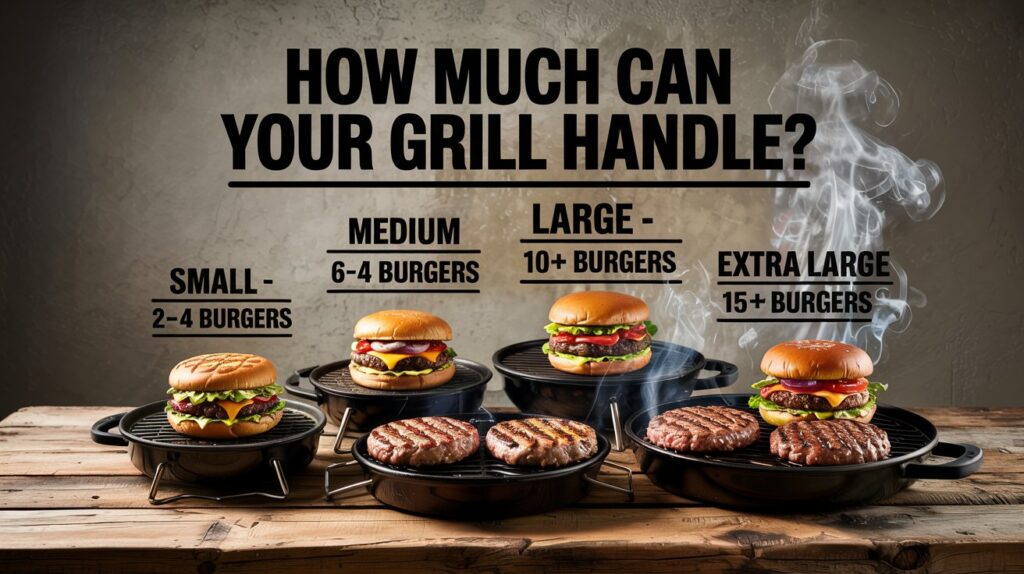
- Cooking Capacity: Can typically cook 2-4 burgers at once.
- Ideal Foods: Hot dogs, burgers, veggies, and skewers.
- Recommended Serving Size: 2-4 people.
Medium Grills
Medium grills range from 200 to 400 square inches, offering a balance between capacity and convenience. They are great for family barbecues or small parties.
- Cooking Capacity: Can grill 6-10 burgers at a time.
- Ideal Foods: Ribs, chicken, larger cuts of meat, and assorted vegetables.
- Recommended Serving Size: 4-8 people.
Large Grills
Large grills exceed 400 square inches of cooking surface, making them suitable for larger gatherings and cooking multiple dishes simultaneously.
- Cooking Capacity: Can cook 10 or more burgers at once.
- Ideal Foods: Whole chickens, multiple racks of ribs, and large cuts of meat.
- Recommended Serving Size: 8+ people.
Chef’s tip: Always preheat your grill to the appropriate temperature for the best sear and flavor.
Grill Types
| Type | Best For | Heat Control | Flavor |
|---|---|---|---|
| Gas | Convenience | Easy | Mild smoke |
| Charcoal | Classic BBQ | Moderate | Strong smoky |
| Pellet | Smoking | Precise | Deep wood flavor |
| Electric | Apartments | Very easy | Minimal smoke |
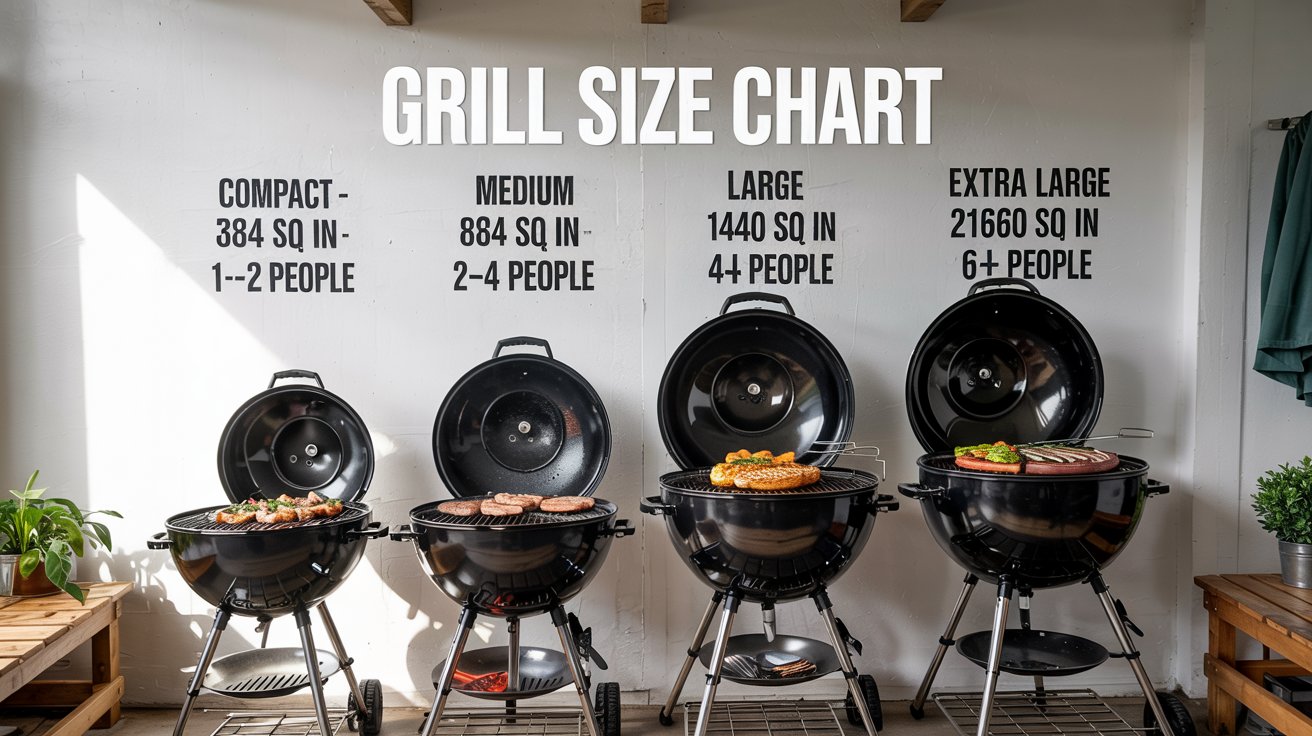
Grill Size Chart
This section provides a detailed chart of various grill sizes, their dimensions, cooking areas, and ideal serving sizes. Understanding the specifics of grill sizes can help you choose the right one for your cooking needs, ensuring that your meals turn out perfectly every time.
| Compact | 24 x 16 | 384 | 1-2 people |
| Medium | 36 x 24 | 864 | 2-4 people |
| Large | 48 x 30 | 1440 | 4-6 people |
| Extra Large | 60 x 36 | 2160 | 6+ people |
When selecting a grill size, consider the following:
- Compact Grills: Great for small balconies or camping, perfect for grilling burgers or hot dogs.
- Medium Grills: Versatile for family gatherings, ideal for steaks, chicken, and vegetables.
- Large Grills: Suitable for entertaining, can handle a variety of foods such as ribs, whole chickens, and multiple sides.
- Extra Large Grills: Perfect for large parties, capable of cooking large cuts of meat and several dishes simultaneously.
Chef’s tip: Always ensure your grill is preheated to the desired temperature for even cooking, which typically ranges from 350°F (175°C) to 500°F (260°C) depending on the food you are grilling.
Food Types by Grill Size
Understanding which foods are best suited for your grill size can make all the difference in achieving perfect results. This section outlines the types of food you can cook based on your grill’s capacity, ensuring that your grilling experience is both enjoyable and successful.
Small Grill Foods
Small grills typically have a cooking area of about 200-400 square inches, making them ideal for smaller portions. Here are some great options:
- 2-4 burgers (about 4-6 oz each)
- 8-12 hot dogs
- 1-2 chicken breasts (6-8 oz each)
- Vegetable skewers (4-6 pieces)
Chef’s tip: Keep the lid closed while cooking to maintain heat, resulting in juicy meats.
Medium Grill Foods
With a cooking area of 400-600 square inches, medium grills can accommodate larger portions. Consider these food options:
- 6-8 burgers (4-6 oz each)
- 10-16 hot dogs
- 3-4 chicken breasts (6-8 oz each) or 1 whole chicken
- 1-2 racks of ribs
| Burgers | 6-8 patties | Medium (350°F/175°C) |
| Whole Chicken | 1 (3-4 lbs) | Medium (350°F/175°C) |
Large Grill Foods
Large grills with 600+ square inches of cooking space allow for cooking large quantities and multiple items at once. Try these:
- 10-12 burgers (4-6 oz each)
- 20-30 hot dogs
- 5-6 chicken breasts (6-8 oz each) or 2 whole chickens
- 2-3 racks of ribs
Pro tip: For large gatherings, consider cooking in batches and keeping cooked food warm in a low oven.
Effective Grilling Tips
Understanding how to effectively grill based on your grill size is essential for achieving delicious results. The right temperature control, cooking times, and food placement can make all the difference in your grilling experience.
- Temperature Control: For small grills, keep the temperature at around 350°F (175°C) for even cooking. Larger grills can maintain higher heat levels, but be sure to monitor with a thermometer. Aim for an internal temperature of 165°F (74°C) for poultry and 145°F (63°C) for fish to ensure safety.
- Cooking Times: Cooking times vary by grill size and food type. For example, burgers typically take 6-8 minutes on a medium-sized grill, while larger ribs may require 2-3 hours on a larger setup. Always check for doneness using a meat thermometer; when juices run clear and meat reaches the right temperature, it’s done.
- Placement of Food: On small grills, place food in the center for direct heat. For larger grills, use indirect heat for larger cuts, positioning them away from the flames. This method ensures even cooking, allowing larger items to cook through without burning. Remember to rotate food halfway through cooking for even browning.
Common Grilling Mistakes
Grilling can be a delightful experience, but common mistakes can hinder your results. Understanding these pitfalls, especially in relation to grill size, will help you achieve perfectly cooked meals every time. Let’s dive into some common grilling mistakes to avoid.
Overcrowding the Grill
One of the biggest mistakes is overcrowding your grill. When you place too much food on the grates, it can cause uneven cooking and prevent proper searing.
- Leave at least 1 inch of space between each piece of food.
- For larger grills, consider cooking in batches if you have a lot to prepare.
- Check doneness by using a meat thermometer — aim for 165°F (74°C) for poultry and 145°F (63°C) for pork.
Ignoring Temperature
Each grill size has an optimal temperature range. Ignoring this can lead to poorly cooked food.
- For small grills, preheat to 350°F (175°C) for even cooking.
- Medium grills often require higher temperatures, around 400°F (200°C), for searing larger cuts of meat.
- Always use a grill thermometer to monitor heat levels accurately.
Inadequate Preheating
Skipping the preheating stage can result in sticking and uneven cooking. Here’s how to do it right:
- Preheat your grill for at least 10-15 minutes before placing food on it.
- Check that the grates are hot enough by flicking water on them; it should sizzle and evaporate immediately.
- For optimal results, clean the grates with a grill brush after preheating.
Chef’s tip: Always aim for a two-zone fire — one side hotter for searing and the other cooler for finishing off your food.
Choosing the Right Grill
Selecting the right grill size is crucial for a successful grilling experience. The size of your grill not only affects how much food you can cook at one time but also influences the flavors and cooking techniques you can employ. Here’s what to consider when choosing the perfect grill for your needs.
Consider Your Space
Before purchasing a grill, evaluate the space you have available. Whether you have a spacious backyard or a small balcony, understanding your available area will help you make the right choice.
- Small Spaces: Opt for compact grills (around 200-300 square inches) suitable for 1-4 people.
- Medium Spaces: Choose grills with 400-600 square inches, ideal for 4-8 people.
- Large Spaces: If you have ample room, consider grills over 600 square inches, which can accommodate larger gatherings.
Number of Diners
How many people do you typically cook for? This will determine the cooking area you need. Below is a quick reference grill size chart based on the number of diners:
| 1-2 | 200-300 |
| 3-4 | 300-400 |
| 5-8 | 400-600 |
| 8+ | 600+ |
Type of Cooking
Different grill sizes are better suited for various cooking techniques. Consider what you plan to cook:
- Direct Grilling: Smaller grills are perfect for quick-cooking items like burgers and hot dogs.
- Indirect Grilling: Larger grills can accommodate whole chickens or roasts, allowing for slow cooking.
- Smoking: If you enjoy smoking meats, a larger grill will give you the space needed for wood chips and longer cooking times.
Pro tip: Always measure your space before purchasing a grill to avoid any surprises!
Cleaning and Maintenance
Proper cleaning and maintenance of your grill are crucial to ensuring its longevity and optimal performance. Different grill sizes may require varying maintenance routines, but the fundamentals remain the same. Here’s how often to clean, the tools you’ll need, and tips for long-term care.
Cleaning Frequency
- Small Grills (Portable/Compact): Clean after every use. A simple brush and wipe down will suffice.
- Medium Grills (Charcoal/Gas): Clean the grates after each use and perform a deep clean every 5-10 uses.
- Large Grills (Commercial/Full-Sized): Clean grates after each use, and do a thorough cleaning every 10-15 uses, especially if you’re cooking for larger gatherings.
Tools Needed
- Grill brush (preferably brass or stainless steel)
- Putty knife or scraper for stubborn residue
- Bucket of warm, soapy water
- Microfiber cloths for drying
- Protective gloves for safety
Long-term Care
Chef’s tip: Cover your grill when not in use to protect it from the elements and prolong its life.
For long-term maintenance, consider the following:
- Inspect hoses and connections for leaks on gas grills regularly.
- Lubricate moving parts as per the manufacturer’s instructions.
- Store charcoal in a cool, dry place to maintain its quality.
| Small | After every use | Store indoors when possible |
| Medium | After each use, deep clean every 5-10 uses | Check for rust regularly |
| Large | After each use, deep clean every 10-15 uses | Inspect and replace parts as needed |
Quick Summary
| Prep Time | Cook Time | Total Time | Servings |
|---|---|---|---|
| 10 minutes | Varies | Depends on size | As needed |
- Understand grill sizes: Know the difference between portable, medium, and large grills.
- Measure your space: Ensure your grill fits your patio or balcony properly.
- Consider cooking style: Choose a grill that matches your preferred cooking methods (gas, charcoal, electric).
- Check BTU ratings: Higher BTUs mean more heat; choose according to your grilling needs.
- Plan for capacity: Select a grill that accommodates the number of guests you typically serve.
- Tip: Always measure your food to ensure it fits the grill.
- Tip: Look for grills with adjustable racks for better cooking flexibility.
Frequently Asked Questions
Can I make a grill size chart ahead of time? How do I store it?
You can definitely create your grill size chart ahead of time and store it in a cool, dry place or print it out for easy access. If you save it digitally, keep it on your device or in the cloud for quick reference while grilling.
What can I substitute for a standard grill size when planning my cookout?
If you’re working with a smaller grill, you can substitute a grill basket or skewers to maximize space and still cook effectively. This allows you to cook smaller cuts or vegetables without crowding the grill surface.
How do I know when my grill is at the right temperature?
Use a grill thermometer to ensure your grill reaches the desired temperature, typically around 450°F to 500°F for direct grilling. You can also hold your hand about 5 inches above the grill; if you can only keep it there for 2-3 seconds, it’s ready.
Can I freeze a grill size chart? How long does it last?
You don’t need to freeze a grill size chart, but you can save it digitally, and it will last indefinitely as long as you keep a backup. If printed, just store it in a binder or folder for easy access.
What if I don’t have a grill size chart?
If you don’t have a grill size chart, you can easily find printable versions online or create your own based on standard grilling guidelines for different meats and vegetables. Just ensure you have the correct cooking times and temperatures handy for best results!
