
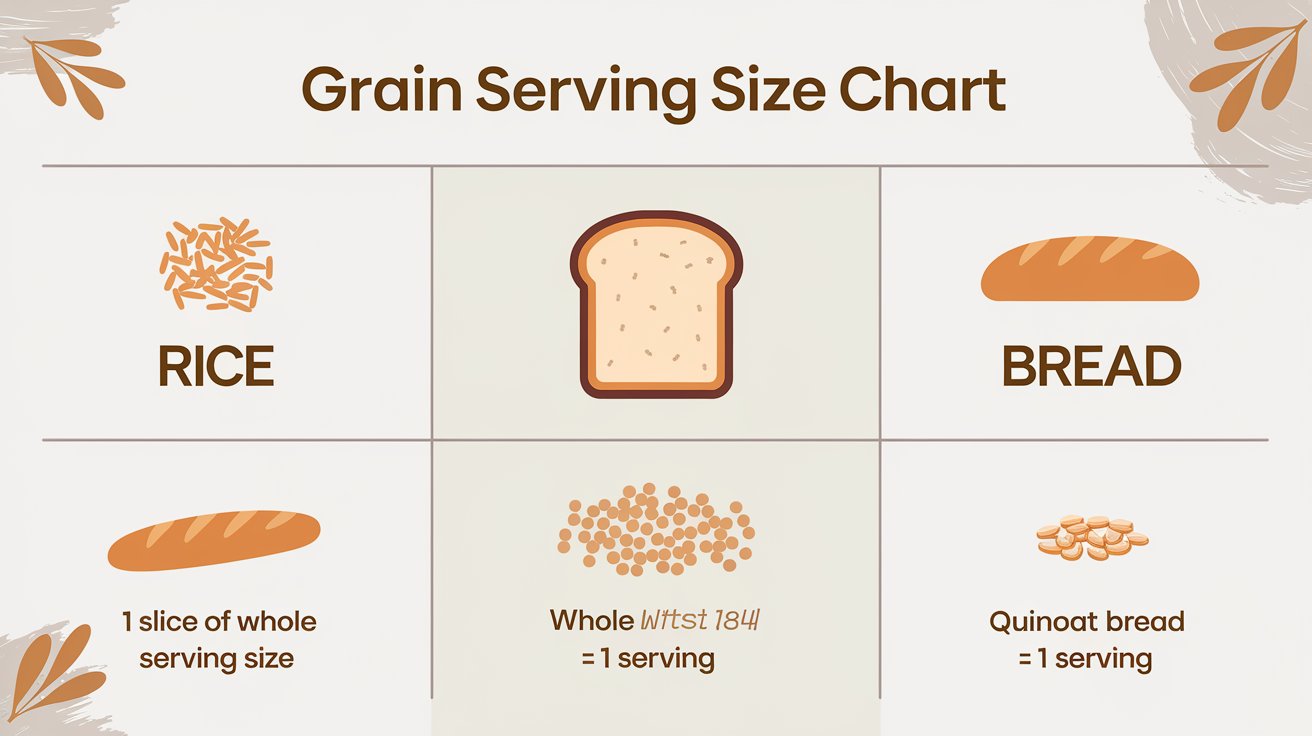
grain serving size chart typically suggests one serving as 1 ounce for dry grains. This translates to about ½ cup of cooked grains or 1 slice of bread.
Understanding grain serving sizes is essential for a balanced diet. Grains provide vital nutrients like fiber, vitamins, and minerals. Knowing how much to consume helps maintain proper portion control and supports overall health. This guide breaks down various grains, including rice, quinoa, and oats, along with their recommended serving sizes.
Whether you’re meal prepping or planning a balanced diet, this chart offers a quick reference. With the right serving sizes, you can enjoy the health benefits of grains without overindulging. Embrace grains as part of your daily meals for optimal nutrition and energy.
Introduction To Grain Portions
Understanding grain portions is essential for a healthy diet. Grains are a major food group. They provide energy, nutrients, and fiber. Knowing the right serving size helps maintain a balanced diet.
Why Portion Size Matters
Portion size influences health and wellness. Here are key reasons why it matters:
- Weight Management: Proper portions help control calorie intake.
- Balanced Nutrition: Accurate servings ensure you get essential nutrients.
- Digestive Health: Correct amounts prevent digestive issues.
Understanding servings helps avoid overeating. It also promotes mindful eating habits.
The Role Of Grains In Your Diet
Grains are a vital part of a balanced diet. They offer many health benefits:
- Energy Source: Grains provide carbohydrates for energy.
- Nutrient-Rich: They contain vitamins and minerals.
- High in Fiber: Grains support digestive health.
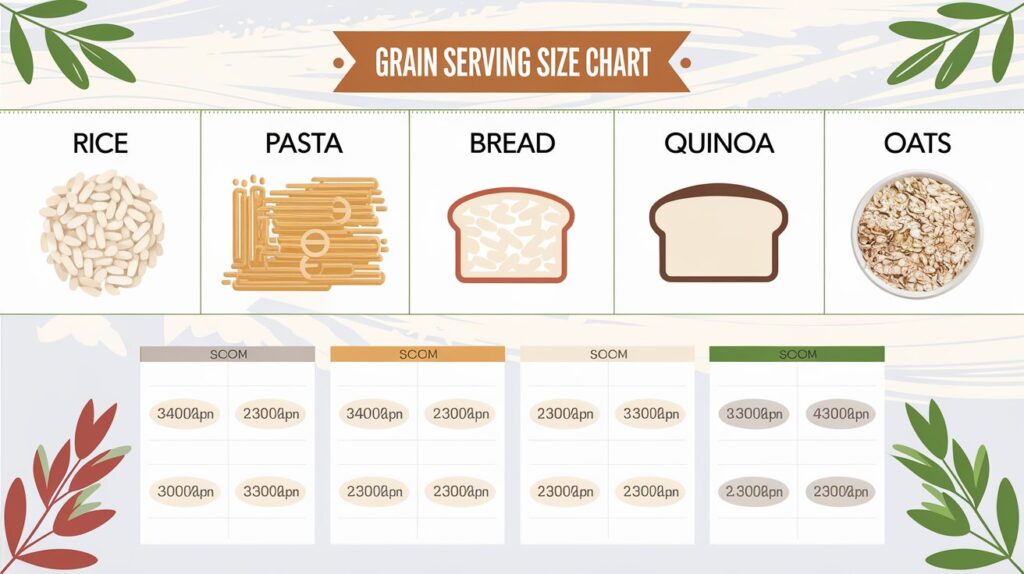
Here is a simple grain serving size chart:
| Type of Grain | Serving Size | Nutritional Benefits |
|---|---|---|
| Brown Rice | 1/2 cup cooked | High in fiber and magnesium |
| Quinoa | 1/2 cup cooked | Complete protein source |
| Oats | 1/2 cup dry | Rich in antioxidants |
| Whole Wheat Bread | 1 slice | Good source of fiber |
Choosing the right grain servings helps maintain energy levels. It also supports overall health.
Types Of Grains
Understanding the types of grains helps in making healthy choices. Grains fall into two main categories: whole grains and refined grains. Each type offers different health benefits and nutritional values.
Whole Grains Vs. Refined Grains
Whole grains contain all parts of the grain kernel. They include the bran, germ, and endosperm. This means they are rich in fiber, vitamins, and minerals.
Refined grains have been processed. They often lose valuable nutrients during this process. Refined grains can lead to quick spikes in blood sugar. Examples include white rice and white bread.
Here’s a quick comparison:
| Type of Grain | Nutritional Benefits |
|---|---|
| Whole Grains | High in fiber and nutrients |
| Refined Grains | Lower in fiber and nutrients |
Popular Grain Varieties
Many grains are popular around the world. Each grain has unique flavors and uses.
- Brown Rice: Nutty flavor and chewy texture.
- Quinoa: High in protein and gluten-free.
- Oats: Great for breakfast and rich in fiber.
- Barley: Good for soups and stews.
- Whole Wheat: Common in bread and pasta.
Choosing whole grains over refined grains adds more nutrients to your diet. Incorporating a variety of grains can enhance your meals.
Measuring Grain Servings
Measuring grain servings correctly is important for a balanced diet. Understanding the right portion helps with nutrition and health goals. Use simple methods for accurate measurements.
Using Household Items For Measurement
Many household items can help measure grain servings. Here are some common items:
- 1 cup = 1 serving of cooked rice or pasta
- 1 slice of bread = 1 serving
- 1 ounce of dry cereal = 1 serving
Using these items makes measuring easy. No need for special tools!
Weighing For Precision
For more accurate measurements, weighing grains is best. Here’s a quick guide:
| Grain Type | Weight (in ounces) | Serving Size |
|---|---|---|
| Rice (uncooked) | 1 oz | 1/4 cup |
| Oats (uncooked) | 1 oz | 1/2 cup |
| Pasta (dry) | 2 oz | 1 cup cooked |
Using a kitchen scale can ensure precision. Weighing helps meet dietary needs.
Grain Serving Size Recommendations
Understanding the right grain serving sizes is crucial for a healthy diet. Grains provide essential nutrients and energy. Following proper serving sizes helps maintain balanced nutrition.
Daily Intake Guidelines
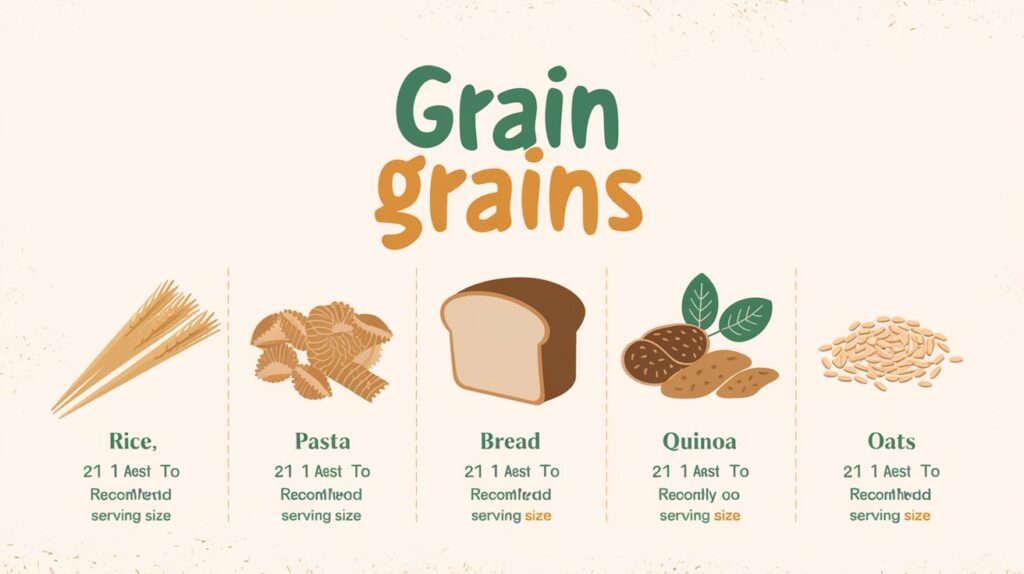
The daily intake of grains varies by age, gender, and activity level. Here are some general guidelines:
| Age Group | Daily Serving Size (ounces) | Examples |
|---|---|---|
| Children (2-3 years) | 3-5 | ½ cup cooked rice, 1 slice bread |
| Children (4-8 years) | 4-6 | 1 cup cooked pasta, 1 slice bread |
| Teens (9-18 years) | 5-8 | 1 cup oatmeal, 2 slices bread |
| Adults (19-50 years) | 6-8 | 1 cup quinoa, 1 slice bread |
| Older Adults (51+ years) | 5-7 | ½ cup cooked barley, 1 slice bread |
Adjusting For Dietary Needs
Adjust grain servings based on specific dietary needs. Consider these factors:
- Weight Management: Reduce servings for weight loss.
- Physical Activity: Increase servings for higher energy needs.
- Health Conditions: Consult a doctor for specific recommendations.
Choosing whole grains is essential. They provide more fiber and nutrients. Always read labels for accurate serving sizes.
Remember, moderation is key. Vary your grain choices to maintain interest in meals. Whole grains, such as brown rice and quinoa, are excellent options.
Visual Guide To Grain Portions
Understanding grain serving sizes is crucial for a balanced diet. This visual guide helps you recognize proper portions. Accurate serving sizes prevent overeating and promote healthy eating habits.
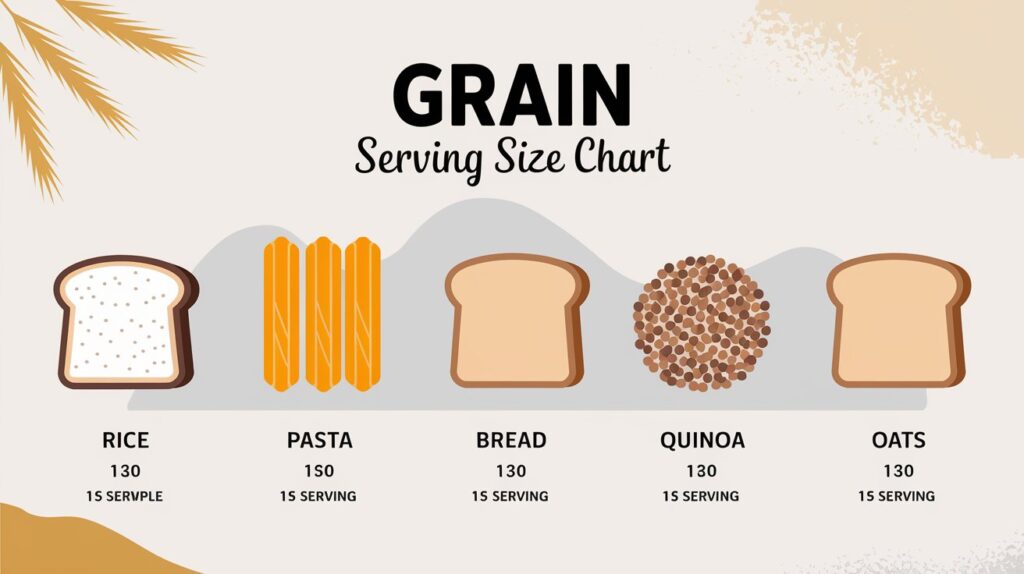
Infographic: Grain Serving Sizes
Check out this infographic for a quick view of grain serving sizes:
Portion Size Comparisons
Grain serving sizes can vary. Here is a simple comparison:
| Grain Type | Serving Size | Visual Portion |
|---|---|---|
| Cooked Rice | 1 cup | Size of a baseball |
| Cooked Quinoa | 1 cup | Size of a baseball |
| Oats (cooked) | 1 cup | Size of a baseball |
| Bread | 1 slice | Size of a CD |
| Pasta (cooked) | 1 cup | Size of a baseball |
Use your hands to measure portions:
- 1 fist = 1 cup of cooked grains
- 1 palm = 1 slice of bread
- 1 thumb = 1 ounce of dry grains
These comparisons help you visualize appropriate grain portions easily. Understanding these sizes leads to better choices.
Tips For Portion Control
Portion control helps maintain a balanced diet. Knowing how much to eat is essential. Use these tips to manage grain servings effectively.
Mindful Eating Practices
Mindful eating encourages awareness during meals. Focus on what you eat. Here are some tips:
- Slow down your eating pace. Chew each bite well.
- Pay attention to your hunger signals. Stop when you feel satisfied.
- Eliminate distractions. Avoid screens during meals.
- Use smaller plates to make portions appear larger.
By practicing mindfulness, you can enjoy your food more. This leads to better portion control and satisfaction.
Pre-measured Containers
Using pre-measured containers can simplify portion control. They help ensure accurate servings. Consider these benefits:
- Convenience: Grab and go without measuring.
- Consistency: Maintain the same serving size every time.
- Variety: Use different containers for different grains.
Choose containers marked with serving sizes. This makes it easy to stick to your grain limits.
| Grain | Serving Size (cooked) |
|---|---|
| Brown Rice | 1/2 cup |
| Quinoa | 1/2 cup |
| Oats | 1/2 cup |
| Couscous | 1/2 cup |
Stick to these serving sizes. They help in maintaining a healthy diet.
Incorporating Grains Into Meals
Grains are vital for a healthy diet. They provide energy and essential nutrients. Including them in meals can boost your overall nutrition. Understanding serving sizes helps you make better choices. Let’s explore ways to incorporate grains into your meals effectively.
Balanced Plate Method
The Balanced Plate Method is simple and effective. It helps you visualize your meal. Aim to fill your plate with:
- 50% vegetables and fruits
- 25% grains
- 25% protein
This method ensures a variety of nutrients. Choose whole grains for added benefits. They contain fiber, vitamins, and minerals. Examples of whole grains include:
- Brown rice
- Quinoa
- Oats
- Whole wheat pasta
Using this method can improve meal satisfaction. It encourages mindful eating habits. Serve grains in appropriate portion sizes.
Grain-based Meal Ideas
Here are some delicious grain-based meal ideas:
- Quinoa Salad: Mix cooked quinoa with chopped veggies.
- Brown Rice Stir-Fry: Stir-fry your favorite vegetables with brown rice.
- Oatmeal Bowl: Top oatmeal with fruits and nuts for breakfast.
- Whole Wheat Pasta: Serve with tomato sauce and vegetables.
Experimenting with grains can make meals fun. Combine different grains for variety. Consider a grain bowl with:
| Grain | Pairing Options |
|---|---|
| Brown Rice | Chicken, Broccoli, Soy Sauce |
| Quinoa | Black Beans, Corn, Avocado |
| Barley | Vegetable Soup, Herbs |
Enjoying grains in meals can be delicious and healthy. Remember to keep the serving sizes in mind for balanced nutrition.
Common Pitfalls And How To Avoid Them
Understanding grain serving sizes can be tricky. Many people make mistakes that lead to poor choices. Here are common pitfalls and tips to avoid them.
Overestimating Serving Sizes
One major mistake is overestimating serving sizes. Many assume they eat less than they actually do. This can lead to consuming too many calories. Here are some tips:
- Use a measuring cup or scale.
- Check food labels for serving sizes.
- Practice portion control by using smaller plates.
Tracking servings accurately helps maintain a balanced diet. It also prevents overeating, leading to better health.
Correcting Misconceptions
Many misconceptions exist about grains. Some think all grains are unhealthy. This is not true. Whole grains provide essential nutrients.
| Grain Type | Benefits |
|---|---|
| Brown Rice | High in fiber and vitamins. |
| Quinoa | Complete protein source. |
| Oats | Good for heart health. |
Educate yourself about different grains. Read nutrition labels. Choose whole grains over refined ones.
Correcting these misconceptions helps make healthier choices. This leads to better overall well-being.
Frequently Asked Questions
What Is The Correct Serving Size For Grains?
The correct serving size for grains is typically 1 ounce or 1/2 cup cooked. For adults, aim for 6-8 servings daily. Adjust based on activity level and dietary needs. Always choose whole grains for added nutrients and benefits.
What Is A Standard Serve Of Grains?
A standard serve of grains is typically one ounce or 28 grams. This can include one slice of bread, half a cup of cooked rice, or one cup of dry cereal. Aim for whole grains for better nutrition and health benefits.
How Much Grain Per Person Per Day?
The recommended grain intake is about 6 to 8 ounces per person per day. This includes whole grains like brown rice, quinoa, and whole wheat bread. Adjust based on age, activity level, and dietary needs for optimal health benefits. Choose a variety for balanced nutrition.
What Does 1 Oz Of Grains Look Like?
One ounce of grains is about 28 grams. Visually, it can fill a small handful or approximately 1/4 cup. Common examples include a small portion of rice or oats. This amount is often used in recipes or meal portions.
Conclusion
Understanding grain serving sizes is crucial for a balanced diet. This chart simplifies meal planning and portion control. By knowing the right amounts, you can enhance your nutrition and support your health goals. Use this guide to make informed choices and enjoy a variety of grains in your meals.
