
Grains are a big part of diets worldwide. Yet, many people feel confused about the right grain serving size for good health. With bread, rice, pasta, and oats in every kitchen, it’s easy to eat too much or too little. This confusion can affect your energy, weight, and overall well-being.
Knowing what counts as a serving and how to measure it can make meal planning simpler. It can also help you follow food guidelines and choose the right portions for your needs. Let’s explore what a grain serving size means, why it matters, and how to get it right every day.
What Is A Grain Serving Size?
A grain serving size is a standard amount of grain food. It helps people know how much to eat for a balanced diet. Health organizations like the USDA define a serving to help you measure foods like bread, rice, and pasta.
A typical adult needs about 6-8 servings of grains a day. At least half should be whole grains. Serving sizes are not the same for every grain. They depend on whether the grain is cooked, dry, whole, or refined.
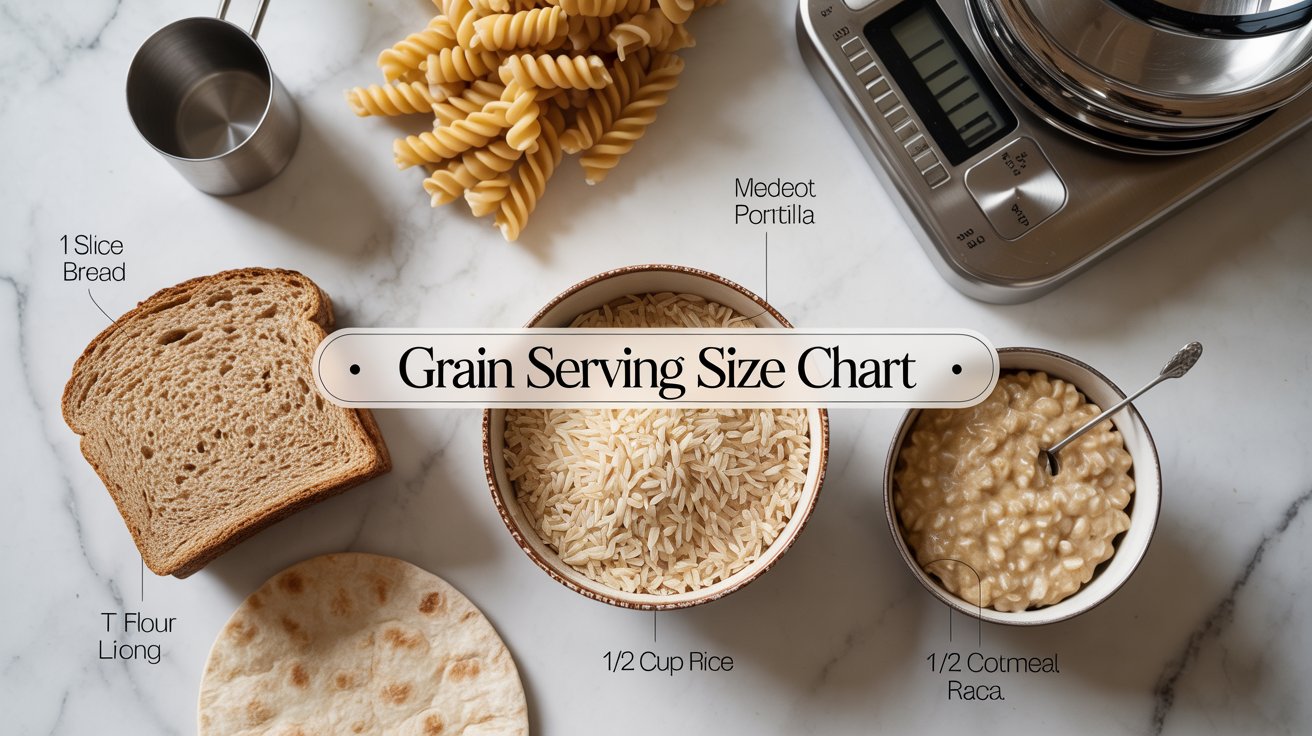
Standard Serving Examples
- 1 slice of bread
- 1/2 cup of cooked rice or pasta
- 1/2 cup of cooked oatmeal
- 1 small tortilla (6-inch)
- 1 cup of ready-to-eat cereal
These amounts may look small, but they offer the nutrition your body needs when combined with other foods.
Why Grain Serving Size Matters
Choosing the right grain serving size gives many benefits:
- Balanced energy – Grains are rich in carbohydrates, your body’s main energy source.
- Weight control – Overeating grains can add extra calories and lead to weight gain.
- Better digestion – Whole grains contain fiber, which helps keep your gut healthy.
- Disease prevention – Eating the right amount, especially of whole grains, lowers the risk of heart disease, diabetes, and some cancers.
Many people eat more grains than they realize, especially from snacks and large portions at restaurants. Learning to measure servings helps you avoid these hidden calories.
How To Measure Grain Servings
Measuring grains can be tricky. Here are simple ways to make it easier:
Using Common Kitchen Tools
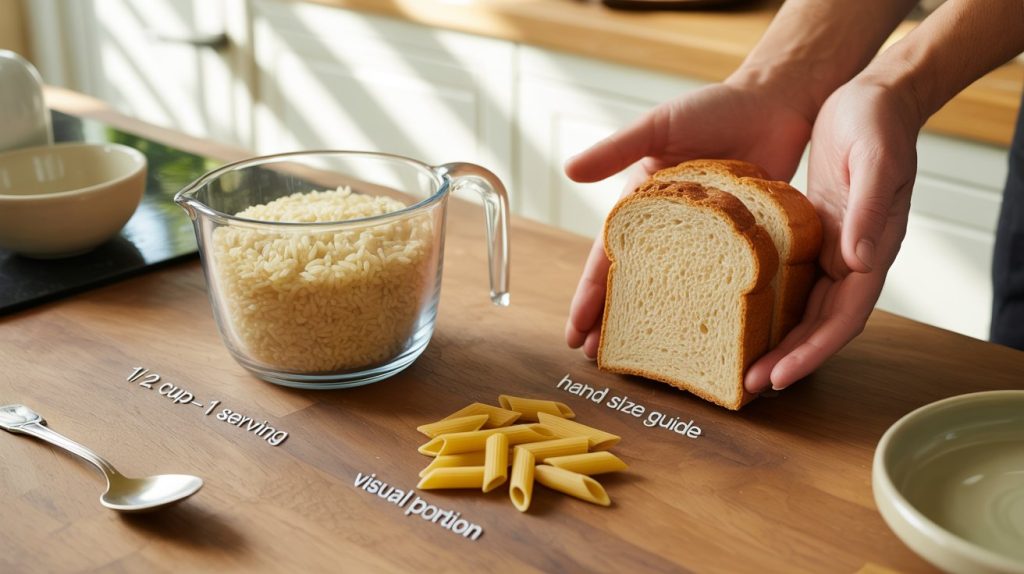
- Measuring cups: 1/2 cup cooked rice or pasta = 1 serving.
- Your hand: One slice of bread is about the size of your hand.
- Visual guides: A serving of cooked grain is about the size of a hockey puck.
Serving Size Comparison Table
See how common foods compare in serving size:
| Grain Food | Serving Size | Calories (approx.) |
|---|---|---|
| Bread | 1 slice (28g) | 70-80 |
| Cooked rice | 1/2 cup (100g) | 110 |
| Cooked pasta | 1/2 cup (70g) | 90 |
| Breakfast cereal | 1 cup (30g) | 100-120 |
| Tortilla | 1 small (6-inch) | 60-70 |
Most packaged foods also list serving size on the nutrition label. Always check before eating.
Whole Grains Vs. Refined Grains
Not all grains are equal. Whole grains keep all parts of the grain (bran, germ, endosperm). Refined grains lose important nutrients during processing.
Grain Intake Based on Goals
| Goal | Servings Per Day |
|---|---|
| Weight loss | 4–6 servings |
| Maintenance | 6–8 servings |
| Active lifestyle | 7–10 servings |
Why Whole Grains Are Better
Whole grains are richer in:
- Fiber
- Vitamins
- Minerals
- Healthy plant chemicals
Refined grains, like white bread or white rice, miss out on these benefits.
Whole Vs. Refined Grain Comparison
| Type | Fiber (per serving) | Main Nutrients |
|---|---|---|
| Whole wheat bread | 2g | B vitamins, iron, magnesium |
| White bread | 0.5g | Some B vitamins (enriched), less iron |
| Brown rice | 1.8g | Magnesium, selenium, phosphorus |
| White rice | 0.4g | Fewer minerals |
Eating more whole grains helps your body in many ways.
How Many Grain Servings Should You Eat?
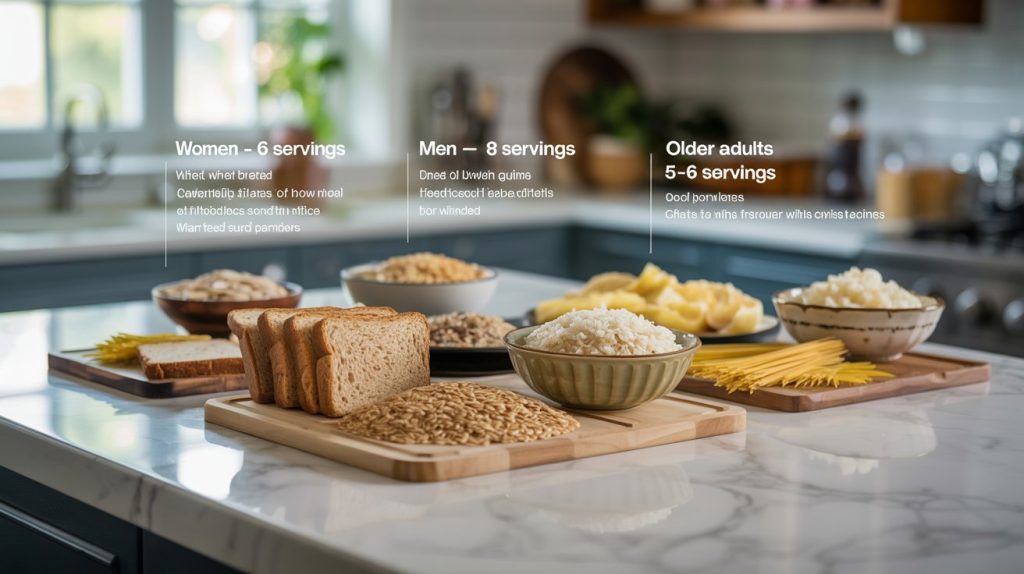
Your ideal number of servings depends on your age, gender, and activity.
- Women (19-50 years): 6 servings/day
- Men (19-50 years): 8 servings/day
- Older adults: 5-6 servings/day
Active people may need more. Children and less active adults may need less. At least half of your grains should be whole grains.
Example Daily Grain Plan
| Meal | Grain Food | Servings |
|---|---|---|
| Breakfast | Oatmeal (1 cup cooked) | 2 |
| Lunch | Brown rice (1/2 cup) | 1 |
| Dinner | Whole wheat pasta (1 cup cooked) | 2 |
| Snack | Whole grain bread (1 slice) | 1 |
This plan gives you 6 servings and focuses on whole grains.
Common Mistakes With Grain Serving Size
Many people make these errors:
- Oversized portions – Large bowls of rice or pasta may be 2-3 servings.
- Ignoring snacks – Crackers, cookies, and even popcorn count as grain servings.
- Choosing refined grains – Too much white bread or rice means less nutrition.
- Not reading labels – Packages often show a smaller serving size than expected.
A practical tip: At restaurants, ask for a half-portion or share with a friend. At home, measure your grains until you can judge by sight.
Tips To Balance Grain Intake
- Choose whole grains whenever possible.
- Measure your grains at home for a week to learn serving sizes.
- Fill half your plate with vegetables and fruits, not just grains.
- Limit pastries and sweetened cereals; they count as refined grains.
- Try new grains like quinoa, barley, or bulgur for more variety.
One insight many miss: not all “brown” breads are whole grain. Check the label for “whole wheat” or “whole grain” as the first ingredient. Another tip: cooked grains often double or triple in size, so a small dry amount becomes a full serving when cooked.
For more details, see the USDA’s grains guide.
Frequently Asked Questions
What Is One Serving Size Of Cooked Rice?
One serving of cooked rice is 1/2 cup, about the size of a cupcake wrapper. This gives you roughly 110 calories.
How Do I Know If My Bread Is Whole Grain?
Check the ingredient list. The first word should be “whole” (like “whole wheat flour”). Color or marketing words are not enough.
Can I Eat All My Grain Servings As Pasta?
Yes, but it’s best to mix different grains and choose whole grain pasta. Variety gives you more nutrients.
Are Popcorn And Crackers Grain Servings?
Yes. Air-popped popcorn and whole grain crackers count as grain servings. Check serving sizes on the package.
Is It Okay To Skip Grains?
Grains give energy and nutrients, but you can skip them if you get enough carbs and fiber from other foods. Talk to a dietitian before making big changes.
Eating the right grain serving size every day helps your body stay healthy, gives you steady energy, and supports good digestion. With a little practice, you’ll find it easy to balance your grains and enjoy a variety of foods.
