
Are you confused about which size of glass noodles to choose for your recipe? You’re not alone.
The size of glass noodles can change the texture and cooking time of your dish, making a big difference in the final taste. This Glass Noodles Size Chart will help you quickly understand the different sizes and their best uses.
By the end of this article, you’ll know exactly which noodle size fits your cooking needs perfectly. Keep reading to make your meals better and your cooking easier!
Glass Noodles Varieties
Glass noodles are a popular ingredient in many Asian dishes. They come in different styles and sizes. Knowing the types helps you pick the right one for your recipe. This section explains the main varieties of glass noodles.
Common Types By Origin
Glass noodles vary by country. Korean dangmyeon uses sweet potato starch. Chinese cellophane noodles often use mung bean starch. Thai glass noodles are usually made from mung beans too. Each type has a unique texture and taste. The origin affects how the noodles cook and feel.
Differences In Thickness
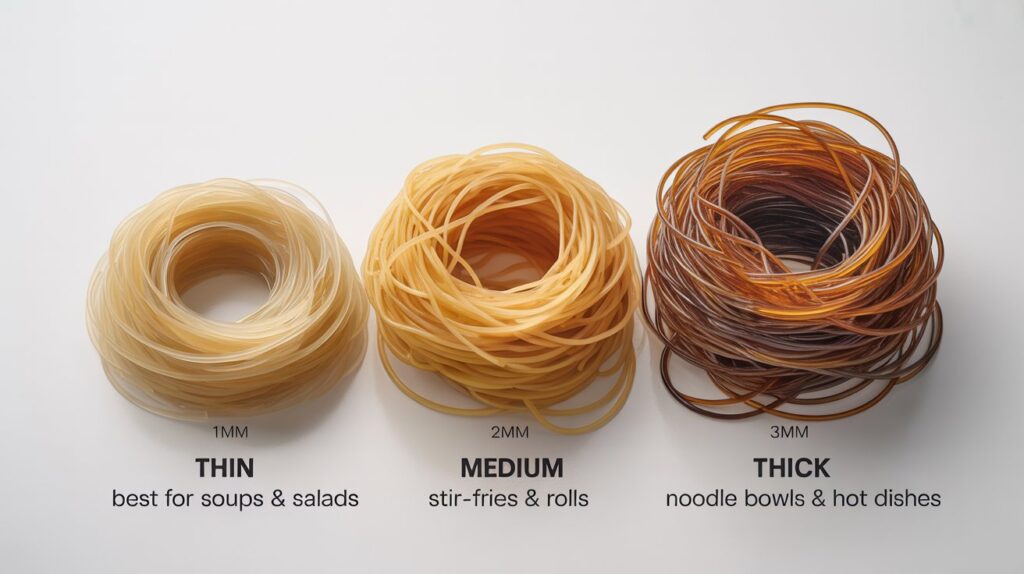
Thickness changes how glass noodles cook. Thin noodles cook quickly and become soft fast. Thicker noodles hold shape better and feel chewier. Some recipes call for thin noodles in soups. Others use thick noodles in stir-fries. Choose thickness based on how you want the dish.
Packaging Sizes
Glass noodles come in many package sizes. Small packs are great for single meals. Larger packs suit families or batch cooking. Some brands sell in 100-gram bags. Others offer bulk packs over 500 grams. Check the size before buying to avoid waste.
Measuring Glass Noodles
Measuring glass noodles correctly is key to cooking the perfect dish. These noodles change size and texture after cooking. Knowing how to measure them helps avoid waste and ensures the right portion size. Understanding their weight and volume before and after cooking is important.
Weight Vs Volume
Glass noodles are often measured by weight or volume. Weight gives a precise amount. Volume can vary because noodles expand when cooked. A cup of dry noodles weighs less than a cup of cooked noodles. Use weight for accuracy in recipes.
Dry Vs Cooked Measurements
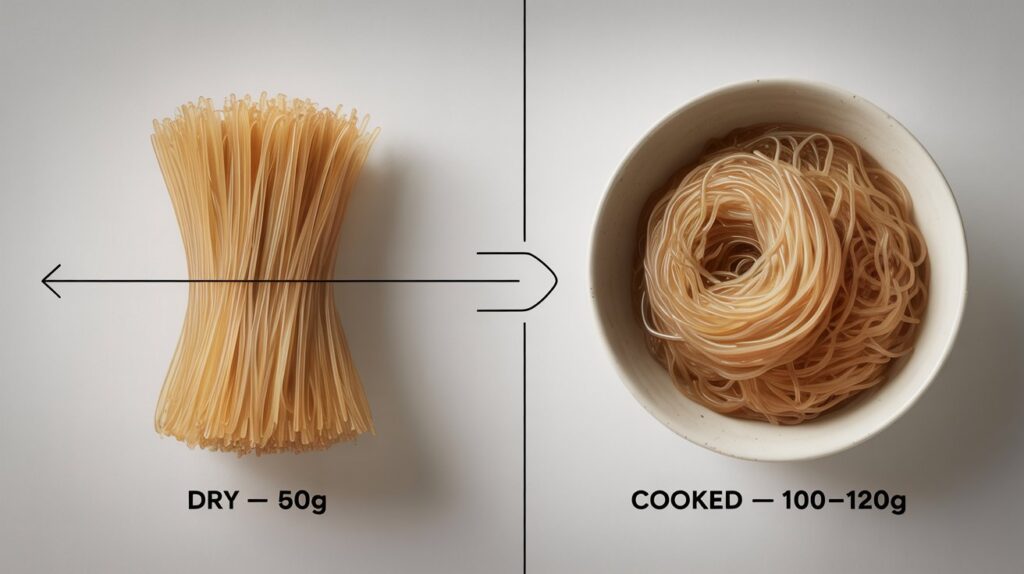
Dry glass noodles are smaller and lighter. They swell up and absorb water during cooking. One serving of dry noodles will look much bigger once cooked. Measuring noodles dry helps control portions before cooking. Cooked measurements show how much food you get to eat.
Tools For Accurate Portions
A kitchen scale is best for measuring glass noodles. It shows the exact weight before and after cooking. Measuring cups work but are less accurate. A food scale helps avoid guessing and reduces food waste. Simple tools improve cooking results every time.
Portion Sizes For Recipes
Understanding portion sizes for glass noodles helps cook the right amount every time. Recipes need correct noodle measurements for taste and texture. Using the right size keeps meals balanced and avoids waste.
Glass Noodles Size Chart
| Noodle Size | Thickness (approx.) | Best Uses | Cooking Time |
|---|---|---|---|
| Thin | ~1 mm | Soups, salads | 2–3 minutes |
| Medium | ~2 mm | Stir-fries, spring rolls | 3–5 minutes |
| Thick | ~3 mm | Noodle bowls, hearty dishes | 5–7 minutes |
Single Serving Amounts
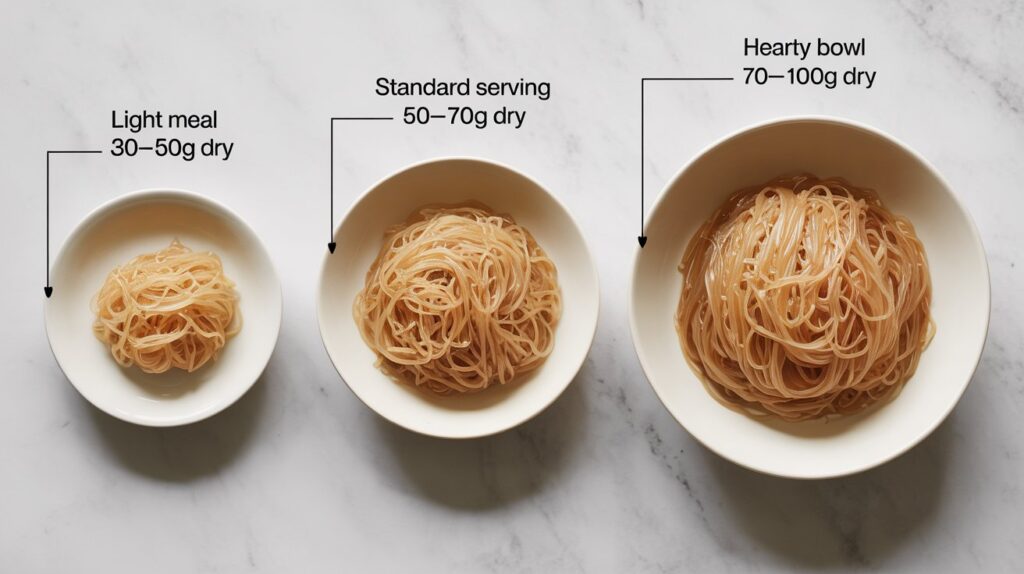
A single serving of glass noodles is usually about 50 grams dry. This equals roughly one cup cooked noodles. It suits one person as a side or light main dish. Adjust serving size based on appetite or recipe type.
Family And Group Portions
For groups, multiply single servings by the number of people. For example, four people need about 200 grams dry noodles. Cook noodles in a large pot to avoid sticking. Large portions work well for shared dishes like stir-fries or soups.
Adjusting Portions For Dietary Needs
Portions change for special diets. Low-carb eaters use smaller amounts, about 30 grams dry. Bigger portions fit active people or those needing more calories. Always measure noodles before cooking for accuracy.
Cooking Tips For Perfect Portions
Cooking glass noodles perfectly means getting the right portion and texture. Small changes in cooking can make noodles sticky or mushy. Knowing how to soak, boil, and handle their size helps a lot. Here are some tips to cook glass noodles just right.
Soaking And Boiling Times
Glass noodles need soaking before cooking. Soak them in warm water for 5 to 10 minutes. This softens the noodles and shortens boiling time.
Boil the noodles for 2 to 4 minutes after soaking. Check often to avoid overcooking. The noodles should be tender but still firm.
Expanding Properties
Glass noodles grow about two times their dry size. This means one cup dry can become two cups cooked.
Use smaller portions of dry noodles if you want a light meal. Measure carefully to avoid cooking too much.
Avoiding Overcooking
Overcooked glass noodles become sticky and lose their shape. Drain them immediately after boiling.
Rinse the noodles with cold water to stop cooking. Toss with a little oil to keep them separate and smooth.
Storing And Shelf Life
Proper storing of glass noodles helps keep them fresh and tasty. Knowing their shelf life prevents waste and saves money. Understanding signs of spoilage keeps meals safe and enjoyable.
Proper Storage Methods
Store dry glass noodles in a cool, dry place. Keep them in an airtight container to avoid moisture. Avoid direct sunlight or heat near the storage spot. For cooked noodles, use a sealed container and refrigerate quickly. Consume cooked noodles within a few days for best taste.
Shelf Life Expectations
Dry glass noodles last about 1 to 2 years unopened. Once opened, use them within 6 to 12 months for freshness. Cooked glass noodles stay good for 3 to 5 days in the fridge. Avoid freezing cooked noodles as it changes their texture.
Signs Of Spoilage
Look for off smells or sour odors in noodles. Check for any discoloration or mold spots. Sticky or slimy texture means spoilage in cooked noodles. If noodles taste strange or bitter, do not eat them.
Common Portion Mistakes
Cooking glass noodles can be tricky without the right portion sizes. Many people make common mistakes that affect the meal’s taste and texture. Knowing these errors helps you cook better dishes every time.
Overestimating Dry Noodles
People often use too many dry glass noodles. It looks like a small amount, but it grows a lot when cooked. Using more than needed leads to waste or overly large servings.
Ignoring Expansion Rates
Glass noodles swell up after soaking or cooking. They can triple in size or weight. Not considering this expansion causes wrong portion sizes and unbalanced meals.
Impact On Recipe Outcomes
Wrong portions change the dish’s flavor and texture. Too many noodles can make the dish heavy. Too few noodles make it less filling and unsatisfying.
Scaling Portions For Different Dishes
Scaling portions of glass noodles is important for different dishes. Each dish needs a specific amount to taste just right. Too much or too little can change the texture and flavor. Knowing how to measure helps cook better meals every time.
Soups And Salads
Glass noodles in soups and salads need smaller portions. Usually, 30 to 50 grams of dry noodles work well per serving. They soak up broth or dressing quickly. Too many noodles can make the dish heavy and less fresh.
Stir-fries
Stir-fries require a moderate amount of glass noodles. Around 50 to 70 grams per person is ideal. Noodles mix with vegetables and sauce here. Balance is key to keep the dish light and flavorful.
Noodle Bowls
Noodle bowls use larger portions of glass noodles. Typically, 70 to 100 grams per serving is perfect. This amount fills the bowl well and satisfies hunger. It pairs nicely with proteins and fresh herbs.
Frequently Asked Questions
What Are The Common Sizes Of Glass Noodles?
Glass noodles typically range from thin strands (about 1mm) to wider flat shapes (up to 3mm). Size varies by brand and recipe use.
How Does Glass Noodle Size Affect Cooking Time?
Thinner glass noodles cook faster, usually 2-3 minutes. Thicker noodles require 5-7 minutes to soften properly without becoming mushy.
Can Glass Noodle Size Impact Texture In Dishes?
Yes, thinner noodles offer a delicate, slippery texture, while thicker ones provide a chewier bite, ideal for stir-fries or soups.
Where Can I Find A Glass Noodles Size Chart?
Many packaging labels or online food blogs provide size charts. They help choose the right noodle size for your recipe.
Conclusion
Glass noodles come in different sizes for many recipes. Knowing their sizes helps you cook better dishes. Smaller noodles cook faster and suit soups well. Larger noodles hold sauce and work great in stir-fries. Choose the size that fits your meal needs.
This guide makes picking easy and clear. Enjoy cooking with the right glass noodle size every time. Simple tips lead to tasty results. Keep this chart handy for your kitchen.
