
A fruit and vegetable serving size chart provides clear guidelines for daily intake. Typically, one serving equals one cup of raw vegetables or two cups of leafy greens.
Eating a variety of fruits and vegetables is essential for optimal health. A serving size chart helps you understand the right portions to consume daily. This ensures you get enough vitamins, minerals, and fiber. Understanding serving sizes can prevent overeating while promoting balanced meals.
It’s crucial to incorporate different colors and types of produce to maximize nutrient intake. This approach not only supports overall well-being but also enhances taste in your meals. Use the chart as a guide to create delicious, healthful dishes that fit your lifestyle and dietary needs. Eating well can be simple and enjoyable.
The Importance Of Proper Servings
Understanding proper serving sizes for fruits and vegetables is crucial. It helps maintain a balanced diet. Knowing the right amounts can enhance health and well-being. Proper servings also prevent overeating.
Nutritional Balance And Health Benefits
Fruits and vegetables are rich in vitamins, minerals, and fiber. They provide essential nutrients for your body. Proper servings ensure you receive:
- Vitamins: Vital for immune function and energy.
- Minerals: Important for bone health and muscle function.
- Fiber: Aids digestion and helps control cholesterol.
Consuming the right portions of these foods can:
- Reduce the risk of chronic diseases.
- Support a healthy weight.
- Boost overall energy levels.
Weight Management And Portion Control
Controlling portion sizes helps manage weight effectively. Overeating, even healthy foods, can lead to weight gain. Follow these tips for better portion control:
- Use smaller plates to trick your mind.
- Measure servings using cups or scales.
- Choose whole fruits instead of juices.
Understanding serving sizes can prevent unnecessary snacking. It keeps you satisfied longer. Balanced portions lead to a healthier lifestyle.
| Fruit/Vegetable | Recommended Serving Size |
|---|---|
| Apple | 1 medium (about 182g) |
| Banana | 1 medium (about 118g) |
| Carrot | 1 medium (about 61g) |
| Broccoli | 1 cup chopped (about 91g) |
Decoding Serving Sizes
Understanding serving sizes helps you eat healthy. It guides you on how much fruit and vegetables to enjoy. Different foods have different serving sizes. Knowing these helps you meet your daily needs.
Standard Measurements Vs. Personal Needs
Standard measurements offer a basic guideline. Here are some common serving sizes:
| Food Item | Standard Serving Size |
|---|---|
| Fruit | 1 medium apple or banana |
| Leafy Greens | 1 cup raw or ½ cup cooked |
| Vegetables | 1 cup raw or ½ cup cooked |
| Berries | ½ cup |
Your personal needs may vary. Age, activity level, and health goals matter. Adjust serving sizes based on your unique situation. Listen to your body. It knows what it needs.
Visual Cues For Estimating Portions
Estimating portions visually can be easy. Here are some helpful cues:
- Fist Size: A fist equals about 1 cup of veggies.
- Palm Size: A palm equals about 3 ounces of protein.
- Thumb Size: A thumb equals about 1 ounce of cheese or nuts.
Use these cues to help you serve accurately. This method makes it simple. It takes away guesswork. Enjoy your meals while staying within healthy limits.
Fruit Serving Size Breakdown
Understanding fruit serving sizes helps you make better choices. Proper portions can enhance your health. Here, we’ll explore common fruits and their recommended quantities.
Common Fruits And Recommended Quantities
Different fruits come in various serving sizes. Here’s a simple chart for quick reference:
| Fruit | Serving Size |
|---|---|
| Apple | 1 medium (about 4-5 oz) |
| Banana | 1 medium (about 7-8 oz) |
| Orange | 1 medium (about 6-7 oz) |
| Strawberries | 1 cup (about 8 large) |
| Grapes | 1 cup (about 32 grapes) |
| Pineapple | 1 cup (chunks) |
These servings ensure you enjoy the health benefits of fruits. Always remember that variety is key.
Dried Fruits Vs. Fresh: Adjusting Portions
Dried fruits are tasty but more concentrated. They contain more sugar and calories.
Here’s how to adjust your portions:
- Dried Apricots: ¼ cup = 3 fresh apricots
- Dried Raisins: ¼ cup = 1 cup of fresh grapes
- Dried Cranberries: ¼ cup = ½ cup of fresh cranberries
Always check the package for serving sizes. Enjoy dried fruits in moderation. Fresh fruits remain the best choice for hydration and nutrients.
Vegetable Serving Size Insights
Understanding vegetable serving sizes helps you maintain a balanced diet. Proper serving sizes ensure you get enough nutrients without overeating. Here, we explore two main categories of vegetables and their serving sizes.

Leafy Greens Vs. Root Vegetables
Leafy greens and root vegetables have different serving sizes. Here’s a quick comparison:
| Vegetable Type | Serving Size |
|---|---|
| Leafy Greens (e.g., spinach, kale) | 1 cup raw or ½ cup cooked |
| Root Vegetables (e.g., carrots, potatoes) | 1 cup chopped or 1 medium-sized |
Leafy greens are low in calories. They are packed with vitamins. Aim for at least one cup daily. Root vegetables are heartier. They provide more carbohydrates. Enjoy them in moderation.
Pre-cooked Vs. Raw: Serving Size Variations
Raw and pre-cooked vegetables have different serving sizes. Cooking can change the volume and weight of vegetables.
- Raw Vegetables: Measure by volume, like cups.
- Cooked Vegetables: Measure by weight or volume after cooking.
Here are some typical serving sizes:
| Vegetable | Raw Serving Size | Cooked Serving Size |
|---|---|---|
| Broccoli | 1 cup | ½ cup |
| Bell Peppers | 1 cup | ½ cup |
| Cauliflower | 1 cup | ½ cup |
Use these serving sizes to guide your meals. Adjust based on your dietary needs. Enjoy a variety of vegetables daily!
Balancing Variety In Your Diet
Eating a mix of fruits and vegetables keeps meals exciting. It also boosts nutrition. Different colors and types provide unique benefits. Balance is key for a healthy lifestyle.
Combining Different Fruits And Vegetables
Combining fruits and vegetables enhances flavors and nutrients. Here are some fun pairings:
- Spinach and strawberries for a fresh salad.
- Carrots and apples for a crunchy snack.
- Bell peppers and tomatoes in stir-fries.
- Bananas and blueberries in smoothies.
Try different combinations to discover new tastes. Colorful plates attract attention and encourage eating more.
Seasonal Adjustments To Serving Sizes
Seasonal fruits and vegetables can affect serving sizes. During summer, fresh produce is abundant. In winter, root vegetables are filling. Here’s a simple guide:
| Season | Recommended Serving Size | Examples |
|---|---|---|
| Spring | 1-2 cups | Asparagus, peas, strawberries |
| Summer | 2-3 cups | Tomatoes, cucumbers, berries |
| Fall | 1-2 cups | Pumpkins, apples, squash |
| Winter | 1-3 cups | Carrots, potatoes, citrus fruits |
Adjust serving sizes based on availability. Enjoy the flavors of each season. Eating seasonally supports local farmers too.
Age And Activity Level Considerations
Understanding serving sizes for fruits and vegetables is vital. Different age groups and activity levels require varying amounts of these foods.
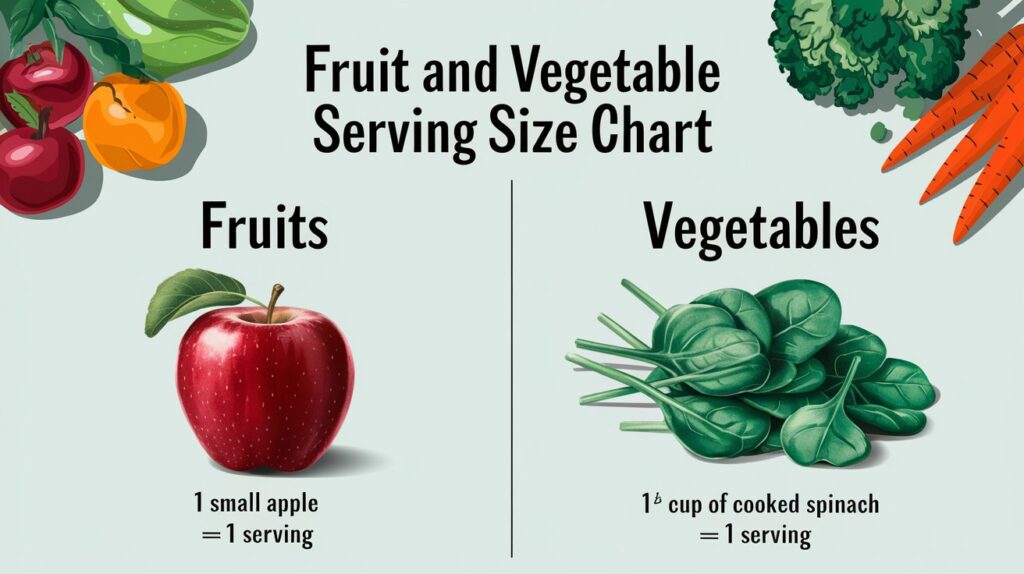
Children And Teens: Growing Needs
Children and teens are in a stage of rapid growth. Their bodies need more nutrients to support this development. Fruits and vegetables play a crucial role in their diet.
- Children (Ages 2-5): 1-2 cups per day
- Kids (Ages 6-12): 1.5-2.5 cups per day
- Teens (Ages 13-18): 2-3 cups per day
Active children and teens need more servings. Physical activities increase their nutritional requirements. Encourage them to try a variety of fruits and veggies.
Adults And Seniors: Adjusting For Metabolism
Adults and seniors experience changes in metabolism. These changes affect their dietary needs. Serving sizes for fruits and vegetables should reflect these shifts.
| Age Group | Recommended Servings |
| Adults (Ages 19-50) | 2-3 cups per day |
| Seniors (Ages 51+) | 1.5-2.5 cups per day |
Regular physical activity can boost metabolism. Active adults should aim for higher servings. Seniors benefit from fiber-rich fruits and vegetables.
Focus on leafy greens, berries, and citrus fruits. These options are nutrient-dense and support overall health.
Impact Of Cooking On Serving Sizes
Cooking fruits and vegetables changes their serving sizes. Heat affects volume and nutrient density. Understanding these changes helps in meal planning.
How Heat Changes Volume And Nutrient Density
Cooking can reduce the volume of fruits and vegetables. This means you might eat less than you think.
- Steaming and boiling can shrink veggies.
- Roasting may create a crispy texture but reduces moisture.
Nutrient density also changes with cooking. Some nutrients may be lost, while others become more available.
| Cooking Method | Effect on Volume | Nutrient Change |
| Boiling | Reduces volume | Some nutrients leach into water |
| Steaming | Minimally reduces volume | Retains most nutrients |
| Roasting | Can reduce volume | Enhances flavors, some nutrients may be lost |
| Microwaving | Minimal volume change | Preserves most nutrients |
Cooking Methods And Their Effects On Portioning
Different cooking methods affect how much you eat. Understanding these effects can help with portion sizes.
- Boiling: Often leads to smaller servings.
- Steaming: Keeps portions closer to raw size.
- Roasting: May decrease volume but enhance taste.
- Microwaving: Retains size and nutrients.
Consider these effects when planning meals. Adjust serving sizes based on cooking methods.
Practical Tips For Measuring Servings
Measuring servings of fruits and vegetables helps maintain a healthy diet. Knowing serving sizes can improve nutrition. Here are some practical tips to measure portions easily.
Using Kitchen Tools For Accurate Portions
Kitchen tools make measuring servings simple. Here are some tools to help:
- Measuring Cups: Use these for liquids and chopped fruits.
- Kitchen Scale: Weigh whole fruits and vegetables for precision.
- Food Portioning Plates: These plates have sections for different food types.
Keep in mind these common serving sizes:
| Food Item | Serving Size |
| Raw Vegetables | 1 cup |
| Cooked Vegetables | 1/2 cup |
| Fresh Fruits | 1 medium-sized fruit |
| Dried Fruits | 1/4 cup |
When Eating Out: Strategies To Estimate Servings
Estimating servings while dining out can be tricky. Use these strategies for better accuracy:
- Visual Comparison: Compare portions to your hand size.
- Share Plates: Split meals with friends to control portions.
- Ask for Half Portions: Many restaurants offer this option.
Remember, a healthy plate should include:
- Half filled with fruits and vegetables
- One-quarter with whole grains
- One-quarter with lean protein
Using these tips makes it easier to enjoy a balanced diet.
Integrating Servings Into Meal Planning
Understanding serving sizes helps create healthy meals. This knowledge makes meal planning easier. It ensures you eat the right amount of fruits and vegetables.
Creating Balanced Meal Plans
Balanced meal plans include a variety of fruits and vegetables. Each meal should aim for:
- One serving of fruit
- Two servings of vegetables
Here’s a simple example of a daily meal plan:
| Meal | Fruit Servings | Vegetable Servings |
| Breakfast | 1 serving of berries | 0 servings |
| Lunch | 1 serving of apple | 2 servings of mixed greens |
| Dinner | 0 servings | 2 servings of broccoli |
This plan totals:
- 2 servings of fruit
- 4 servings of vegetables
Shopping Lists Based On Serving Sizes
Creating a shopping list based on serving sizes is essential. Start with your meal plan. Choose fruits and vegetables that fit your needs.
- List fruits:
- Apples
- Berries
- Bananas
- List vegetables:
- Carrots
- Broccoli
- Spinach
Check the serving sizes for each item. This helps you buy the right amounts.
Credit: www.flickr.com
Frequently Asked Questions
What Is The Correct Serving Size Of Fruits And Vegetables?
The recommended serving size for fruits and vegetables is about 2-3 cups daily. Aim for half your plate to be filled with these foods. This ensures a balanced diet rich in vitamins and minerals, promoting overall health. Adjust portions based on individual needs and activity levels.
How Much Is 5 Servings Of Fruits And Vegetables A Day?
Five servings of fruits and vegetables daily typically equals about 2. 5 cups. Aim for a variety of colors and types for maximum nutrients. Incorporating this amount can enhance health and well-being. Simple ways include adding fruits to breakfast and veggies to lunch or dinner.
How Much Is A Serve Of Fruit Or Vegetables?
A serving of fruit is about one medium piece or one cup of chopped fruit. For vegetables, a serving equals one cup of raw or half a cup of cooked vegetables. These portions help ensure you meet daily nutritional needs.
Aim for variety to maximize health benefits.
How Do You Eat 5 Servings Of Fruits And Vegetables?
Eat fruits and vegetables at every meal. Start breakfast with a smoothie or fruit. Snack on carrots or apple slices. Add a side salad to lunch. Include steamed veggies at dinner. Keep fruit visible for easy snacking. Aim for variety to make it enjoyable and nutritious.
Conclusion
Understanding fruit and vegetable serving sizes helps you maintain a balanced diet. Referencing our chart can simplify meal planning. Remember, incorporating a variety of produce maximizes nutrients and flavor. Stay informed and make healthier choices for a vibrant lifestyle. Embrace these servings for better health and well-being.
