
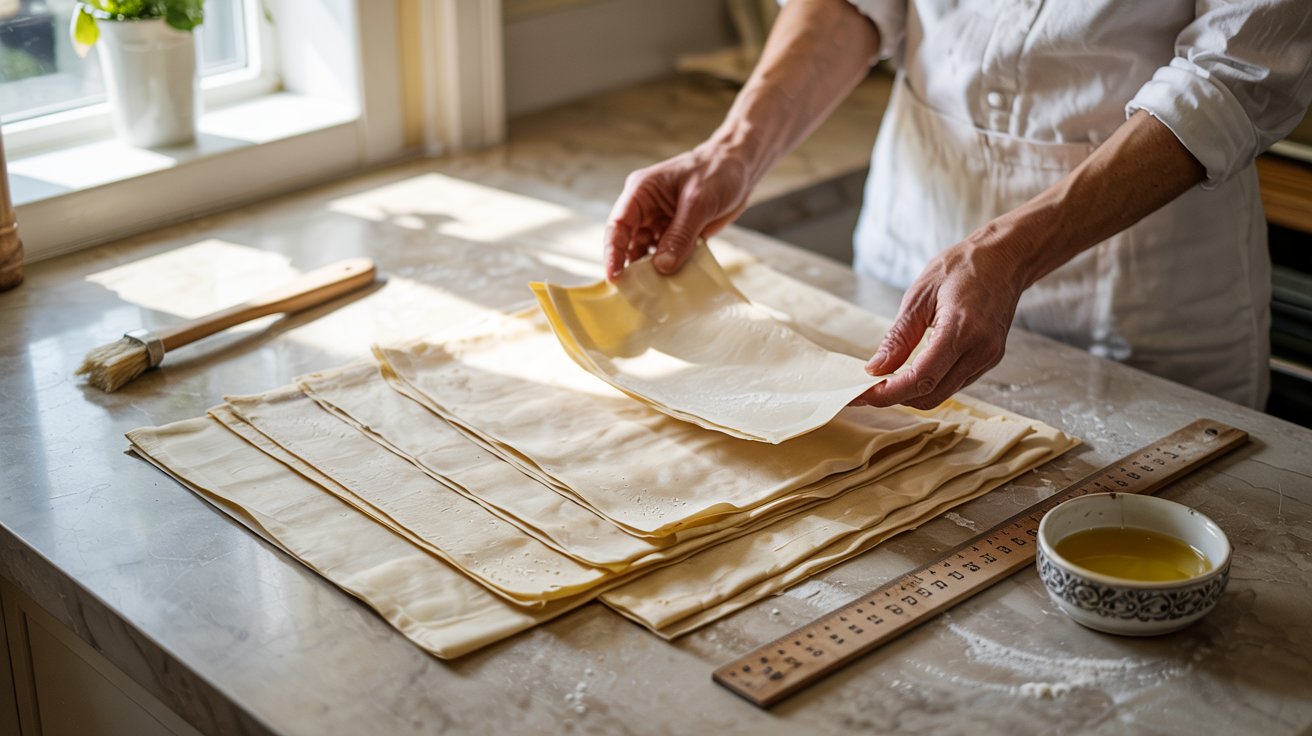
Are you struggling to find the right size of filo pastry for your recipes? Choosing the perfect filo pastry size can make a big difference in how your dishes turn out.
Whether you’re making delicate baklava or crispy spanakopita, knowing the exact dimensions helps you save time and avoid waste. In this guide, you’ll discover a simple filo pastry size chart that makes your cooking easier and more precise. Keep reading to master the art of working with filo pastry like a pro.
Filo Pastry Basics
Filo pastry is a thin, delicate dough used in many baked dishes. It has a unique texture that crisps up nicely. Understanding filo pastry basics helps in using it effectively. Knowing its size and common uses makes baking easier and more fun.
Filo sheets come in different sizes. This variety suits many recipes and baking needs. Handling filo requires care because it tears easily. Learning about filo pastry aids in better preparation and results.
What Is Filo Pastry
Filo pastry is a very thin dough sheet. It is made from flour, water, and a little oil. No yeast or rising agents are used. The dough is rolled until paper-thin. It bakes into a light, crispy texture.
Filo is traditional in Middle Eastern and Mediterranean cooking. It is sold frozen or fresh in stores. Each sheet is usually separated by a light dusting of flour. This stops the sheets from sticking together.
Common Uses In Baking
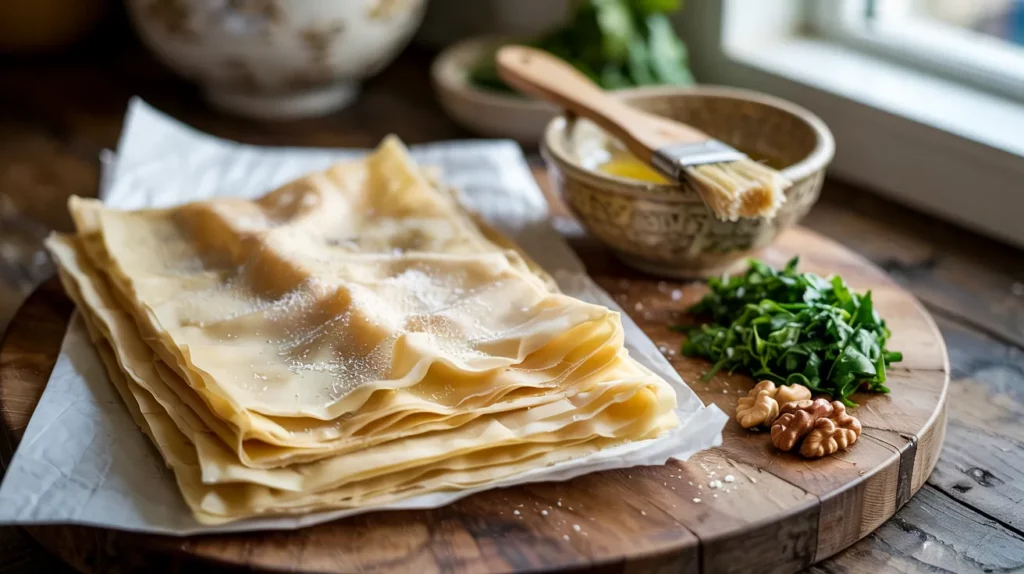
Filo pastry is popular in sweet and savory dishes. It forms layers that turn golden and crunchy when baked. It is often brushed with butter or oil before baking.
Baklava is a famous sweet made with filo layers and nuts. Spanakopita uses filo to wrap spinach and cheese. Filo is also used for crispy pies, tarts, and rolls.
Its light texture lets fillings shine through. Using filo can make simple ingredients taste special. It adds crispness and a delicate crunch to many recipes.
Standard Filo Pastry Sizes
Filo pastry comes in various sizes to fit different recipes. Knowing the standard filo pastry sizes helps in planning your cooking. It ensures you buy the right amount and avoid waste. This section explains the typical dimensions and thickness variations.
? Filo Pastry Size Chart
| Filo Pastry Sheet Size | Thickness Range | Best Use | Notes |
|---|---|---|---|
| 9×14 inch sheets | 0.2–0.4 mm | Mini baklava, small pies, rolls | Very common in supermarkets |
| 12×18 inch sheets | 0.2–0.5 mm | Baklava trays, spanakopita, savory pies | Most versatile for home baking |
| 16×24 inch sheets | 0.3–0.5 mm | Large family-sized trays, catering recipes | Usually found in specialty stores |
| Small pre-cut squares (4–6 inches) | Thin | Appetizers, mini tarts, pastry cups | Saves time and reduces waste |
| Round filo sheets (10–12 inches) | Thin | Middle Eastern desserts, layered round pies | Less common but great for round pans |
Typical Dimensions
Standard filo pastry sheets usually measure 12 by 18 inches. Some brands offer smaller sizes, like 9 by 14 inches. Larger sheets of 16 by 24 inches are also available. These sizes suit different dishes and baking pans. Most recipes work best with 12 by 18 inch sheets.
Sheet Thickness Variations
Filo pastry sheets vary in thickness from brand to brand. Thin sheets are about 0.2 millimeters thick. Thicker sheets can be around 0.4 millimeters. Thinner sheets create crispier layers in pastries. Thicker sheets hold fillings better and are easier to handle.
Choosing The Right Size
Choosing the right filo pastry size affects the final dish’s look and taste. Using the correct size helps the pastry cook evenly. It also prevents waste and saves time. Knowing how to pick the right size makes your cooking easier and better.
Understanding sizes lets you match the pastry to your recipe needs. It also helps when adjusting to different pan shapes and sizes. Getting this right improves your results every time.
Recipes And Size Matching
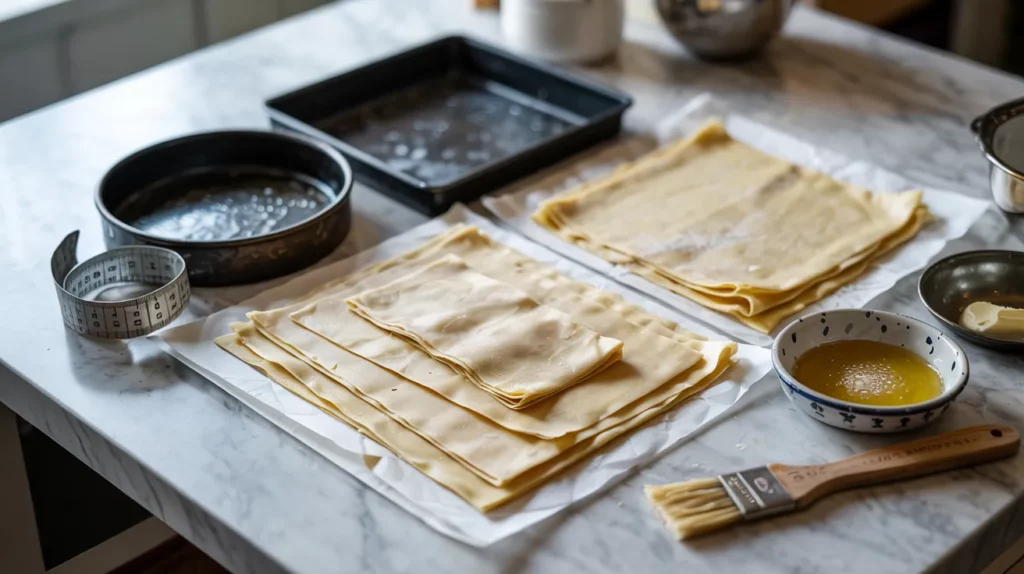
Different recipes need different filo sizes. Small sheets work well for bite-sized snacks. Large sheets suit layered dishes like baklava. Check your recipe to know the exact size needed. Using the right size keeps the layers even and neat.
Some recipes call for cutting filo sheets. This helps fit the pastry perfectly. Always measure before cutting to avoid mistakes. Matching size to recipe makes cooking smoother and more fun.
Adjusting For Pan Dimensions
Pans come in many shapes and sizes. Round, square, or rectangular pans need different filo sizes. Measure your pan before starting. Cut the filo to fit the pan’s shape and size exactly. This prevents overhanging or gaps in your pastry.
Make sure filo covers the pan evenly. Fold or trim excess sheets carefully. Proper adjustment stops burning or uneven cooking. It also gives your dish a clean, professional look.
Cutting And Handling Tips
Handling filo pastry requires care and attention. Its thin layers can tear easily. Cutting and handling tips help keep sheets intact and ready to use. Follow simple steps to measure, cut, and protect the dough.
Measuring And Cutting Sheets
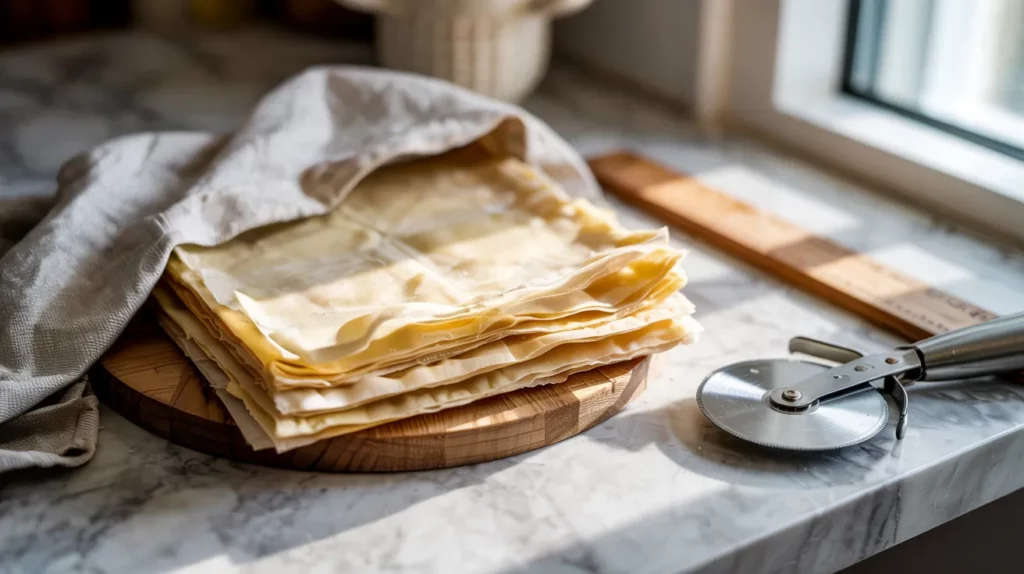
Use a sharp knife or pizza cutter for clean cuts. Measure the pastry sheets with a ruler or tape. Cut straight lines to avoid uneven edges. Work on a flat, clean surface. Cut the sheets to fit your recipe size. Keep leftover pieces covered to prevent drying.
Preventing Drying And Tearing
Filo dries out quickly when exposed to air. Cover sheets with a damp cloth while working. Avoid stacking too many sheets at once. Handle sheets gently to stop tearing. Use light hands when separating layers. Keep unused sheets wrapped in plastic wrap or foil.
Storage And Shelf Life
Filo pastry is delicate and needs proper care to keep fresh. Correct storage keeps its texture and taste. Understanding how to store and the shelf life helps avoid waste. It also ensures the pastry stays safe to eat.
Storing Fresh Filo Pastry
Keep fresh filo pastry in its original packaging. Wrap it tightly with plastic wrap to stop air exposure. Store it in the refrigerator at a temperature below 40°F (4°C). Use fresh filo within 2 to 3 days. Avoid moisture as it makes the pastry soggy and fragile.
Freezing Guidelines
Filo pastry freezes well for longer storage. Wrap it in plastic wrap and then place it in a freezer bag. Remove as much air as possible to prevent freezer burn. Label the package with the date before freezing. Use frozen filo within 2 months for best quality. Thaw it slowly in the refrigerator before use. Do not refreeze once thawed to keep texture intact.
Troubleshooting Common Issues
Filo pastry is thin and delicate, which can lead to common problems during use. Understanding how to handle these issues helps keep your pastry perfect. Small fixes can make a big difference in your final dish.
Dealing With Tears And Breaks
Tears happen easily because filo is very thin. Use a soft brush to apply oil or butter gently. This keeps the layers flexible and less likely to break. Work carefully and avoid pulling the sheets too hard. If a tear appears, patch it with a small piece of filo. Press it down lightly and add some butter to help it stick together.
Avoiding Overly Thick Layers
Too thick layers stop filo from baking evenly. Use the right size sheet from the filo pastry size chart. Brush each layer lightly with butter or oil to keep them separate. Avoid stacking too many sheets at once. Thin layers bake crisp and golden, giving the best texture. Remember, less is more with filo pastry layers.
Frequently Asked Questions
What Are The Common Filo Pastry Sheet Sizes?
Filo pastry sheets usually come in 9×14 inches or 12×18 inches. Thickness varies from 0. 2mm to 0. 5mm. These sizes suit different recipes like baklava or spanakopita.
How To Choose Filo Pastry Size For Recipes?
Choose filo size based on your dish’s pan dimensions. Larger sheets are ideal for bigger trays. Smaller sheets work well for individual servings or layered pastries.
Can Filo Pastry Sheets Be Cut To Size?
Yes, filo sheets can be easily trimmed with scissors or a knife. Cutting helps fit the pastry to your dish perfectly and reduces waste.
What Thickness Is Ideal For Filo Pastry?
Typical filo thickness ranges between 0. 2mm and 0. 5mm. Thinner sheets create crisp layers, while thicker ones offer more structure and sturdiness.
Conclusion
Knowing the right filo pastry size saves time and avoids waste. It helps you pick the perfect sheet for each recipe. With this chart, you can measure easily and cook confidently. Baking becomes smoother and results taste better. Use the sizes to plan your dishes well.
Keep this guide handy for your next cooking day. Simple steps lead to great meals every time. Enjoy your baking journey with clear, easy information.
