
Are you looking to make perfect fettuccine noodles without using eggs? Whether you’re cooking for dietary reasons or simply want a lighter pasta option, getting the right noodle size can be tricky.
Your fettuccine’s thickness and width affect how it cooks and tastes. In this guide, you’ll find an easy-to-follow size chart that helps you create ideal egg-free fettuccine every time. Keep reading to discover the simple secrets to mastering your homemade noodles and impressing everyone at your table.
Fettuccine Noodles Basics
Fettuccine noodles are a classic pasta type. They are flat and thick, perfect for holding sauces. Eggless fettuccine noodles offer a great alternative for those avoiding eggs. Understanding the basics helps in making or choosing the right eggless pasta.
Eggless fettuccine noodles use different ingredients and have unique textures. Knowing these differences can improve your cooking and eating experience.
Key Ingredients For Eggless Dough
Eggless dough mainly uses flour and water. Some recipes add a bit of oil for smoothness. Salt enhances the flavor without eggs. Sometimes, semolina flour is included for better texture. These ingredients create a simple and flexible dough.
Texture And Flavor Differences
Eggless fettuccine feels slightly firmer than egg pasta. It cooks a bit longer but holds its shape well. The flavor is milder and less rich. This makes it perfect for bold sauces. Eggless noodles offer a clean, neutral taste that suits many dishes.
Noodle Size Variations
Noodle size varies a lot in fettuccine noodles without egg. Size affects cooking time and texture. It also changes how the noodles hold sauces. Knowing these differences helps in choosing the right noodle for each dish.
Understanding noodle size variations makes cooking easier and more fun. It helps create dishes that taste just right.
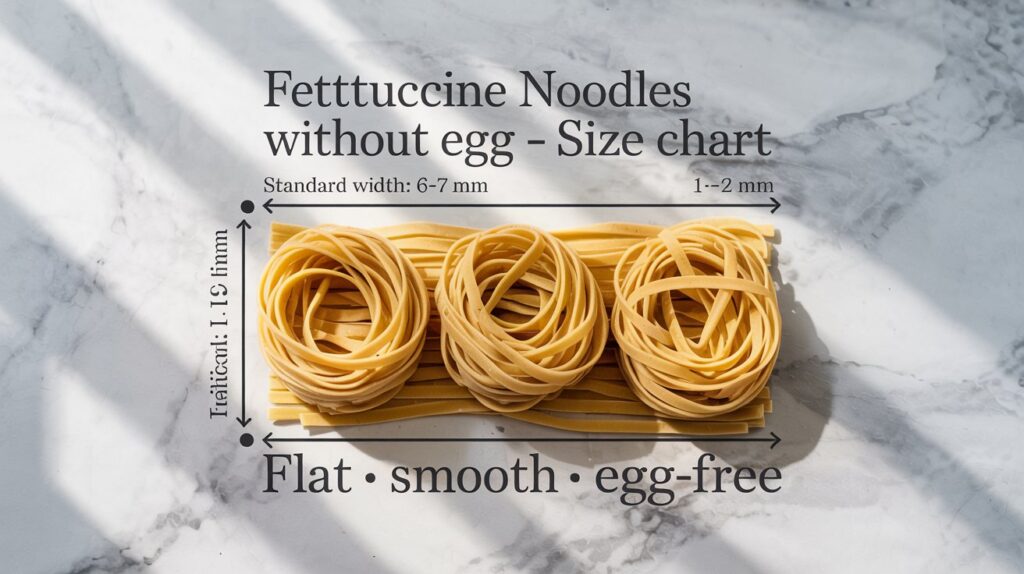
? Fettuccine Noodles Without Egg – Size Chart
| Fettuccine Size | Width (Approx.) | Thickness | Cooking Time | Best Uses |
|---|---|---|---|---|
| Thin Fettuccine | 5–6 mm | 1 mm | 6–8 min | Light sauces, oil-based dishes |
| Standard Fettuccine | 6–7 mm | 1.5 mm | 8–10 min | Creamy sauces, everyday meals |
| Wide Fettuccine | 7–9 mm | 2 mm | 10–12 min | Thick sauces, hearty dishes |
| Fresh Eggless Fettuccine | 6–8 mm | Soft | 3–5 min | Butter, cheese, herb sauces |
Note: Eggless fettuccine is slightly firmer than egg pasta and pairs best with bold or creamy sauces.
Standard Widths For Fettuccine
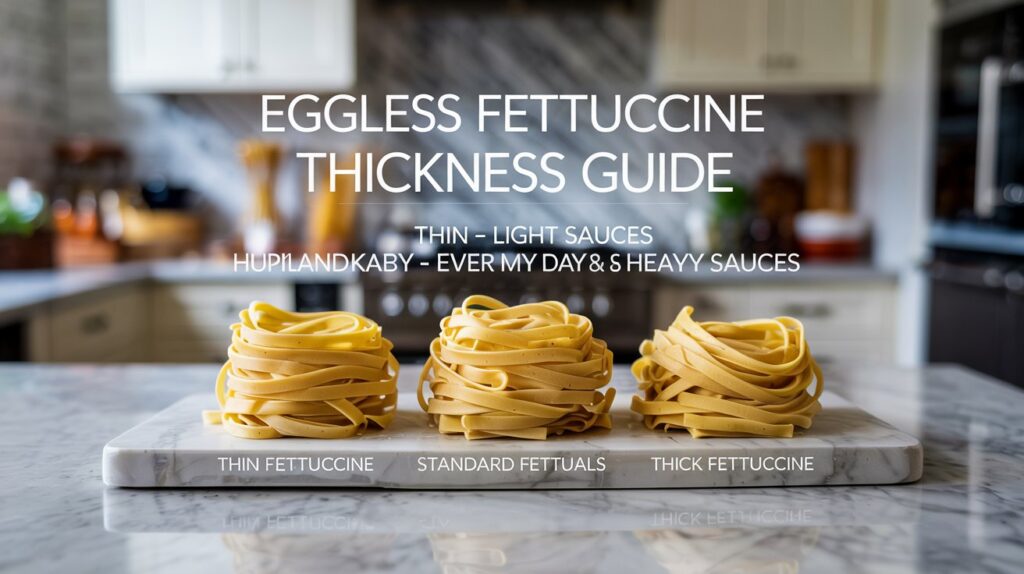
Fettuccine noodles usually measure between 6 to 8 millimeters wide. This width is perfect for holding creamy or thick sauces. Some brands offer thinner or wider options. Thin noodles cook faster but can be fragile. Wider noodles are chewy and great for heavy sauces.
Thickness Options
Thickness affects texture and cooking time. Thicker noodles take longer to cook and feel firmer. Thin noodles cook quickly and feel soft. Most egg-free fettuccine is about 1 to 2 millimeters thick. Choosing the right thickness depends on your recipe and preference.
Length Considerations
Fettuccine length varies from 20 to 30 centimeters. Longer noodles look nice on the plate. Shorter noodles are easier to eat. Length does not affect cooking time much. It is mainly about presentation and ease of use.
Measuring And Cutting Tips
Measuring and cutting fettuccine noodles without egg requires care. Proper sizing helps cook the noodles evenly and improves texture. This section offers tips on measuring and cutting for perfect fettuccine every time.
Tools For Accurate Sizing
Use a ruler or measuring tape to get exact noodle width. A sharp knife or pizza cutter works well for clean cuts. A pasta board can help keep strips straight. These tools ensure uniform noodles that cook evenly.
Hand-cutting Techniques
Roll dough into a thin, even sheet before cutting. Fold the sheet gently but not too tight. Slice with smooth, steady strokes to keep edges clean. Cut noodles about 1/4 inch wide for classic fettuccine size. Avoid uneven widths to prevent uneven cooking.
Using A Pasta Machine
Set the pasta machine to the right thickness first. Feed the dough through several times for smooth texture. Use the fettuccine cutter attachment for perfect strips. Keep the dough slightly floured to avoid sticking. Cut strips evenly for consistent cooking.
Adjusting Sizes For Recipes
Adjusting the size of fettuccine noodles without egg is important for many recipes. Different sizes affect cooking time and portion amounts. Understanding how to change sizes helps keep your dish balanced. It also ensures the noodles cook just right. This section explains how to adjust noodle sizes for better results.
Portion Control Guidelines
Portion control helps serve the right amount of noodles per person. Smaller noodles fill the plate faster. Larger noodles take up more space. For a typical meal, use about 2 ounces of dry noodles per person. Adjust the amount based on appetite and other dishes served. Measure noodles by weight for best accuracy. This keeps servings consistent and avoids waste.
Cooking Time Based On Size
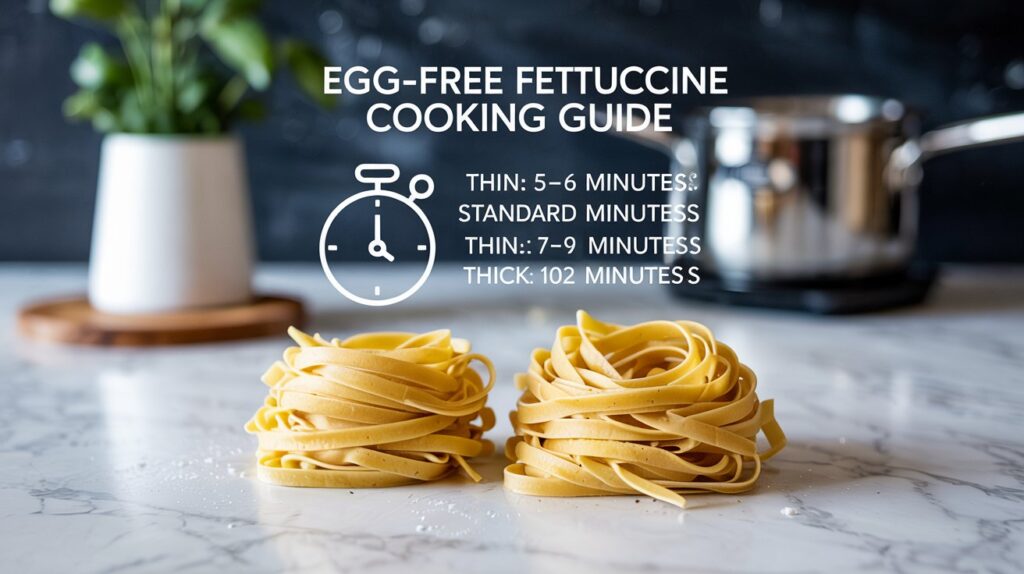
Cooking time changes with noodle size. Thin fettuccine cooks faster than thick ones. Smaller pieces need less time in boiling water. Larger or thicker noodles take longer to become soft. Check noodles a minute before the recommended time. Taste test to find the perfect texture. Proper cooking time prevents mushy or hard noodles.
Storing And Handling Tips
Storing and handling eggless fettuccine noodles correctly keeps them fresh and tasty. Proper care helps maintain their texture and flavor. This section explains how to dry, freeze, and thaw eggless fettuccine for best results.
Drying Eggless Fettuccine
Dry eggless fettuccine on a clean, flat surface or a drying rack. Spread noodles evenly to avoid clumping. Let them dry for at least 12 hours in a cool, dry place. Avoid direct sunlight to prevent noodles from becoming brittle. Proper drying extends shelf life and prevents mold.
Freezing And Thawing
Place fresh eggless fettuccine in airtight containers or freezer bags. Remove as much air as possible to stop freezer burn. Freeze noodles for up to two months. To thaw, move noodles to the refrigerator for several hours. Cook them directly from frozen if needed, adding a minute or two to cooking time.
Common Mistakes To Avoid
Making fettuccine noodles without egg can be simple with the right steps. Still, many make small mistakes that affect the texture and taste. Avoiding these common errors helps you get perfect noodles every time.
Overworking The Dough
Kneading dough too much makes it tough and hard to roll. The dough loses its softness and becomes difficult to shape. Stop kneading once the dough feels smooth and elastic. Rest the dough before rolling to relax the gluten.
Incorrect Thickness
Rolling dough too thick or too thin can spoil the noodles. Thick noodles take longer to cook and may be chewy. Thin noodles break easily and cook too fast. Use a size chart to cut noodles evenly and keep thickness consistent.
Improper Storage
Storing fresh noodles without care causes them to dry out or stick together. Keep noodles in an airtight container or dust them with flour. For longer storage, freeze noodles on a tray before placing them in bags. Proper storage maintains freshness and texture.
Creative Serving Suggestions
Creative serving suggestions make your fettuccine noodles without egg more enjoyable. They help you use the noodles in tasty and fun ways. These ideas also guide you to match sauces and use leftovers smartly. Discover how to serve your noodles with style and flavor.
Pairing Sauces With Size
Choose sauce thickness based on noodle size. Thin noodles suit light sauces like lemon butter or garlic oil. Thick noodles hold rich sauces like Alfredo or tomato cream better. Medium noodles work well with pesto or marinara. Matching sauce and noodle size improves taste and texture. It also makes your meal balanced and delicious.
Alternative Uses For Leftovers
Leftover fettuccine noodles have many uses. Turn them into a noodle soup by adding broth and vegetables. Use cold noodles in a salad with fresh herbs and olive oil. Stir-fry leftovers with veggies and soy sauce for a quick meal. Bake noodles with cheese and sauce for a simple casserole. These ideas reduce waste and bring variety to your meals.
Frequently Asked Questions
What Is The Ideal Thickness For Eggless Fettuccine Noodles?
The ideal thickness for eggless fettuccine noodles is around 1. 5 to 2 millimeters. This thickness ensures they cook evenly and have a perfect texture. Thicker noodles may take longer to cook, while thinner ones can become too soft quickly.
How To Measure Fettuccine Noodle Size Without Egg?
Use a ruler or caliper to measure the width and thickness of the noodles. Typically, eggless fettuccine noodles are about 6 to 7 millimeters wide. Measuring helps maintain consistency in cooking and presentation.
Can I Use Alternative Flours For Eggless Fettuccine?
Yes, you can use alternative flours like rice, chickpea, or gluten-free blends. These flours affect noodle texture and size, so adjustments in thickness may be needed. Experimentation helps achieve the best results for eggless pasta.
How Does Noodle Size Affect Cooking Time?
Thicker fettuccine noodles take longer to cook, while thinner ones cook faster. Proper noodle size ensures even cooking and prevents mushy or undercooked pasta. Adjust boiling time based on the measured thickness of your eggless noodles.
Conclusion
Fettuccine noodles without egg come in many sizes. Knowing the right size helps with cooking and recipes. Use the size chart to choose what fits your dish. This makes cooking easier and more fun. Enjoy your meal with perfect noodles every time.
Simple tips like these improve your cooking skills. Keep trying different sizes to see what you like best. Cooking pasta can be easy and tasty for everyone.
