
Are you struggling to get the perfect fettuccine noodles every time you cook? One key factor you might be overlooking is the size of the eggs you use in your dough.
Believe it or not, the egg size can change the texture and consistency of your noodles dramatically. You’ll discover a simple egg size chart designed specifically for fettuccine noodles. By understanding this, you’ll be able to create pasta that’s just right—never too dry or too sticky.
Keep reading to unlock the secret to making flawless fettuccine noodles that will impress everyone at your table.
Fettuccine Basics
Fettuccine is a type of pasta known for its flat, thick shape. It has a smooth texture and holds sauce well. This pasta is common in Italian cooking and loved worldwide. Understanding fettuccine helps in choosing the right size for recipes. The egg content affects its texture and color. This makes the egg size chart useful for cooks and chefs.
Origins And Popularity
Fettuccine originated in Italy, mainly in Rome and Tuscany. It dates back to the Renaissance era. The name means “little ribbons” in Italian. This pasta became popular for its ability to hold rich sauces. It spread across the world with Italian immigrants. Today, fettuccine is a staple in many kitchens globally.
Common Uses In Dishes
Fettuccine pairs well with creamy and thick sauces. It is often served with Alfredo or Bolognese sauce. It also works well in soups and pasta salads. Chefs use it for dishes requiring firm, wide noodles. Fettuccine’s shape makes it versatile for many recipes.
Egg Sizes And Pasta Dough
Egg size plays a key role in making pasta dough, especially for fettuccine noodles. Different egg sizes affect the dough’s moisture and texture. Understanding egg sizes helps achieve the perfect pasta dough consistency. This guide explains egg types, their impact on dough, and how to adjust recipes.
? Fettuccine Noodles – Egg Size Chart
| Egg Size | Avg. Egg Weight | Flour Needed (Approx.) | Dough Result | Best Use |
|---|---|---|---|---|
| Small | ~38 g | 90–95 g flour | Firm, slightly dry | Thicker fettuccine, rustic texture |
| Medium | ~44 g | 95–100 g flour | Balanced, workable | Home-style fresh pasta |
| Large (Ideal) | ~50 g | 100 g flour | Smooth, elastic | Classic fettuccine noodles |
| Extra-Large | ~56 g | 105–110 g flour | Soft, moist | Thin-rolled or machine pasta |
| Jumbo | ~63 g | 110–115 g flour | Very soft, sticky | Only with added flour control |
Types Of Egg Sizes
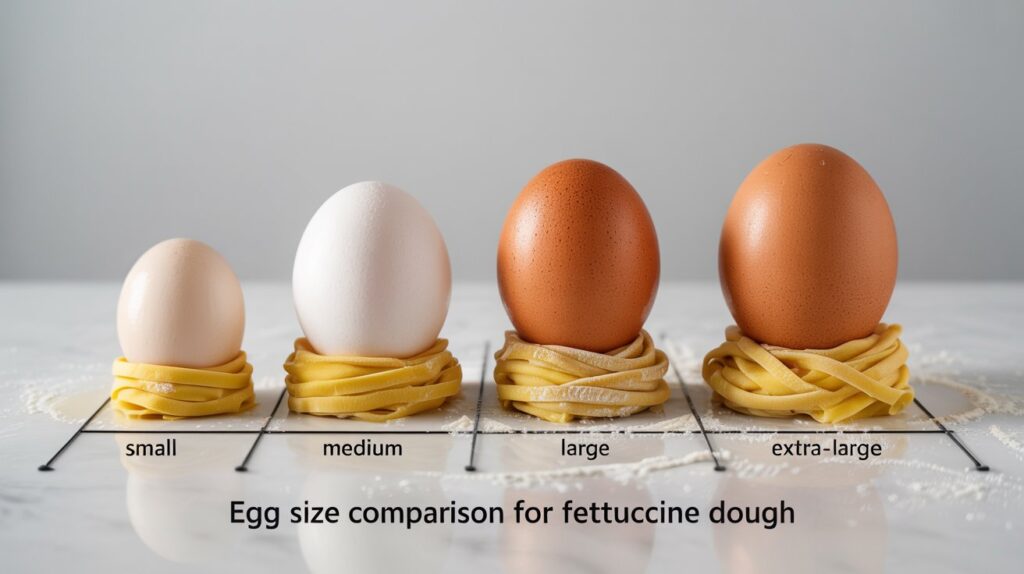
Eggs come in several sizes: small, medium, large, and extra-large. Most pasta recipes use large eggs. Large eggs weigh about 50 grams each. The size changes the amount of liquid and fat in the dough. Using smaller or larger eggs needs recipe changes.
Impact On Dough Texture
The egg size affects dough texture. Bigger eggs add more moisture. This makes the dough softer and easier to work with. Smaller eggs can make the dough dry and crumbly. Proper moisture helps stretch and roll the pasta without breaking.
Adjusting Recipes For Egg Size
Adjust egg quantity based on size for best results. Use one large egg for standard recipes. For small eggs, add an extra egg white or some water. For extra-large eggs, reduce liquid slightly. Measure ingredients carefully to keep dough balanced.
Fettuccine Noodle Size Guide
Understanding the size of fettuccine noodles helps in cooking and serving the perfect dish. The size affects texture, cooking time, and how sauce clings to noodles. This guide explains the key size aspects of fettuccine noodles and how egg size can change their dimensions.
Width And Thickness Variations
Fettuccine noodles usually range from 6 to 8 millimeters in width. Thickness can vary depending on the dough recipe and rolling method. Thicker noodles take longer to cook and feel chewier. Thinner noodles cook faster and feel lighter in the mouth.
Length And Portion Sizes
Fettuccine length varies from 20 to 30 centimeters per strand. Portion size often depends on the number of strands served. A typical serving uses about 100 grams of dried noodles or 150 grams of fresh noodles. Adjust portion sizes based on appetite and dish style.
How Egg Size Influences Noodle Dimensions
Egg size changes dough consistency and noodle thickness. Larger eggs add more moisture, making dough softer and easier to roll thin. Smaller eggs result in firmer dough and thicker noodles. Adjusting egg size helps achieve the desired noodle texture and size.
Measuring And Cutting Pasta
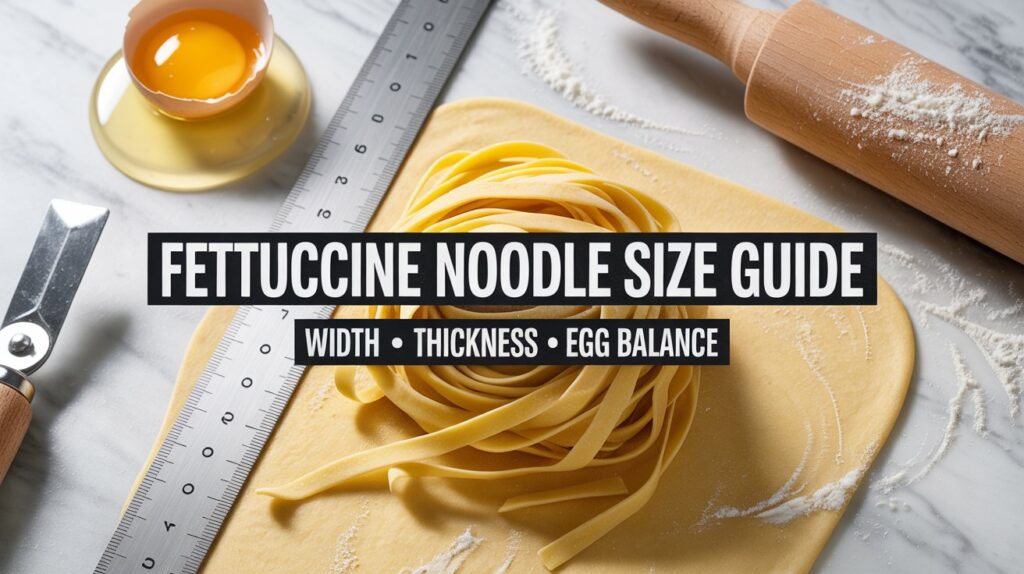
Measuring and cutting pasta is a key step in making perfect fettuccine noodles. The right size affects cooking time and texture. Precise cuts help noodles cook evenly and look neat on the plate. Careful measuring ensures each strand is the right width, matching your recipe or preference.
Tools For Accurate Sizing
Use a ruler or pasta measuring guide to mark dough thickness. A sharp knife or pasta cutter wheel works well for clean edges. Pasta machines often have guides for uniform width. These tools help keep noodle strips even and consistent.
Techniques For Consistent Cuts
Roll dough into a flat sheet before cutting. Fold the sheet lightly to make cutting easier. Cut slowly and steadily to avoid jagged edges. Keep your knife vertical for straight lines. Unfold strips carefully to keep noodles separate.
Tips For Homemade Fettuccine
Dust dough with flour to prevent sticking. Cut noodles about 1/4 inch wide for classic fettuccine. Keep cut noodles loosely piled to avoid clumping. Use fresh noodles soon after cutting for best taste. Practice makes cutting faster and more even.
Cooking And Serving Tips
Cooking and serving fettuccine noodles with egg can be simple and fun. Knowing the right cooking times, sauce choices, and presentation ideas helps make every dish delicious. These tips will guide you to cook perfect noodles and serve them attractively.
Optimal Cooking Times By Size
Fettuccine noodles vary in thickness and size. Thinner noodles cook faster, usually in 2 to 3 minutes. Thicker noodles need about 4 to 5 minutes. Check the noodles by tasting them. They should be soft but firm to bite. Avoid overcooking to keep good texture.
Sauce Pairing Recommendations
Light sauces work well with thin fettuccine noodles. Try olive oil, garlic, and fresh herbs. Creamy sauces fit thicker noodles perfectly. Alfredo or mushroom cream sauce are great choices. Tomato-based sauces add fresh flavor. Match sauce thickness to noodle size for balance.
Presentation Ideas
Serve fettuccine on wide, shallow plates for easy eating. Twirl noodles with a fork for neat servings. Garnish with fresh parsley or grated cheese. Add a lemon wedge or chili flakes for color. Small touches make the dish look inviting and tasty.
Troubleshooting Pasta Issues
Troubleshooting pasta issues helps you make perfect fettuccine noodles every time. Small mistakes can cause big problems with dough and noodle shape. Knowing how to fix these problems saves time and reduces waste. This guide covers common dough problems, uneven noodles, and egg size adjustments.
Common Problems With Dough
Dough can be too dry or too sticky. Dry dough cracks and breaks during rolling. Sticky dough sticks to the surface and is hard to handle. Use a little water to fix dry dough. Add a bit of flour to sticky dough. Knead the dough well until smooth and elastic. Rest the dough to relax gluten and make rolling easier.
Fixes For Uneven Noodles
Uneven noodles cook unevenly and look messy. Rolling dough unevenly causes this problem. Use a pasta machine to get uniform thickness. Roll dough slowly and fold it between passes. Cut noodles with a sharp knife or pasta cutter. Dust noodles lightly with flour to stop sticking. Spread noodles on a flat surface to dry slightly before cooking.
Adjustments For Different Egg Sizes
Egg size affects dough moisture and texture. Large eggs add more liquid than small eggs. Use the egg size chart to adjust flour amount. Add flour little by little until dough feels firm. For smaller eggs, add a splash of water if dough is dry. For larger eggs, add a bit more flour if dough is sticky. Always test dough by touch and adjust as needed.
Frequently Asked Questions
What Is The Ideal Egg Size For Fettuccine Noodles?
The ideal egg size for fettuccine noodles is large eggs. They provide the right moisture and texture for dough. Medium eggs may make dough dry, while extra-large eggs can make it too sticky.
How Does Egg Size Affect Fettuccine Dough Texture?
Egg size impacts dough moisture and elasticity. Larger eggs add more liquid, making dough softer and easier to roll. Smaller eggs need added water or flour adjustments to maintain the perfect texture for fettuccine.
Can I Substitute Egg Sizes In Fettuccine Recipes?
Yes, you can substitute egg sizes by adjusting liquid amounts. Use 3 medium eggs instead of 2 large eggs. Add flour or water gradually to achieve the right dough consistency.
Why Is Egg Size Important In Pasta Making?
Egg size controls dough hydration and structure. Proper egg sizing ensures smooth, elastic dough that holds shape when cooked. Incorrect egg size can lead to brittle or overly sticky noodles.
Conclusion
Fettuccine noodles and egg sizes go hand in hand. Knowing the right egg size helps make perfect dough. This chart guides you to choose eggs easily. It saves time and avoids mistakes in cooking. Simple steps lead to better pasta every time.
Enjoy making fettuccine with confidence and ease. Try the chart next time you cook pasta. Your dishes will taste fresher and look great. Keep this guide handy for future recipes. Cooking becomes fun when you have the right tools.
