
Imagine a cozy weeknight dinner that’s not only easy to whip up but also feels like a warm hug on a plate. Pasta shells, with their delightful shapes and perfect pockets for sauce, can turn a simple meal into a comforting feast that everyone will love. Get ready to dig in!
Here, you’ll find a comprehensive pasta shell size chart that includes cooking times, typical uses, and even substitutions to keep your dishes delicious and stress-free.
Pasta Shell Origins
Pasta shells, with their unique shape and versatility, hold a special place in Italian cuisine. Understanding their history and cultural significance enriches our appreciation for these delightful pasta types, setting the stage for their various sizes and uses in recipes.
Historical Background
- Ancient Beginnings: Pasta is believed to have originated in ancient civilizations, with its earliest forms being made from durum wheat. The creation of pasta shells likely came later as cooks sought to develop shapes that could hold ingredients, leading to the creation of stuffed pasta.
- Regional Variations: Different regions in Italy began to adopt and adapt pasta shapes. Shells, or “conchiglie,” became popular for their ability to trap sauces and fillings, making them a favorite for baked dishes and hearty sauces.
Cultural Importance
- A Family Tradition: Pasta shells are often featured in family gatherings and celebrations. Their ability to be filled with various ingredients like ricotta or meat makes them a staple for festive occasions.
- Symbol of Italian Cuisine: Shells represent the inventive spirit of Italian cooking, showcasing how simple ingredients can be transformed into comforting and satisfying meals that reflect the region’s heritage.
Pasta Shell Size Chart
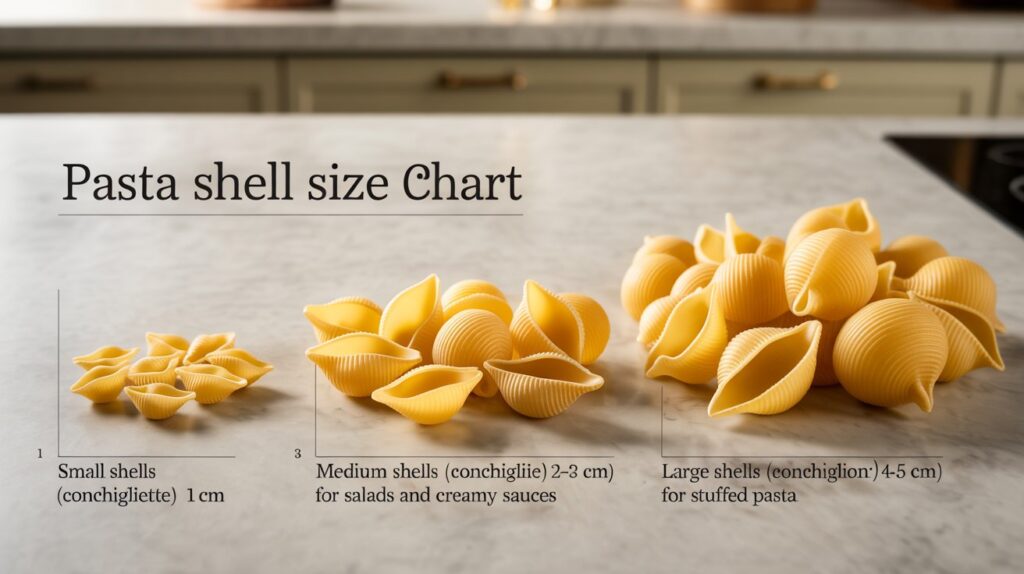
Understanding the various sizes of pasta shells is essential for selecting the right type for your dish. This section provides a visual guide and size comparisons that can help you choose the best shell for your recipe, ensuring optimal texture and flavor in your meals.
Images of Shells
Here are some common pasta shell sizes, along with their typical uses:
- Small Shells (Conchiglie Rigate): About 1 inch (2.5 cm) in diameter. Great for soups and salads.
- Medium Shells: About 1.5 inches (3.8 cm) in diameter. Perfect for stuffing with cheese or meat.
- Large Shells (Giant Conchiglie): About 2 inches (5 cm) in diameter. Ideal for baked dishes and fillings.
Size Comparisons
To give you a clearer idea of the differences in size, refer to the table below:
| Shell Type | Size | Diameter | Best Uses |
|---|---|---|---|
| Small shells | Conchigliette | ~1 cm (0.4 in) | soups |
| Medium shells | Conchiglie | ~2–3 cm (1 in) | salads, creamy sauces |
| Large shells | Conchiglioni | ~4–5 cm (2 in) | stuffed pasta |
Chef’s tip: When cooking pasta shells, always salt the water generously to enhance flavor. A good rule of thumb is 1 tablespoon of salt per 4 quarts of water.
Common Uses for Shells
This section highlights the various dishes typical for different sizes of pasta shells, along with ideal sauce pairings to enhance your meals. Understanding how to use each shell type effectively can elevate your cooking and ensure that every bite is packed with flavor.
Stuffed Pasta Ideas
- Jumbo Shells: Perfect for stuffing with ricotta, spinach, and marinara sauce. Bake at 350°F (175°C) for 25-30 minutes until bubbly.
- Conchiglie (Shells): These medium-sized shells are great for filling with a mixture of ground meat, cheese, and herbs. Cook in boiling water for 8-10 minutes until al dente.
- Small Shells: Ideal for casseroles or creamy pasta salads. Toss with your favorite ingredients and bake at 375°F (190°C) for 20 minutes, or serve cold.
Sauce Pairings
Choosing the right sauce can make or break your dish. Here are some classic pairings by shell size:
| Jumbo Shells | Marinara, Alfredo, or Bolognese |
| Conchiglie | Pesto, Tomato Basil, or Creamy Garlic |
| Small Shells | Cheese Sauce, Vinaigrette, or Light Cream Sauces |
Chef’s tip: When making stuffed shells, ensure your filling is well-seasoned to prevent blandness.
Cooking Times for Shells
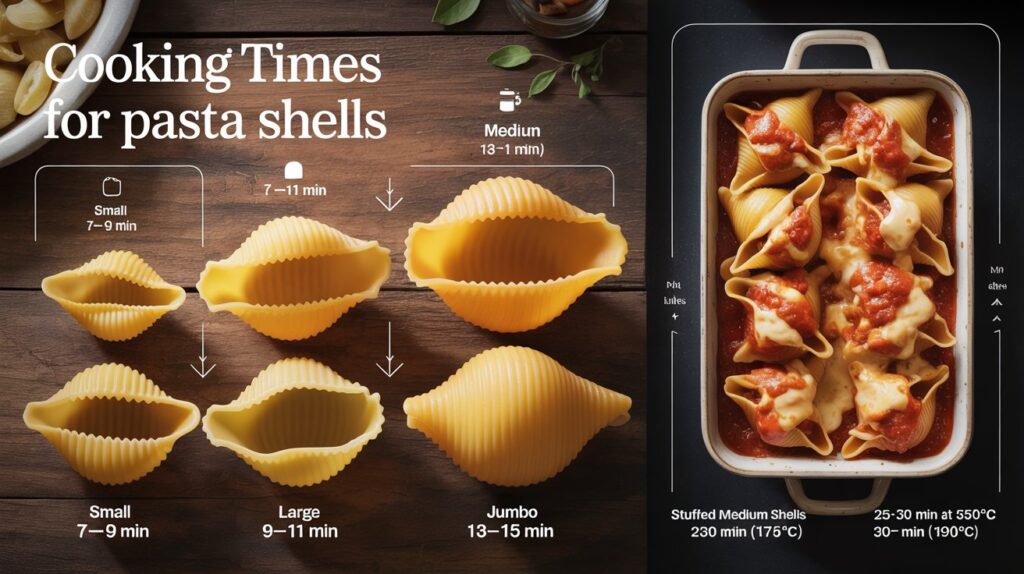
Understanding the cooking times for various pasta shells is essential for achieving the perfect texture in your dishes. Each type of shell has its own ideal cooking duration, whether you’re boiling or baking it. This section provides precise timings and tips to ensure your pasta turns out just right.
Boiling Times
Boiling pasta shells is a straightforward method, but timing is key to prevent overcooking. Here’s a quick reference for boiling different sizes:
| Shell Size | Cooking Time |
|---|---|
| Small shells | 7–9 minutes |
| Medium shells | 9–11 minutes |
| Large shells | 11–13 minutes |
| Jumbo shells | 13–15 minutes |
During boiling, each shell should feel al dente, firm to the bite but not crunchy. If you notice the shells becoming too soft, immediately drain them to avoid mushiness.
Baking Times
Baking pasta shells, especially when stuffed, requires a different approach. Here’s how long to bake them to achieve a bubbly, golden finish:
- Stuffed Medium Shells: Bake at 350°F (175°C) for 25-30 minutes.
- Stuffed Jumbo Shells: Bake at 375°F (190°C) for 30-35 minutes.
Chef’s tip: Cover the dish with foil for the first half of baking to retain moisture, then remove it for the last 10 minutes for a crispy top.
Look for a golden-brown top and bubbling sauce when your shells are done baking. Enjoy your perfectly cooked pasta shells!
Choosing the Right Shell
Selecting the right pasta shell can elevate your dish by enhancing both texture and flavor. Here, we’ll explore how to choose shells based on the sauce you plan to use and the overall dish you want to create.
Texture Considerations
- Large Shells (Conchiglie): These shells are perfect for holding thick, hearty sauces, such as a creamy Alfredo or a chunky marinara. Their ridged surface helps grip the sauce, ensuring each bite is flavorful.
- Medium Shells: A versatile choice, medium shells work well with a variety of sauces, from light olive oil dressings to tomato-based sauces. They provide a pleasant chewiness and can be stuffed with fillings, making them ideal for baked dishes.
- Small Shells (Ditalini): These tiny shells are best for lighter sauces or soups, as they add texture without overwhelming the dish. They’re perfect for a pasta e fagioli or a light pesto.
Flavor Pairings
- Tomato-based Sauces: Medium and large shells are great companions for tomato sauces. Their shape allows them to carry the robust flavors of the sauce, making every bite satisfying.
- Creamy Sauces: For rich sauces like Alfredo, opt for large shells. Their size and structure trap creamy goodness inside, providing a delightful burst of flavor with each forkful.
- Pesto or Oil-based Sauces: Smaller shells work wonderfully with these lighter coatings as they don’t overpower the delicate flavors. Their size allows for an even distribution of the sauce across the dish.
Substitutions for Shells
Sometimes the specific pasta shells you need might not be available, but don’t worry! There are various alternatives that can work just as well in your recipes. Understanding similar shapes and making appropriate cooking adjustments can help you maintain the integrity of your dish.
Similar Shapes
Here are some pasta shapes that can be substituted for traditional shells:
- Conchiglie (Conch Shells) – Slightly larger and more textured, these hold sauces well and can be used in baked dishes.
- Fagottini – Similar in size, these stuffed pasta shapes can be a delightful alternative.
- Pasta Orecchiette – Small, ear-shaped pasta that works well in salads and with thick sauces.
- Gemelli – Twisted pasta that can hold sauce nicely, great in creamy or chunky sauces.
Cooking Adjustments
When substituting pasta shapes, keep an eye on cooking times and water amounts:
Chef’s tip: Always taste the pasta a minute before the package’s suggested cooking time to ensure it’s al dente.
| Shells | 10-12 | 1 liter |
| Conchiglie | 11-13 | 1 liter |
| Fagottini | 8-10 | 1 liter |
| Orecchiette | 10-12 | 1 liter |
| Gemelli | 9-11 | 1 liter |
Always remember to adjust cooking times based on your selected shape to achieve the best texture. If the pasta seems to be cooking too fast or too slow, make adjustments as needed!
Storage Tips
Proper storage of pasta shells is essential to maintaining their freshness and flavor, whether they are dry or cooked. Here’s a practical guide to help you keep your pasta shells in optimal condition for your culinary creations.
- Dry Storage: Store dry pasta shells in an airtight container or a resealable plastic bag to prevent exposure to moisture. Ideally, keep them in a cool, dark place like a pantry or cupboard. If stored correctly, they can last for up to 2 years without losing quality.
- Cooked Storage: If you have leftover cooked pasta shells, allow them to cool completely before storing. Place them in an airtight container and refrigerate for up to 3-5 days. For longer storage, consider freezing them. Spread the shells in a single layer on a baking sheet, freeze until solid, then transfer to a freezer-safe bag for up to 3 months.
- Reheating Cooked Pasta Shells: When ready to enjoy your stored cooked shells, reheat them by boiling in water for 1-2 minutes or microwaving with a splash of water for about 1-2 minutes on medium power. This will revive their texture and flavor.
- Avoiding Common Mistakes: One common mistake is not allowing cooked pasta to cool down before storing; this can create steam and moisture in the container, leading to spoilage. Always ensure they are completely cool to maintain their quality.
Quick Summary
| Prep Time | Cook Time | Total Time | Servings |
|---|---|---|---|
| 10 minutes | 15 minutes | 25 minutes | 4 servings |
- Choose the right shell size: Use small shells for soups, medium for salads, and large for stuffed pasta dishes.
- Check cooking times: Follow package instructions for each size to ensure perfect texture.
- Use plenty of salted water: A rule of thumb is 1 tablespoon of salt per 4 quarts of water.
- Reserve pasta water: Save a cup before draining to adjust sauce consistency.
- Don’t rinse pasta: Rinsing removes starch, which helps sauces cling better.
Frequently Asked Questions
Can I make pasta shells ahead of time? How to store and reheat?
You can cook pasta shells ahead of time; just store them in an airtight container in the refrigerator for up to 3 days. To reheat, simply drop them in boiling water for about 30 seconds or microwave with a splash of water covered for 1-2 minutes.
What can I substitute for large pasta shells?
If you can’t find large pasta shells, you can use cannelloni or manicotti as alternatives, which have similar shapes and sizes. Just adjust the cooking time according to the package instructions.
How do I know when pasta shells are done cooking?
Pasta shells are done when they are al dente, meaning they should be tender but still have a slight bite to them, usually around 9-12 minutes depending on the brand. Taste a shell to check for doneness during cooking.
Can I freeze cooked pasta shells? How long do they last?
You can freeze cooked pasta shells in an airtight container for up to 2 months. For best results, layer them with parchment paper to prevent sticking.
What if I don’t have a large pot to boil pasta shells?
If you don’t have a large pot, you can use a deep skillet or a Dutch oven to boil the pasta, just ensure it has enough room for the shells to move freely. Remember to stir occasionally to prevent sticking.
