
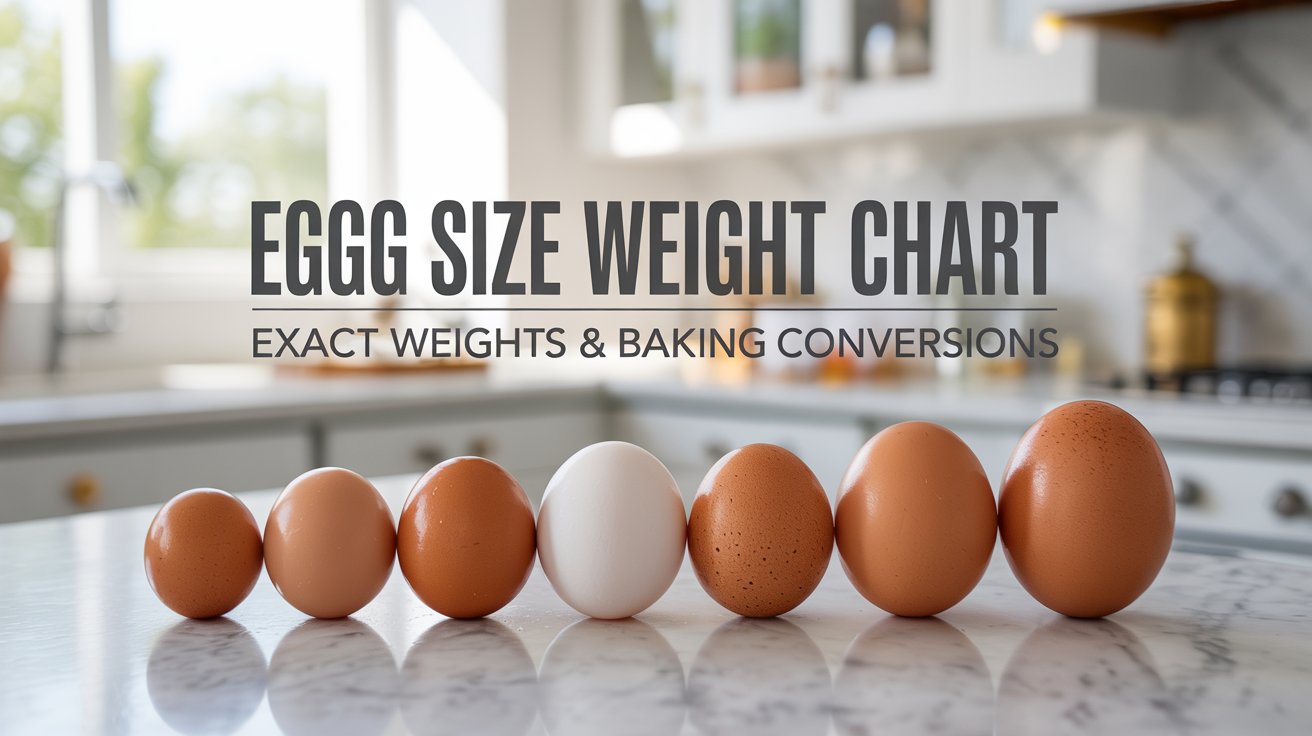
Eggs are the unsung heroes of the kitchen, bringing richness and flavor to everything from breakfast burritos to decadent cakes. Whether you’re whipping up a quick scramble or baking a fluffy soufflé, knowing the right egg size can be the difference between a dish that shines and one that flops.
With this comprehensive egg size weight chart, you’ll find exact weights for small, medium, large, extra-large, and jumbo eggs, as well as practical tips for substituting them in your recipes. Prepare to gain confidence in your baking with precise measurements!
Egg Size Categories
Understanding egg size categories is essential for any home cook, especially when it comes to baking and cooking where precise measurements matter. Different sizes can affect the outcomes of your recipes, and knowing their classifications helps you choose the right egg for your dish.
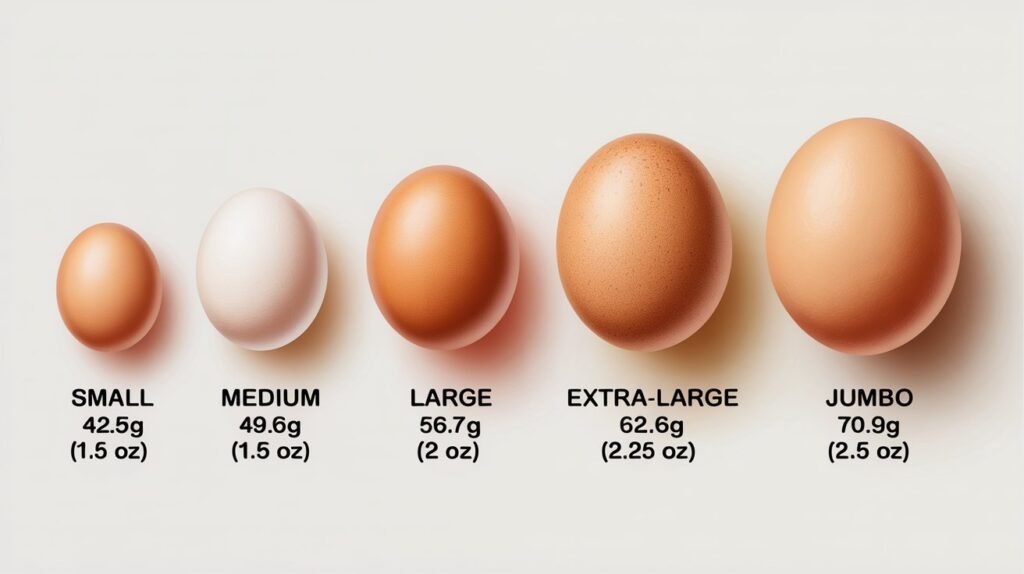
- Small: Weighs about 18 ounces per dozen (1.5 ounces or 42.5 grams per egg)
- Medium: Weighs about 21 ounces per dozen (1.75 ounces or 49.6 grams per egg)
- Large: Weighs about 24 ounces per dozen (2 ounces or 56.7 grams per egg)
- Extra-Large: Weighs about 27 ounces per dozen (2.25 ounces or 63.6 grams per egg)
- Jumbo: Weighs about 30 ounces per dozen (2.5 ounces or 70.9 grams per egg)
| Size | Weight Per Dozen | Avg Weight Per Egg | Grams (No Shell) |
|---|
| Small | 18 oz | 1.5 oz | ~38g |
| Medium | 21 oz | 1.75 oz | ~44g |
| Large | 24 oz | 2 oz | ~50g |
| Extra-Large | 27 oz | 2.25 oz | ~56g |
| Jumbo | 30 oz | 2.5 oz | ~63g |
Chef’s tip: If a recipe calls for large eggs and you only have medium or extra-large, you can substitute by using the equivalent weight. For example, two medium eggs can replace one large egg in most recipes.
Choosing the right egg size can make a significant difference, particularly in baking where precision is key. A small egg may not provide enough moisture or binding, while an extra-large may make a batter too runny. Always consider the size when planning your recipes!
Weight and Volume Chart
This section provides a detailed chart of egg sizes along with their corresponding weights and volume equivalents. Understanding these measurements is crucial, especially when baking, as the size of the egg can significantly impact the texture and structure of your baked goods.
| Small | 38 grams | 45 ml |
| Medium | 44 grams | 50 ml |
| Large | 50 grams | 60 ml |
| Extra-Large | 56 grams | 70 ml |
| Jumbo | 63 grams | 80 ml |
When substituting eggs, consider that:
- 1 large egg is equivalent to 2 small eggs.
- 1 extra-large egg can replace 1 large egg if necessary.
- Using a different size egg may alter the moisture content, so adjust other ingredients accordingly.
Chef’s tip: If a recipe calls for large eggs and you only have medium eggs, use an additional egg white to maintain the right volume.
Keep this chart handy for your baking needs, as the right egg size can be the key to your recipe’s success!
Impact on Baking
Understanding how egg sizes affect your baked goods is essential for achieving consistent results in your recipes. The size of the egg can influence binding, leavening, and moisture levels, ultimately affecting the texture and flavor of your dishes. Here’s how each aspect plays a critical role in baking.
- Binding: Eggs act as a binder in many recipes, helping to hold ingredients together. For example, in a cake batter, using a large egg (about 2 ounces or 56 grams) will provide the right amount of moisture and structure. If you substitute a smaller egg, such as a medium egg (about 1.75 ounces or 50 grams), you may find your cake crumbles easily because it lacks the proper binding agent.
- Leavening: The size of the egg also impacts how well your baked goods rise. Larger eggs contain more liquid, which can contribute to a lighter texture in items like soufflés or meringues. If a recipe calls for large eggs and you use extra-large (about 2.25 ounces or 64 grams), your mixture may become too runny, resulting in over-leavening and a collapsed final product.
- Moisture: Eggs add moisture to your recipes, which is especially important in baked goods like brownies or muffins. If you use a smaller egg in a recipe that requires a large egg, you might end up with a drier texture. Conversely, using a jumbo egg (about 2.5 ounces or 71 grams) can introduce excess moisture, leading to a soggy outcome.
Chef’s tip: Always weigh your eggs if you’re substituting sizes to maintain balance in your recipe!
Substituting Eggs
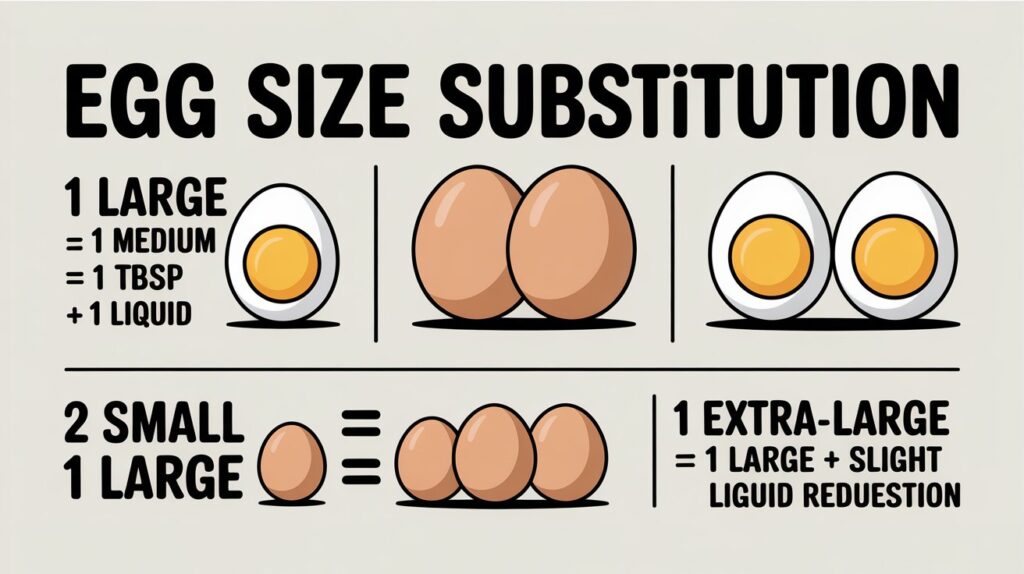
Understanding how to substitute different sizes of eggs is crucial for achieving the perfect consistency in your baking. Whether you only have medium eggs when your recipe calls for large or you’re looking for an egg substitute due to dietary restrictions, these tips will help you adjust without compromising your dish.
- Identify the size differences: Begin by referring to the egg size weight chart. For example, a large egg weighs approximately 2 ounces (56 grams), while a medium egg weighs about 1.75 ounces (50 grams). Keep this in mind to ensure you’re using the right volume for your recipe.
- Adjust the quantity: If you need to substitute one egg size for another, adjust the quantity accordingly. If a recipe calls for 2 large eggs (4 ounces or 112 grams), you can use 3 medium eggs (5.25 ounces or 150 grams) instead. Make sure to adjust any other liquid ingredients slightly to maintain the desired texture.
- Use egg substitutes wisely: If you’re looking to replace eggs due to allergies or dietary preferences, common substitutes include 1/4 cup unsweetened applesauce, 1/4 cup mashed banana, or 2 tablespoons of ground flaxseed mixed with 3 tablespoons of water. These options can add moisture and binding properties similar to eggs.
- Test the consistency: After substituting, pay attention to the batter’s consistency. It should be thick yet pourable. If it seems too dry, gently fold in a tablespoon of water or milk at a time until you achieve a smooth texture.
Pro Tips for Success
Understanding how to accurately measure eggs and adjust recipe ratios can significantly improve your baking results. Here are some expert tips to help you avoid common pitfalls when using the egg size weight chart.
- Measure accurately: Use a kitchen scale to weigh your eggs, especially when precise measurements are crucial for recipes like soufflés or meringues. A large egg typically weighs about 2 ounces (56 grams) without the shell, while a medium egg weighs around 1.75 ounces (50 grams). Always ensure you’re using the correct size for your recipe.
- Adjust recipe ratios: If you find yourself needing to substitute egg sizes, remember that one large egg can be replaced with one medium egg plus 1 tablespoon of liquid (milk or water). Similarly, if you’re using extra-large eggs, you might need to reduce the liquid slightly to maintain the desired consistency.
- Consider volume equivalents: For recipes that specify volume, remember that one large egg is approximately 1/4 cup (60 mL). This is helpful when scaling recipes up or down, ensuring that you maintain the right egg-to-other-ingredient ratio.
- Keep an eye on consistency: If your batter appears too runny or too thick after substituting eggs, adjust other ingredients accordingly. A thinner batter might benefit from slightly more flour, while a thicker batter may need a splash of milk to achieve the right texture.
- Don’t skip the temperature: Ensure that your eggs are at room temperature before using them in recipes. Cold eggs can lead to uneven mixing, affecting the final product’s texture and rise.
Dietary Modifications
For those with dietary restrictions, understanding how to adapt recipes that typically use eggs is crucial. Whether you’re vegan or need a gluten-free option, there are effective substitutes that can help you achieve similar results without compromising on taste or texture.
Vegan Options
If you’re following a vegan diet, here are a few reliable egg substitutes that can be used in baking:
- Flaxseed Meal: Combine 1 tablespoon of ground flaxseed with 2.5 tablespoons of water. Let it sit for 5-10 minutes until it thickens. This mixture replaces one egg and is great for binding in recipes.
- Chia Seeds: Similar to flaxseeds, mix 1 tablespoon of chia seeds with 2.5 tablespoons of water. Allow to sit for about 10 minutes until it forms a gel.
- Applesauce: Use ¼ cup of unsweetened applesauce to replace one egg. This adds moisture and works well in cakes and muffins.
- Silken Tofu: Blend ¼ cup of silken tofu until smooth. This is an excellent binding agent for dense recipes like brownies.
Gluten-Free Baking
For those who are gluten intolerant, it’s essential to use egg substitutes that also complement gluten-free flours. Here’s a quick reference table for common gluten-free binding agents:
| Flaxseed Meal | 1 tablespoon + 2.5 tablespoons water |
| Chia Seeds | 1 tablespoon + 2.5 tablespoons water |
| Applesauce | ¼ cup |
| Silken Tofu | ¼ cup |
By using these substitutes, you can ensure that your baked goods maintain the desired texture and moisture levels without the use of eggs. Remember, the key to successful baking lies in experimenting and finding what works best for your specific recipes while keeping dietary needs in mind.
Serving and Pairing Suggestions
Understanding how to use different egg sizes in your cooking can elevate your dishes and ensure successful outcomes, whether you’re making breakfast or baked goods. Here’s how to effectively incorporate various egg sizes in your recipes and what to serve alongside them.
Breakfast Dishes: Use large eggs (about 2 ounces or 57 grams each) for classic breakfast preparations like scrambled eggs or frittatas. They whip up nicely, creating a fluffy texture. If you have medium eggs (about 1.75 ounces or 50 grams), you can still achieve great results but may need to adjust the quantity slightly; use about 1.5 medium eggs for every large egg.
Baking Recipes: When baking, the size of the egg can significantly impact the final product. Use large eggs for recipes like cakes and cookies that specify egg sizes. If you substitute with extra-large eggs (about 2.25 ounces or 64 grams), reduce the number slightly; 1 extra-large egg is equivalent to 1 large egg and a yolk.
Pairing Suggestions: Serve your breakfast egg dishes with fresh vegetables like sautéed spinach or roasted tomatoes for a nutritious boost. For baked goods, pair with seasonal fruits or whipped cream to enhance flavors and presentation.
Common Mistakes: Avoid using jumbo eggs (about 2.5 ounces or 71 grams) in recipes that require precision, as they can add too much liquid and alter texture. If you find yourself with only small eggs (about 1.25 ounces or 35 grams), use two small eggs for each large egg called for in your recipe.
Quick Summary
| Prep Time | Cook Time | Total Time | Servings |
|---|---|---|---|
| 5 mins | 0 mins | 5 mins | 1 |
- Know Your Sizes: Familiarize yourself with the weight of different egg sizes: small (38g), medium (44g), large (50g), extra-large (56g), and jumbo (63g).
- Weighing Eggs: Use a kitchen scale for precise measurements, especially in baking.
- Conversion Tips: Substitute large eggs with 1.25 small or 0.75 extra-large for accurate recipes.
- Storage: Store eggs in their original carton to maintain freshness and prevent odors.
- Check Freshness: Perform the water test; fresh eggs sink, while older eggs float.
Frequently Asked Questions
Can I make this ahead of time? How to store and reheat?
You can prepare your egg-based dishes ahead of time, and they can be stored in an airtight container in the refrigerator for up to 3-4 days. To reheat, gently warm them in the microwave or on the stovetop over low heat to avoid overcooking.
What can I substitute for large eggs?
If you’re out of large eggs, you can substitute with 1/4 cup of unsweetened applesauce for each egg in baking recipes. Alternatively, for binding, you can use 1 tablespoon of ground flaxseed mixed with 2.5 tablespoons of water per egg.
How do I know when my egg dish is done?
12-15 minutes at 350°F (175°C) in the oven. For scrambled eggs, they should be soft and slightly creamy, not dry or rubbery.
Can I freeze egg dishes? How long do they last?
You can freeze egg dishes like quiches or frittatas, and they last up to 2-3 months in the freezer. Just ensure they’re fully cooled and wrapped tightly in plastic wrap and aluminum foil before freezing.
What if I don’t have a kitchen scale to measure egg weight?
If you don’t have a kitchen scale, you can use a standard size reference: a large egg weighs about 50 grams. You can also use the volume method, where one large egg is approximately 1/4 cup in volume.
