
Eggs are one of the most nutritious and versatile foods, commonly eaten for breakfast, lunch, or even dinner. But how many eggs count as one serving? Understanding an egg serving size helps you balance your protein intake, manage calories, and build healthier meals.
Why Egg Serving Size Matters
Eggs are rich in protein, vitamins, and healthy fats, but portion size still matters—especially if you’re watching cholesterol or calorie intake.
Knowing the right serving size helps you:
- Get enough protein
- Control calories and fat
- Balance meals with other foods
Eggs can be very filling, so proper portions are important.
Standard Egg Serving Sizes And Portions
Egg serving size is usually measured by number of eggs and their size (small, medium, large).
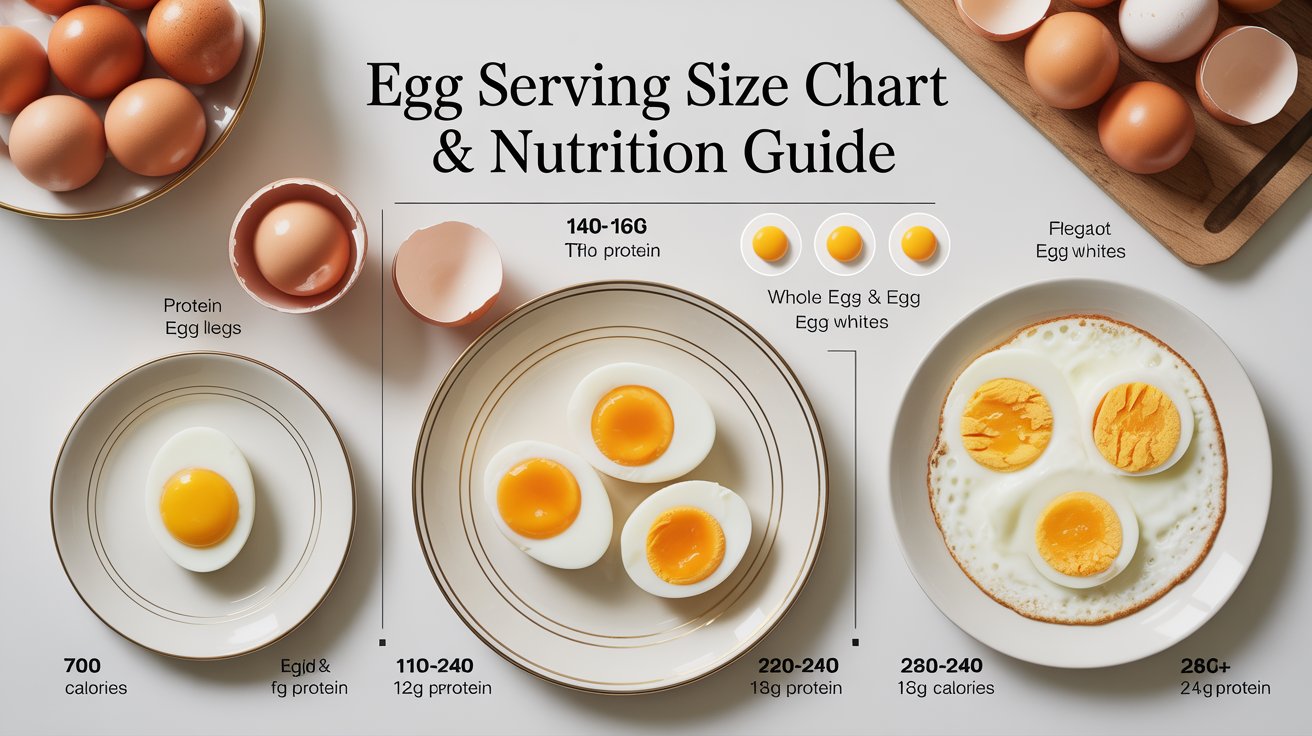
Egg Serving Size Chart
| Serving Type | Number of Eggs | Weight (Approx.) | Calories | Protein |
|---|---|---|---|---|
| Small Portion | 1 egg | 50g | 70–80 | 6g |
| Standard Serving | 2 eggs | 100g | 140–160 | 12g |
| Large Portion | 3 eggs | 150g | 210–240 | 18g |
| Extra Large Meal | 4+ eggs | 200g+ | 280+ | 24g+ |
Values are based on large eggs, which are most common.
Choosing The Right Egg Serving Size
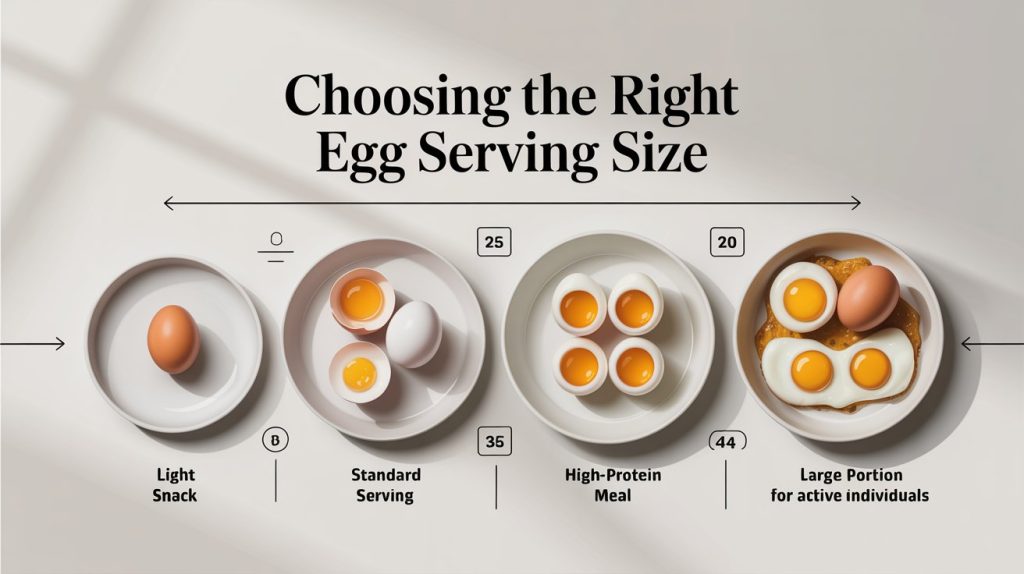
The best portion depends on your needs:
- 1 egg: Light meal or snack
- 2 eggs: Standard serving for most people
- 3 eggs: High-protein meal
- 4+ eggs: Larger portion, often for active individuals
For most people, 2 eggs per meal is ideal.
Egg Serving Size Comparison: Whole Eggs Vs Egg Whites
Different egg parts affect nutrition.
Whole Eggs vs Egg Whites
| Type | Serving Size | Calories | Protein | Notes |
|---|---|---|---|---|
| Whole Eggs | 2 eggs | 140–160 | 12g | Contains fats and nutrients |
| Egg Whites | 3–4 whites | 50–70 | 10–14g | Low fat, high protein |
Egg whites are lower in calories, while whole eggs provide more nutrients.
Egg Serving Size And Nutrition
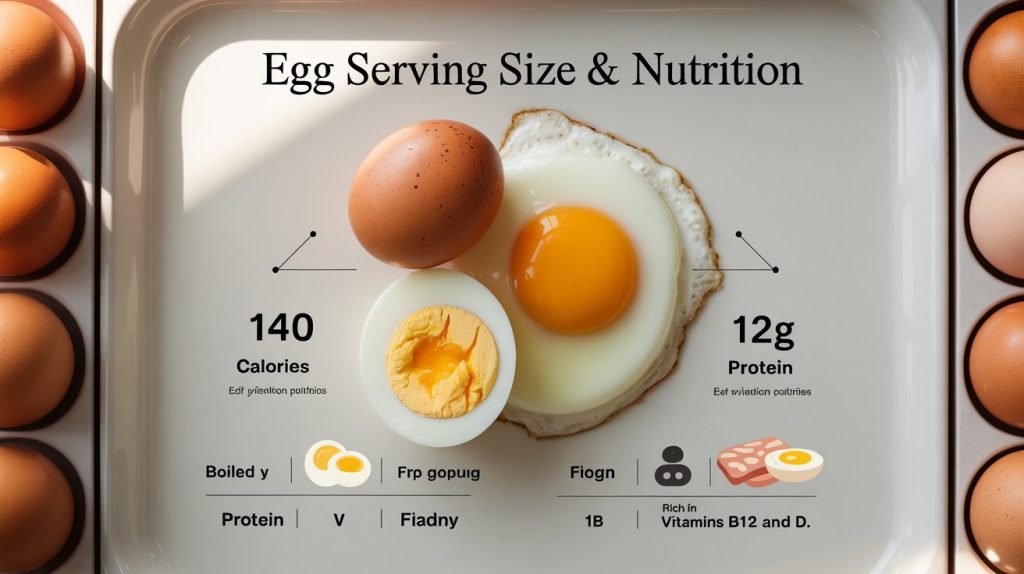
Eggs are packed with:
- High-quality protein
- Vitamins (B12, D)
- Healthy fats
A 2-egg serving typically contains:
- 140–160 calories
- 12g protein
- Essential nutrients
Cooking method (fried vs boiled) affects calories.
Visual Guide: Egg Serving Size
Here’s a simple way to estimate portions:
| Serving Size | Visual Comparison | Best Use |
|---|---|---|
| 1 egg | Single egg | Light meal |
| 2 eggs | Small plate portion | Standard serving |
| 3 eggs | Full plate | Larger meal |
Simple visuals help with portion control.
Tips For Managing Egg Portions
- Stick to 2 eggs for balance: Ideal for most diets
- Use egg whites for lower calories: Reduce fat intake
- Boil or poach instead of fry: Healthier cooking
- Pair with vegetables: Adds nutrients
- Avoid excess oil: Reduces calories
Small changes make meals healthier.
Common Mistakes When Eating Eggs
- Eating too many eggs daily: Can increase calorie intake
- Adding too much oil or butter: Raises fat content
- Ignoring portion size: Easy to overeat
- Not balancing meals: Missing other nutrients
Being mindful helps maintain balance.
How Egg Serving Size Affects Your Meal
The number of eggs you eat determines your protein intake and meal balance. A standard serving provides enough protein without making the meal too heavy.
Balancing eggs with vegetables and grains creates a complete meal.
The Popularity Of Eggs
Eggs have been a dietary staple for centuries due to their affordability, nutrition, and versatility. They are used in countless recipes across different cuisines.
Frequently Asked Questions
What Is A Standard Serving Size Of Eggs?
Typically 2 eggs.
Can I Eat Eggs Every Day?
Yes, in moderation as part of a balanced diet.
Are Egg Whites Healthier Than Whole Eggs?
They are lower in calories, but whole eggs contain more nutrients.
Is 3 Eggs Too Much?
It depends on your diet and activity level.
How Do I Measure Egg Portions?
Count the number of eggs—2 eggs equals one serving.
Egg serving sizes may seem simple, but they play an important role in your nutrition. By understanding the egg serving size chart, you can enjoy eggs in the right amount while keeping your meals balanced and healthy.
