
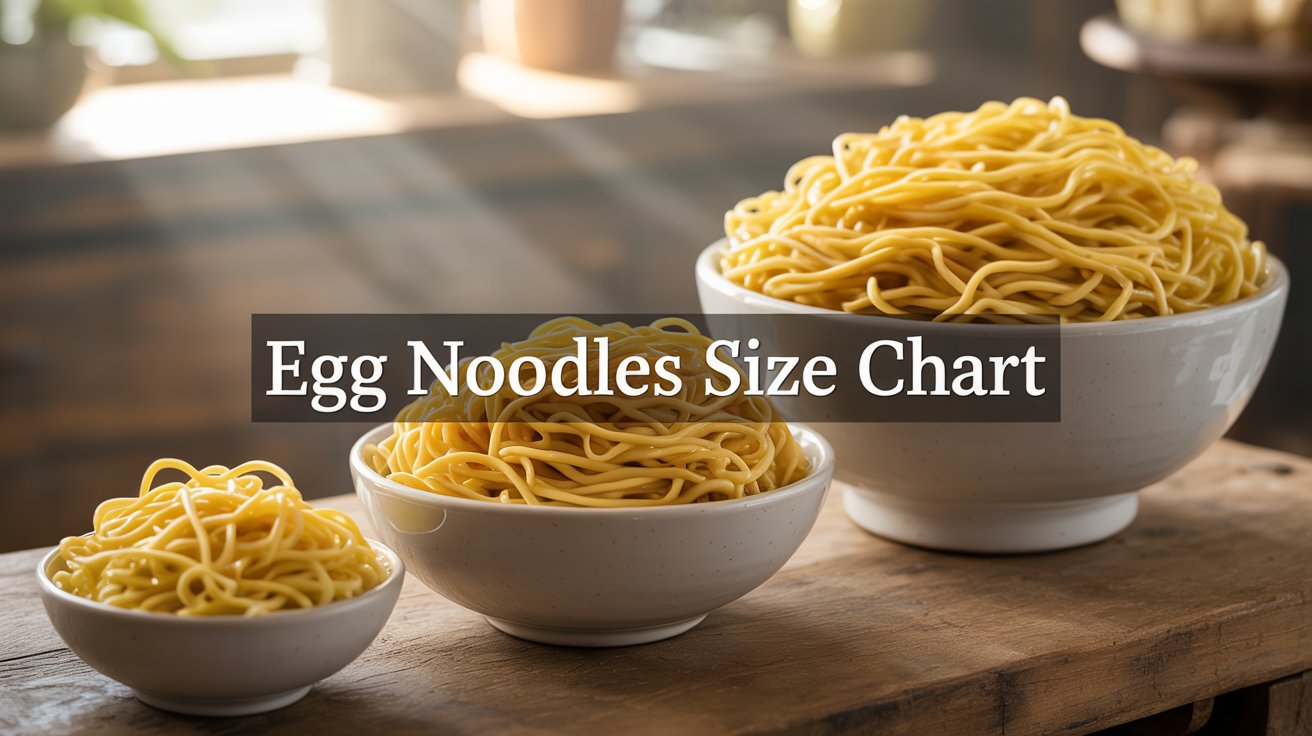
Are you confused about which egg noodle size to choose for your recipe? You’re not alone.
Picking the right size can change the texture and taste of your dish completely. Whether you’re cooking a comforting soup or a hearty stir-fry, knowing the difference between small, medium, and large egg noodles matters. In this guide, you’ll find an easy-to-follow egg noodles size chart that helps you make the perfect choice every time.
Keep reading, and you’ll never second-guess your noodles again.
Egg Noodle Types
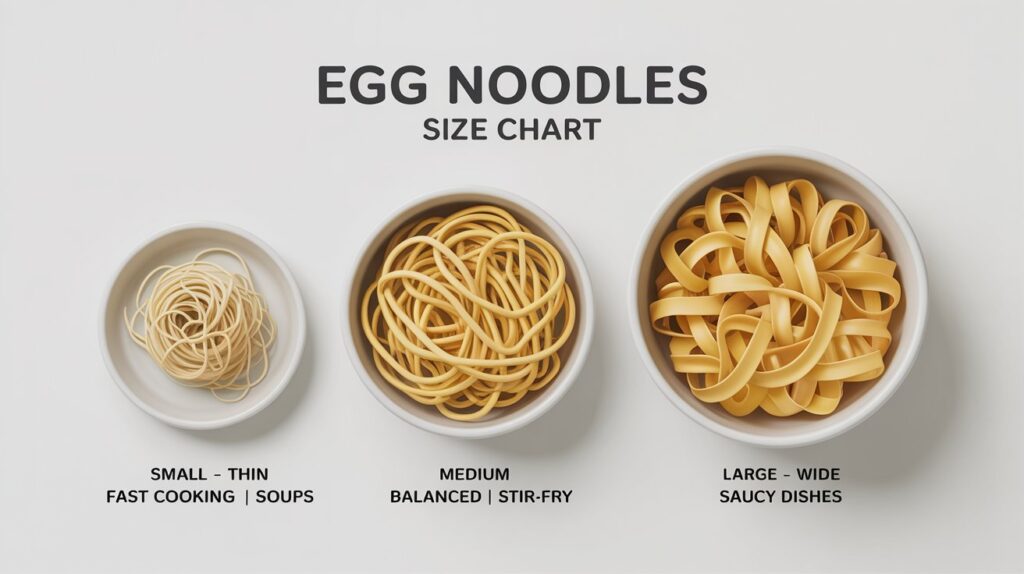
Egg noodles come in many shapes and sizes. Each type serves a different cooking purpose and texture. Knowing the types helps you choose the best noodle for your dish.
Thin Egg Noodles
Thin egg noodles are delicate and cook quickly. They are great for soups and light stir-fries. Their small size makes them perfect for dishes needing a soft texture.
Wide Egg Noodles
Wide egg noodles have a broad surface. They hold sauces well and give a chewy bite. These noodles work well in casseroles and rich, hearty meals.
Flat Egg Noodles
Flat egg noodles are smooth and slightly thick. They provide a good balance between softness and firmness. They are often used in Asian and European recipes.
Ribbon Egg Noodles
Ribbon egg noodles are long and narrow, like ribbons. They add a rustic feel to any dish. These noodles are excellent for pan-fried or baked dishes.
Common Noodle Sizes
Egg noodles come in various sizes that affect cooking and dish texture. Knowing common sizes helps choose the right noodle for recipes. Sizes differ mainly in length, width, and thickness. These factors change how noodles hold sauce and cook time.
Egg Noodles Size Chart
| Noodle Size | Width (approx.) | Best Uses | Cooking Time |
|---|---|---|---|
| Small / Thin | 1–3 mm | Soups, light dishes | 2–3 minutes |
| Medium | 4–8 mm | Stir-fries, everyday meals | 4–5 minutes |
| Large / Wide | 10 mm+ | Casseroles, hearty sauces | 6–8 minutes |
Length Variations
Egg noodles range from short to long lengths. Short noodles measure about 2 to 4 inches. They suit soups and casseroles well. Long noodles can be 8 to 12 inches or more. These are great for stir-fries and pasta dishes. Length affects how noodles mix with other ingredients.
Width Measurements
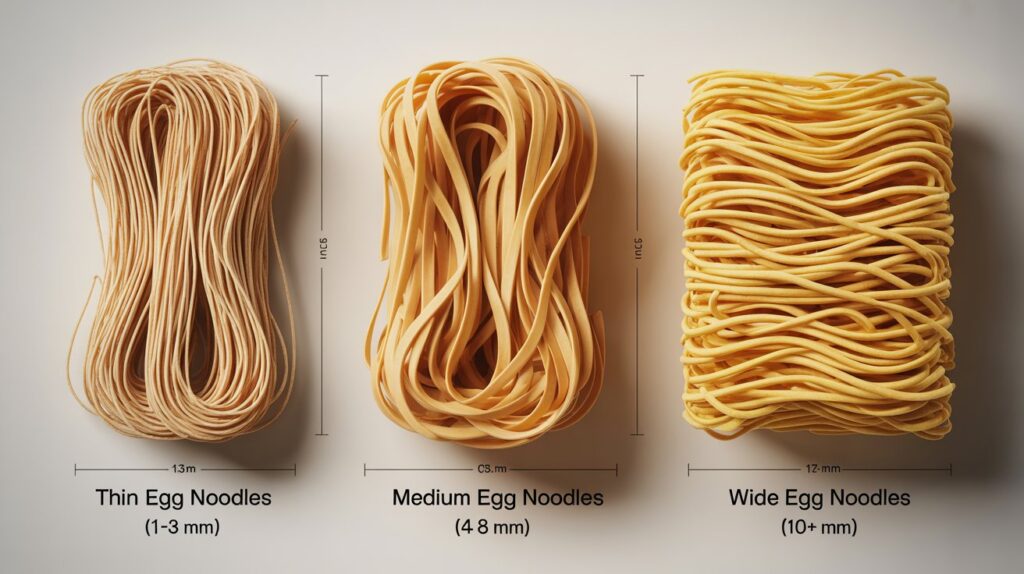
Width varies from thin strands to wide ribbons. Thin noodles are around 1 to 3 millimeters wide. They cook quickly and work in light soups. Medium-width noodles measure 4 to 8 millimeters. These fit many recipes, from stir-fry to baked dishes. Wide noodles can be 10 millimeters or more. They hold thick sauces and have a chewy bite.
Thickness Options
Thickness changes noodle firmness and cooking time. Thin noodles feel soft and cook fast. Medium thickness noodles balance chewiness and tenderness. Thick noodles stay firm longer, giving a hearty texture. Thickness choice depends on personal taste and recipe needs.
Portion Sizes Explained
Understanding egg noodle portion sizes helps in planning meals better. Knowing the right amount avoids waste and ensures balanced servings. This section explains how to measure and adjust egg noodle portions.
Serving Size By Weight
Portion size often depends on weight. A standard serving of dry egg noodles usually weighs about 56 grams. This amount equals one cup of cooked noodles. Measuring by weight gives accurate portions for each meal.
Dry Vs Cooked Noodles
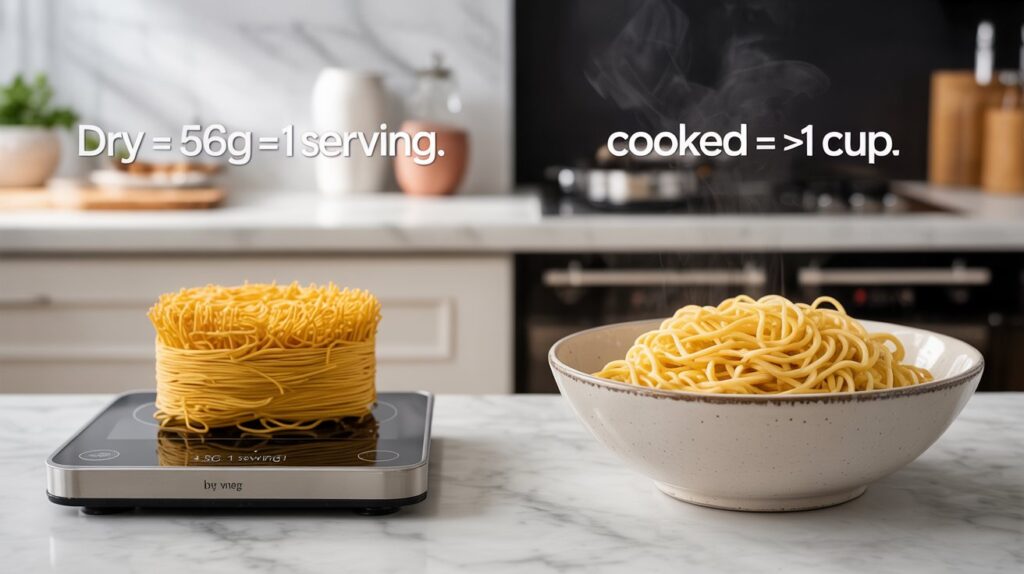
Dry noodles weigh less than cooked ones. After cooking, egg noodles absorb water and become heavier. For example, 56 grams of dry noodles turns into about 140 grams cooked. Always measure dry noodles before cooking for portion control.
Adjusting Portions For Meals
Portion size changes with appetite and meal type. For lunch or dinner, serve about one to one and a half cups of cooked noodles. For children or light eaters, reduce the amount. Add vegetables or protein for a balanced plate.
Measuring Egg Noodles
Measuring egg noodles correctly helps in cooking the perfect meal. Different recipes need different amounts. Knowing how to measure them makes cooking easier and avoids waste. Here are simple ways to measure egg noodles for any dish.
Using A Kitchen Scale
A kitchen scale gives the most accurate measurement of egg noodles. Place a bowl on the scale and zero it out. Add the noodles until reaching the desired weight. This method works best for dry noodles. It ensures consistent portions every time.
Volume Measurements
Measuring noodles by volume is quick and handy. Use a measuring cup to scoop the noodles. Note that dry noodles take up less space than cooked ones. For best results, use the same cup size each time. This method suits recipes with volume instructions.
Visual Portion Estimates
Visual estimates help when no tools are nearby. A typical serving of dry egg noodles is about a handful or a small fist. For cooked noodles, use a cup as a visual guide. This method works well for informal cooking. It keeps portion sizes reasonable without exact measuring.
Cooking Tips For Perfect Portions
Getting the right portion of egg noodles starts with good cooking tips. Cooking noodles perfectly needs attention to size and timing. This helps keep the noodles tasty and easy to eat. Follow these tips for the best results in your kitchen.
Boiling Time By Size
Egg noodles come in different sizes. Each size needs a different boiling time to cook well. Thin noodles cook fast, usually in 2 to 3 minutes. Medium-sized noodles take about 4 to 5 minutes. Thick or wide noodles need 6 to 8 minutes to become soft.
Check the noodles often while boiling. Taste one to see if it is done. Noodles should be soft but still a little firm. This is called “al dente.”
Avoiding Overcooking
Overcooked noodles become mushy and lose their shape. To avoid this, do not leave noodles in hot water too long. Drain them as soon as they reach the right texture. Rinse with cold water to stop cooking if needed.
Use a timer to keep track of cooking time. Stir noodles gently during boiling to stop them from sticking together.
Serving Suggestions
Portion size depends on how you serve noodles. For a main dish, use about 1 to 1.5 cups of cooked noodles per person. For side dishes, ½ to 1 cup is enough.
Egg noodles taste great with sauces, soups, or stir-fries. Add vegetables or protein to make a balanced meal. Serve hot for the best flavor and texture.
Nutritional Info By Size
Understanding the nutritional values of egg noodles helps you choose the right portion. Different sizes mean different amounts of calories, carbs, and protein. These details help you eat healthier and meet your diet goals.
Let’s break down the nutrition based on noodle size. This guide makes it simple to track what you eat.
Calories Per Serving
Small servings of egg noodles usually have around 100 to 150 calories. Medium servings contain about 200 to 250 calories. Larger portions can have 300 calories or more. Knowing this helps control your calorie intake.
Carbohydrates And Protein
Carbohydrates provide energy. A small serving has roughly 20 to 25 grams of carbs. Medium sizes offer 40 to 50 grams. Large portions may contain 60 grams or more. Protein supports muscles. Small servings have 3 to 5 grams of protein. Medium and large servings increase this amount proportionally.
Adjusting For Dietary Needs
Choose smaller sizes to reduce calories and carbs. Larger servings work for higher energy needs. Use this chart to match your diet plan. Adjust portions to fit low-carb or high-protein diets easily. This way, egg noodles fit your lifestyle well.
Frequently Asked Questions
What Are The Common Sizes Of Egg Noodles?
Egg noodles come in various sizes like thin, medium, and wide. Thin noodles are ideal for soups, medium for stir-fries, and wide noodles suit casseroles and baked dishes. Size affects cooking time and texture, so choose according to your recipe needs.
How Does Egg Noodle Size Affect Cooking Time?
Smaller egg noodles cook faster, usually within 2-3 minutes. Medium and wide noodles take longer, around 4-6 minutes. Cooking time varies by thickness; thicker noodles need more time to become tender without overcooking.
Why Is Choosing The Right Egg Noodle Size Important?
Choosing the correct size impacts dish texture and flavor absorption. Thin noodles work well in broths, while wide noodles hold sauces better. Using the right size ensures balanced taste and optimal cooking results.
Can Egg Noodle Size Influence Recipe Types?
Yes, noodle size guides recipe suitability. Thin noodles are perfect for light soups, medium for stir-fries, and wide for hearty casseroles. Size enhances the dish’s overall appeal and texture.
Conclusion
Egg noodles come in many sizes for different dishes. Knowing their sizes helps you cook better meals. Use the right size for soups, stir-fries, or casseroles. Size affects cooking time and texture. Keep this chart handy for easy reference. Enjoy cooking with confidence and create tasty dishes.
Simple steps lead to great results every time.
