
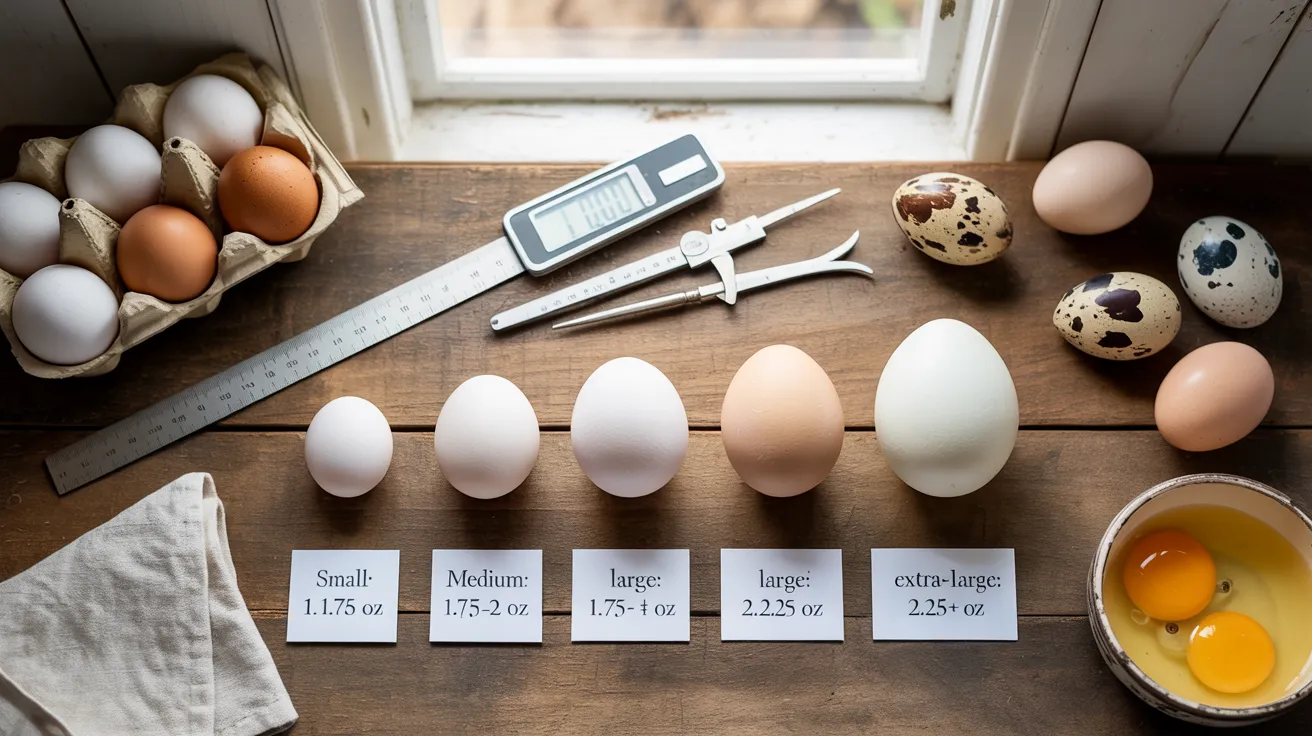
Are you curious about how duck eggs compare in size? Whether you’re a chef, a farmer, or just love cooking with duck eggs, knowing their size can make a big difference.
You might wonder how to pick the right egg for your recipe or how they stack up against chicken eggs. This Duck Egg Size Chart will clear up all your questions and help you choose the perfect egg every time.
Keep reading to discover the simple way to understand duck egg sizes and boost your cooking or farming skills!
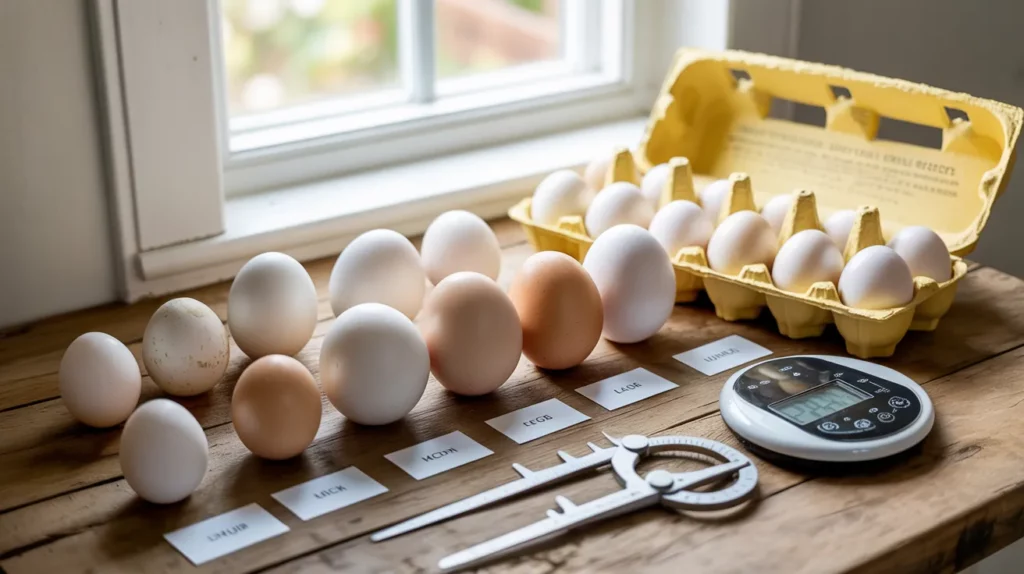
Duck Egg Size Categories
Duck eggs come in different sizes. Knowing their size categories helps with cooking and baking. Each size has a unique weight and shell dimension. These sizes guide buyers and cooks to choose the right eggs.
Here are the common duck egg size categories. They range from small to extra large.
Small Duck Eggs
Small duck eggs weigh about 1.5 to 1.75 ounces. Their shells are compact and smooth. These eggs work well for small recipes or snacks. They have a mild flavor and rich yolk.
Medium Duck Eggs
Medium duck eggs weigh between 1.75 and 2 ounces. They are perfect for everyday cooking. Their size fits most egg cups and cartons. These eggs offer a good balance of white and yolk.
Large Duck Eggs
Large duck eggs weigh 2 to 2.25 ounces. They are great for baking and larger meals. The yolk is bright and creamy. Large eggs provide more protein per serving.
Extra Large Duck Eggs
Extra large duck eggs weigh over 2.25 ounces. These eggs are ideal for special dishes. Their thick shells protect the rich yolk inside. Use them when a recipe calls for extra volume.
Measuring Duck Eggs
Measuring duck eggs is important for many reasons. It helps farmers, cooks, and buyers understand the egg’s size and weight. Accurate measurement ensures the right size is used for recipes or sale. Duck eggs can vary widely in size and weight, so knowing how to measure them correctly is key.
Weight Vs Dimensions
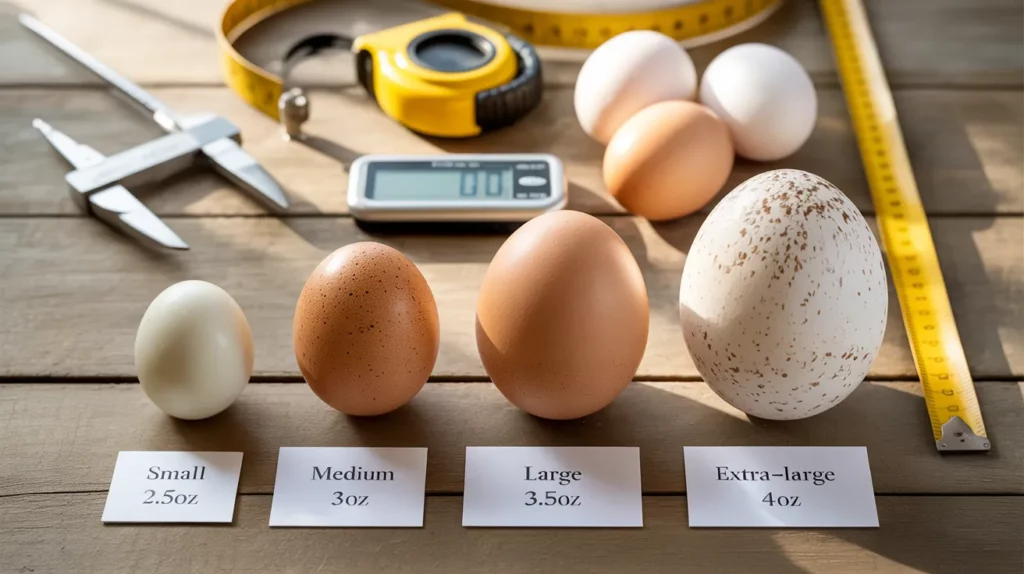
Weight and dimensions both show the size of a duck egg. Weight tells you how heavy the egg is, usually in grams or ounces. Dimensions measure the length and width of the egg. Length is the distance from one end to the other. Width is the widest part of the egg.
Weight is often more reliable for size categories. Dimensions help compare shape differences. Both help create a complete size chart for duck eggs.
Tools For Accurate Measurement
A kitchen scale is the best tool to measure weight. It gives precise results in grams or ounces. Use a clean, flat surface to get an accurate reading.
For dimensions, a caliper or ruler works well. Calipers measure length and width with exact numbers. A ruler can do the job but is less precise.
Always measure eggs gently. Too much pressure can crack the shell. Handle eggs with care during measurement.
Factors Influencing Egg Size
Egg size varies a lot between ducks. Several factors affect how big or small a duck egg will be. Understanding these factors helps farmers and hobbyists predict egg sizes better. It also helps in choosing the right ducks for specific egg needs.
Duck Breed Variations
Different duck breeds lay eggs of different sizes. Larger breeds like the Pekin usually produce bigger eggs. Smaller breeds, such as Call ducks, tend to lay smaller eggs. Breed genetics play a big role in egg size differences.
Age And Health Of Ducks
Young ducks often lay smaller eggs than older ones. As ducks mature, egg size generally increases. Health also matters; healthy ducks lay bigger and stronger eggs. Illness or stress can reduce egg size quickly.
Diet And Nutrition Impact
Ducks need balanced diets for optimal egg size. Proteins, vitamins, and minerals support bigger eggs. Lack of nutrients often leads to smaller eggs or weak shells. Proper feed encourages consistent egg production and size.
Environmental Conditions
Temperature and lighting affect egg size. Ducks in warm, well-lit spaces tend to lay larger eggs. Cold or dark environments may reduce egg size and laying frequency. Comfortable surroundings promote healthy egg growth.
Comparing Duck Eggs To Chicken Eggs
Duck eggs and chicken eggs are common in many kitchens. Both eggs provide protein and nutrients. Yet, they differ in size, taste, and use. Understanding these differences helps in cooking and nutrition choices. Below, we compare duck eggs to chicken eggs in key areas.
Duck Egg Size Chart
| Size | Weight (oz) | Weight (g) |
|---|---|---|
| Small | 1.5–1.75 oz | 42–50 g |
| Medium | 1.75–2.0 oz | 50–57 g |
| Large | 2.0–2.25 oz | 57–64 g |
| Extra-Large | 2.25+ oz | 64 g+ |
Size Differences
Duck eggs are larger than chicken eggs. On average, a duck egg weighs about 70 grams. Chicken eggs weigh around 50 grams. Duck eggs have a thicker shell. This makes them last longer in the fridge. The bigger size means more yolk and white inside.
Nutritional Content
Duck eggs contain more fat and protein than chicken eggs. They have higher levels of vitamins A, B12, and D. Duck eggs also have more omega-3 fatty acids. The yolk in duck eggs is bigger and richer. People who need more energy may prefer duck eggs.
Culinary Uses
Duck eggs are favored for baking due to their richness. They make cakes and pastries fluffier and moister. Their strong flavor suits savory dishes well. Chicken eggs work well for everyday cooking. They have a milder taste and cook quickly. Both types can be used in many recipes.
Using The Size Chart In Cooking
Using a duck egg size chart helps in cooking with accuracy. Duck eggs vary more in size than chicken eggs. Recipes often list egg size but may mean chicken eggs. Knowing the size helps you adjust recipes and get the best results. This guide shows how to use the size chart in cooking.
Adjusting Recipes
Duck eggs are larger than chicken eggs. Using the size chart helps you match the right egg size to your recipe. If a recipe calls for large chicken eggs, use the size chart to find the equivalent duck egg size. This keeps the balance of ingredients correct. It prevents dishes from becoming too wet or dry.
Baking Considerations
Baking needs precise measurements, including eggs. Duck eggs have more yolk and less white than chicken eggs. This changes the texture and taste of baked goods. Use the size chart to adjust egg amounts for better baking results. It helps keep cakes and pastries moist and fluffy.
Portion Control
Portion control matters when cooking with duck eggs. Duck eggs vary in size and weight. The size chart helps you serve consistent portions. It aids in meal planning and calorie counting. This is useful for restaurants and home cooks alike.
Storing And Handling Duck Eggs
Storing and handling duck eggs properly keeps them fresh and safe to eat. Duck eggs have thicker shells than chicken eggs. This helps them last longer if stored well. Proper care also prevents cracks and contamination.

Shelf Life By Size
Duck egg size affects how long it stays fresh. Smaller eggs usually last about 3 weeks in the fridge. Medium and large eggs can last up to 5 weeks. Extra-large duck eggs may stay fresh for 6 weeks or more. Always check eggs for cracks or bad smells before use.
Best Storage Practices
Store duck eggs in the coldest part of the fridge. Keep them in their carton to avoid moisture loss. Avoid washing eggs before storage to keep the natural protective layer. Wash them only before cooking. Store eggs with the pointed end down to keep the yolk centered. Use older eggs first to reduce waste.
Common Myths About Duck Egg Sizes
Many people have ideas about duck egg sizes that are not true. These myths can confuse anyone trying to understand duck eggs better. Knowing the facts helps to choose the right eggs for cooking or baking.
Let’s clear up some common myths about duck egg sizes.
Egg Size And Quality
Many believe bigger eggs mean better quality. This is not always true. Egg size depends on the duck’s age and breed. Young ducks lay smaller eggs, older ducks lay bigger eggs.
Quality depends on how fresh the egg is and how the duck is fed. Small eggs can be just as fresh and nutritious as large eggs. Size does not measure quality.
Impact On Taste
People think bigger duck eggs taste stronger or different. Taste mostly depends on the duck’s diet and environment. Ducks eating natural foods lay eggs with a richer flavor.
Both small and large duck eggs taste similar if the ducks have the same diet. Size does not change the egg’s flavor much. Taste is about freshness and feeding, not size.
Frequently Asked Questions
What Is The Average Size Of A Duck Egg?
A typical duck egg measures about 2. 5 inches long and 1. 75 inches wide. It is larger than a chicken egg, weighing around 70 grams. Duck eggs have a thicker shell and richer yolk, making them popular in baking and cooking.
How Do Duck Egg Sizes Vary By Breed?
Duck egg sizes differ depending on the breed. Pekin ducks lay larger eggs, often weighing 70-90 grams. Khaki Campbells produce medium-sized eggs, around 60-70 grams. Size variation helps farmers choose breeds based on egg production needs.
Are Duck Eggs Bigger Than Chicken Eggs?
Yes, duck eggs are generally larger than chicken eggs. They weigh about 50% more, with a thicker shell and stronger membrane. This size difference affects cooking times and texture, making duck eggs a unique choice in recipes.
How To Measure Duck Egg Size Accurately?
To measure duck egg size, use a ruler or caliper to check length and width. Weigh the egg on a kitchen scale for precise size classification. Accurate measurement helps in grading and selecting eggs for sale or consumption.
Conclusion
Understanding duck egg sizes helps in cooking and buying. Eggs come in small, medium, large, and extra-large sizes. Each size fits different recipes and needs. Knowing the size saves time and avoids guesswork. Keep this chart handy for quick reference.
It makes choosing eggs easier and more confident. Simple size knowledge improves your kitchen results. Try using the chart next time you cook with duck eggs. You will notice the difference in your dishes. Size matters, and now you know why.
