
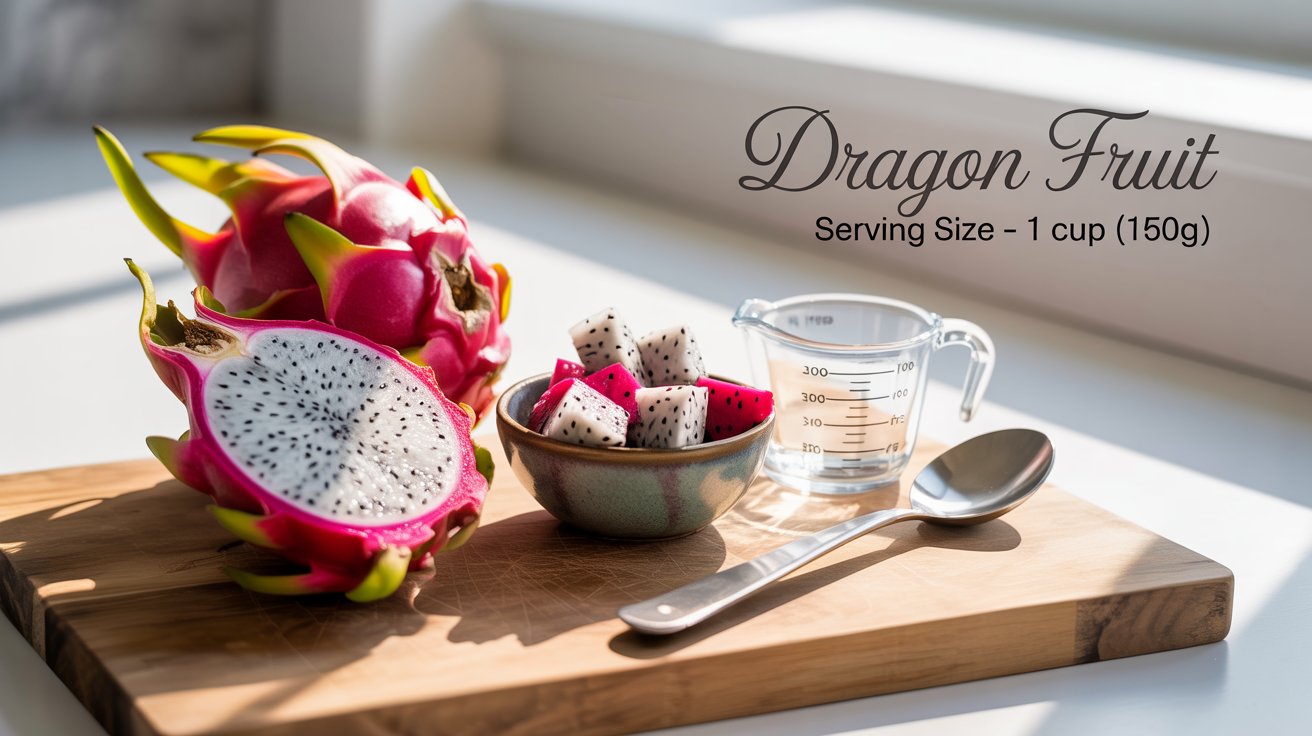
Dragon fruit, also known as pitaya, has become a favorite among health-conscious eaters. Its bright pink skin, speckled flesh, and sweet taste make it stand out in fruit bowls and smoothie recipes. But one question often comes up: what is the right serving size for dragon fruit? Understanding how much to eat is important for getting the benefits without overeating. Let’s explore portion sizes, nutrition facts, and practical tips so you can enjoy dragon fruit with confidence.
What Is A Standard Dragon Fruit Serving Size?
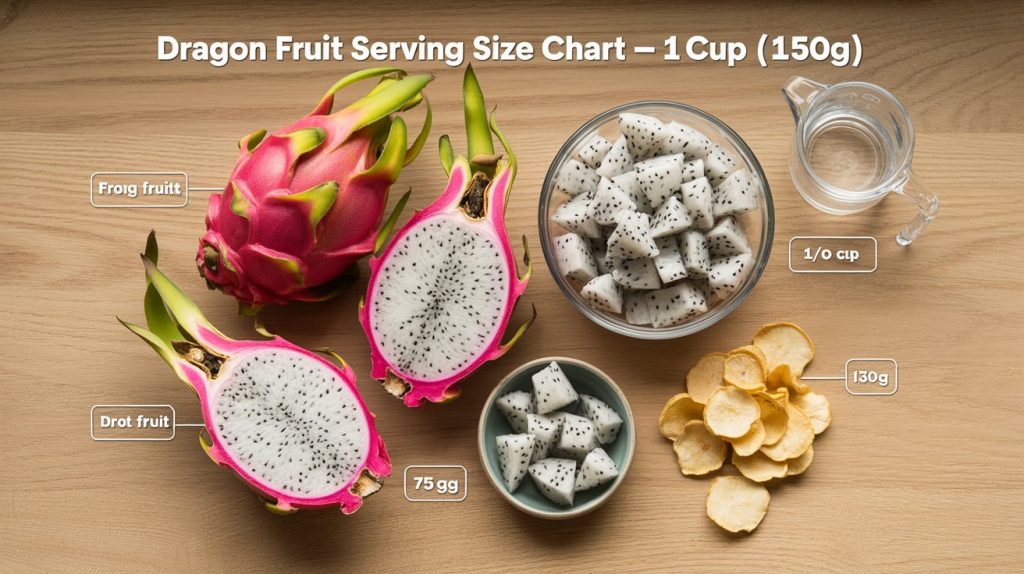
A standard serving size helps you measure how much to eat at one time. For dragon fruit, the most common serving size is one cup of diced flesh. This equals about 150 grams or half of a medium-sized fruit. You can also measure a serving by weight or by the whole fruit, depending on your needs.
Typical Serving Sizes
| Serving Method | Amount | Notes |
|---|---|---|
| By Cup | 1 cup diced (150g) | Most common measure |
| By Fruit | 1/2 medium fruit | Medium fruit weighs about 300g |
| By Weight | 100g | Often used on nutrition labels |
Many people are surprised that a whole dragon fruit can be two servings or more. Because the fruit is large, eating the entire thing may double your calorie and sugar intake.
Dragon Fruit Serving Size Chart
| Serving Type | Amount | Weight |
|---|---|---|
| Standard serving | 1 cup diced | ~150 g |
| Half fruit | ½ medium fruit | ~150 g |
| Small portion | ½ cup diced | ~75 g |
| Dried dragon fruit | ¼ cup | ~30 g |
✔ Recommended serving: 1 cup (150 g)
Nutrition Facts Per Serving
Knowing the nutrition in one serving helps you fit dragon fruit into your diet. One cup of diced dragon fruit (about 150g) contains:
- Calories: 60
- Carbohydrates: 13g
- Fiber: 3g
- Sugars: 8g
- Protein: 1g
- Fat: 0g
- Vitamin C: 3% of Daily Value
- Magnesium: 10% of Daily Value
Dragon fruit is low in calories and fat but rich in fiber. This makes it a good choice for weight management and digestion. The fruit also provides antioxidants and minerals, though not in very high amounts.
Nutrition Per 1 Cup of Dragon fruit
| Nutrient | Amount |
|---|---|
| Calories | 60 kcal |
| Carbohydrates | 13 g |
| Fiber | 3 g |
| Sugar | 8 g |
| Protein | 1 g |
| Fat | 0 g |
Comparison With Other Fruits
To see how dragon fruit compares, here’s a quick look at nutrition in a typical serving of other fruits:
| Fruit | Calories (per cup) | Sugar (g) | Fiber (g) |
|---|---|---|---|
| Dragon Fruit | 60 | 8 | 3 |
| Mango | 99 | 23 | 3 |
| Strawberries | 50 | 7 | 3 |
| Banana | 134 | 18 | 4 |
Dragon fruit is lower in sugar and calories compared to mango and banana, making it a lighter option.
How To Measure And Serve Dragon Fruit
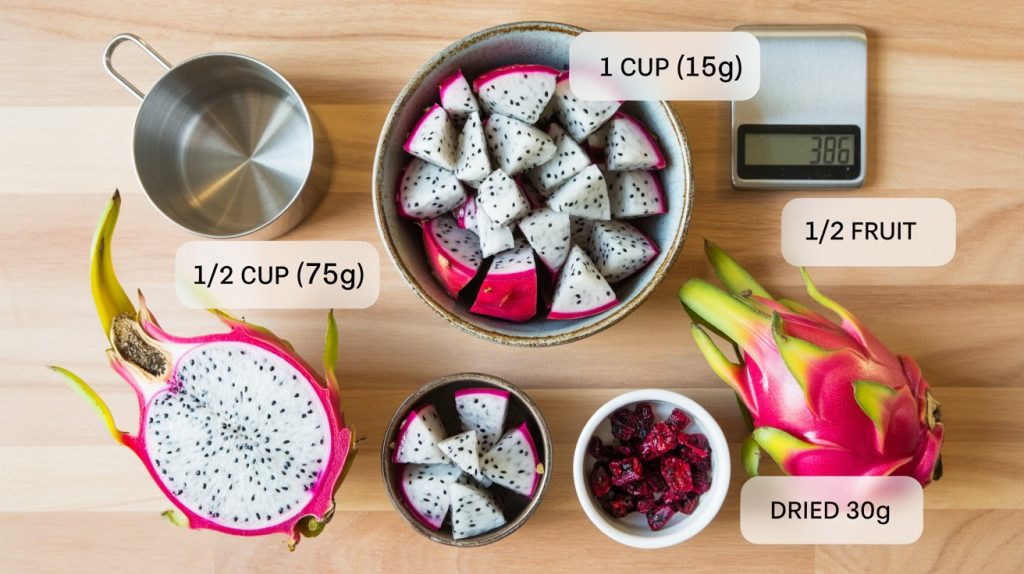
Measuring a serving is simple if you follow these steps:
- Wash and cut the dragon fruit in half.
- Scoop out the flesh with a spoon.
- Dice the flesh into small cubes.
- Fill a measuring cup with the cubes to reach 1 cup (150g).
You can also use a kitchen scale for more accuracy. If you don’t have a scale, remember that half a medium fruit is close to one serving.
Serving Ideas
Dragon fruit is versatile. Here are a few ways to enjoy a standard serving:
- Eat fresh cubes as a snack.
- Mix with yogurt and granola.
- Add to fruit salads.
- Blend into smoothies.
- Use as a topping on pancakes.
If you use dragon fruit in recipes, check how much you add. Smoothie bowls, for example, may use more than one serving.
Adjusting Serving Size For Health Goals
Different people have different needs. For most adults, one serving per day is enough to enjoy the benefits. But you may want to adjust the size in certain situations.
For Weight Loss
Keep servings at one cup or less. Dragon fruit is low in calories but eating too much fruit can add up.
For Diabetes
Stick to one serving and combine with protein or fat, like Greek yogurt. Dragon fruit has less sugar than some fruits, but portion control is important.
For Kids
A child-sized serving is smaller—about half a cup or 75 grams. The fruit is safe for children and easy to digest.
For Athletes
If you need more energy, you might eat a larger portion. Dragon fruit provides carbs for fuel but is not high in calories.
Common Mistakes With Dragon Fruit Portions
Beginners often make these errors:
- Eating a whole dragon fruit thinking it’s one serving.
- Not measuring the flesh before adding to recipes.
- Forgetting that juice or smoothie bowls often contain multiple servings.
- Ignoring calories from added toppings like honey or granola.
A less-known tip: dragon fruit seeds are edible and add fiber, but they don’t change the serving size.
Practical Tips For Portion Control
Controlling your serving size is easy if you:
- Use a measuring cup or small bowl.
- Pre-cut the fruit and store in containers.
- Share with friends or family if the fruit is large.
- Read nutrition labels if buying dragon fruit products.
If you buy dried dragon fruit, remember that the serving size is much smaller—about ¼ cup (30g). Dried fruit is concentrated and higher in sugar per gram.
When To Eat More Or Less
You might want to increase or decrease your serving size based on your health and preferences.
- Eat more if you have high energy needs, do sports, or want more fiber.
- Eat less if you are watching calories, have blood sugar issues, or are a child.
If you have kidney problems or allergies, talk to a doctor before making changes.
How To Store Dragon Fruit
| Type | Storage Time |
|---|---|
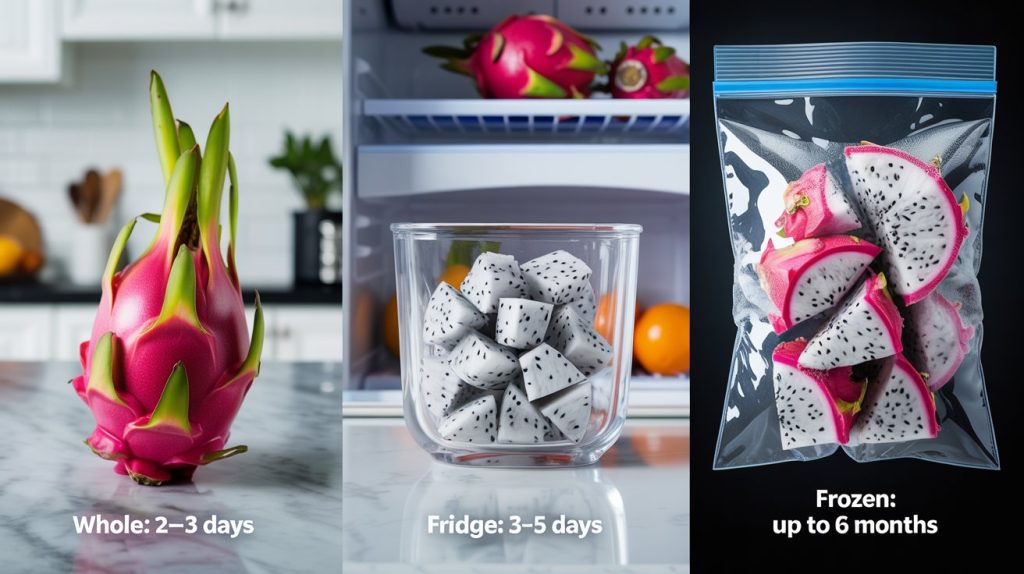
| Whole fruit | 2–3 days room temp |
| Cut fruit | 3–5 days fridge |
| Frozen | up to 6 months |
Dragon Fruit Serving Size In Different Cuisines
In Asia and Central America, dragon fruit is served in many ways. In Vietnam, it’s offered in small wedges after meals. In Mexico, it’s mixed with lime and chili. Most traditional servings are small—about half a fruit or less.
In Western countries, dragon fruit is often used in large smoothie bowls. These portions can be double the standard serving, so be careful if you count calories.
Summary Table: Key Points About Dragon Fruit Serving Size
| Aspect | Details |
|---|---|
| Standard Serving | 1 cup diced (150g) |
| Calories per Serving | 60 |
| Child Serving | ½ cup (75g) |
| Dried Fruit Serving | ¼ cup (30g) |
| Typical Mistake | Eating the whole fruit |
Frequently Asked Questions
What Is The Best Way To Measure A Dragon Fruit Serving?
The easiest way is to cut the fruit, dice the flesh, and fill a measuring cup with 1 cup (150g). A kitchen scale gives the most accurate result.
Is It Okay To Eat A Whole Dragon Fruit At Once?
It’s safe, but a whole dragon fruit is usually two servings or more. Eating the whole fruit increases your calorie and sugar intake.
Does Dragon Fruit Have A Low Glycemic Index?
Yes, dragon fruit has a low glycemic index compared to other tropical fruits. This means it raises blood sugar more slowly, but you should still watch your portion if you have diabetes.
How Many Calories Are In One Serving Of Dragon Fruit?
One cup of diced dragon fruit (about 150g) has about 60 calories, making it a low-calorie fruit.
Are There Any Risks Of Eating Too Much Dragon Fruit?
Eating too much can cause mild stomach upset or diarrhea, mostly due to the high fiber. Stick to one or two servings to avoid problems.
Enjoying dragon fruit is easy when you know the right serving size. By measuring your portions, you can get the health benefits without overdoing it. For more nutrition details, check trusted resources like the Wikipedia page on pitaya. Remember, a little preparation goes a long way toward a balanced and tasty diet.
