
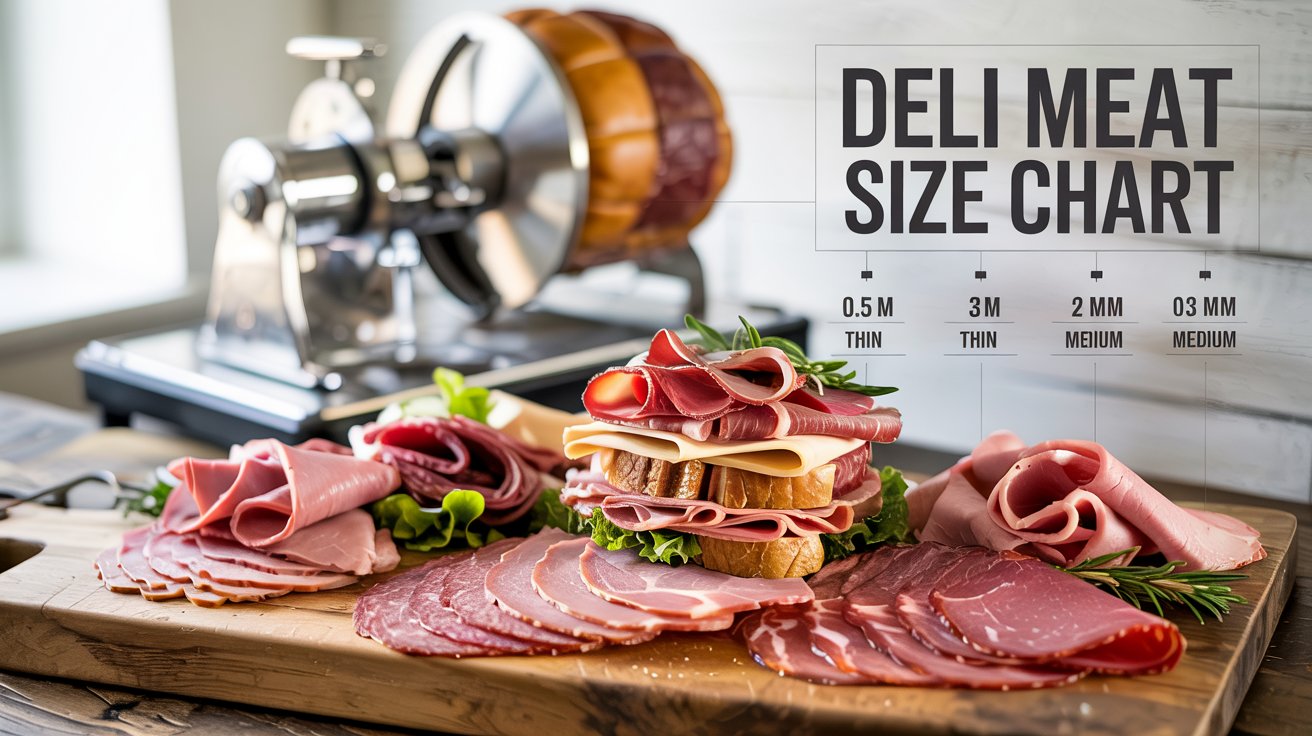
Deli meats are a staple in sandwiches, charcuterie boards, and quick meals—but have you ever noticed how slice thickness and portion size can completely change your experience? Some slices fold perfectly into a sandwich, while others feel too thick or too thin. Understanding a deli meat size chart helps you choose the right cut for taste, texture, and presentation. Whether you’re ordering at the counter or preparing food at home, knowing the right size makes a big difference.
Why Deli Meat Size Matters
Deli meat size isn’t just about quantity—it affects flavor, texture, and how the meat layers in your sandwich. Thin slices are tender and easy to bite, while thicker cuts offer a more satisfying, meaty texture.
For delis and restaurants, consistency in slice size ensures even pricing and customer satisfaction. At home, controlling portion size helps with meal planning and nutrition. If you’re watching calories or sodium intake, the thickness and amount of deli meat you use matters more than you think.
Standard Deli Meat Slice Sizes And Thickness
Deli meats are usually measured by slice thickness (in millimeters or inches) and weight per serving. Here are the most common slice sizes you’ll encounter:
Deli Meat Size Chart
| Slice Style | Thickness (Approx.) | Slices per 100g | Best Use |
|---|---|---|---|
| Shaved/Ultra Thin | 0.2–0.5 mm | 10–15 slices | Soft sandwiches, wraps |
| Thin | 0.5–1 mm | 6–10 slices | Classic deli sandwiches |
| Medium | 1–2 mm | 4–6 slices | Hearty sandwiches, subs |
| Thick | 2–4 mm | 2–4 slices | Charcuterie, snacks |
| Extra Thick | 5 mm+ | 1–2 slices | Plated meals, carving style |
These values can vary slightly depending on the meat type and slicer settings, but they provide a reliable guideline.
Choosing The Right Deli Meat Size
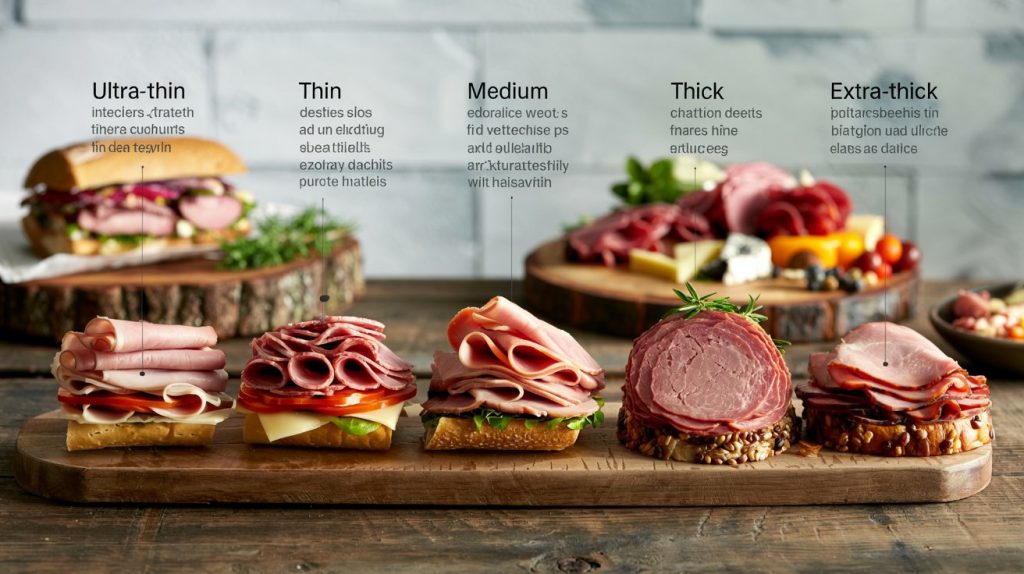
The best slice size depends on how you plan to use the meat. Here’s a quick guide:
- Shaved/Ultra Thin: Perfect for delicate sandwiches like roast beef or turkey. These slices fold easily and create a soft bite.
- Thin: The most popular choice for everyday sandwiches. Balanced texture and flavor.
- Medium: Ideal for subs or stacked sandwiches where you want more substance.
- Thick: Great for cheese boards or eating on its own. Offers a stronger, meatier bite.
- Extra Thick: Best for serving as a main protein, similar to carved meat portions.
If you’re ordering at a deli counter, you can usually request the exact thickness based on your preference.
Deli Meat Portion Sizes And Weights
Portion size is just as important as thickness. Here’s a general guideline for serving deli meat:
Portion Size Chart
| Serving Type | Weight (Approx.) | Number of Slices (Thin) |
|---|---|---|
| Light Sandwich | 50–60g | 3–4 slices |
| Standard Sandwich | 80–100g | 5–6 slices |
| Large Sandwich/Sub | 120–150g | 6–8 slices |
| Charcuterie Serving | 60–90g | 4–6 slices |
These portions help balance flavor without overwhelming the bread or other ingredients.
Deli Meat Size Comparison: Fresh Deli Vs. Packaged
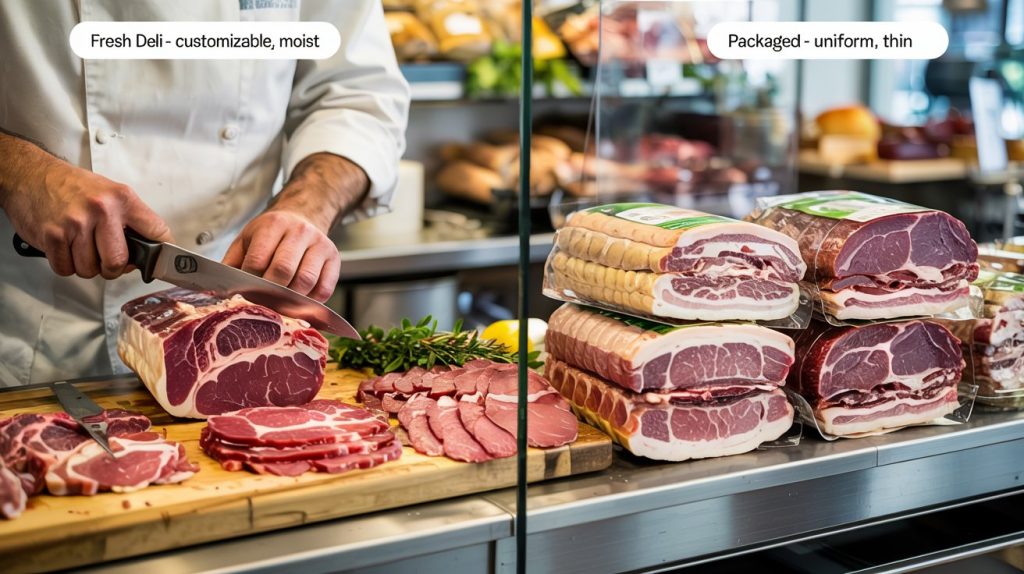
Not all deli meats are sliced the same way. Fresh deli counter meats and pre-packaged meats often differ in thickness and texture.
Fresh vs Packaged Deli Meat
| Source | Typical Thickness | Texture | Flexibility |
|---|---|---|---|
| Fresh Deli | Customizable | Fresh, moist | High |
| Packaged | Uniform (thin) | Slightly drier | Medium |
Fresh deli meats allow you to choose your preferred thickness, while packaged options are convenient but less flexible.
Deli Meat Size And Nutrition
Slice size directly affects how much you consume. Thicker slices or larger portions can quickly increase calories, sodium, and fat intake.
For example, 100g of deli turkey may contain around 120 calories, while processed meats like salami can exceed 300 calories for the same amount. Choosing thinner slices can help control portions without sacrificing flavor.
Also, stacking multiple slices adds up quickly—especially in large sandwiches.
Visual Guide: Deli Meat Size Chart
Sometimes, it helps to think about how deli meat is used:
| Slice Size | Best Use | Serving Suggestion |
|---|---|---|
| Ultra Thin | Wraps, soft rolls | Layered generously |
| Thin | Sandwiches | 4–6 slices |
| Medium | Subs, burgers | 3–5 slices |
| Thick | Boards, snacks | 2–3 slices |
| Extra Thick | Main dish | 1–2 slices |
Tips For Slicing And Storing Deli Meat
- Use a sharp slicer or knife: Clean cuts improve texture and appearance.
- Chill before slicing: Cold meat slices more evenly.
- Stack properly: Fold or layer slices instead of laying flat for better texture in sandwiches.
- Store airtight: Keep deli meat fresh longer by sealing it properly.
- Use within 3–5 days: Fresh deli meat doesn’t last as long as packaged options.
Consistency in slicing makes a big difference in both taste and presentation.
Common Mistakes When Choosing Deli Meat Size
- Slicing too thick: Makes sandwiches hard to bite and less balanced.
- Too thin for certain uses: Ultra-thin slices may tear or disappear in hearty sandwiches.
- Overloading portions: Too much meat can overpower other ingredients.
- Ignoring nutrition: Larger portions increase sodium and calorie intake.
Choosing the right size ensures a better eating experience.
How Deli Meat Size Affects Sandwiches
The thickness and amount of deli meat can change the entire sandwich. Thin slices create a soft, layered texture, while thicker slices give a bold, meaty bite.
Too much meat can make a sandwich difficult to eat, while too little may feel unsatisfying. The key is balance—matching the slice size with your bread, toppings, and overall portion.
The Evolution Of Deli Meat Slicing
Traditionally, deli meats were hand-carved into thicker slices. With the invention of meat slicers, thinner and more consistent slices became popular—especially in modern delis and supermarkets.
Today, customers can customize everything from paper-thin cuts to thick slabs, depending on their preference and dish.
Frequently Asked Questions
What Is The Best Thickness For Deli Meat?
Thin slices (0.5–1 mm) are ideal for most sandwiches because they balance texture and flavor.
How Much Deli Meat Do I Need For One Sandwich?
A standard sandwich typically uses 80–100g of deli meat, or about 5–6 thin slices.
Is Thicker Deli Meat Better?
Not always. Thicker slices are better for charcuterie or main dishes, but thin slices work best for sandwiches.
Why Does Deli Meat Taste Different At Various Thicknesses?
Thickness affects how the meat feels and how flavors are released. Thicker slices taste meatier, while thinner slices feel more delicate.
Can I Request Custom Slice Sizes At A Deli?
Yes, most deli counters allow you to choose your preferred thickness.
Deli meat size may seem like a small detail, but it plays a big role in taste, texture, and overall enjoyment. Whether you’re building the perfect sandwich or preparing a platter, understanding the deli meat size chart helps you make the right choice every time.
