
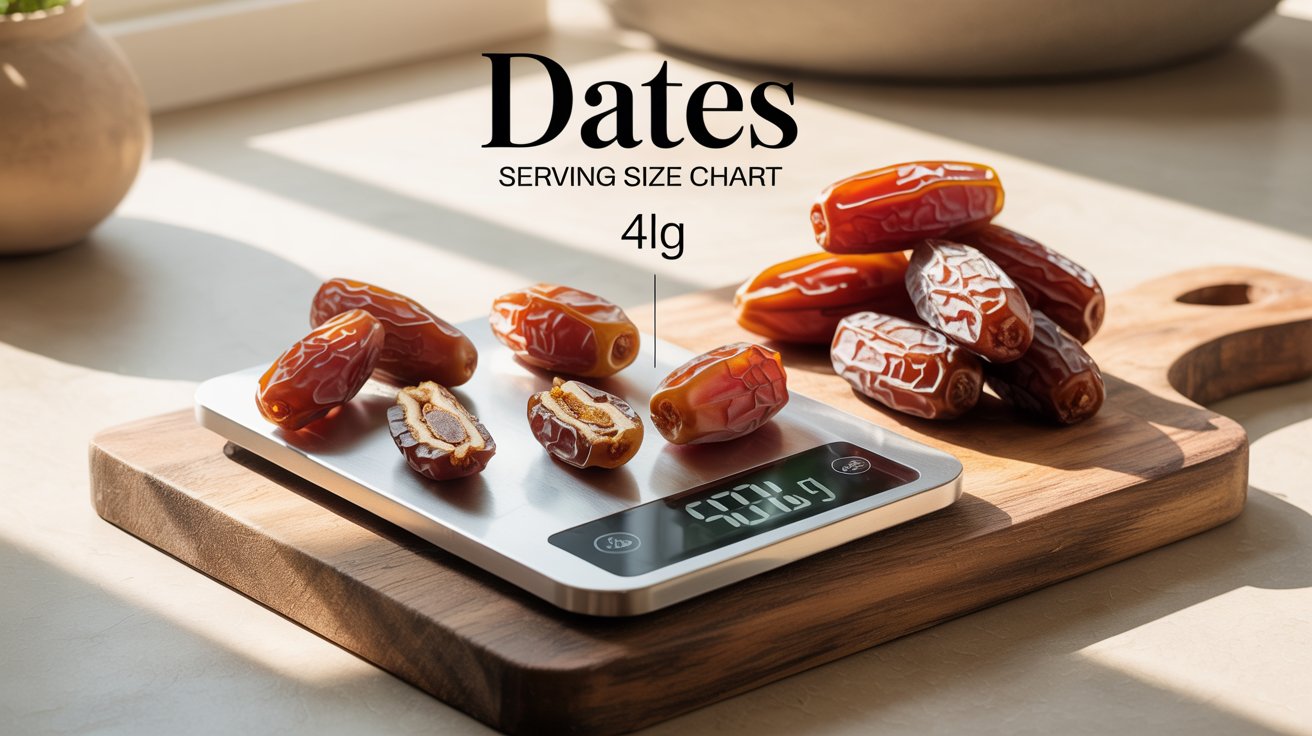
Dates are small, sweet fruits that come from the date palm tree. People around the world enjoy them as a quick snack, a natural sweetener, or as part of traditional dishes. But when it comes to eating dates, many wonder: how many should you actually eat at once? Serving size matters, especially if you care about calories, sugar, or want to get the most health benefits. Understanding the right serving size for dates helps you balance taste, nutrition, and your own health goals.
What Counts As One Serving Of Dates?
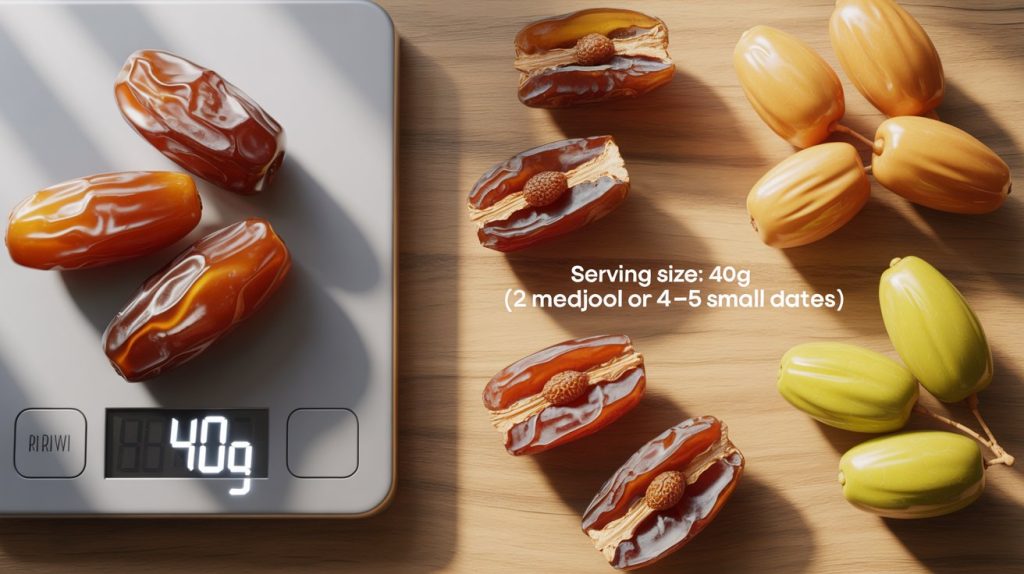
A typical serving size for dates is about 3 to 5 pieces, depending on the variety and size. Most nutrition labels use 40 grams (about 2 large Medjool dates or 4 to 5 smaller Deglet Noor dates) as a standard serving. This is not just a random number—it reflects a portion that gives energy, fiber, and nutrients without too much sugar.
Here’s a quick comparison of common serving sizes:
| Date Variety | Typical Weight per Piece | Number in 40g Serving |
|---|---|---|
| Medjool | 18-24g | 2 |
| Deglet Noor | 7-9g | 4-5 |
| Barhi | 8-10g | 4-5 |
It’s important to use a kitchen scale if you want to be precise, but most people use the number of dates as a simple guide.
Nutrition In A Dates Serving Size
Dates are packed with energy and nutrients. In a standard 40g serving, you get:
- Calories: 110-130 kcal
- Carbohydrates: 30-34g (mostly natural sugars)
- Fiber: 3g
- Potassium: 280mg
- Magnesium: 20mg
- Small amounts of iron, calcium, and B vitamins
This makes dates a nutrient-dense snack, especially if you need quick energy. But the sugar content is also high, so keeping to a moderate serving is wise.
Comparing Dates To Other Fruits
How do dates stack up against other common fruits? Here’s a simple table:
| Fruit (40g Serving) | Calories | Sugar (g) | Fiber (g) |
|---|---|---|---|
| Dates | 120 | 27 | 3 |
| Banana | 35 | 7 | 1 |
| Apple | 21 | 5 | 1 |
| Raisins | 120 | 26 | 1 |
You can see that dates are higher in sugar and calories per serving than most fresh fruits, but they also offer more fiber.
Serving Size Based on Goals
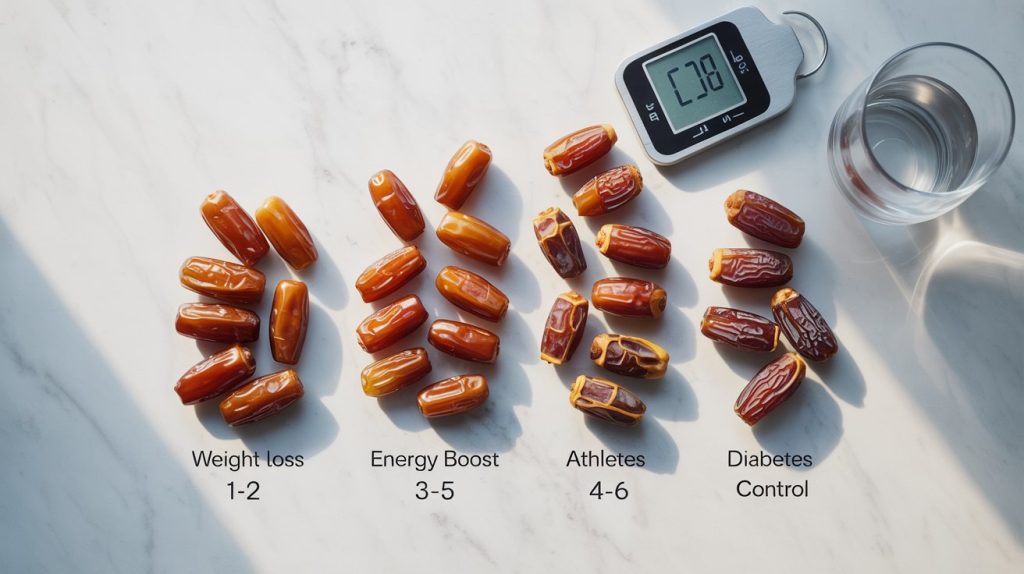
| Goal | Recommended Amount |
|---|---|
| Weight loss | 1–2 dates |
| Energy boost | 3–5 dates |
| Athletes | 4–6 dates |
| Diabetes control | 1–2 dates |
👉 This makes content more practical & actionable
Why Serving Size Matters
You might wonder: why not eat as many dates as you want? The answer comes down to sugar, calories, and digestion.
- Blood Sugar Impact: Dates have a high glycemic load. Eating too many can quickly raise blood sugar, which is not ideal for people with diabetes or those watching sugar intake.
- Calorie Density: Because dates are calorie-rich, large amounts can add up fast—useful for athletes, but risky for weight management.
- Digestive Health: Dates are high in fiber, but too many at once may cause stomach upset or diarrhea, especially if you’re not used to a lot of fiber.
A common mistake is underestimating how filling and sweet dates are. You might think 6 or 8 is a small handful, but that could be over 200 calories and 50g of sugar.
How To Measure Your Ideal Dates Serving Size
Your ideal serving size can depend on your age, activity level, and health goals:
- Children: 1-2 dates per snack is usually enough.
- Active adults: 3-5 dates provide energy before or after exercise.
- People managing weight or blood sugar: 1-2 dates, eaten with nuts or yogurt, can satisfy cravings without overdoing sugar.
For baking or smoothies, use the number of dates called for in the recipe, then divide by servings. If you’re adding dates to oatmeal, one chopped date per bowl is often enough.
Non-obvious Insight: Timing Matters
Many people eat dates as a breakfast food or after dinner. However, dates are especially good before exercise or during long work periods. Their quick sugar and potassium help with muscle function and focus.
Practical Tips For Enjoying Dates Responsibly
To get the most from your dates without overdoing calories or sugar:
- Pair with protein or fat (like nuts or cheese) to slow sugar absorption.
- Choose whole dates over date syrup or paste, which can be more concentrated.
- Watch serving sizes when using dates in energy balls or bars; these often pack many dates into a small snack.
For people new to dates, start with one or two and see how you feel. They are satisfying, so you may not want more.
Non-obvious Insight: Fresh Vs. Dried Dates
Most store-bought dates are dried, but fresh dates (if you can find them) are lower in sugar and calories per piece. If you’re watching your intake, fresh dates are a good option.
Common Serving Size Mistakes
Even people who eat healthy snacks sometimes make mistakes with dates:
- Ignoring Portion Size: Eating straight from the bag leads to unplanned overeating.
- Counting Pieces, Not Weight: Some Medjool dates are nearly twice as large as Deglet Noor; counting pieces can be misleading.
- Assuming All Dates Are the Same: Nutritional value can differ between varieties.
- Relying on Recipes: Some online recipes use large amounts of dates for sweetness—always check portions.
If you want more details on nutrition, check the USDA FoodData Central for up-to-date information.
Frequently Asked Questions
How Many Dates Can I Eat Per Day?
For most people, 3 to 5 dates per day is a safe and healthy amount. This provides energy and nutrients without too much sugar. If you’re active, you can eat a bit more, but listen to your body.
Are Dates Good For Weight Loss?
Dates are nutrient-dense but high in calories and sugar. If you control your portion size (1-2 dates as a snack), they can fit into a weight loss plan. Avoid eating large amounts, as this can add calories quickly.
Should I Eat Dates With Or Without Seeds?
Always remove the seeds before eating. The seeds are hard and not edible. Most store-bought dates are pitted, but check before eating.
Can People With Diabetes Eat Dates?
People with diabetes can eat dates, but serving size is key. Limit to 1-2 dates at a time, and eat them with foods that slow sugar absorption, like nuts or yogurt. Always check with your doctor.
What Is The Best Time To Eat Dates?
Dates are a good pre-workout snack because they give fast energy. You can also eat them as a sweet treat after meals. Avoid eating many dates late at night, as the sugar may affect sleep.
Enjoying dates is about balance. When you understand serving size, you can get the benefits without the downsides. Next time you reach for these sweet fruits, remember: sometimes less is more.
