
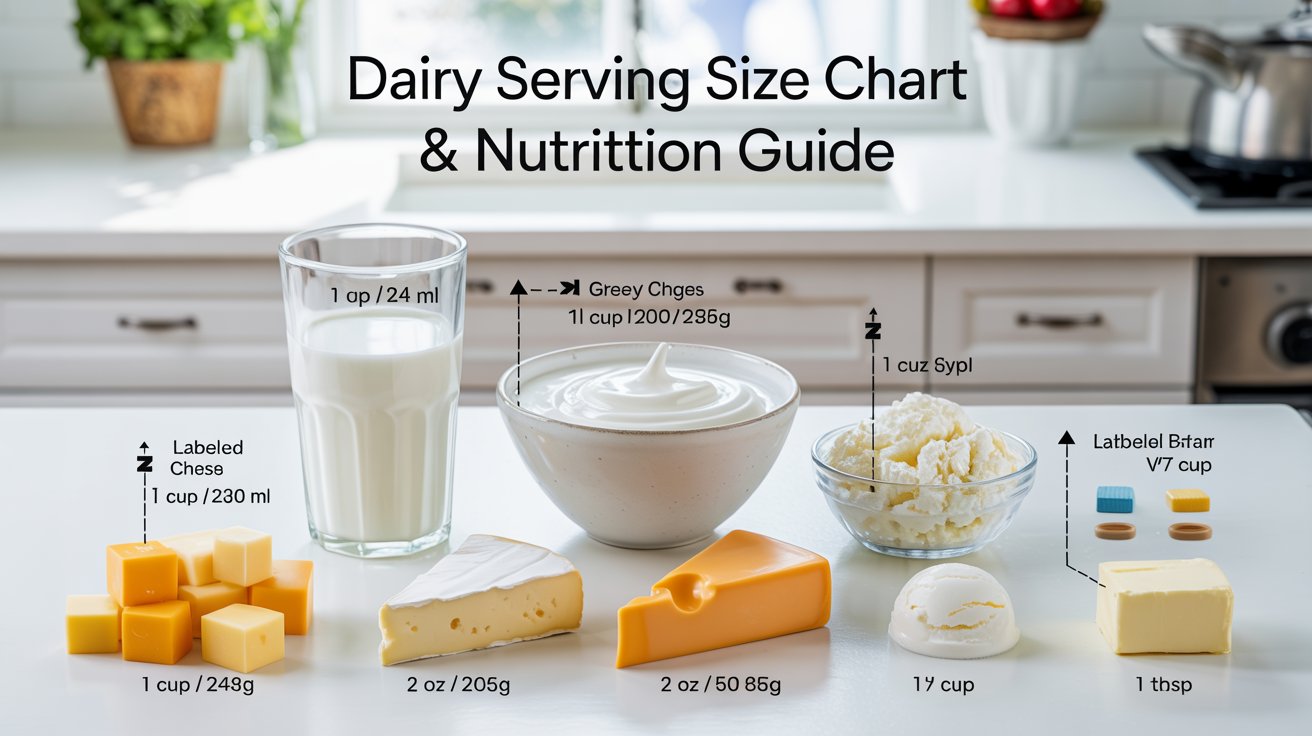
Dairy products like milk, cheese, and yogurt are rich in calcium, protein, and essential nutrients—but portion sizes can vary widely depending on the type. Understanding a dairy serving size chart helps you balance your diet, meet daily nutrient needs, and avoid overconsumption.
Why Dairy Serving Size Matters
Dairy foods are nutrient-dense, but they can also contain fat, calories, and sometimes added sugars. Portion control ensures you get the benefits without excess intake.
Knowing proper serving sizes helps you:
- Meet calcium and protein needs
- Control calories and fat intake
- Balance dairy with other food groups
Moderation is key for a healthy diet.
Standard Dairy Serving Sizes And Portions
Dairy servings are measured differently depending on the product.
Dairy Serving Size Chart
| Dairy Product | Serving Size | Weight/Volume (Approx.) | Calories |
|---|---|---|---|
| Milk | 1 cup | 240 ml | 100–150 |
| Yogurt | 1 cup | 200–245g | 120–180 |
| Cheese (Hard) | 1–1.5 oz | 28–42g | 100–120 |
| Cheese (Soft) | 2 oz | 50–60g | 100–150 |
| Cottage Cheese | ½ cup | 100–120g | 90–120 |
| Ice Cream | ½ cup | 65–75g | 130–200 |
| Butter | 1 tbsp | 14g | 100 |
These values may vary depending on fat content and brand.
Choosing The Right Dairy Serving Size
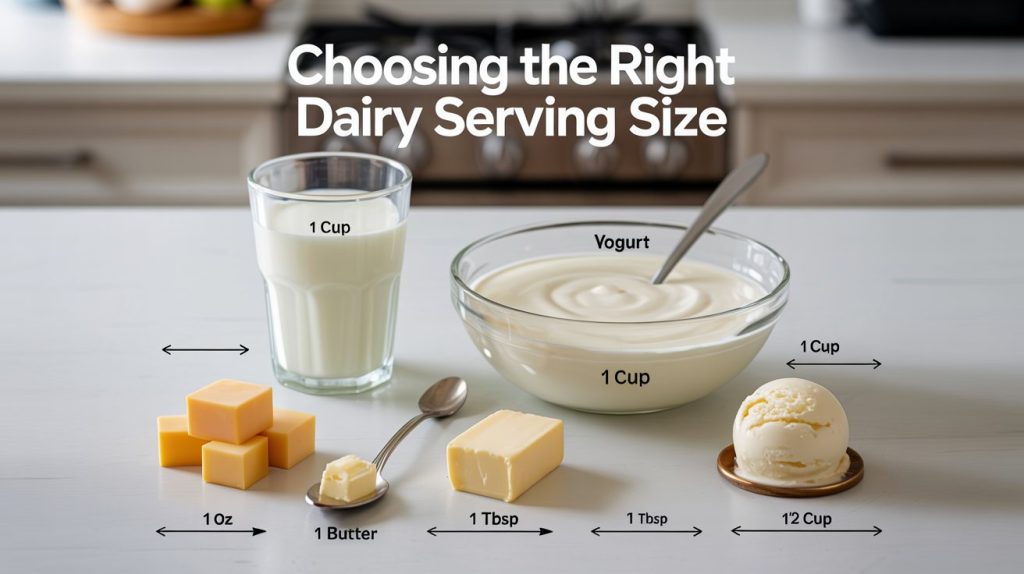
The best portion depends on your needs:
- Milk/Yogurt: 1 cup per serving
- Cheese: Small portions due to higher fat
- Butter: Use sparingly (1 tbsp or less)
- Ice cream: Treat-sized portion (½ cup)
Balancing different dairy types helps maintain a healthy diet.
Dairy Serving Size Comparison: Low-Fat Vs Full-Fat
Fat content affects calories and portion choices.
Low-Fat vs Full-Fat Dairy
| Type | Calories | Fat Content | Notes |
|---|---|---|---|
| Low-Fat | Lower | Reduced | Good for calorie control |
| Full-Fat | Higher | More fat | More flavor, more calories |
Choose based on your dietary goals.
Dairy Serving Size And Nutrition
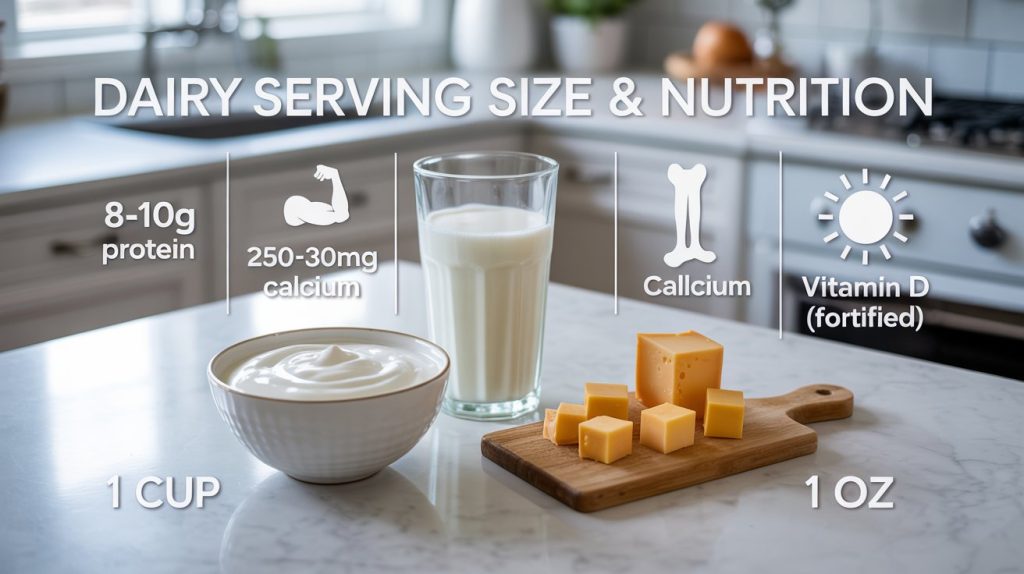
Dairy provides important nutrients like:
- Calcium
- Protein
- Vitamin D (fortified products)
A typical 1 cup milk or yogurt serving contains:
- 8–10g protein
- 250–300mg calcium
Cheese provides similar nutrients but in smaller portions.
Visual Guide: Dairy Serving Sizes
Here’s a simple way to estimate portions:
| Food | Visual Comparison | Serving Size |
|---|---|---|
| Milk | Standard glass | 1 cup |
| Yogurt | Small bowl | 1 cup |
| Cheese | Two dice | 1 oz |
| Butter | Thumb tip | 1 tbsp |
Visual cues make portioning easier.
Tips For Managing Dairy Portions
- Measure servings: Especially cheese and butter
- Choose low-fat options if needed: Reduces calories
- Limit added sugars: Check flavored yogurts
- Balance with other foods: Include fruits and grains
- Track intake: Especially if consuming multiple servings
Small habits help maintain balance.
Common Mistakes With Dairy Serving Sizes
- Overeating cheese: Easy to exceed portions
- Ignoring portion sizes in desserts: Ice cream adds up
- Choosing high-sugar yogurt: Increases calories
- Using too much butter: Adds excess fat
Being mindful helps you stay on track.
How Dairy Serving Size Affects Your Diet
The amount of dairy you consume impacts your calcium intake and overall calorie balance. Proper portions help support bone health while keeping your diet balanced.
Recommended Daily Dairy Intake
Most adults are advised to consume:
- 2–3 servings of dairy per day
This can include a mix of milk, yogurt, and cheese.
Frequently Asked Questions
What Counts As One Serving Of Dairy?
Examples include 1 cup milk, 1 cup yogurt, or 1 oz cheese.
Is Cheese A Full Dairy Serving?
Yes, but in smaller amounts due to higher fat content.
Can I Have Dairy Every Day?
Yes, in recommended portions.
Is Low-Fat Dairy Better?
It can help reduce calorie and fat intake.
How Do I Measure Dairy Without Tools?
Use visual cues like a glass (milk) or dice (cheese).
Dairy serving sizes may seem small, but they play a big role in your nutrition. By understanding the dairy serving size chart, you can enjoy dairy products in the right amounts while maintaining a balanced and healthy diet.
