
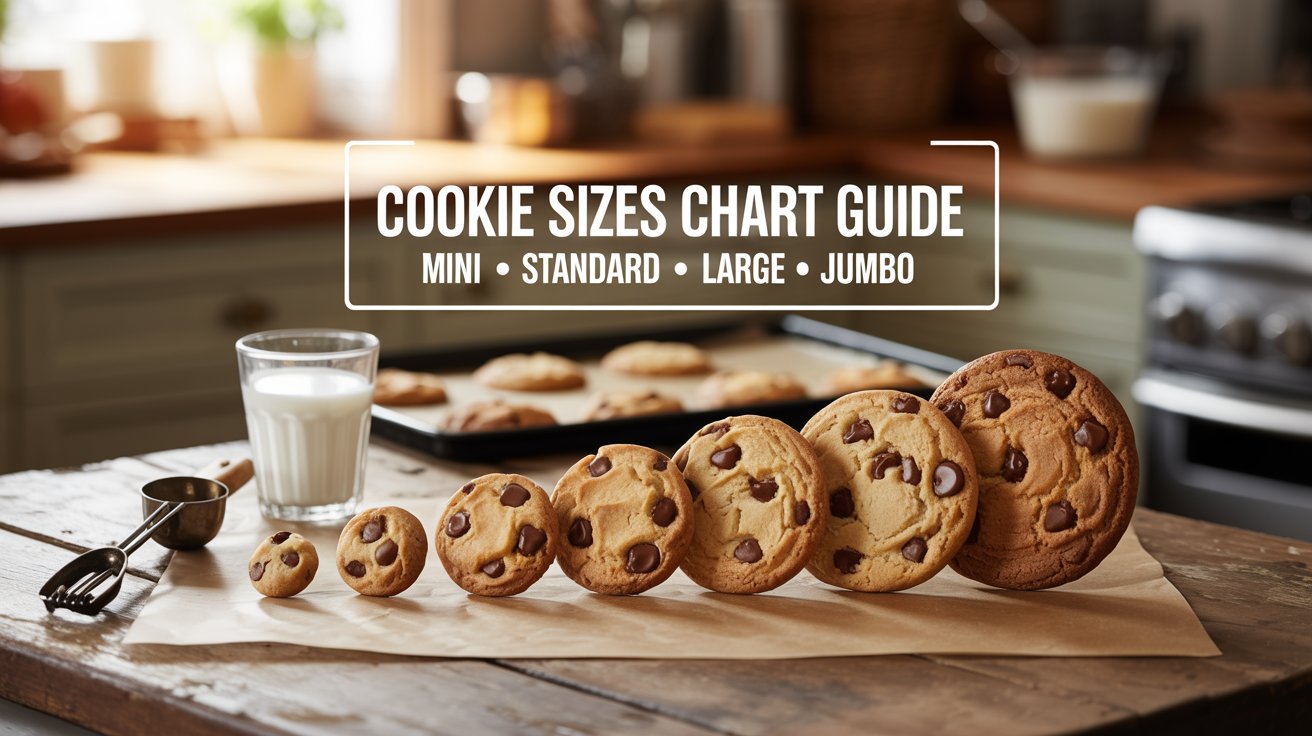
Imagine pulling a batch of warm, gooey cookies from the oven, their sweet aroma filling the kitchen and making your mouth water. Whether it’s for a cozy family night or a gathering with friends, the right cookie size can make all the difference in texture and enjoyment. Get ready to bake cookies that are perfectly sized and utterly delicious!
Here, you’ll find a comprehensive cookie sizes chart that includes everything from recommended diameters to baking times and temperatures. Expect to master your cookie game with total time of 30 minutes, easy difficulty level, and 12 servings!
Cookie Size Importance
Understanding the significance of cookie size is essential for achieving the perfect bake. The size of your cookies directly affects their texture and the baking time required, making it crucial to follow a reliable cookie sizes chart.
Impact on Texture
The texture of your cookies can vary significantly based on their size:
- Smaller cookies: These often achieve a crispier edge while maintaining a chewy center, thanks to faster baking times.
- Larger cookies: These tend to be softer and chewier throughout, as they take longer to bake, allowing the center to remain moist.
Baking Time Variation
Different cookie sizes require adjustments in baking time:
Cookie Size Chart
| Cookie Size | Diameter | Dough Weight | Baking Time | Temperature |
|---|---|---|---|---|
| Mini | 1–2 in (2.5–5 cm) | 10–20 g | 8–10 min | 350°F / 175°C |
| Standard | 2–3 in (5–7.5 cm) | 20–30 g | 10–12 min | 350°F / 175°C |
| Large | 3–4 in (7.5–10 cm) | 30–50 g | 12–15 min | 350°F / 175°C |
| Jumbo | 4–5 in (10–12 cm) | 50–80 g | 15–18 min | 350°F / 175°C |
✔ Standard cookie size: about 2.5 inches diameter
To ensure consistent results, refer to a cookie sizes chart when baking. This will help you anticipate changes in texture and baking time, ultimately leading to delicious cookies every time!
Cookie Sizes Chart
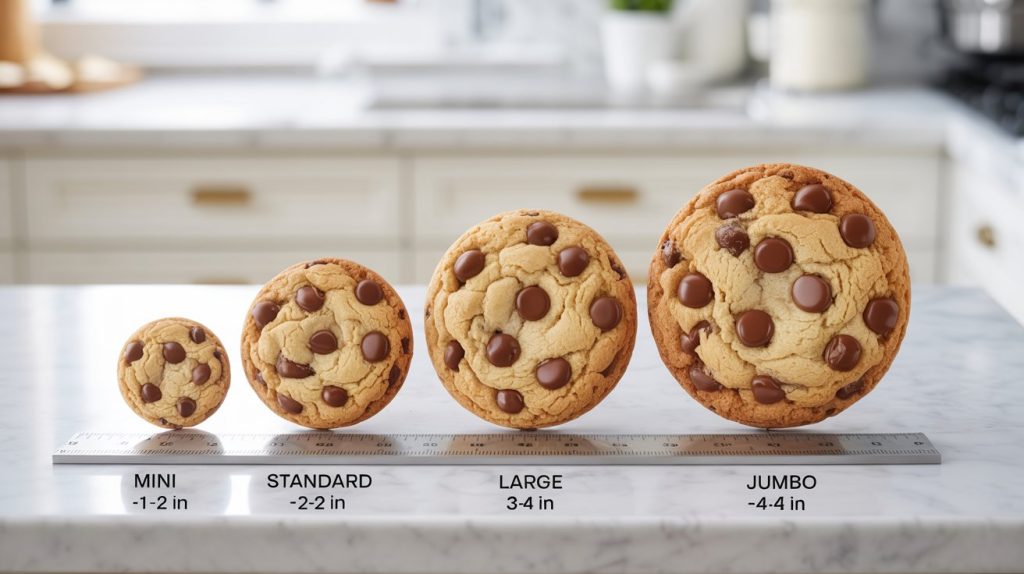
This section provides a detailed chart for cookie sizes, including recommended diameter and weight measurements, as well as suggested baking times and temperatures. Understanding these details is essential for achieving the perfect cookie texture and flavor.
Diameter Measurements
| Mini | 1-2 | 10-20 | 8-10 | 350 |
| Standard | 2-3 | 20-30 | 10-12 | 350 |
| Large | 3-4 | 30-50 | 12-15 | 350 |
| Jumbo | 4-5 | 50-80 | 15-18 | 350 |
Weight Measurements
- Mini Cookies: Aim for 10-20 grams each.
- Standard Cookies: Each should weigh 20-30 grams.
- Large Cookies: Expect a weight of 30-50 grams.
- Jumbo Cookies: These should be 50-80 grams per cookie.
Chef’s tip: Always use a kitchen scale for precision when measuring cookie dough, especially for uniform baking results.
Understanding these sizes and measurements will help you create cookies that are perfectly baked and delicious every time! Adjust baking times if your cookies are browning too quickly or not fully cooked by the indicated time.
Baking Times and Temperatures
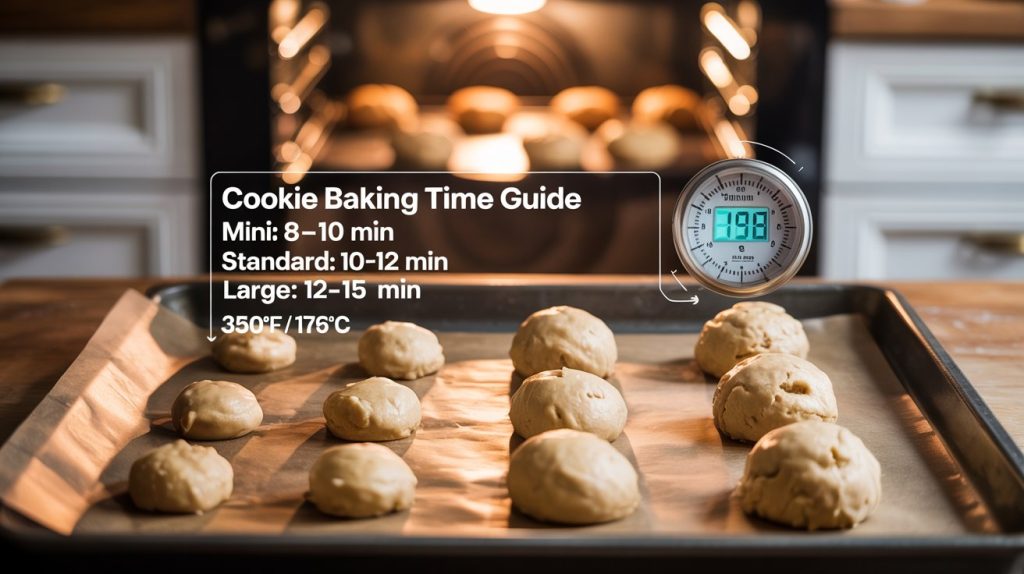
Understanding the baking times and temperatures for different cookie sizes is key to achieving that perfect texture and flavor. Whether you prefer small, medium, or large cookies, knowing the right settings will ensure your cookies are baked to perfection. Below is a detailed chart to guide you.
| Small Cookies | 1-2 inches / 0.5 oz | 350°F (175°C) | 8-10 minutes |
| Medium Cookies | 2-3 inches / 1 oz | 350°F (175°C) | 10-12 minutes |
| Large Cookies | 3-4 inches / 2 oz | 350°F (175°C) | 12-15 minutes |
Chef’s tip: For small cookies, keep an eye on them as they can quickly turn from perfectly golden to burnt. They should look slightly golden and firm around the edges but soft in the center when done.
- Small Cookies: Aim for a light golden brown color. If they spread too much, consider chilling the dough before baking.
- Medium Cookies: Look for a slight puffing and a golden bottom. If they remain too flat, check your baking soda or powder for freshness.
- Large Cookies: Should be golden on the edges but still soft in the middle; a slight indentation should remain when pressed lightly.
Achieving Consistent Sizes
Creating cookies that are uniform in size is essential for even baking and a beautiful presentation. By using the right tools and techniques, you can ensure that every cookie bakes to perfection. Here are some tips to help you achieve that consistency.
- Use a Cookie Scoop: A cookie scoop is a game-changer for achieving identical cookie sizes. Choose a scoop that holds about 1.5 tablespoons of dough for standard cookies. This will yield cookies that are approximately 2 inches in diameter. Make sure to fill the scoop completely, then level it off for accuracy.
- Chilling Dough: Chilling your cookie dough before baking is crucial. After scooping, place the dough balls on a baking sheet and refrigerate for at least 30 minutes. This helps solidify the fat, ensuring that the cookies maintain their shape and size while baking. You’ll notice a firmer, less spread-out cookie that holds its edges nicely.
- Measure Dough Portions: If you prefer to roll the dough into balls by hand, use a kitchen scale. Aim for about 30 grams (1 ounce) per cookie for uniformity. This method guarantees that each cookie will be the same weight, leading to consistent baking results.
- Test Bake: If you’re unsure about the size or baking time, do a test bake with a couple of cookies. This will allow you to adjust your baking time or temperature as needed. Aim for a light golden edge and a soft center; cookies should look set but still slightly underbaked.
Common Mistakes to Avoid
When baking cookies, size matters significantly for achieving the perfect texture and flavor. Understanding how to avoid common pitfalls related to cookie sizes can make all the difference in your baking success. Here, we’ll focus on two critical mistakes: overbaking small cookies and underbaking large cookies.
Overbaking Small Cookies
- Small cookies, typically around 1-2 inches in diameter, can bake quickly. Keep an eye on them, as they usually need only 8-10 minutes at 350°F (175°C).
- Signs of overbaking include a hard, dry texture and a darker color. Ideally, small cookies should be golden around the edges but soft in the center when you take them out of the oven.
- To prevent this, set a timer for 7 minutes, and check them. If they’re not done, add 1-2 minutes at a time, checking frequently.
Underbaking Large Cookies
- Large cookies, generally 3-4 inches in diameter, require 12-15 minutes at 350°F (175°C) to bake properly.
- Underbaked cookies will appear soft and may look shiny or wet in the center. This can lead to a doughy texture that doesn’t hold up and may spoil quickly.
- To ensure they are baked through, look for a slightly firm edge and a matte finish on top. If in doubt, use a toothpick; it should come out with just a few moist crumbs.
Remember: Adjust baking times based on your oven’s performance; some may run hotter or cooler than the set temperature.
Variations on Cookie Sizes
This section explores the delightful variations in cookie sizes, focusing on mini and giant cookies. Understanding how size affects baking time and texture can elevate your cookie-making game, ensuring that every batch turns out perfectly baked and delicious.
Mini Cookies
Mini cookies are perfect for bite-sized treats and are often a hit at gatherings. These cookies typically measure about 1 inch in diameter. Here’s a quick guide:
- Diameter: 1 inch (2.5 cm)
- Baking Temperature: 350°F (175°C)
- Baking Time: 6-8 minutes
Watch for a light golden edge while the center remains slightly soft. This ensures a chewy texture that contrasts beautifully with the crisp edges.
Giant Cookies
On the other end of the spectrum, giant cookies are impressive and satisfying, typically measuring around 4-5 inches in diameter. Here’s how to bake them:
- Diameter: 4-5 inches (10-12.5 cm)
- Baking Temperature: 350°F (175°C)
- Baking Time: 12-15 minutes
For giant cookies, you want a golden brown exterior, while the inside should feel soft and slightly underbaked. They will continue to set as they cool.
| Mini Cookies | 1 inch | 6-8 minutes | 350°F (175°C) |
| Giant Cookies | 4-5 inches | 12-15 minutes | 350°F (175°C) |
Chef’s tip: For even baking, ensure to space mini cookies well on the baking sheet, as they will spread slightly during baking.
Serving and Pairing Suggestions
Choosing the right accompaniments for your cookies can elevate them from a simple treat to a delightful experience. Here, we’ll explore some milk pairings and dessert platter ideas that complement various cookie sizes, ensuring your cookies shine at any gathering.
Milk Pairings
For classic cookies like chocolate chip or oatmeal raisin, pair them with cold whole milk (1 cup or 240ml) to balance the sweetness. The creamy texture of whole milk enhances the flavors and makes each bite more satisfying.
For Healthier Options
If you’re serving healthier cookies, such as almond flour or coconut macaroons, consider pairing them with unsweetened almond milk (1 cup or 240ml). This nutty flavor complements the cookies without overpowering them.
Dessert Platter Ideas
Create an enticing dessert platter by mixing various cookie sizes. For example, include small (1-inch) chocolate chip cookies, medium (2-inch) sugar cookies, and large (3-inch) peanut butter cookies. This variety not only adds visual appeal but also caters to different preferences.
Garnishes
Enhance your dessert platter with garnishes like fresh berries (1 cup or 150g) and whipped cream (1 cup or 240ml). The brightness of the berries and the creaminess of whipped cream pair beautifully with cookies, making your platter irresistible.
Presentation Tips
Arrange your cookies in a tiered stand or a large serving board. Use parchment paper or decorative napkins to separate the cookie types, which not only looks appealing but also prevents them from sticking together.
Quick Summary
| Prep Time | Cook Time | Total Time | Servings |
|---|---|---|---|
| 15 minutes | 10-12 minutes | 25-27 minutes | 24 cookies |
- Measure precisely: Use a kitchen scale for consistent cookie sizes.
- Oven temperature: Preheat to 350°F (175°C) for even baking.
- Chill dough: Refrigerate for at least 30 minutes to prevent spreading.
- Use parchment paper: Line baking sheets to ensure easy removal.
- Watch closely: Bake until edges are golden for the perfect texture.
- Key Tip: Larger cookies may need extra baking time; adjust accordingly.
- Key Tip: For uniformity, use a cookie scoop to portion dough.
Frequently Asked Questions
Can I make cookie dough ahead of time? How to store and reheat?
You can prepare cookie dough ahead of time and store it in the refrigerator for up to 3 days. To reheat, simply scoop and bake from chilled, adding an extra 1-2 minutes to the baking time.
What can I substitute for all-purpose flour?
If you need a substitute, you can use gluten-free flour blend at a 1:1 ratio, or for a healthier option, try almond flour, though you may need to adjust the liquid in the recipe.
How do I know when my cookies are done?
Your cookies are done when they are lightly golden around the edges and still soft in the center; they will continue to set as they cool. Generally, this takes about 10-12 minutes at 350°F (175°C).
Can I freeze cookie dough? How long does it last?
Yes, you can freeze cookie dough for up to 3 months. Just scoop the dough into balls, freeze them on a baking sheet, then transfer to a zip-top bag for easy baking later.
What if I don’t have a cookie scoop?
If you don’t have a cookie scoop, you can use a tablespoon to measure out equal portions of dough, ensuring they are about the same size for even baking. Just roll them into balls with your hands for a uniform shape.
