
Perfectly cooked rice is one of those essentials that can elevate any meal, whether it’s a cozy weeknight dinner or an impressive gathering with friends. Imagine fluffy grains, each one separate and full of flavor, ready to soak up your favorite sauces or pair with vibrant stir-fries. It’s comfort food at its best!
Understanding cooked rice serving sizes is crucial for meal planning. You’ll find clear recommendations for different types of rice, tips for measuring, and even solutions for common cooking mishaps. This guide will equip you with all the details you need.
History of Rice Serving Sizes
Understanding the history of rice serving sizes is essential, as it reflects not just culinary practices but also cultural significance across various regions. Rice has been a staple food for centuries, and the way it is served has evolved, influenced by societal norms and dietary habits.
- Ancient Cultures: In many ancient civilizations, such as in China and India, rice was often served in communal bowls. The serving sizes were not standardized, as it was common for families to eat together, taking what they desired from a shared pot. This practice emphasized the importance of community and shared meals.
- Regional Variations: Different regions have their own serving customs. For instance, in Japan, a typical serving size is about 150 grams (5.3 ounces) of cooked rice, while in Southeast Asia, it may be more generous, reflecting local dietary needs and preferences. These variations highlight how geography and culture shape eating habits.
- Modern Standardization: With globalization, rice serving sizes have become more standardized, especially in restaurants and packaged foods. Today, a common serving size is often cited as 1 cup (about 200 grams or 7 ounces) of cooked rice, which aligns with dietary guidelines and helps with portion control.
- Health Considerations: As health consciousness has grown, so has the focus on appropriate serving sizes. Nutritionists recommend measuring servings to avoid overeating, especially given rice’s carbohydrate content. This shift reflects a broader trend of awareness about balanced diets and caloric intake.
Standard Serving Size Defined
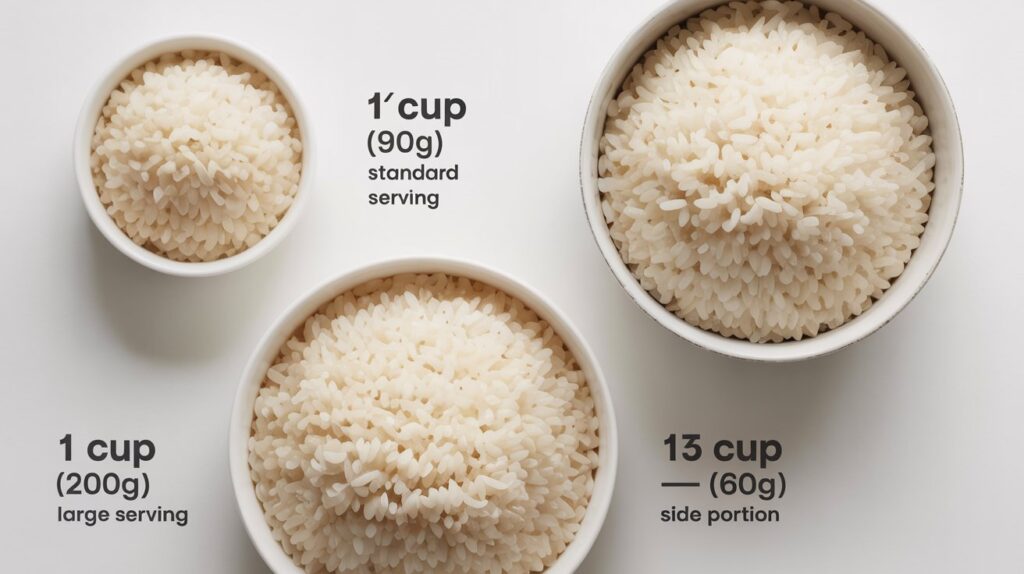
Understanding the standard serving size for cooked rice is essential for portion control and meal planning. A typical serving can vary based on dietary needs, type of rice, and personal preferences. Here, we’ll break down what constitutes a standard serving size and why it matters for your cooking and health.
- Standard Serving Size: Generally, a standard serving of cooked rice is about 1 cup (around 200 grams). This amount provides a good balance of carbohydrates for an average adult meal.
- Dietary Considerations: If you are watching your carbohydrate intake, consider a serving size of ½ cup (about 100 grams). This is particularly useful for those following low-carb diets.
- Family Style Serving: When serving rice at a family meal, it’s often helpful to prepare a large batch. A good guideline is to cook ½ cup (about 90 grams) of uncooked rice per person, which yields approximately 1.5 cups of cooked rice.
Chef’s tip: If you’re cooking for kids or smaller appetites, a serving size of ⅓ cup (about 70 grams) of cooked rice works perfectly.
| Rice Type | Recommended Cooked Portion | Notes |
|---|---|---|
| White rice | ½–1 cup | Lighter texture |
| Brown rice | ½–¾ cup | More fiber, more filling |
| Jasmine rice | ½–1 cup | Softer, aromatic |
| Basmati rice | ½–1 cup | Long grain, fluffy |
| Sushi rice | ½ cup | Denser & sticky |
Serving Sizes by Rice Type
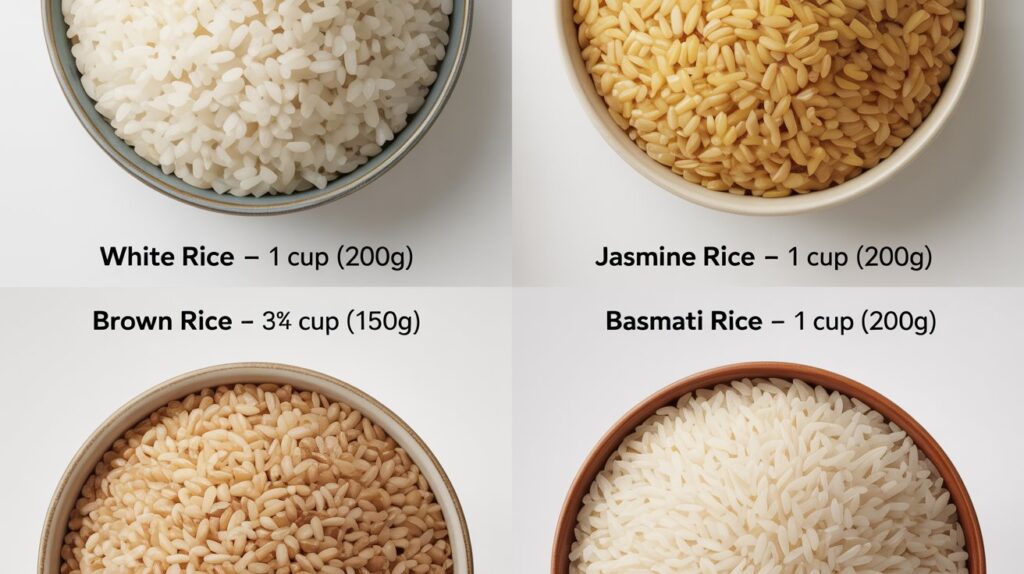
Understanding the appropriate serving sizes for different types of cooked rice is essential for meal planning and dietary considerations. Each rice variety has its unique characteristics, affecting how much you might want to serve. Here’s a breakdown of recommended serving sizes for common types of rice.
White Rice
- Cooked serving size: 1 cup (about 200g)
White rice is fluffy and light when cooked, with a slightly sticky texture. It pairs well with various dishes and is often the go-to for many meals.
Brown Rice
- Cooked serving size: ¾ cup (about 150g)
Brown rice has a nutty flavor and chewy texture. It’s denser than white rice, so a slightly smaller serving size is appropriate. When cooked, it should be tender yet firm to the bite.
Jasmine Rice
- Cooked serving size: 1 cup (about 200g)
Known for its fragrant aroma and soft, slightly sticky texture, jasmine rice is perfect for pairing with Asian dishes. It should be moist but not overly wet when cooked.
Basmati Rice
- Cooked serving size: 1 cup (about 200g)
Basmati rice is long-grained and remains separate when cooked. It has a delicate flavor and should be fluffy and aromatic, making it ideal for Indian cuisine.
Chef’s tip: Adjust serving sizes based on personal dietary needs or caloric intake. For lighter meals, consider reducing portions by ¼ cup.
| Type of Rice | Cooked Serving Size | Approximate Weight |
|---|---|---|
| White Rice | 1 cup | 200g |
| Brown Rice | ¾ cup | 150g |
| Jasmine Rice | 1 cup | 200g |
| Basmati Rice | 1 cup | 200g |
Measuring Cooked Rice Accurately
Getting the right serving size of cooked rice is essential for both flavor balance and dietary needs. Whether you’re serving a family dinner or prepping meals for the week, accurate measurements can help prevent waste and ensure everyone is satisfied.
- Use a Measuring Cup: For precise portions, use a standard measuring cup. A typical serving size of cooked rice is about 1/2 cup (125ml) per person. This measurement provides a good balance with protein and vegetables for a complete meal.
- Weigh the Rice: If you want to be even more accurate, consider weighing your cooked rice. One cup of cooked rice typically weighs around 200 grams. Use a kitchen scale to get exact measurements, especially if you are meal prepping.
- Visual Cues: If you don’t have measuring tools handy, a general guideline is that a serving of rice should fill about half of a standard coffee mug. This method can help you gauge portions without needing a cup.
- Adjust for Types of Rice: Different types of rice can yield varying volumes. For example, fluffy basmati may appear less dense than sticky sushi rice. Always measure according to your specific type of rice to maintain consistency in servings.
- Store Leftovers Properly: If you have leftover rice, store it in an airtight container in the refrigerator. It typically stays good for 4-6 days. Make sure to reheat it thoroughly, ideally to 165°F (74°C) to ensure safety.
Dietary Considerations for Portions
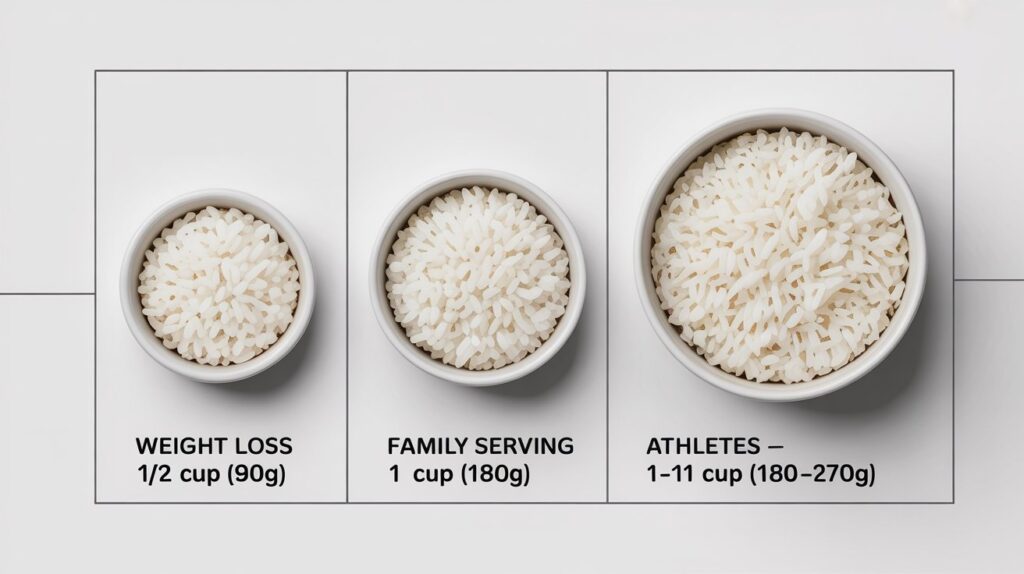
When it comes to serving sizes for cooked rice, understanding dietary needs is essential. Different individuals and groups have varying requirements, which can influence the amount of rice you serve. Here’s a breakdown tailored for weight loss, athletes, and families.
For Weight Loss
To support weight loss, aim for a smaller serving size of cooked rice, typically around ½ cup (90g) per meal. This portion provides sufficient carbohydrates while keeping calorie intake in check. Pair it with plenty of vegetables and lean proteins to create a balanced meal that feels satisfying.
For Athletes
Athletes often require more energy, so a serving size can increase to about 1 to 1½ cups (180-270g) of cooked rice. This higher portion helps fuel workouts and supports recovery. Consider combining rice with protein sources, like chicken or legumes, to enhance its nutritional value post-exercise.
For Families
When serving rice for a family, a good rule of thumb is 1 cup (180g) of cooked rice per person. This amount works well for a balanced meal when served with a variety of dishes. If you’re cooking for children, consider reducing the portion to ½ cup (90g) and pairing it with their favorite proteins and veggies to encourage a well-rounded diet.
Common Mistakes in Serving Rice
Understanding the common mistakes in serving rice can help you achieve the perfect portion size every time. Many home cooks struggle with estimating how much rice to serve, leading to either waste or unsatisfied diners. Here are some frequent pitfalls to avoid.
- Overestimating servings: A common mistake is assuming that everyone will eat more than they actually do. Standard serving size is about ½ cup (90g) of cooked rice per person. Adjust based on your guests’ appetites or dietary needs.
- Ignoring rice type: Different types of rice can have varying textures and expand differently. For example, long-grain rice typically yields more than short-grain rice. Make sure to consider this when determining serving sizes.
- Not accounting for other dishes: If rice is part of a larger meal with multiple side dishes, you might need to reduce your rice portions. Think of it as balancing your plate.
- Using dry measurements: Many home cooks mistakenly measure rice in its dry form when serving cooked rice. Remember, uncooked rice expands significantly when cooked, so always measure after cooking.
Chef’s tip: If you’re unsure about portion sizes, it’s better to make a bit extra. Leftover rice can be stored in the refrigerator for up to 5 days or frozen for up to a month!
| Type of Rice | Cooked Serving Size per Person |
|---|---|
| Long-grain | ½ cup (90g) |
| Short-grain | ⅓ cup (60g) |
| Brown rice | ¾ cup (135g) |
Visual Aids for Portion Sizes
Understanding portion sizes for cooked rice is essential for meal planning and ensuring balanced servings. Visual aids can help clarify what a typical serving looks like, taking the guesswork out of portion control. Below are representations of different serving sizes based on common types of rice and dietary considerations.
Typical Serving Sizes
- Standard Serving: ½ cup (90g) cooked rice per person, which is approximately the size of a large ice cream scoop.
- For Side Dishes: ⅓ cup (60g) cooked rice, enough for a side portion alongside proteins and vegetables.
- For Main Dishes: 1 cup (180g) cooked rice, suitable for a hearty meal with additional toppings or sauces.
Visual Representation
| White Rice | ½ cup (90g) |  |
| Brown Rice | ½ cup (90g) |  |
| Jasmine Rice | ½ cup (90g) |  |
| Quinoa | ½ cup (90g) |  |
Chef’s tip: Use measuring cups to ensure accurate portion sizes, especially when preparing meals for guests or meal prepping for the week ahead.
Serving Suggestions and Pairings
Understanding how to serve cooked rice appropriately enhances your meals and ensures everyone gets just the right amount. Here are some suggestions for serving sizes based on various types of rice and ideal pairings to create a satisfying dining experience.
Standard Serving Size: For most types of cooked rice, such as white or brown rice, a typical serving size is about ½ cup (100g). This amount provides a good base for dishes and can be paired with vegetables, proteins, or sauces.
Jasmine and Basmati Rice: If you’re using fragrant rice varieties like jasmine or basmati, consider slightly smaller portions, around ⅓ cup (75g) per serving. These aromatic rices tend to be a flavorful side, so a smaller amount can still deliver a satisfying taste experience.
Risotto: When serving risotto, aim for about ¾ cup (150g) per person. Risotto is rich and creamy, often serving as a main dish, so this portion accounts for its hearty nature.
Rice Bowls: For rice bowls topped with protein and vegetables, a larger serving of 1 cup (200g) of cooked rice is ideal. This allows ample space for toppings while keeping the rice as the foundation of the meal.
Dietary Considerations: Adjust portions for specific dietary needs. For example, if you’re on a low-carb diet, consider reducing the portion to ¼ cup (50g). Always listen to your body’s hunger cues and adjust as necessary.
Chef’s tip: Use a measuring cup to ensure consistent serving sizes, which helps in maintaining balanced meals and controlling portions effectively.
Quick Summary
| Prep Time | Cook Time | Total Time | Servings |
|---|---|---|---|
| 5 minutes | 20 minutes | 25 minutes | 4 servings |
- Measure rice accurately: Use 1 cup of uncooked rice for 2-3 servings.
- Rinse rice well: Wash under cold water until water runs clear to remove excess starch.
- Water ratio: Use 2 cups of water for every 1 cup of rice.
- Simmer covered: Cook on low heat for 18-20 minutes, then let it sit off the heat for 5 minutes.
- Fluff with a fork: This prevents clumping and enhances texture.
- Tip: Use a tight-fitting lid to trap steam for perfect rice.
- Tip: Allow rice to rest covered after cooking for better absorption.
Frequently Asked Questions
Can I make this ahead of time? How to store and reheat?
You can definitely make cooked rice ahead of time! Store it in an airtight container in the refrigerator for up to 4-6 days, and reheat in the microwave or on the stovetop with a splash of water to keep it moist.
What can I substitute for white rice?
If you need a substitute for white rice, you can use quinoa or brown rice; just adjust the cooking times accordingly, as quinoa cooks in about 15 minutes and brown rice takes around 45 minutes.
How do I know when it’s done?
Your rice is done when all the water is absorbed and the grains are tender; you can test this by fluffing it with a fork to see if it separates easily.
Can I freeze this? How long does it last?
Yes, you can freeze cooked rice! It will last in the freezer for up to 6 months, just make sure to cool it completely before transferring to a freezer-safe container.
What if I don’t have a rice cooker?
No worries! You can cook rice perfectly on the stovetop by using a ratio of 1 cup rice to 2 cups water, bringing it to a boil, then covering and simmering on low for about 18 minutes.
