
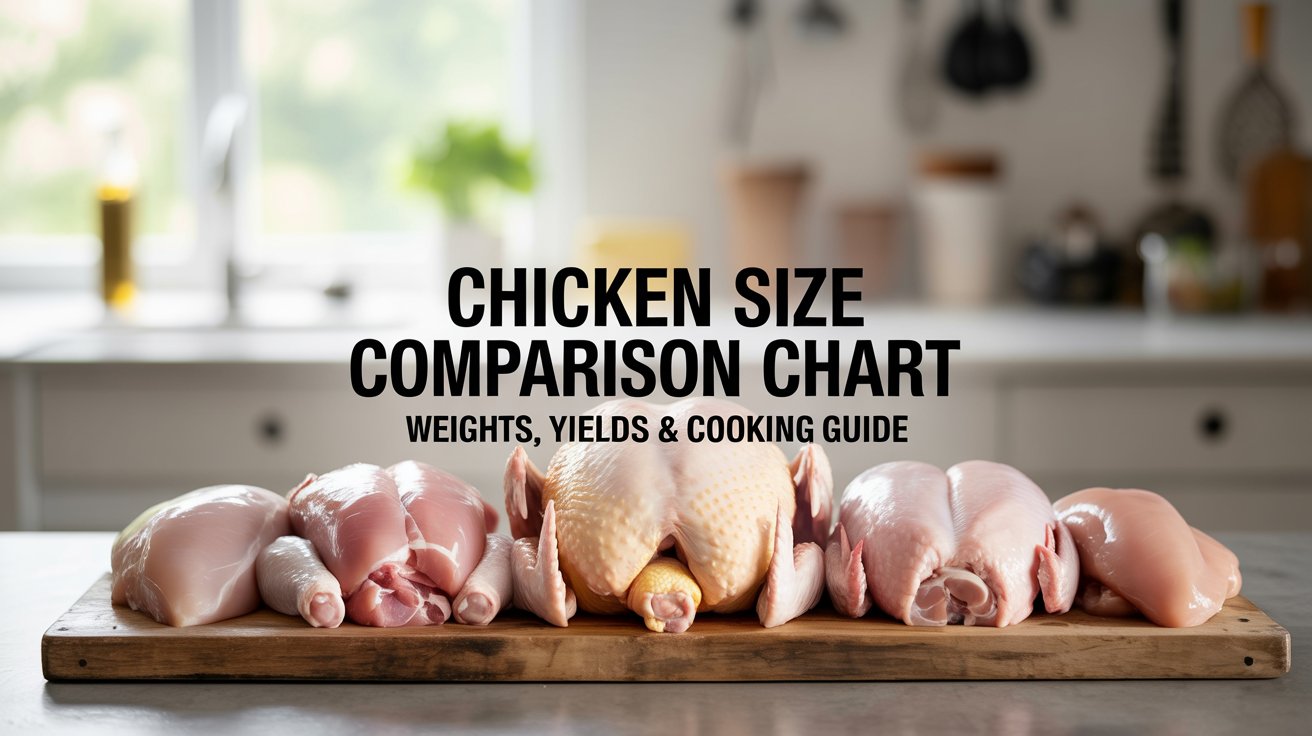
If you’re looking for the ultimate chicken dish that can turn any weeknight into a feast, you’ve come to the right place! Juicy, succulent chicken not only warms the heart but also brings the family together around the table. Whether it’s crispy wings or tender thighs, there’s something comforting about perfectly cooked chicken that everyone loves.
With this guide, you’ll find a comprehensive chicken size comparison chart featuring whole chickens, breasts, thighs, and wings, along with key cooking yield information. Get ready for easy-to-follow recipes that match each cut, ensuring delicious meals every time!
Origin of Chicken Cuts
This section delves into the historical background and culinary importance of different chicken cuts, providing a foundation for understanding their significance in cooking. Knowing the origin of these cuts can enhance your appreciation for chicken dishes and guide you in selecting the right type for your recipes.
- Historical Background: The domestication of chickens dates back over 8,000 years in Southeast Asia. Initially bred for their eggs and later for meat, chickens became a staple in various cultures, leading to the development of distinct cuts for different cooking methods.
- Culinary Importance: Different cuts of chicken are significant in many culinary traditions, each offering unique textures and flavors. For instance, the breast is lean and versatile, while thighs provide a richer taste, perfect for braising and roasting.
- Regional Variations: Various cuisines around the world have unique ways of utilizing chicken cuts. In French cuisine, for example, the whole chicken is often roasted, whereas in Asian dishes, you might find chicken cut into smaller pieces for stir-frying.
- Modern Trends: Today, the popularity of specific cuts varies, influenced by health trends and cooking styles. Skinless chicken breasts are favored for their low-fat content, while bone-in cuts are appreciated for their flavor and moisture retention during cooking.
Chicken Size Comparison Chart
Understanding the various sizes and cuts of chicken is essential for any home cook. This section provides a detailed comparison chart that illustrates whole chickens, breasts, thighs, and wings, along with information on the amount of meat each cut yields and the best recipes suited for them.
Whole Chicken
- Average Weight: 3-4 pounds (1.4-1.8 kg)
- Yield: Approximately 2-3 pounds (900-1360 g) of meat
- Best for: Roasting, grilling, or making broth
Chicken Breasts
- Average Weight: 6-8 ounces (170-227 g) per breast
- Yield: About 30% of a whole chicken’s weight
- Best for: Grilling, baking, or sautéing
Chicken Thighs
- Average Weight: 4-6 ounces (113-170 g) per thigh
- Yield: Approximately 25% of a whole chicken’s weight
- Best for: Braising, frying, or slow cooking
Chicken Wings
- Average Weight: 3-4 ounces (85-113 g) per wing
- Yield: About 15% of a whole chicken’s weight
- Best for: Baking, frying, or grilling
| Whole Chicken | 3-4 lbs | 2-3 lbs | Roast Chicken, Chicken Soup |
| Breasts | 6-8 oz | 30% | Grilled Chicken, Chicken Salad |
| Thighs | 4-6 oz | 25% | Chicken Adobo, BBQ Thighs |
| Wings | 3-4 oz | 15% | Buffalo Wings, Honey Garlic Wings |
Meat Yield Information
This section provides a detailed look at the meat yield from various cuts of chicken, which is crucial for planning your meals and recipes. Knowing the amount of meat you can expect from different chicken sizes helps you make informed decisions when buying and cooking your chicken.
Whole Chicken Yield
A whole chicken typically weighs around 3.5 to 4.5 pounds (1.6 to 2 kg). From this, you can expect to yield about 50-60% of the weight in meat, which translates to approximately 1.75 to 2.5 pounds (0.8 to 1.1 kg) of usable meat. Whole chickens are versatile and perfect for roasting, grilling, or making broth.
Breast Yield
Chicken breasts are one of the most popular cuts, yielding about 30% of the whole chicken’s weight. For a 4-pound (1.8 kg) chicken, you can expect to harvest around 1.2 pounds (0.5 kg) of breast meat. This cut is ideal for grilling, sautéing, or baking due to its lean nature and mild flavor.
Thigh Yield
Chicken thighs, known for their rich flavor and tenderness, yield about 20-25% of the whole chicken’s weight. From a 4-pound (1.8 kg) chicken, you can typically obtain approximately 0.8 to 1 pound (0.36 to 0.45 kg) of thigh meat. These cuts are excellent for braising, roasting, or slow cooking to achieve maximum flavor.
Wing Yield
Chicken wings yield about 10% of a whole chicken’s weight, so from a 4-pound (1.8 kg) chicken, you can expect around 0.4 pounds (0.18 kg) of wing meat. Wings are perfect for frying, grilling, or baking, especially when tossed in sauces for added flavor.
Recommended Recipes for Each Cut
This section offers a selection of delicious recipes tailored for various chicken cuts, ensuring you know exactly how to make the most of each size. Whether you’re roasting a whole chicken or preparing wings for a game day snack, these recipes are designed to highlight the unique qualities of each cut.
Whole Chicken Recipes
- Herb-Roasted Whole Chicken
- BBQ Spatchcock Chicken
Ingredients:
- 1 whole chicken (about 4-5 pounds)
- 2 tablespoons olive oil
- 1 tablespoon salt
- 1 teaspoon black pepper
- 1 tablespoon fresh rosemary, chopped
- Preheat your oven to 375°F (190°C). Pat the chicken dry with paper towels.
- Rub the chicken with olive oil, salt, pepper, and rosemary. Ensure it’s evenly coated.
- Place the chicken in a roasting pan, breast side up, and roast for 1 hour and 15 minutes or until the internal temperature reaches 165°F (74°C).
Chef’s tip: Let the chicken rest for 10-15 minutes before carving for juicier meat.
Breast Recipes
- Stuffed Chicken Breasts
- Lemon Garlic Chicken Breast
Ingredients:
- 2 chicken breasts (about 6 ounces each)
- 1 cup spinach, chopped
- ½ cup cream cheese
- 1 tablespoon garlic, minced
- Preheat your oven to 400°F (200°C). Slice a pocket into each chicken breast.
- In a bowl, mix the spinach, cream cheese, and garlic. Stuff each breast with the mixture.
- Season the outside with salt and pepper, then bake for 25-30 minutes until the internal temperature hits 165°F (74°C).
Thigh Recipes
- Honey Garlic Chicken Thighs
- Crispy Baked Chicken Thighs
Ingredients:
- 4 chicken thighs (bone-in, skin-on)
- ¼ cup honey
- 3 tablespoons soy sauce
- 3 cloves garlic, minced
- Preheat your oven to 425°F (220°C). In a bowl, whisk together honey, soy sauce, and garlic.
- Place chicken thighs in a baking dish and pour the sauce over them, making sure they are well coated.
- Bake for 35-40 minutes until the skin is crispy and the internal temperature reaches 165°F (74°C).
Wing Recipes
- Buffalo Chicken Wings
- Garlic Parmesan Chicken Wings
Ingredients:
- 2 pounds chicken wings
- ½ cup hot sauce
- ¼ cup butter
- 1 tablespoon
Cooking Tips for Chicken Cuts
Understanding how to cook chicken properly can elevate your dishes from good to great. This section highlights common mistakes to avoid and expert tips that will ensure your chicken is juicy, flavorful, and perfectly cooked, regardless of the cut you choose.
- Avoid overcrowding the pan: When sautéing or searing chicken, make sure not to overcrowd the pan. If the pieces are too close together, they will steam rather than brown, resulting in a less desirable texture and flavor.
- Check for doneness: Use a meat thermometer to ensure that chicken reaches an internal temperature of 165°F (74°C). This is crucial for food safety and helps avoid dry, overcooked chicken.
- Let it rest: After cooking, allow your chicken to rest for 5-10 minutes before slicing. This helps the juices redistribute throughout the meat, making it more tender and moist.
- Marinate for flavor: For cuts like chicken breasts or thighs, marinate for at least 30 minutes or up to 24 hours. Use acidic components like lemon juice or vinegar to enhance flavor and tenderness.
- Use the right cooking method: Certain cuts are better suited to specific cooking methods. For example, grilling works well for chicken breasts, while braising is ideal for thighs and drumsticks.
Chef’s tip: If you’re cooking chicken wings, toss them in a mixture of baking powder and salt before baking to achieve extra crispy skin!
Variations and Substitutions
When it comes to cooking chicken, dietary modifications can play a crucial role in catering to different preferences and needs. This section will explore gluten-free options and vegan alternatives that can be used in place of traditional chicken cuts, ensuring everyone can enjoy delicious meals.
Gluten-Free Options
For those with gluten sensitivities, it’s essential to choose ingredients that do not contain gluten. Here are some substitutes that work well:
- Use gluten-free soy sauce instead of regular soy sauce in marinades.
- Opt for rice flour or cornstarch as a coating for crispy chicken instead of all-purpose flour.
- Choose gluten-free breadcrumbs for breading chicken cutlets.
These substitutions ensure your dishes remain flavorful while being safe for gluten-free diets.
Vegan Alternatives
If you’re looking for a plant-based option, several substitutes can mimic the texture and flavor of chicken cuts:
- Jackfruit: Use young green jackfruit as a shredded chicken substitute in tacos or sandwiches. It absorbs flavors well and has a similar texture.
- Tofu: Firm tofu can be cubed and marinated, then sautéed or grilled to replicate chicken pieces.
- Tempeh: This fermented soy product has a nutty flavor and can be sliced or crumbled to replace chicken in stir-fries or salads.
Chef’s tip: Marinating your vegan substitutes in similar spices and sauces as you would with chicken can enhance their flavor and make them more enjoyable!
Serving and Plating Suggestions
Understanding how to serve and plate chicken dishes effectively enhances both presentation and enjoyment. This section will guide you on the best practices for serving various chicken sizes and suggest pairing ideas that can elevate your meal.
- Whole Chicken: For a whole roasted chicken, carve it into serving pieces right before serving. Arrange the pieces on a large platter and garnish with fresh herbs, like rosemary or parsley, for an inviting presentation. Drizzle some of the pan juices over the chicken to keep it moist and flavorful.
- Chicken Breasts: Slice cooked chicken breasts against the grain for tenderness. Serve them on individual plates and top with a light sauce, such as a lemon butter or a creamy mushroom sauce. Pair with a side of roasted vegetables or a fresh salad for a balanced meal.
- Chicken Thighs: Braised or grilled chicken thighs can be served directly in their cooking vessel, allowing guests to help themselves. For a rustic touch, serve with a side of mashed potatoes or couscous to soak up the delicious juices.
- Chicken Wings: Arrange wings on a large platter with a variety of dipping sauces, like blue cheese or ranch. This casual presentation encourages sharing and makes for a fun, interactive dining experience, especially for game days or gatherings.
Pairing Suggestions
- For Whole Chicken: Pair with roasted seasonal vegetables and a light white wine, such as Sauvignon Blanc.
- For Chicken Breasts: Complement with a crisp green salad and a glass of Chardonnay.
- For Chicken Thighs: Serve with hearty grains like quinoa or barley, and a medium-bodied red wine like Pinot Noir.
- For Chicken Wings: Offer alongside celery sticks and carrot sticks, with a refreshing beer or a sweet iced tea.
Frequently Asked Questions
Can I make this ahead of time? How to store and reheat?
You can prepare your chicken size comparison chart ahead of time and store it in a cool, dry place. To reheat, simply refer back to the measurements as needed, and you might want to keep it in a digital format for easy access.
What can I substitute for a whole chicken in this comparison?
If you don’t have a whole chicken, you can use chicken parts like thighs or breasts, keeping in mind that the cooking times will vary. Just remember to adjust the cooking times based on the weight of the parts you choose, as different cuts have different cooking times.
How do I know when the chicken sizes are accurately compared?
You can ensure accuracy by using a kitchen scale and measuring the weight of each chicken size, as this is the most reliable method. Make sure to refer to the USDA guidelines for safe cooking weights to confirm your comparisons.
Can I freeze this chart? How long does it last?
While you can’t freeze the chart itself, you can save it as a PDF or image on your computer for long-term use. It will last indefinitely as long as you keep it in a safe digital format, but updating it annually is a good practice.
What if I don’t have a kitchen scale to measure chicken sizes?
If you don’t have a kitchen scale, you can use measuring cups or visual comparisons based on standard size references. Remember that one pound of chicken roughly equals two cups of shredded meat, which can help you gauge sizes when needed.
