
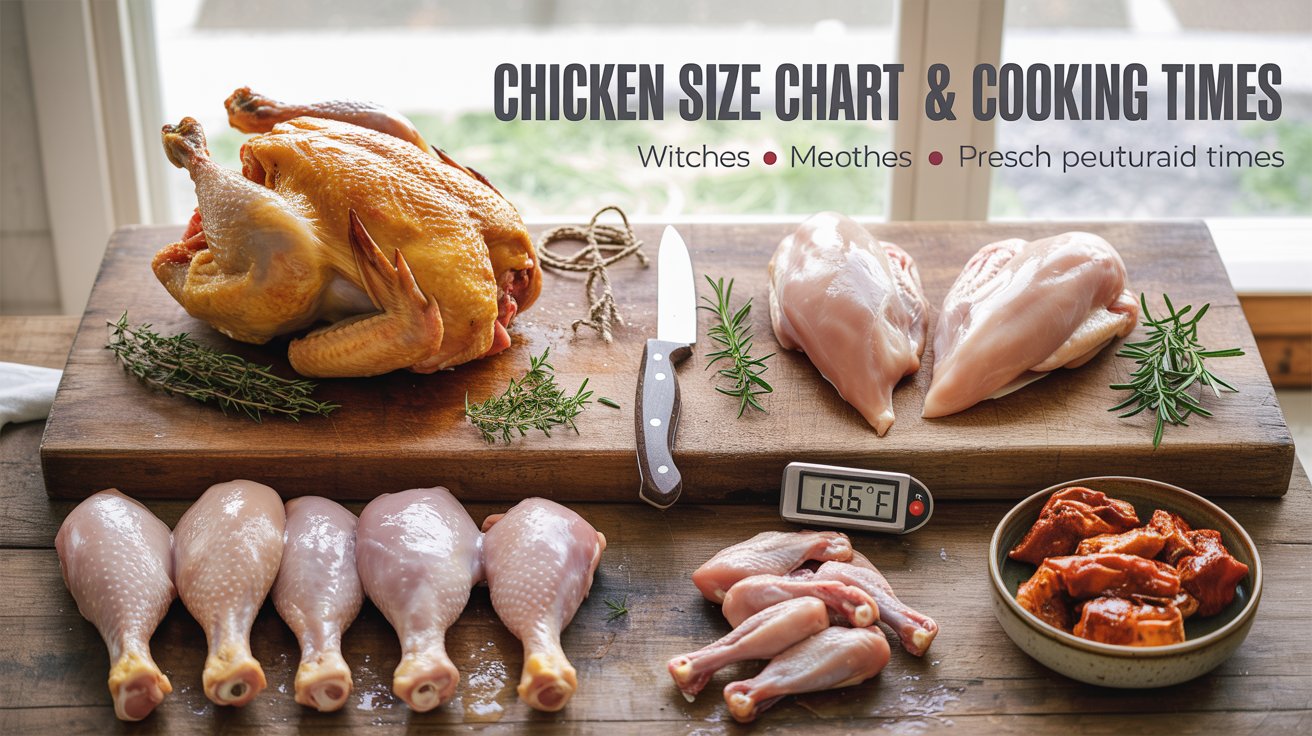
Understanding chicken sizes can make or break your meals, whether it’s a juicy roast for Sunday dinner or quick chicken stir-fry on a busy weeknight. Selecting the right size ensures perfect cooking, so every bite is succulent and flavorful. Your taste buds will thank you!
Get ready to discover a comprehensive chicken sizes chart that includes weights, cooking times, and easy recipes for each size. You’ll feel confident in your kitchen with clear instructions and tips to tackle any hiccups along the way.
Chicken Size Chart
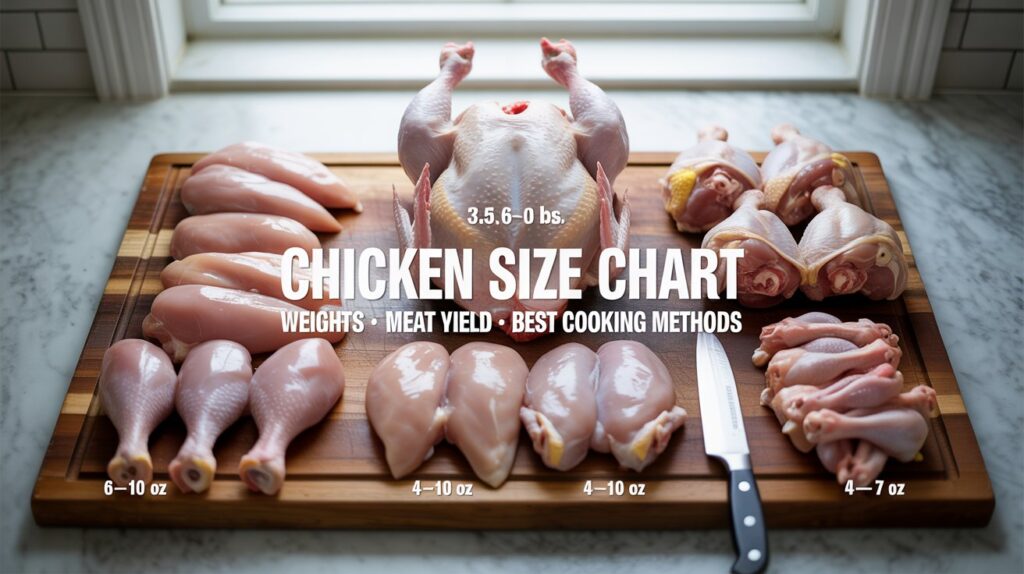
This section provides a comprehensive chicken size chart that details various cuts and their typical weights. Knowing the size of chicken parts is essential for selecting the right cut for your recipes and ensuring proper cooking times for perfect results.
| Cut | Average Weight | Meat Yield | Best Cooking Method |
|---|---|---|---|
| Whole Chicken | 3.5–6 lbs (1.6–2.7 kg) | 50–60% usable meat | Roast, grill |
| Boneless Breast | 6–10 oz (170–280g) | ~95% meat | Grill, bake |
| Bone-in Thigh | 4–7 oz (113–200g) | 70–75% meat | Roast, braise |
| Drumstick | 4–5 oz (113–142g) | ~65% meat | Roast, grill |
| Wing | 3–4 oz (85–113g) | ~60% edible | Bake, fry |
Understanding these sizes helps in meal planning and ensures that your chicken is cooked thoroughly. Here are some additional details about common chicken cuts:
- Whole Chicken: Ideal for roasting, generally requires longer cooking times.
- Chicken Breasts: Lean and quick to cook; perfect for grilling or pan-searing.
- Chicken Thighs: Juicier and more forgiving if slightly overcooked; great for braising.
- Chicken Wings: Popular for appetizers; often baked or fried for crispy texture.
- Chicken Drumsticks: Easy to handle and packed with flavor; versatile for various cooking methods.
Chef’s tip: Always weigh your chicken cuts if unsure about cooking times to avoid undercooking or overcooking.
Weight and Cooking Times
This section provides a comprehensive chart of various chicken sizes, detailing their weights and the recommended cooking times for each. Understanding these specifics is crucial for achieving perfectly cooked chicken, ensuring it is tender, juicy, and safe to eat.
| Whole Chicken | 3-4 lbs | 1 hour 30 minutes to 2 hours |
| Chicken Breast | 6-8 oz | 20-30 minutes |
| Chicken Thigh | 4-6 oz | 30-40 minutes |
| Chicken Wing | 2-4 oz | 25-30 minutes |
| Chicken Drumstick | 4-6 oz | 35-45 minutes |
Chef’s tip: Always check the internal temperature of chicken with a meat thermometer. It should reach 165°F (75°C) to ensure safety.
- Whole Chicken: Look for a golden-brown skin and juices running clear. Overcooking can dry it out, so check at 1 hour and 15 minutes.
- Chicken Breast: Should be white and opaque when fully cooked. Avoid overcooking, as it can become tough.
- Chicken Thigh: Juicy and tender, with a slight crisp on the skin. Check for a minimum internal temperature of 165°F.
- Chicken Wing: Crispy skin is a sign they are done. You can also toss them in your favorite sauce after cooking.
- Chicken Drumstick: Tender and juicy when cooked through, with crispy skin. Ensure the meat pulls easily from the bone.
Chicken Size Descriptions
This section provides a closer look at the various chicken sizes and their characteristics, helping you choose the right cut for your culinary creations. Understanding the differences in chicken parts not only enhances your cooking but also ensures you achieve the desired flavor and texture in your dishes.
Whole Chicken Overview
A whole chicken typically weighs between 3.5 to 7 pounds (1.6 to 3.2 kg) and is perfect for roasting, grilling, or slow cooking. It offers a balance of dark and white meat, making it versatile for various recipes.
- Weight: 3.5 to 7 pounds (1.6 to 3.2 kg)
- Cooking Time: Roast at 375°F (190°C) for 20 minutes per pound
Breast Meat Characteristics
Chicken breast is lean and cooks quickly, making it ideal for sautéing, grilling, or baking. It typically weighs 6 to 8 ounces (170 to 227 grams) per piece and should reach an internal temperature of 165°F (74°C).
- Weight: 6 to 8 ounces (170 to 227 grams)
- Cooking Time: Sauté for 6-7 minutes per side on medium-high heat
Thigh Meat Overview
Thighs are richer and more flavorful than breasts, making them great for braising or slow cooking. They generally weigh about 4 to 6 ounces (113 to 170 grams) each.
- Weight: 4 to 6 ounces (113 to 170 grams)
- Cooking Time: Bake at 375°F (190°C) for 30-35 minutes
Wing Meat Overview
Wings are popular for appetizers and snacks. They usually weigh about 3 to 4 ounces (85 to 113 grams) each and are perfect for frying or baking.
- Weight: 3 to 4 ounces (85 to 113 grams)
- Cooking Time: Bake at 400°F (200°C) for 40-45 minutes
Drumstick Overview
Drumsticks are tender and juicy, making them great for grilling or oven roasting. Each drumstick weighs approximately 4 to 5 ounces (113 to 142 grams).
- Weight: 4 to 5 ounces (113 to 142 grams)
- Cooking Time: Roast at 375°F (190°C) for 35-40 minutes
Suggested Recipes
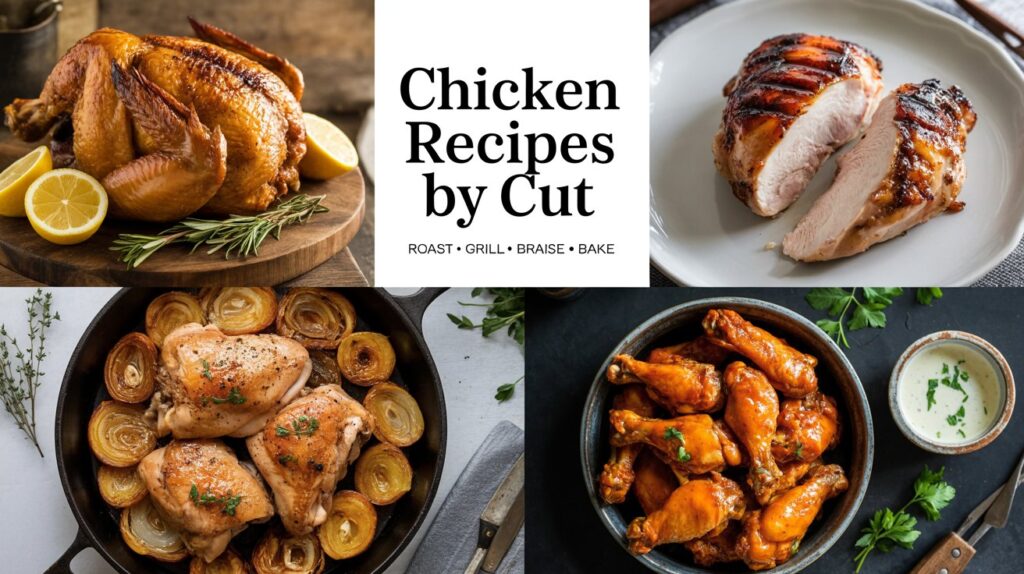
This section provides delicious and practical recipes tailored for various chicken sizes. Whether you have a whole chicken or just some parts, these recipes will guide you through the cooking process with clear instructions and perfect results.
Roast Whole Chicken Recipe
- 1 whole chicken (4-5 lbs / 1.8-2.3 kg)
- 2 tablespoons olive oil
- 1 tablespoon salt
- 1 teaspoon black pepper
- 1 lemon, halved
- 4 sprigs of rosemary
- Preheat your oven to 425°F (220°C). This high temperature gives the chicken a crispy skin.
- Pat the chicken dry with paper towels; this step is crucial for achieving golden skin.
- Rub olive oil over the chicken and season generously with salt and pepper, including the cavity.
- Stuff the cavity with lemon halves and rosemary.
- Roast for 1 hour and 15 minutes, or until the internal temperature reaches 165°F (75°C). The skin should be golden brown and the juices should run clear.
Chef’s tip: Let the chicken rest for 10-15 minutes before carving to keep it juicy.
Grilled Chicken Breasts Recipe
- 2 boneless, skinless chicken breasts (6-8 oz each)
- 2 tablespoons olive oil
- 1 teaspoon garlic powder
- 1 teaspoon paprika
- Salt and pepper to taste
- Preheat your grill to medium-high heat (about 400°F / 200°C).
- In a bowl, mix olive oil, garlic powder, paprika, salt, and pepper.
- Coat the chicken breasts with the marinade and let them sit for 15 minutes.
- Grill for 6-7 minutes on each side or until the internal temperature reaches 165°F (75°C). The chicken should have beautiful grill marks and feel firm to the touch.
Braised Chicken Thighs Recipe
- 4 chicken thighs (bone-in, skin-on, about 1 lb / 450 g)
- 1 tablespoon olive oil
- 1 onion, chopped
- 3 garlic cloves, minced
- 1 cup chicken broth
- 1 teaspoon thyme
- Heat olive oil in a large skillet over medium-high heat (about 375°F / 190°C).
- Season the chicken thighs with salt and pepper, then brown them skin-side down for 5-6 minutes until the skin is crispy.
- Flip the thighs, add onion and garlic, and sauté for 2-3 minutes until fragrant.
- Add chicken broth and thyme, then cover and simmer for 30-35 minutes, until the chicken is tender and reaches 165°F (75°C).
Buffalo Chicken Wings Recipe
- 2 lbs (900 g) chicken wings
- 1 tablespoon baking powder
- 1 teaspoon salt
Cooking Tips by Size
This section provides essential tips and best practices for cooking chicken based on its size. Choosing the right cooking method and timing can ensure your chicken turns out juicy and flavorful, whether you’re working with a whole bird or individual pieces.
- Whole Chicken: For a perfectly roasted whole chicken, preheat your oven to 375°F (190°C). Roast for about 20 minutes per pound. The skin should be golden brown and crispy, and the internal temperature should reach 165°F (74°C) in the thickest part of the thigh.
- Chicken Breast: Boneless, skinless chicken breasts should be cooked at 400°F (200°C) for about 20-25 minutes. Ensure they are cooked through with an internal temperature of 165°F (74°C). Let them rest for 5 minutes before slicing to keep them moist.
- Chicken Thighs: For bone-in chicken thighs, bake at 375°F (190°C) for 35-40 minutes. They should be tender and the juices should run clear when pierced with a knife. Thighs have more fat, making them juicy and forgiving, so don’t worry if they cook a bit longer.
- Chicken Wings: When preparing wings, bake them at 425°F (220°C) for 40-45 minutes to achieve crispy skin. Toss them in your favorite sauce after cooking, and make sure they reach an internal temperature of 165°F (74°C).
- Drumsticks: Bake chicken drumsticks at 400°F (200°C) for 35-40 minutes. They should be golden brown and the meat should easily pull away from the bone. Always check that the internal temperature is 165°F (74°C) for safety.
Common Mistakes to Avoid
Cooking chicken of various sizes can be tricky, and even experienced cooks can make mistakes that lead to less-than-ideal results. Understanding these common pitfalls will help ensure your chicken dishes are juicy, flavorful, and perfectly cooked every time.
Overcooking Whole Chicken
One of the most frequent errors is overcooking a whole chicken. This can lead to dry meat and tough skin. Aim for an internal temperature of 165°F (74°C) when measured at the thickest part of the thigh. If you overcook, the chicken will look pale and the juices will run clear.
Undercooking Chicken Breasts
Undercooking chicken breasts is another common mistake. Chicken breasts should reach an internal temperature of 165°F (74°C) for safety. Undercooked breasts will appear pink in the center and have a rubbery texture.
Not Resting Thighs
After cooking chicken thighs, many neglect to rest them. Allowing thighs to rest for at least 5-10 minutes helps redistribute the juices, making them more tender. If you skip this step, the juices will run out when you cut into them, resulting in dryness.
Ignoring Wing Sauces
Wings are often overlooked when it comes to sauces. Toss them in your favorite sauce immediately after frying or baking while they are still hot for maximum flavor absorption. Wings should be crispy on the outside and coated evenly.
Not Basting Drumsticks
Basting drumsticks while they cook is key to achieving a flavorful and moist result. Use a mixture of melted butter and herbs, basting every 15-20 minutes at a cooking temperature of 375°F (190°C). Drumsticks should be golden brown and have a crispy exterior.
Serving and Pairing Suggestions
Choosing the right sides and pairings for your chicken dishes can elevate your meal from ordinary to extraordinary. Whether you’re serving a whole chicken or just chicken parts, having the perfect accompaniments will enhance the flavors and create a well-rounded dining experience.
Sides for Whole Chicken
- Roasted Vegetables: Toss 2 cups of mixed seasonal vegetables like carrots, potatoes, and Brussels sprouts with 2 tablespoons of olive oil, salt, and pepper, and roast alongside the chicken at 425°F (220°C) for about 30-40 minutes until tender.
- Creamy Mashed Potatoes: Boil 2 pounds of peeled potatoes until fork-tender, then mash with ½ cup of heavy cream and 4 tablespoons of butter until smooth. Season with salt and pepper to taste.
Pairing for Chicken Breasts
- Steamed Asparagus: Steam 1 pound of asparagus for about 5 minutes until bright green and tender-crisp. Drizzle with lemon juice for a fresh finish.
- Quinoa Salad: Combine 1 cup cooked quinoa with diced cucumber, cherry tomatoes, and a dressing of 2 tablespoons olive oil and 1 tablespoon red wine vinegar.
Complementing Chicken Thighs
- Garlic Rice: Sauté 1 cup of rice with 3 minced garlic cloves in 2 tablespoons of olive oil for about 2 minutes, then add 2 cups of chicken broth and cook until rice is tender.
- Coleslaw: Mix 3 cups of shredded cabbage with 1 cup of shredded carrots, then toss with a dressing made from ½ cup mayonnaise, 2 tablespoons apple cider vinegar, and a pinch of sugar.
Sides for Chicken Wings
- Celery and Blue Cheese Dip: Serve with fresh celery sticks and a dip made from ½ cup blue cheese crumbles mixed with ½ cup sour cream and 1 tablespoon lemon juice.
- French Fries: Bake 2 pounds of frozen fries at 425°F (220°C) for 20-25 minutes until golden and crispy for a perfect finger-food combo.
What Goes with Drumsticks
- Macaroni and Cheese: Cook 8 ounces of elbow macaroni, then mix with 2 cups of shredded cheese and 1 cup of milk, baking at 350°F (175°C) for 20 minutes.
- Grilled Corn on the Cob: Boil 4 ears of corn for about 5-7 minutes, then grill for a few minutes for a smoky flavor.
Quick Summary
| Prep Time | Cook Time | Total Time | Servings |
|---|---|---|---|
| 10 mins | 30 mins | 40 mins | 4 |
- Understand sizes: Familiarize yourself with whole chicken vs. parts (breasts, thighs).
- Weight matters: Cooking times depend on chicken weight; aim for 20 minutes per pound.
- Use a thermometer: Ensure internal temperature reaches 165°F for safety.
- Resting time: Let chicken rest for 10 minutes post-cooking to retain juices.
- Meat portioning: Cut against the grain for tender slices when serving.
- Tip #1: Brine chicken for added moisture and flavor.
- Tip #2: Use a convection oven for even cooking.
Frequently Asked Questions
Can I make this chicken sizes chart ahead of time? How to store and reheat?
You can definitely make the chicken sizes chart ahead of time and save it as a PDF or image file. Just store it in a cool, dry place on your device, and you won’t need to reheat it!
What can I substitute for a whole chicken in the chart?
If you’re looking to substitute, you can use 2-3 pounds of chicken parts instead of a whole chicken, adjusting cooking times accordingly. Just remember to check the doneness based on the thickest part of the meat.
How do I know when the chicken sizes are accurate for cooking?
You can ensure accuracy by checking that the internal temperature reaches 165°F for all chicken pieces, regardless of size. Use a meat thermometer for the best results!
Can I freeze chicken based on the sizes in the chart? How long does it last?
Yes, you can freeze chicken according to the sizes in the chart, and it will last for up to 9 months in the freezer if properly wrapped. Just make sure to label it with the date so you can keep track!
What if I don’t have a kitchen scale to measure chicken sizes?
If you don’t have a kitchen scale, you can use common size references like a standard deck of cards for portions or a fist for larger cuts. Just remember that estimates might vary slightly in cooking times.
