
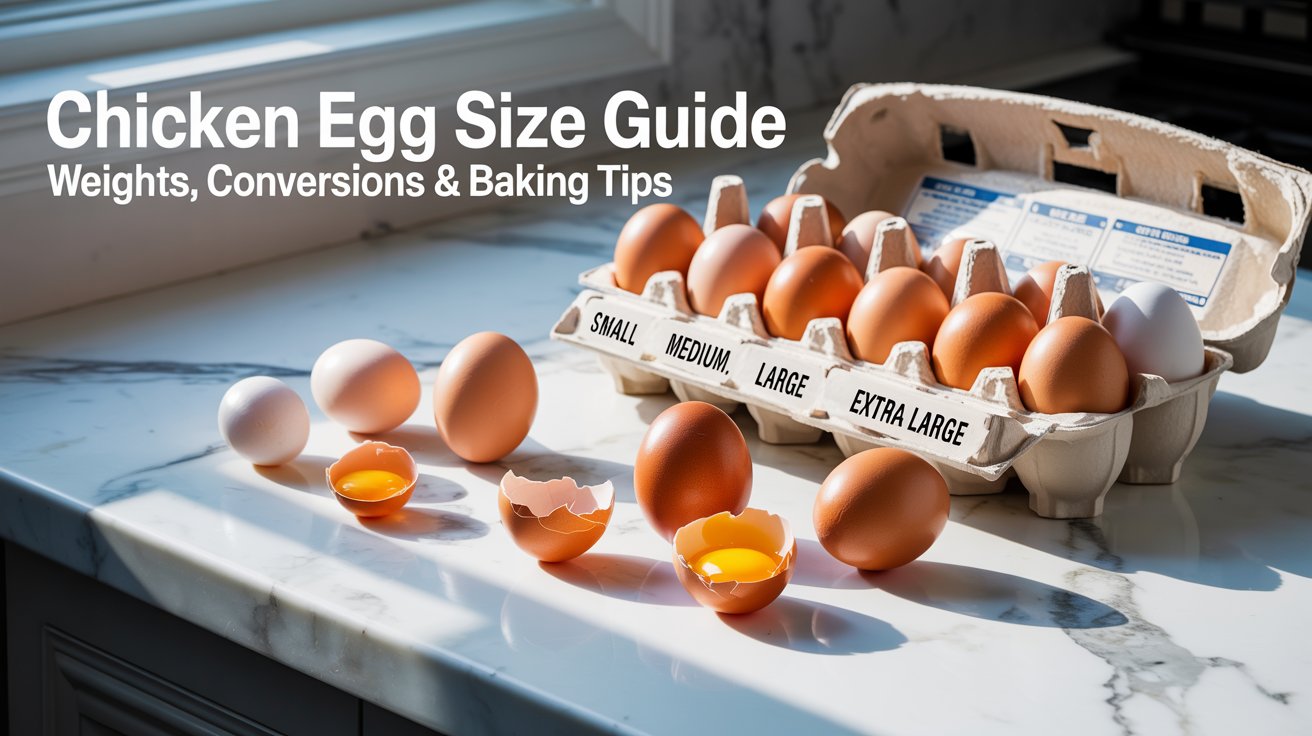
Understanding chicken egg sizes can elevate your cooking game like nothing else. Whether you’re whipping up a fluffy omelet or baking a decadent cake, knowing the right egg size is essential for achieving perfect results. There’s nothing quite like the satisfaction of knowing your dish will turn out just right, every single time.
In this article, you’ll find a comprehensive chicken egg sizes chart that details weights and volumes, along with tips on how egg sizes influence your recipes. Expect prep times, cooking temperatures, and substitution tips to help you navigate any recipe with confidence.
History of Chicken Eggs
Understanding the history of chicken eggs provides valuable context for their culinary significance and the various sizes available today. This section will explore the origin of chicken eggs and their importance in cooking, setting the stage for our subsequent discussion on egg sizes.
Origin of Chicken Eggs
Chicken eggs have a rich history that dates back thousands of years. Domesticated from wild ancestors in Southeast Asia, chickens began to be bred for various purposes, including meat and egg production. Here are some key points about their origin:
- Chickens were first domesticated around 8,000 years ago.
- The domestication process began in regions like China, India, and Southeast Asia.
- Initially, chickens were valued for their meat; the egg-laying aspect became significant later on.
Culinary Significance
Chicken eggs hold a prominent place in global cuisines and are used in diverse ways:
- They serve as a primary protein source, rich in vitamins and minerals.
- Eggs are essential in various cooking techniques, such as boiling, frying, and baking.
- They act as binding agents in recipes, helping to create structure and moisture in baked goods.
Chef’s tip: Fresh eggs will have a firmer white and a more pronounced yolk color, indicating their quality and freshness.
As we move forward, understanding the different sizes of chicken eggs will help you select the right eggs for your recipes and achieve consistent results in your cooking.
Egg Size Chart
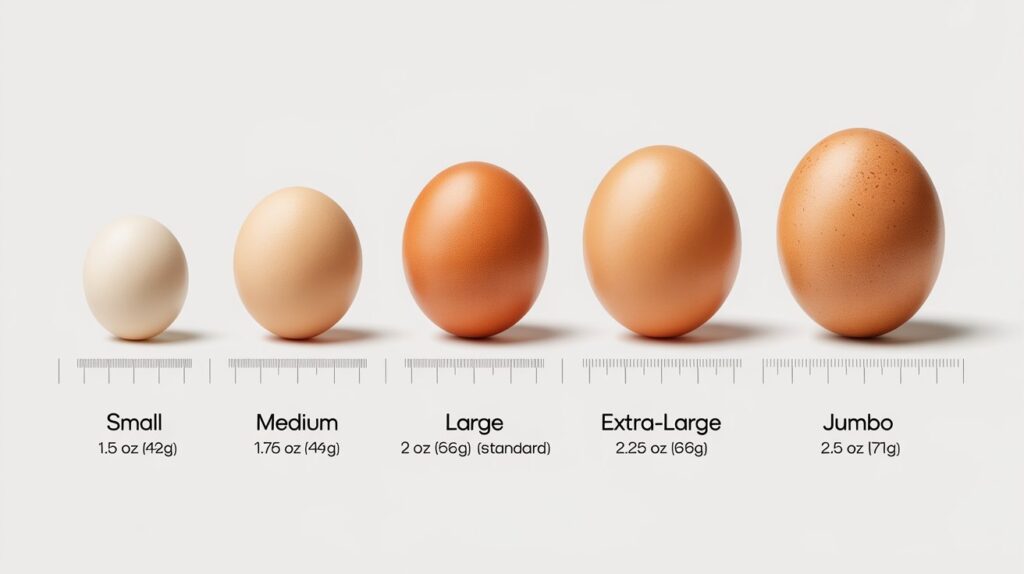
This section provides a detailed chart of chicken egg sizes, their corresponding weights, and volumes. Understanding these sizes is crucial, as they can significantly impact the outcome of your recipes, particularly in baking and cooking where precision matters.
? Official Chicken Egg Size Chart (U.S.)
| Size | Weight per Egg | Weight per Dozen | Volume (approx.) |
|---|---|---|---|
| Small | 1.5 oz (42 g) | 18 oz | 3 tbsp (45 ml) |
| Medium | 1.75 oz (49 g) | 21 oz | 3½ tbsp (52 ml) |
| Large ⭐ (Standard) | 2 oz (56 g) | 24 oz | 4 tbsp (60 ml) |
| Extra-Large | 2.25 oz (64 g) | 27 oz | 4½ tbsp (67 ml) |
| Jumbo | 2.5 oz (71 g) | 30 oz | 5 tbsp (75 ml) |
When selecting eggs for your recipes, keep in mind that using a different size than specified can alter the texture and moisture content. For instance, if a recipe calls for large eggs and you use medium eggs, you may end up with a drier result, as medium eggs contain less liquid. Always check your egg size to ensure your dish turns out just right!
How Size Affects Recipes
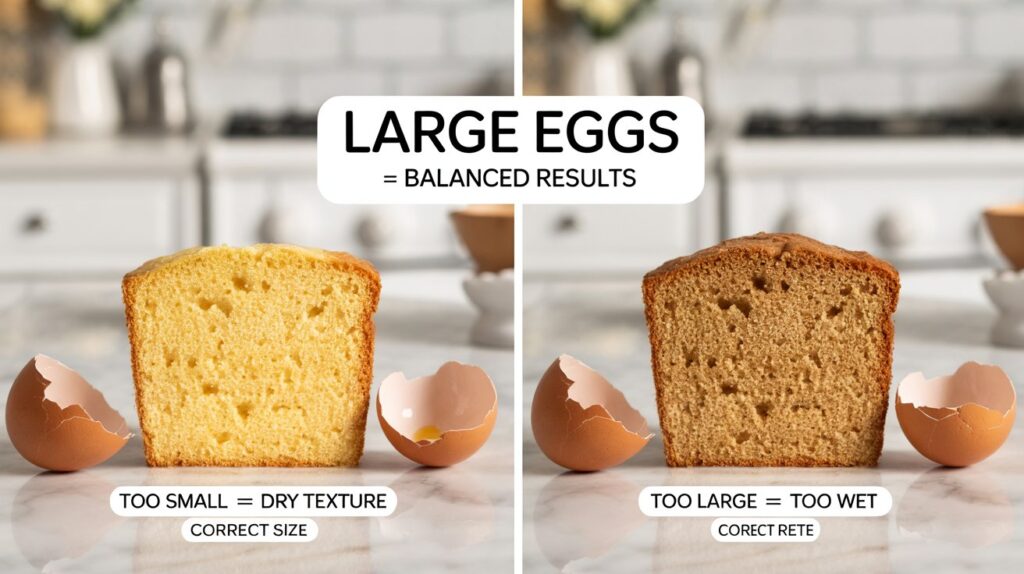
Understanding the impact of egg sizes on your cooking and baking is essential for achieving the best results. Different egg sizes can affect binding, texture, and leavening properties, which are crucial for the final outcome of your dishes.
Binding and Texture
Eggs serve as a binding agent in many recipes, helping to hold ingredients together. The size of the egg can influence how well this binding occurs:
- Small eggs (38-43g): May lead to crumblier textures in baked goods.
- Medium eggs (44-49g): Provide a balanced binding effect, ideal for most recipes.
- Large eggs (50-57g): Often the standard size called for in recipes, ensuring optimal binding.
- Extra-large eggs (58-64g): Can create a more moist texture but may alter the consistency if used in place of large eggs.
- Jumbo eggs (65g and above): Risk making mixtures too wet, potentially affecting the final product.
Leavening Properties
Eggs also play a critical role in leavening, which contributes to the rise of baked goods:
Chef’s tip: Be mindful of the egg size in recipes like soufflés or cakes where volume is key. Large eggs are generally preferred for their leavening capability.
Here’s a quick reference for egg volumes:
| Egg Size | Weight (grams) | Volume (ml) |
|---|---|---|
| Small | 38-43 | 45 |
| Medium | 44-49 | 50 |
| Large | 50-57 | 60 |
| Extra-Large | 58-64 | 65 |
| Jumbo | 65+ | 75 |
Using the wrong egg size can lead to dense or overly airy results, so always check your recipe for the specified size!
Substituting Egg Sizes
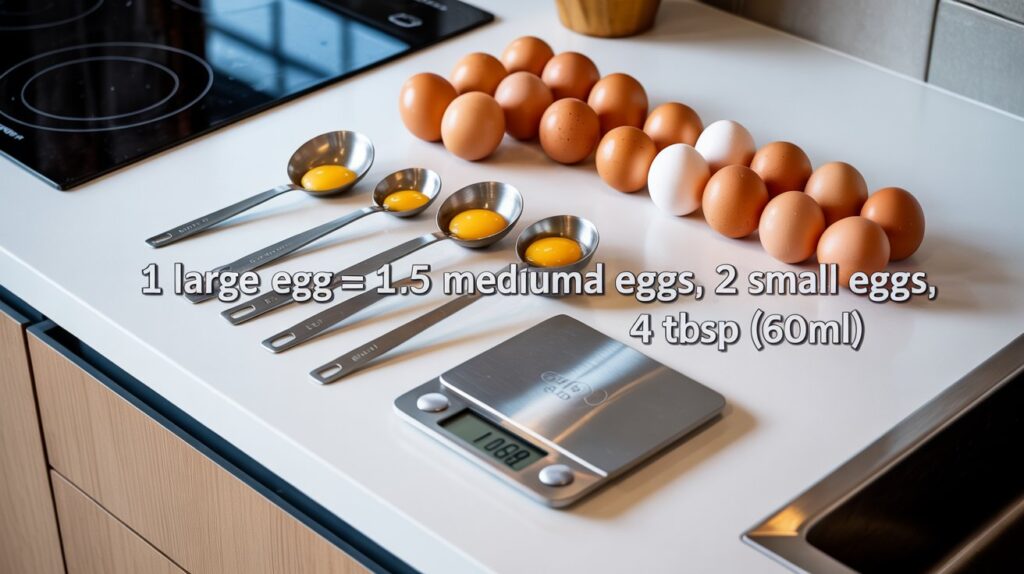
Understanding how to substitute different egg sizes in your recipes is crucial for achieving the desired texture and flavor. This section provides guidance on converting between various egg sizes and making necessary volume adjustments to ensure your dish turns out perfectly every time.
- Identify the egg size needed: Start by checking your recipe to see what size egg it calls for, such as large or extra-large. It’s common for many recipes to specify large eggs, which weigh about 2 ounces (56 grams) each.
- Use the chicken egg size chart: Refer to the chicken egg size chart below to see the weight and volume of different egg sizes. For instance, if your recipe calls for large eggs but you only have medium eggs, you’ll need about 1.5 medium eggs to replace each large egg.
| Small | 1.5 oz (42g) | 3 tablespoons (45ml) |
| Medium | 1.75 oz (49g) | 3.5 tablespoons (52ml) |
| Large | 2 oz (56g) | 4 tablespoons (60ml) |
| Extra-Large | 2.25 oz (64g) | 4.5 tablespoons (67ml) |
| Jumbo | 2.5 oz (71g) | 5 tablespoons (75ml) |
- Adjust the number of eggs: If you find yourself with smaller eggs, simply multiply the number of eggs needed. For example, if your recipe requires 2 large eggs, use 3 medium eggs or 4 small eggs for the best results.
- Consider the recipe type: Certain recipes, like custards or soufflés, are more sensitive to egg sizes. In such cases, use the exact egg size specified to avoid issues with texture and volume.
Chef’s tip: If you’re ever unsure, weigh the eggs! A kitchen scale can help you achieve the perfect amount.
Common Cooking Mistakes
Understanding the impact of different chicken egg sizes on your recipes is crucial to achieving the desired results. This section identifies common mistakes made when substituting egg sizes and how to avoid underestimating their impact on your dishes.
- Incorrect Substitutions: Many home cooks mistakenly assume that all egg sizes can be swapped without consequence. For instance, using a large egg instead of a medium egg might seem insignificant, but the difference in volume can lead to altered textures in baked goods. Always refer to a reliable egg size chart to ensure you’re using the correct size for your recipe.
- Underestimating Egg Impact: Eggs are not just a binding agent; they contribute to moisture, structure, and flavor. If a recipe calls for three large eggs and you use three medium eggs, the resulting dish may be drier or denser than intended. Pay attention to how the eggs interact with other ingredients; if the mixture seems too thick, consider adding a bit of extra liquid to balance it out.
- Ignoring Weight Conversions: Many recipes specify egg sizes but fail to mention their weight equivalents. For example, a large egg typically weighs about 2.0 ounces (about 56.7 grams) and contains approximately 3.25 tablespoons of liquid. If you’re uncertain, having a kitchen scale handy can help you measure accurately and avoid pitfalls.
- Not Testing for Freshness: Freshness can also affect your results. A recipe that requires fresh eggs will yield better flavors and textures. To check for freshness, place an egg in water; if it sinks, it’s fresh; if it floats, it’s time to discard it.
Dietary Modifications
This section provides alternatives to chicken eggs for those following specific dietary preferences or restrictions. Understanding these substitutes can help you maintain the integrity of your recipes while accommodating different needs.
Vegan Egg Substitutes
- Flaxseed Meal: Mix 1 tablespoon of ground flaxseed with 2.5 tablespoons of water. Let it sit for 5 minutes until it thickens. This mixture mimics the binding properties of eggs.
- Chia Seeds: Similar to flaxseeds, combine 1 tablespoon of chia seeds with 2.5 tablespoons of water. Allow it to gel for about 10 minutes. This works well in baked goods.
- Silken Tofu: Blend 1/4 cup of silken tofu until smooth to replace one egg. This is great for adding moisture and density to recipes like brownies.
- Applesauce: Use 1/4 cup of unsweetened applesauce to replace one egg in sweet recipes. It adds sweetness and moisture.
Gluten-Free Options
For those who need gluten-free alternatives, the following substitutes can work well in baking and cooking:
- Ener-G Egg Replacer: Follow the package instructions, typically 1.5 teaspoons of the powder mixed with 2 tablespoons of water per egg.
- Banana: Use 1/4 cup of mashed banana for each egg. This adds a slight flavor, so it’s best in pancakes or muffins.
Chef’s tip: Always test your recipe with the substitute before serving it to guests to ensure the texture and flavor meet your expectations!
Serving and Pairing Ideas
Understanding the appropriate serving temperatures and pairing suggestions for dishes that include chicken eggs can elevate your culinary experience. Whether you’re preparing a hearty breakfast or a delicate soufflé, knowing how to best serve and complement your dishes will enhance flavors and presentation.
- Serving Temperature: Eggs can be enjoyed at various temperatures depending on the dish. For scrambled eggs, serve them immediately after cooking at around 160°F (71°C) for the best texture. If making quiches or frittatas, allow them to cool slightly, serving them warm, ideally at 140°F (60°C) for a creamy consistency.
- Pairing Suggestions: Complement your egg dishes with fresh herbs like chives or parsley to brighten flavors. For breakfast, pair scrambled eggs with crispy bacon or smoked salmon, while a side of roasted vegetables works beautifully with frittatas. If you’re preparing a dessert with eggs, such as a custard or meringue, serve with seasonal fruits or a drizzle of caramel sauce for added sweetness.
- Texture and Flavor Balance: Consider the texture and flavor profiles of your dishes. Creamy egg dishes are delightful with crunchy sides, like toasted bread or a fresh salad. For richer dishes, such as egg-based casseroles, a light, citrusy salad can help balance the meal.
- Presentation Matters: Serve eggs in visually appealing ways. For poached eggs, use a sprinkle of paprika or fresh herbs for color. When plating, ensure that the dish is vibrant — a simple garnish can make a significant difference in presentation.
Quick Summary
| Prep Time | 5 minutes |
|---|---|
| Cook Time | N/A |
| Total Time | 5 minutes |
| Servings | N/A |
- Understand sizes: Familiarize with size categories: small (18 oz), medium (21 oz), large (24 oz), extra-large (27 oz), and jumbo (30 oz).
- Measure accurately: Use a kitchen scale for precise egg weight if recipe specifies.
- Substitutions: Remember 1 large egg = 2 small eggs or 1.5 medium eggs for replacements.
- Cooking temperatures: Use eggs at room temperature for better incorporation in recipes.
- Check freshness: Conduct a float test: fresh eggs sink; old eggs float.
Frequently Asked Questions
Can I make this ahead of time? How to store and reheat?
You can prepare dishes using different egg sizes ahead of time and store them in the refrigerator for up to 3 days. Reheat gently in the microwave or on the stovetop, ensuring they reach an internal temperature of 165°F.
What can I substitute for a large egg?
If you don’t have large eggs, you can use 2 medium eggs or 1 extra-large egg as a substitute in most recipes. Just remember to adjust the quantity based on the size difference.
How do I know when my eggs are done cooking?
9-12 minutes of boiling. For scrambled eggs, they should be soft but not runny, usually done in about 5-7 minutes over medium heat.
Can I freeze dishes made with eggs? How long do they last?
Yes, you can freeze cooked egg dishes for up to 6 months. Just make sure to cool them completely before transferring to an airtight container or freezer bag.
What if I don’t have a specific egg size for my recipe?
If your recipe calls for a specific egg size and you don’t have it, you can use 1 medium egg for every large egg or adjust the number of small eggs accordingly. It’s best to weigh the eggs if precise measurements are critical, as large eggs typically weigh about 50 grams each.
