
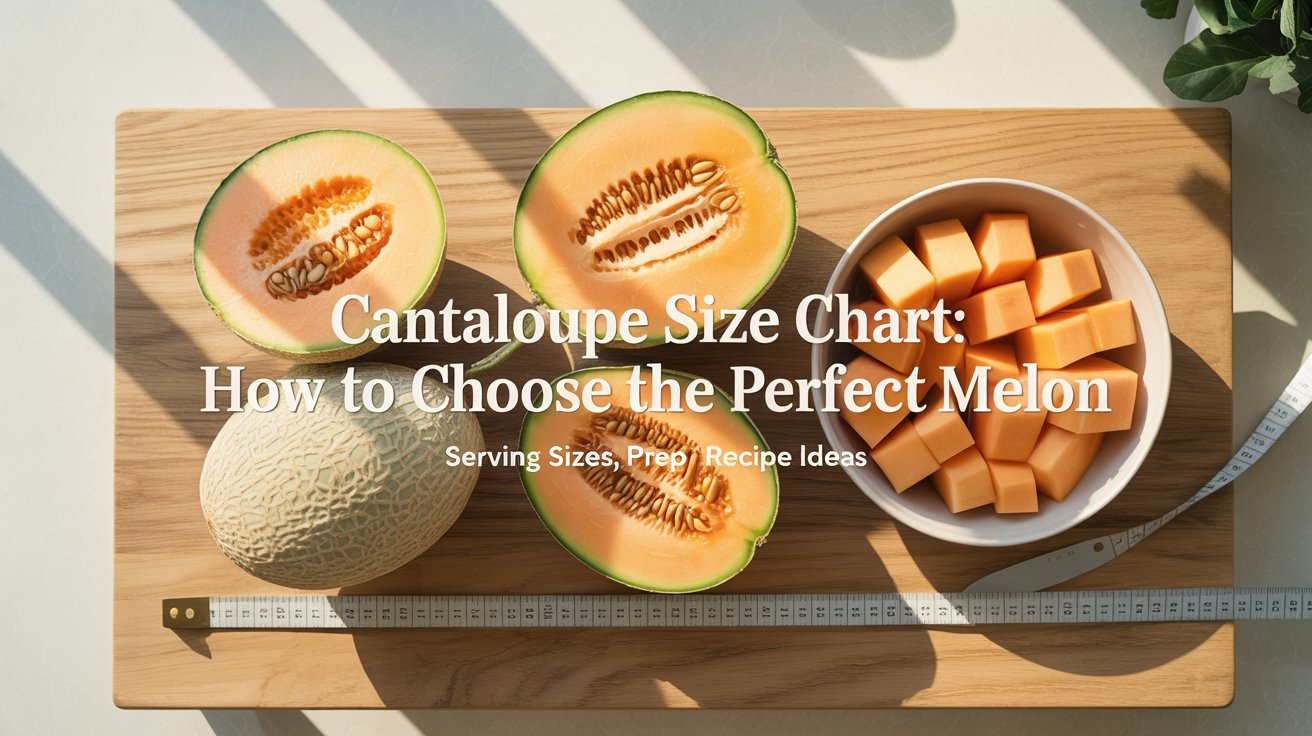
Cantaloupe is one of those fruits that brings a burst of sunshine to your kitchen. Its sweet, juicy flesh is perfect for summer salads, refreshing smoothies, or even a simple snack. Knowing how to choose the right size cantaloupe can elevate your dishes, making them more satisfying and delicious!
With our detailed cantaloupe size chart, you’ll discover key sizes, serving suggestions, and preparation tips. This guide is easy to follow and ideal for home cooks wanting to perfect their recipes.
Cantaloupe Size Overview
Cantaloupe comes in various sizes, and understanding these differences can significantly impact your cooking and serving choices. Whether you’re preparing a refreshing salad, blending a smoothie, or serving fruit at a party, knowing how to select the right size can enhance your recipes and presentation.
- Small Cantaloupe: Typically weighing around 1.5 to 3 pounds (680 to 1360 grams), small cantaloupes are perfect for individual servings or smaller gatherings. Their sweetness can be concentrated, making them ideal for fruit salads and snacks. Look for a firm exterior with a uniform color and a sweet aroma at the stem end.
- Medium Cantaloupe: Weighing between 3 to 5 pounds (1360 to 2268 grams), medium cantaloupes are versatile and great for larger families or meal prepping. They provide ample flesh for recipes like smoothies or sorbets. A well-ripened medium cantaloupe should yield slightly when pressed and have a fragrant scent that indicates ripeness.
- Large Cantaloupe: These hefty fruits can weigh 5 to 7 pounds (2268 to 3175 grams) or more. Large cantaloupes are fantastic for large gatherings or making bulk recipes. Their size means they can be used for impressive fruit displays or as a centerpiece. Ensure the skin is free of blemishes, and the fruit feels heavy for its size to guarantee freshness.
Cantaloupe Size Chart
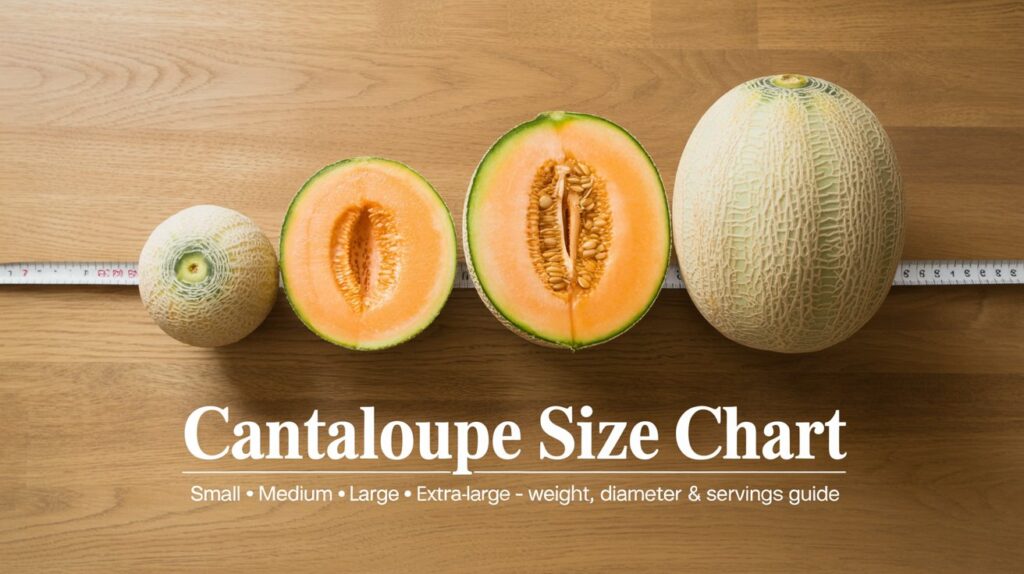
Understanding the size of cantaloupes is essential for selecting the right fruit for your recipes. This detailed size chart helps you visualize the different sizes and offers insights on serving suggestions and preparation methods.
| Size | Weight | Diameter | Servings | Best For |
|---|---|---|---|---|
| Small | 1.5–3 lbs (680–1360g) | 5–6 in | 2–3 | Snacks, smoothies |
| Medium | 3–5 lbs (1360–2268g) | 6–8 in | 4–6 | Salads, meal prep |
| Large | 5–7 lbs (2268–3175g) | 8–10 in | 6–8 | Parties, platters |
| Extra-Large | 7+ lbs (3175g+) | 10+ in | 8–10 | Events, bulk recipes |
- Small Cantaloupe (1.5 – 2 lbs): These cantaloupes are typically around 6-7 inches in diameter. They are perfect for individual servings or small salads. Expect a sweeter flavor profile and a softer texture.
- Medium Cantaloupe (2 – 4 lbs): Measuring about 7-8 inches in diameter, medium cantaloupes are versatile and ideal for family-sized fruit salads or desserts. The flesh should be firm yet slightly yielding when pressed.
- Large Cantaloupe (4 – 6 lbs): These can weigh up to 6 pounds and measure 8-10 inches in diameter. Great for parties or larger gatherings, large cantaloupes yield more servings and can be used for smoothies or summer drinks. Look for a deep, musky aroma indicating ripeness.
- Extra-Large Cantaloupe (6+ lbs): Weighing over 6 pounds and often exceeding 10 inches in diameter, these are best for large events or for making preserves. The texture should be very juicy, and the seeds should rattle inside when shaken gently.
Chef’s tip: Always choose cantaloupes that feel heavy for their size, indicating ripeness and juiciness.
Recommended Recipes by Size
Choosing the right recipe for your cantaloupe size can enhance your dish’s flavor and presentation. Below, you’ll find tailored recipes for small, medium, and large cantaloupes, ensuring you make the most of your fruit by selecting the best options for each size.
Small Cantaloupe Recipes
- Cantaloupe Sorbet
- 1 small cantaloupe, pureed (about 2 cups)
- ½ cup sugar
- 1 tablespoon lemon juice
- In a blender, combine the cantaloupe, sugar, and lemon juice. Blend until smooth.
- Pour the mixture into a shallow dish and freeze for about 2 hours, stirring every 30 minutes until it reaches a sorbet consistency.
Medium Cantaloupe Recipes
- Cantaloupe Salad
- 1 medium cantaloupe, diced (about 4 cups)
- ½ cup feta cheese, crumbled
- 2 tablespoons olive oil
- 1 tablespoon balsamic vinegar
- Fresh mint leaves, for garnish
- In a large bowl, combine the diced cantaloupe, feta, olive oil, and balsamic vinegar. Toss gently to mix.
- Garnish with fresh mint leaves before serving. Enjoy chilled.
Large Cantaloupe Recipes
- Cantaloupe Gazpacho
- 1 large cantaloupe, peeled and cubed (about 6 cups)
- 1 cucumber, peeled and diced
- 1 red bell pepper, diced
- 1 tablespoon lime juice
- Salt and pepper to taste
- In a blender, combine the cantaloupe, cucumber, bell pepper, and lime juice. Blend until smooth.
- Season with salt and pepper. Chill for at least 1 hour before serving.
Chef’s tip: Use chilled ingredients for a refreshing gazpacho.
| Recipe | Cantaloupe Size |
|---|---|
| Sorbet | Small |
| Salad | Medium |
| Gazpacho | Large |
Selecting the Right Cantaloupe
Choosing the right size of cantaloupe can greatly enhance your recipes, ensuring you have the perfect amount for your needs. Understanding ripeness indicators and the best uses for each size will help you select the ideal fruit for any dish.
Ripeness Indicators
- Color: Look for a cantaloupe with a creamy yellow or orange color on the bottom. This indicates ripeness. A greenish hue suggests it’s not ripe yet.
- Feel: Gently press the blossom end of the cantaloupe. It should yield slightly to pressure, indicating it’s ripe. If it feels hard, it’s under ripe.
- Aroma: Ripe cantaloupes emit a sweet, fruity aroma. If you can’t smell anything, it may not be ripe enough.
Best Uses for Each Size
- Small Cantaloupes (3-4 lbs): Ideal for salads and snacks. Their manageable size makes them easy to slice and serve solo or combined with other fruits.
- Medium Cantaloupes (4-5 lbs): Perfect for blending into smoothies or making sorbet. This size yields enough flesh for multiple servings without overwhelming your blender.
- Large Cantaloupes (5-7 lbs): Best for larger gatherings or events. They provide ample fruit for fruit salads and desserts, ensuring everyone gets a taste.
Storing Cantaloupe
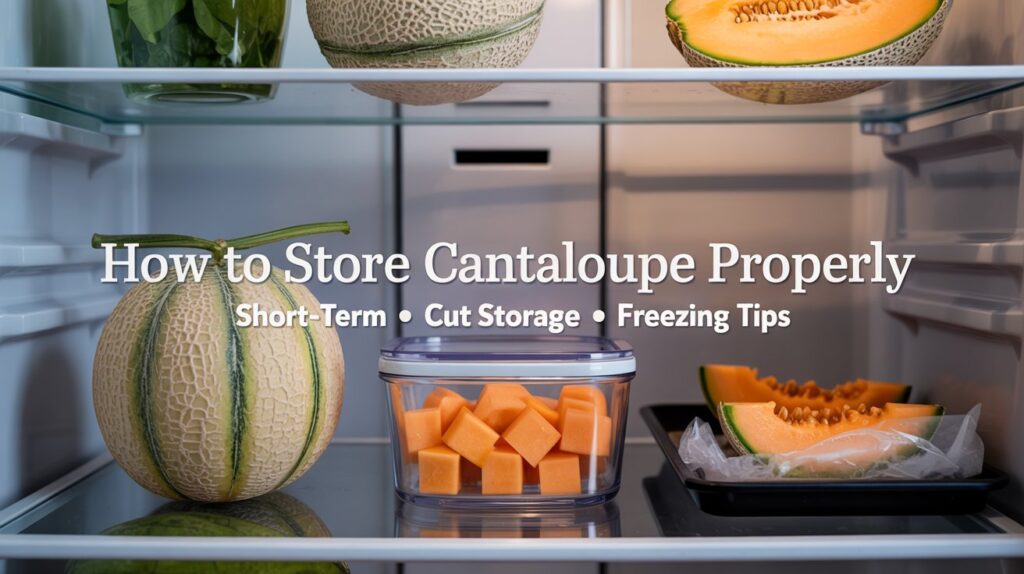
Properly storing cantaloupe is essential to maintain its freshness and flavor. Whether you have a large cantaloupe or smaller ones, understanding short-term and long-term storage options will help you enjoy this fruit at its best.
Short-term Storage: For cantaloupes that are ripe and ready to eat, place them in the refrigerator if you won’t consume them immediately. Wrap the whole cantaloupe in plastic wrap to prevent ethylene gas from escaping, which could cause it to over-ripen. This method keeps your cantaloupe fresh for about 5 to 7 days.
Cut Cantaloupe Storage: If you have cut your cantaloupe, be sure to store it in an airtight container. This prevents moisture loss and keeps it from absorbing other odors in the fridge. Store cut pieces in the refrigerator for up to 3 to 5 days. They should feel firm and still have a sweet aroma when you check them.
Long-term Storage: For long-term storage, consider freezing cantaloupe. Cut the fruit into cubes, place them on a baking sheet, and freeze until solid. Then transfer the cubes to a freezer-safe bag or container. Frozen cantaloupe can last up to 10 to 12 months, but it’s best used in smoothies or purees as the texture changes once thawed.
Choosing the Right Size: When selecting a cantaloupe for storage, consider how quickly you plan to use it. A large cantaloupe may be better for immediate consumption, while several smaller ones can be stored for longer periods. Always choose cantaloupes that are firm and have a sweet aroma at the stem end.
Preparing Cantaloupe
Preparing cantaloupe correctly is essential for enhancing its flavor and texture in your recipes. The size of the cantaloupe affects how you cut it and the final presentation. Here’s how to chop and ball cantaloupe based on its size.
Chopping Techniques
- Begin by selecting a ripe cantaloupe. Look for a uniform beige color with a slight give when pressed at the stem end. To prepare, use a sharp knife to slice the cantaloupe in half lengthwise, exposing the seeds and flesh.
- Using a spoon, scoop out the seeds and discard them. If you prefer, you can save some seeds to plant or compost them. Now, place the cantaloupe halves cut side down on the cutting board for stability.
- Cut each half into wedges about 1-2 inches wide, then slice off the rind from each wedge. Cut the flesh into bite-sized cubes. You can expect the cubes to be juicy and fragrant, with a sweet aroma filling your kitchen.
Melon Balling Instructions
- For a fun presentation, use a melon baller to scoop out round balls from the cantaloupe. After halving and seeding the fruit, hold one half in your hand and gently press the melon baller into the flesh, twisting to create a perfect ball.
- Continue until all of the flesh is removed, and aim for uniform sizes for a professional look. If you encounter any tough spots, simply cut them away with a knife before balling.
- These melon balls can be used in fruit salads, as cocktail garnishes, or simply enjoyed on their own. Store any leftovers in an airtight container in the refrigerator for up to 2 days.
Serving Suggestions
Understanding the size of your cantaloupe can significantly enhance your serving experience. Different sizes lend themselves to various culinary applications, whether for a refreshing salad, vibrant salsa, or a delightful dessert. Below are some tailored suggestions based on cantaloupe sizes, ensuring you get the most out of this delicious fruit.
Salads and Salsas
Cantaloupe can add a sweet, juicy contrast to salads and salsas. Here’s how to use different sizes effectively:
- Small Cantaloupe (2-3 lbs): Perfect for a single serving salad. Dice 1 cup (150g) of cantaloupe and mix with 2 cups of mixed greens, ¼ cup of feta cheese, and 2 tablespoons of balsamic vinaigrette.
- Medium Cantaloupe (4-5 lbs): Ideal for a family gathering. Use 2 cups (300g) of diced cantaloupe in a salsa, combining it with ½ cup diced red onion, 1 jalapeño (minced), and the juice of 1 lime.
- Large Cantaloupe (6-8 lbs): Great for parties. Prepare a large salad with 4 cups (600g) of cantaloupe, 3 cups of arugula, 1 cup of sliced almonds, and ½ cup of goat cheese, drizzled with honey mustard dressing.
Desserts and Smoothies
The sweetness of cantaloupe makes it a fantastic ingredient in desserts and smoothies. Here are some ideas:
- Small Cantaloupe: Blend 1 cup (150g) of diced cantaloupe with ½ cup of Greek yogurt and 1 tablespoon of honey for a quick smoothie.
- Medium Cantaloupe: Use 2 cups (300g) of cantaloupe chunks in a fruit salad, mixing with berries and a spritz of lime juice for a refreshing dessert.
- Large Cantaloupe: Create a cantaloupe sorbet by blending 4 cups (600g) of cantaloupe with ½ cup of sugar and the juice of 1 lemon. Freeze for 4 hours, stirring every hour until smooth.
Chef’s tip: For an elegant touch, wrap cantaloupe slices in prosciutto for an appetizer that’s both savory and sweet.
Quick Summary
| Prep Time | Cook Time | Total Time | Servings |
|---|---|---|---|
| 5 minutes | N/A | 5 minutes | Varies |
- Measure accurately: Use a kitchen scale for precise cantaloupe weight.
- Understand sizes: Familiarize yourself with small, medium, and large cantaloupes.
- Consider ripeness: Choose cantaloupes with a sweet aroma for the best flavor.
- Cut safely: Use a sharp knife and stabilize the cantaloupe with a cutting board.
- Store properly: Refrigerate cut cantaloupe in an airtight container to maintain freshness.
Frequently Asked Questions
Can I make this ahead of time? How to store and reheat?
You can prepare cantaloupe by cutting it into cubes or slices ahead of time. Store it in an airtight container in the refrigerator for up to 3 days to maintain freshness.
What can I substitute for cantaloupe?
If you need a substitute for cantaloupe, you can use honeydew melon or even ripe mango for a similar sweetness and texture.
How do I know when a cantaloupe is ripe?
A ripe cantaloupe will have a slightly soft stem end and will emit a sweet aroma; it should also feel heavy for its size.
Can I freeze cantaloupe? How long does it last?
You can freeze cantaloupe by cutting it into chunks and placing them on a baking sheet to freeze individually before transferring to a bag; it lasts for up to 6 months in the freezer.
What if I don’t have a melon baller?
If you don’t have a melon baller, you can use a small spoon to scoop out the flesh or a sharp knife to cut it into cubes or wedges instead.
