
Cabbage is one of the most versatile and budget-friendly vegetables you can add to your meals. Whether you’re making salads, stir-fries, soups, or coleslaw, cabbage fits almost any dish. But how much cabbage should you actually eat in one serving? Understanding a cabbage serving size helps you balance nutrition, avoid waste, and prepare meals more efficiently. Let’s explore the right portions, how they vary, and why serving size matters more than you might think.
Why Cabbage Serving Size Matters
Cabbage is low in calories but rich in fiber, vitamins, and antioxidants. Even though it’s healthy, portion size still plays an important role in digestion and meal balance.
Eating the right amount of cabbage helps you:
- Get enough fiber without digestive discomfort
- Balance your plate with other foods
- Control portion sizes in recipes
For home cooking, knowing serving sizes also helps you plan meals and avoid cutting too much or too little.
Standard Cabbage Serving Sizes And Portions
Cabbage is usually measured in cups (chopped or shredded) or by weight. Here are the most common serving sizes:
Cabbage Serving Size Chart
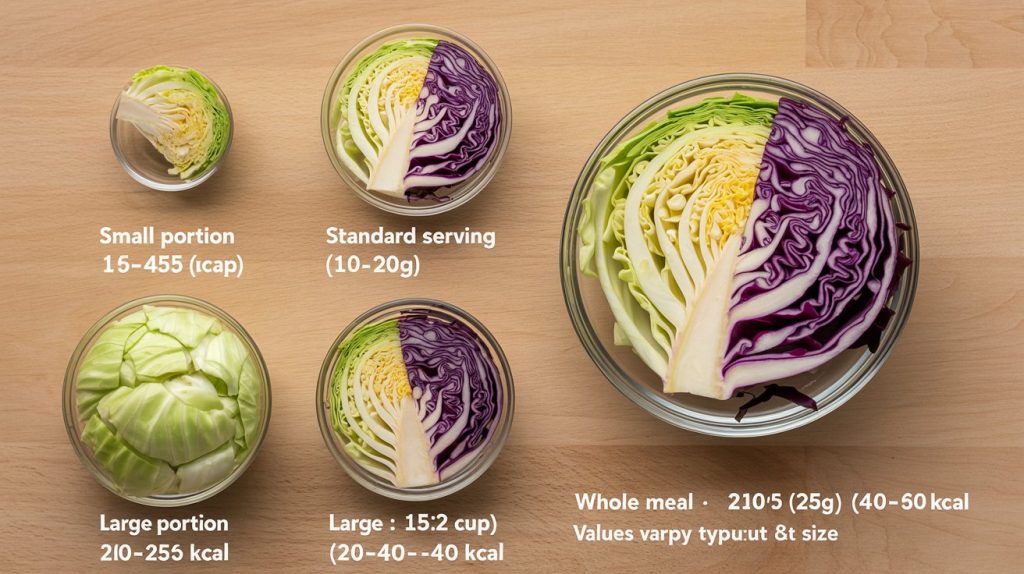
| Serving Type | Amount (Chopped/Shredded) | Weight (Approx.) | Calories |
|---|---|---|---|
| Small Portion | ½ cup | 35–45g | 10–15 |
| Standard Serving | 1 cup | 70–90g | 20–25 |
| Large Portion | 1.5–2 cups | 100–150g | 30–40 |
| Whole Meal Portion | 2–3 cups | 150–250g | 40–60 |
These values may vary slightly depending on the type of cabbage (green, red, or savoy) and how finely it’s chopped.
Choosing The Right Cabbage Serving Size
The best portion depends on how you’re using cabbage:
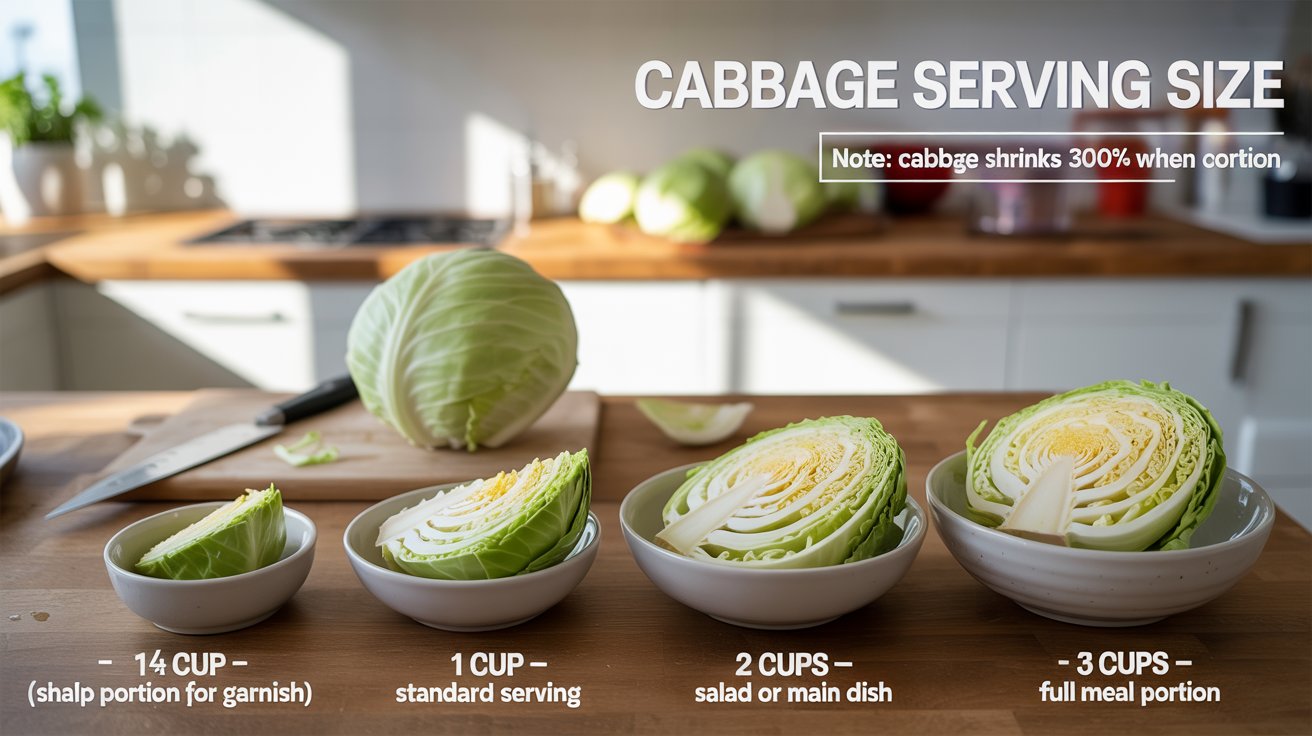
- ½ cup: Great as a side or topping
- 1 cup: Ideal for a balanced serving in meals
- 1.5–2 cups: Perfect for salads or stir-fries
- 2–3 cups: Works well for cabbage-based dishes like coleslaw or soups
Since cabbage shrinks when cooked, you may need a larger raw portion for cooked dishes.
Cabbage Serving Size Comparison: Raw Vs. Cooked
Cabbage changes in volume when cooked, which affects serving size.
Raw vs Cooked Cabbage
| Form | Volume Change | Texture | Serving Tip |
|---|---|---|---|
| Raw | Full volume | Crunchy | Use for salads, slaws |
| Cooked | Shrinks ~30–50% | Soft, tender | Use larger raw portions |
For example, 2 cups of raw cabbage may reduce to about 1 cup after cooking.
Cabbage Serving Size And Nutrition
Cabbage is very low in calories but high in nutrients like:
- Vitamin C
- Vitamin K
- Fiber
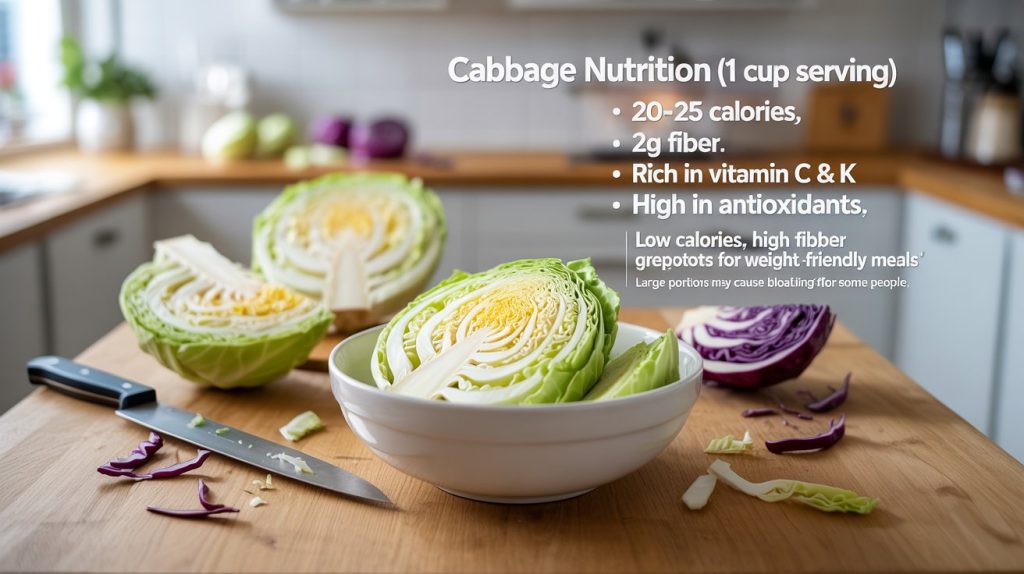
A 1-cup serving of raw cabbage contains:
- ~20–25 calories
- ~2g fiber
- High antioxidant content
Because it’s so low in calories, you can enjoy larger portions without worrying about weight gain. However, very large amounts may cause bloating in some people due to its fiber content.
Visual Guide: Cabbage Serving Size
Here’s a simple way to estimate cabbage portions:
| Serving Size | Visual Guide | Best Use |
|---|---|---|
| ½ cup | Small handful | Garnish or side |
| 1 cup | One full handful | Standard serving |
| 2 cups | Two handfuls | Salads or main dishes |
This makes it easier to measure without tools.
Tips For Measuring And Preparing Cabbage
- Chop evenly: Ensures consistent cooking and texture
- Use a measuring cup: Helpful for recipes
- Wash thoroughly: Remove dirt and outer leaves
- Store properly: Keep in the fridge to maintain freshness
- Cut only what you need: Prevents waste
Proper preparation improves both taste and presentation.
Common Mistakes When Choosing Cabbage Serving Size
- Using too little: Can make dishes feel unbalanced
- Overloading portions: May cause digestive discomfort
- Ignoring shrinkage: Cooked cabbage takes less space
- Uneven chopping: Leads to inconsistent texture
Being aware of these mistakes helps you get the best results.
How Cabbage Serving Size Affects Your Meal
The amount of cabbage you use can change the overall dish. Smaller portions add crunch and freshness, while larger portions can turn cabbage into the main ingredient.
Balancing cabbage with proteins and grains creates a more satisfying and nutritious meal.
The Popularity Of Cabbage In Different Cuisines
Cabbage has been used in cuisines around the world for centuries. From Asian stir-fries to European soups and fermented dishes, it’s valued for its versatility and long shelf life.
Different cultures use different portion sizes depending on the dish, but cabbage remains a staple vegetable globally.
Frequently Asked Questions
What Is A Standard Serving Size Of Cabbage?
A standard serving is about 1 cup of chopped or shredded cabbage.
Can I Eat Cabbage Every Day?
Yes, cabbage is healthy and can be eaten daily in moderate amounts.
Does Cooking Change Serving Size?
Yes, cabbage shrinks when cooked, so you may need more raw cabbage.
Is Cabbage Good For Weight Loss?
Yes, it’s low in calories and high in fiber, making it great for weight management.
How Much Cabbage Should I Use For Salad?
About 1–2 cups per person works well for most salads.
Cabbage serving sizes may seem simple, but they can make a big difference in your meals. Whether you’re preparing a light side or a hearty dish, understanding the cabbage serving size helps you cook smarter, eat healthier, and enjoy your food every time.
