
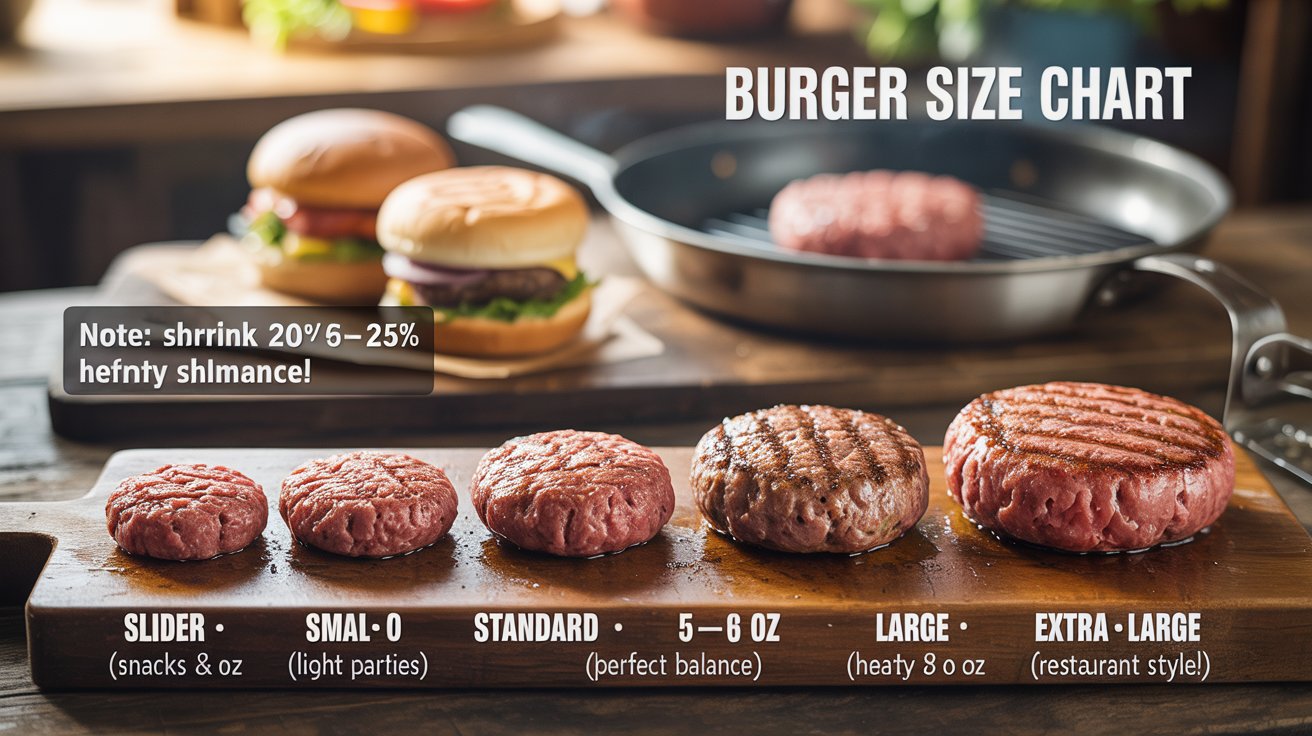
Burgers are one of the most popular and satisfying meals around the world—but have you ever noticed how much their size can vary? From small sliders to oversized restaurant-style burgers, the size you choose affects everything from taste and texture to calories and satisfaction. Understanding a burger size chart helps you build the perfect burger for any occasion, whether you’re cooking at home or ordering out.
Why Burger Size Matters
Burger size isn’t just about appetite—it influences cooking time, flavor balance, and how the burger fits with the bun and toppings. Smaller burgers cook quickly and are easier to handle, while larger ones offer a juicier, more filling experience.
For home cooks, choosing the right size ensures even cooking and better portion control. For those watching calories, burger size directly impacts fat and calorie intake.
Standard Burger Sizes And Weights
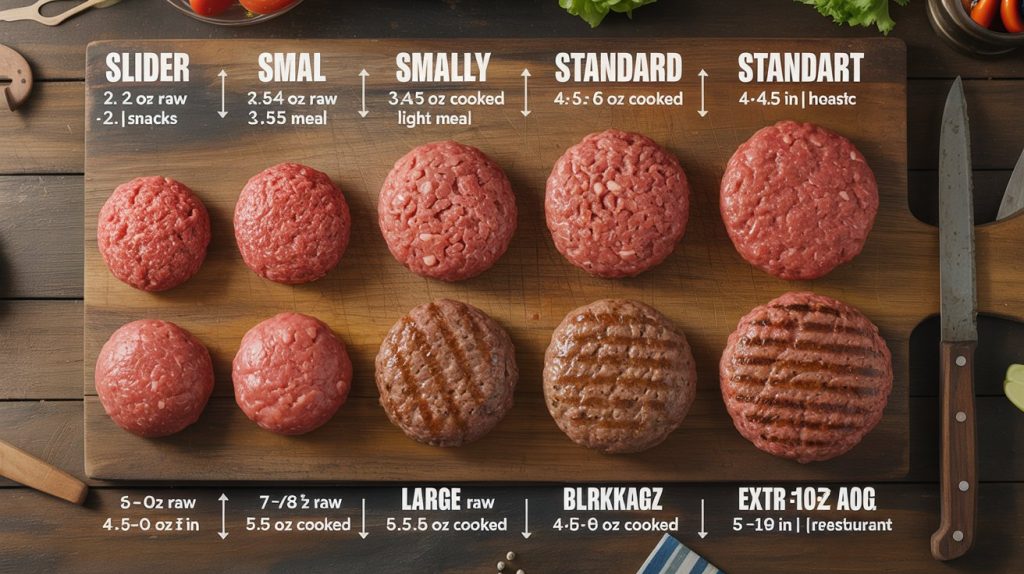
Burgers are typically measured by the weight of the patty (raw). During cooking, patties shrink as they lose moisture and fat.
Burger Size Chart
| Burger Size | Raw Weight | Cooked Weight (Approx.) | Diameter (Approx.) | Best Use |
|---|---|---|---|---|
| Slider | 2 oz (55g) | 1.5 oz (40g) | 2–2.5 in | Snacks, parties |
| Small | 3–4 oz (85–113g) | 2.5–3 oz (70–85g) | 3–3.5 in | Light meals |
| Standard | 5–6 oz (140–170g) | 4–5 oz (115–140g) | 4–4.5 in | Classic burgers |
| Large | 7–8 oz (200–225g) | 5.5–6.5 oz (155–185g) | 4.5–5 in | Hearty meals |
| Extra Large | 9–12 oz (255–340g) | 7–9 oz (200–255g) | 5–6 in | Restaurant-style burgers |
These sizes may vary slightly depending on fat content and cooking method.
Choosing The Right Burger Size
The best burger size depends on your needs and appetite:
- Sliders (2 oz): Perfect for parties or tasting multiple flavors
- Small (3–4 oz): Great for lighter meals or kids
- Standard (5–6 oz): The most popular size for a balanced burger
- Large (7–8 oz): Ideal for bigger appetites
- Extra Large (9 oz+): Best for indulgent, restaurant-style meals
A 5–6 oz patty is often considered the “sweet spot” for taste and portion balance.
Burger Size Comparison: Homemade Vs. Restaurant
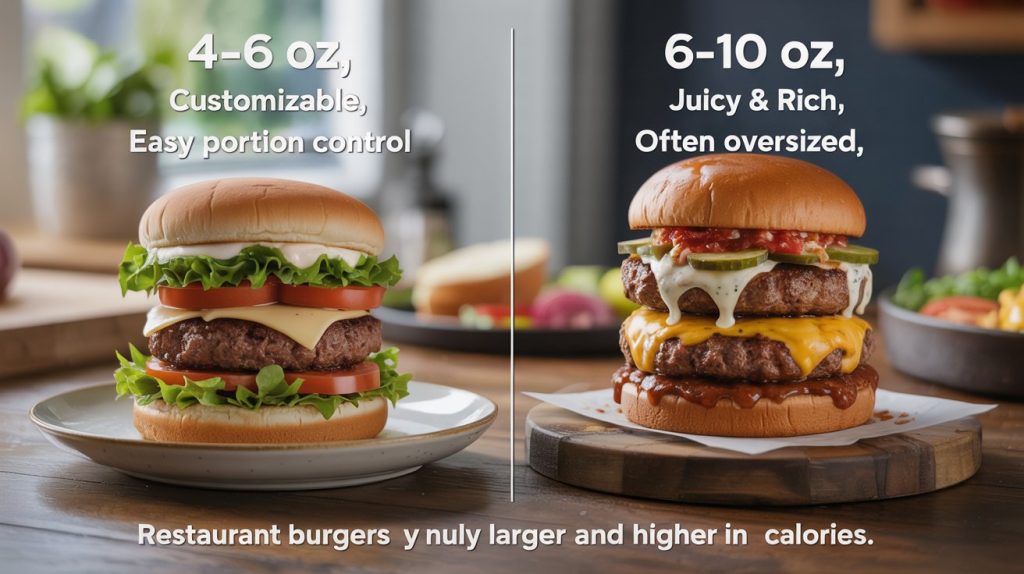
Burger sizes can vary depending on where you eat.
Homemade vs Restaurant Burgers
| Source | Typical Size | Texture | Portion Control |
|---|---|---|---|
| Homemade | 4–6 oz | Customizable | Easy |
| Restaurant | 6–10 oz | Juicy, rich | Often oversized |
Restaurants tend to serve larger burgers, which can be more filling but also higher in calories.
Burger Size And Nutrition
Burger size has a direct impact on calories, fat, and protein intake.
For example:
- 4 oz patty: ~250–300 calories
- 6 oz patty: ~350–450 calories
- 8 oz patty: ~500+ calories
Larger patties also contain more saturated fat. Choosing the right size helps maintain a balanced diet while still enjoying your meal.
Visual Guide: Burger Size Chart
Here’s a simple way to estimate burger sizes without a scale:
| Size | Visual Comparison | Best Use |
|---|---|---|
| Slider | Two fingers wide | Snacks |
| 4 oz | Palm of your hand | Standard meal |
| 6 oz | Full hand size | Hearty burger |
| 8 oz+ | Large smartphone | Restaurant portion |
This makes it easier to portion your patties at home.
Tips For Shaping And Cooking Burgers
- Weigh your patties: Ensures even cooking
- Make a slight indent in the center: Prevents puffing أثناء cooking
- Don’t overwork the meat: Keeps burgers tender
- Match bun size: Ensure the patty fits the bun properly
- Account for shrinkage: Patties shrink by about 20–25% أثناء cooking
Consistency is key for great burgers.
Common Mistakes When Choosing Burger Size
- Making patties too thick: Can lead to uneven cooking
- Oversized portions: Hard to eat and overly heavy
- Too small for the bun: Results in an unbalanced burger
- Ignoring shrinkage: Leads to smaller-than-expected patties
Avoiding these mistakes improves both taste and presentation.
How Burger Size Affects Toppings
Burger size determines how much topping you can add. Smaller burgers work best with simple toppings, while larger burgers can handle multiple layers like cheese, lettuce, tomatoes, and sauces.
Too many toppings on a small burger can make it messy, while too few on a large burger may feel underwhelming.
The Evolution Of Burger Sizes
Burgers started as simple, modest-sized patties. Over time, especially in fast food and restaurants, portion sizes have grown significantly. Today, “gourmet” burgers can be double or triple the size of traditional ones.
Understanding proper burger sizes helps you enjoy them without overindulging.
Frequently Asked Questions
What Is The Standard Burger Size?
A standard burger patty is typically 5–6 oz before cooking.
How Much Does A Burger Shrink When Cooked?
Burgers usually shrink by about 20–25% أثناء cooking.
Is A 4 Oz Burger Enough?
Yes, it’s a good portion for a balanced meal, especially with sides.
Why Are Restaurant Burgers Bigger?
Restaurants often serve larger portions for a more filling experience.
Can I Make Sliders At Home?
Yes, use about 2 oz of meat per patty for sliders.
Burger size may seem like a small detail, but it can completely change your meal. Whether you prefer a light slider or a hearty restaurant-style burger, understanding the burger size chart helps you create the perfect burger every time.
