
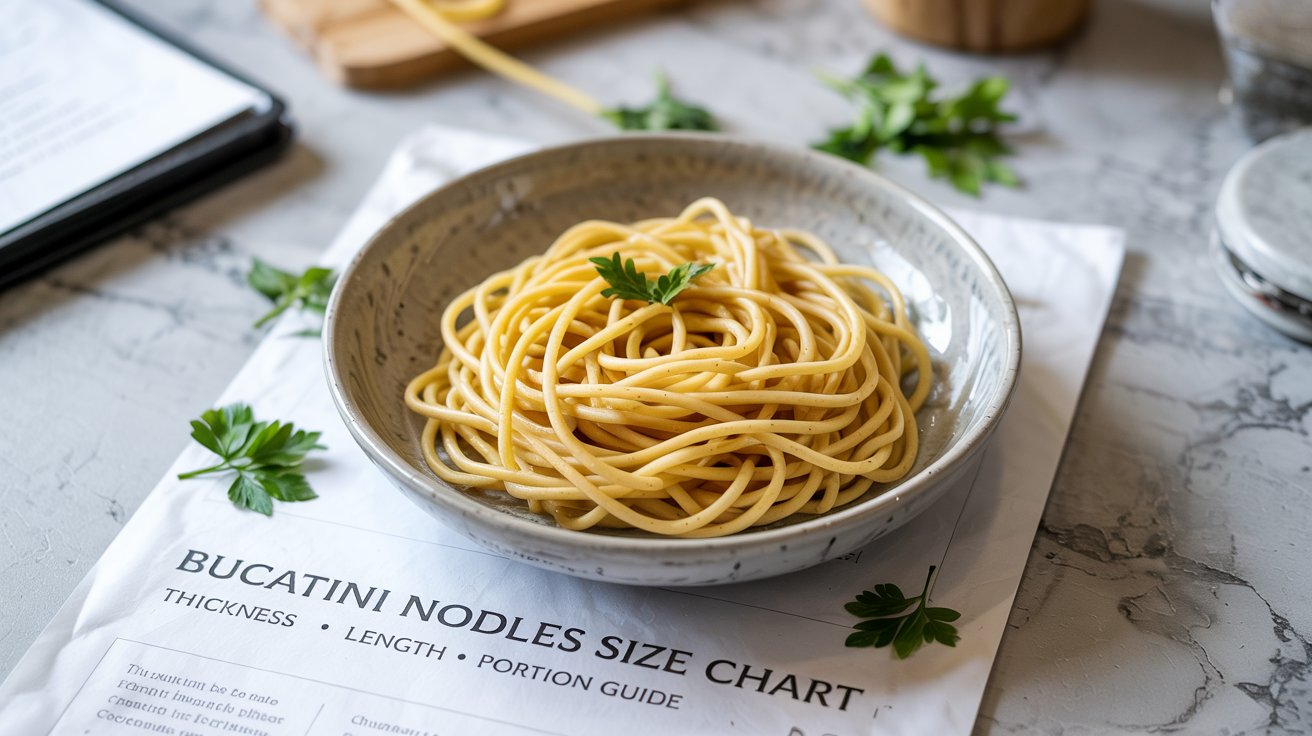
Are you curious about the perfect size of bucatini noodles for your next pasta dish? Knowing the right bucatini noodle size can change the way your meal turns out—whether it’s about cooking time, texture, or how well the sauce clings to the pasta.
In this guide, you’ll find a clear and simple bucatini noodles size chart that helps you pick exactly what you need. By the end, you’ll feel confident choosing the ideal bucatini for every recipe, making your pasta dishes even more delicious and satisfying.
Keep reading to discover the details that make all the difference!
Bucatini Noodles Basics
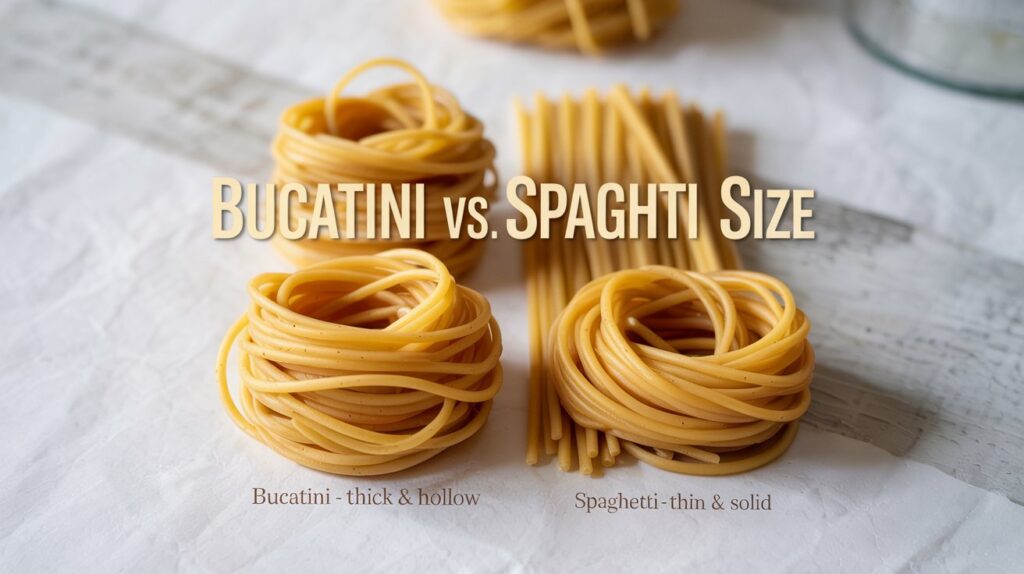
Bucatini noodles stand out in the world of pasta. Their unique shape and size make them a favorite in many kitchens. They look like thick spaghetti but with a hollow center. This hollow part adds a special texture and helps hold sauces better.
Understanding the basics of bucatini noodles helps in cooking dishes that taste great. Knowing their size and shape is important for choosing the right recipes and cooking times.
What Makes Bucatini Unique
Bucatini noodles are long and thick, similar to spaghetti. The key difference is the hole running through the middle. This hole gives them a light, chewy texture. It also allows sauces to fill inside the noodle. This makes each bite flavorful and moist.
The size of bucatini is usually about 3 mm in diameter. They are sturdier than thin pasta, so they hold up well in rich sauces. Their hollow shape sets them apart from most other pasta types.
Common Uses In Recipes
Bucatini noodles work well with thick, chunky sauces. They are perfect for tomato-based sauces and creamy sauces. The hollow center traps sauce, making every bite tasty.
These noodles are often used in traditional Italian dishes. Carbonara and Amatriciana are popular recipes featuring bucatini. They also pair well with vegetables and meats. Their size and shape make them versatile in many recipes.
Measuring Bucatini Portions
Measuring bucatini portions helps control meal size and cooking results. Knowing the right amount avoids waste and ensures balanced servings. This guide explains how to measure bucatini noodles properly for cooking and serving.
Dry Vs Cooked Weight
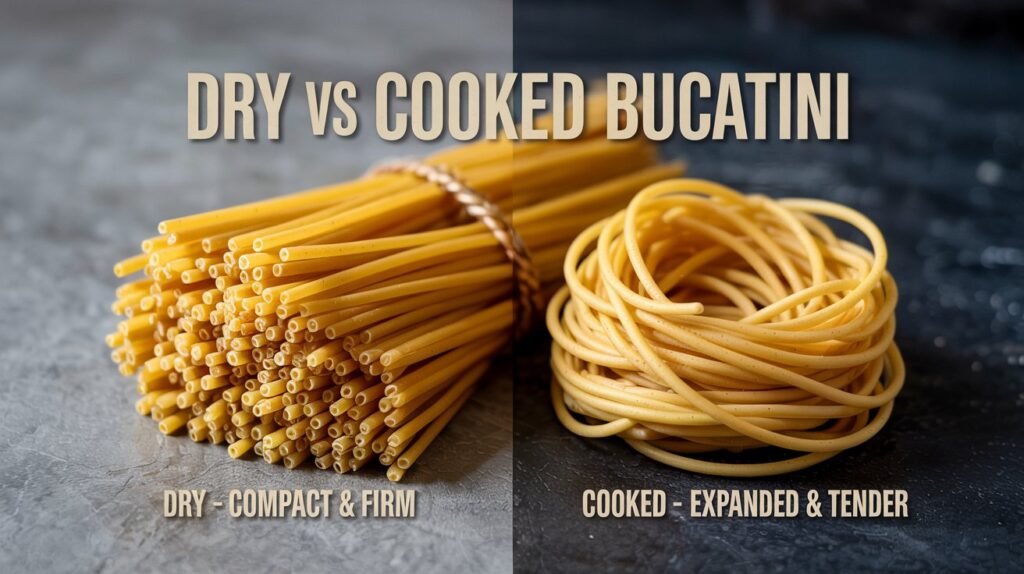
Bucatini noodles change size during cooking. Dry weight is lighter and smaller. Cooked weight is heavier because noodles absorb water. Usually, cooked bucatini weighs about two to two and a half times more than dry.
Measure dry noodles for recipes. Use cooked weight to plan servings. Remember, one cup of dry bucatini can become about two to two and a half cups cooked.
Portion Size For One Serving
One serving of bucatini is usually 2 ounces dry. This equals about 56 grams. It yields roughly one cup cooked. This portion size fits one adult’s meal.
Adjust portions by appetite or recipe needs. For a side dish, use less. For a main course, use more. Keep servings consistent for meal planning and nutrition.
Bucatini Size Variations
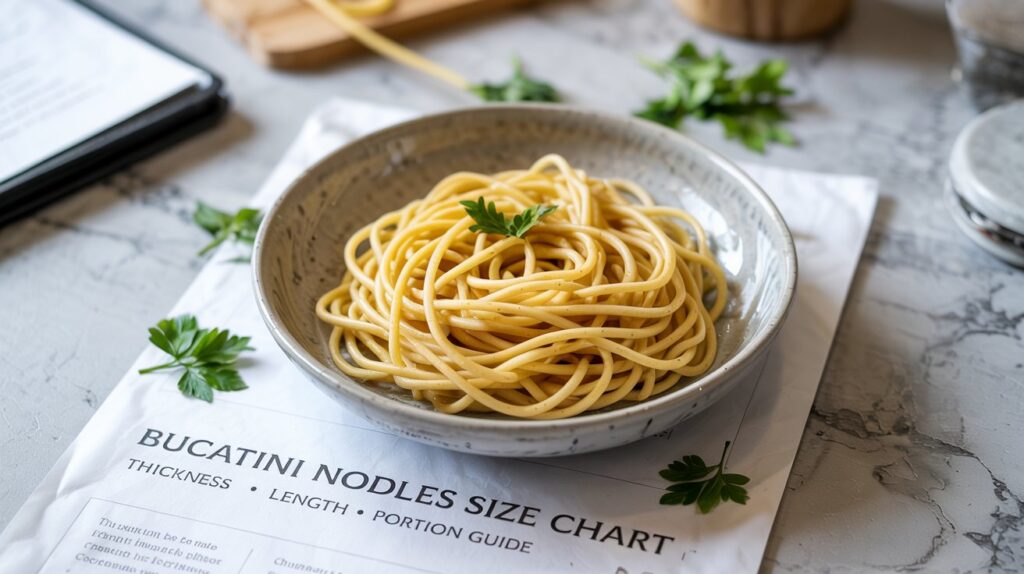
Bucatini noodles come in different sizes that affect how they cook and taste. These variations mainly include changes in diameter and length. Understanding these differences can help you choose the right type for your recipe. The size impacts texture, sauce absorption, and cooking time. Let’s explore the common size variations and what they mean for your cooking.
? Bucatini Noodles Size Chart
| Feature | Standard Measurement | Details |
|---|---|---|
| Length | 25–30 cm (10–12 in) | Similar to spaghetti length |
| Outer Diameter | 2.8–3.2 mm | Thicker than spaghetti |
| Inner Hole Diameter | ~1 mm | Hollow center holds sauce |
| Dry Serving Size | 75–100 g | Per person (main dish) |
| Cooked Yield | ~2–2.5× dry size | Expands after boiling |
| Cooking Time | 9–12 minutes | Cook until al dente |
Diameter And Length Differences
Bucatini noodles are thicker than regular spaghetti. Their diameter usually ranges from 2 to 3 millimeters. Some types have a hollow center, which makes them unique. Length can vary, but it often falls between 25 and 30 centimeters. Thicker noodles hold more sauce and offer a chewier bite. Shorter noodles may cook faster but might not hold sauce as well. Knowing these details helps pick the perfect noodle size for your meal.
How Size Affects Cooking Time
Thicker bucatini takes longer to cook than thinner ones. The hollow center inside also affects cooking speed. It allows heat and water to reach the inside faster. Longer noodles need more time to become tender throughout. Overcooking thick bucatini can make it mushy. Undercooking leaves it hard in the middle. Checking the noodle size guides you to the right cooking time and texture.
Tools For Accurate Measurement
Measuring bucatini noodles accurately helps you cook the right portion every time. Using the right tools makes measuring easy and precise. This helps avoid waste and ensures consistent cooking results.
Using Pasta Measures
Pasta measures are small tools with holes or slots. Each hole fits a different amount of dry bucatini noodles. Insert the noodles into the hole to check the portion size. This tool helps control servings without guessing. It is simple and fast to use for any pasta type.
Kitchen Scales And Alternatives
Kitchen scales give the most accurate weight for noodles. Place the bowl or plate on the scale, then add bucatini. Read the weight to match your recipe or serving size. If you do not have a scale, use measuring cups as a rough guide. Scales are affordable and improve cooking precision.
Adjusting Portions For Different Meals
Adjusting portion sizes of bucatini noodles helps meet different meal needs. Portions vary by appetite and occasion. Knowing the right amount makes cooking easier and reduces waste. This guide breaks down portions for light meals, main courses, and larger groups.
Light Meals And Appetizers
For light meals or appetizers, use about 50 grams of dry bucatini per person. This amount is enough for a small plate or side dish. It pairs well with a simple sauce or salad. Light portions keep meals balanced and avoid feeling too full.
Main Course Portions
Main courses need larger servings of bucatini noodles. Plan for 75 to 100 grams of dry noodles per person. This size fills the plate and satisfies hunger. Serve with your favorite sauce and protein for a complete meal. Adjust slightly based on guest appetite.
Feeding Larger Groups
Cooking for many people means scaling portions carefully. Multiply the single serving size by the number of guests. For example, 100 grams per person for 10 guests equals 1 kilogram of dry bucatini. Prepare extra sauce and toppings to match the noodles. This approach saves time and keeps everyone happy.
Tips For Cooking Bucatini Perfectly
Cooking bucatini noodles perfectly needs care and attention. These thick, hollow noodles hold sauce well and offer a unique texture. Small tips can help you achieve the ideal bite and flavor.
Timing And Texture
Cook bucatini in plenty of boiling water. Stir occasionally to stop noodles from sticking. Check the noodles a minute before the package time ends. The perfect texture is al dente—firm but not hard. Drain quickly but save some cooking water. This water helps adjust sauce thickness later.
Sauce Pairing Suggestions
Bucatini pairs well with rich, thick sauces. Try tomato-based sauces with garlic and herbs. Creamy sauces with cheese also work great. The hollow center traps sauce inside for extra flavor. Avoid very thin sauces that slide off easily.
Storing And Reheating Leftovers
Storing and reheating bucatini noodles properly keeps their texture and taste fresh. Leftovers can lose quality quickly without the right care. Follow simple steps to enjoy your noodles just like first served.
Best Practices For Freshness
Cool the noodles quickly after cooking. Place them in an airtight container. Store in the fridge within two hours. Keep the container sealed to avoid drying out. Use leftover noodles within three to four days. For longer storage, freeze the noodles in portions. Thaw frozen noodles in the fridge overnight.
Reheating Without Overcooking
Reheat noodles gently to keep their texture firm. Use a microwave-safe dish with a lid. Add a splash of water to prevent drying. Heat in short bursts, stirring between each. On the stove, warm noodles over low heat. Stir constantly and add a little water if needed. Avoid overheating to stop noodles from becoming mushy.
Frequently Asked Questions
What Is The Standard Size Of Bucatini Noodles?
Bucatini noodles are typically about 10 to 12 inches long. Their diameter is around 3 mm, thicker than spaghetti. The hollow center gives them a unique texture, perfect for absorbing sauces.
How Does Bucatini Size Compare To Spaghetti?
Bucatini is thicker and hollow, unlike solid spaghetti. Its diameter ranges from 2. 5 to 3 mm, while spaghetti is thinner, around 1. 8 to 2 mm. This size difference affects cooking time and sauce absorption.
What Is The Cooking Time For Bucatini Noodles?
Bucatini usually cooks in 9 to 12 minutes. The thicker, hollow shape requires slightly longer than thin pasta. Always check packaging for exact times to ensure optimal texture.
Can Bucatini Noodles Fit In Standard Pasta Pots?
Yes, bucatini noodles fit standard pasta pots. Their length and diameter are similar to other long pasta types. Use a large pot with ample water for even cooking.
Conclusion
Bucatini noodles come in different sizes to suit your dish. Knowing their size helps you cook pasta perfectly every time. Smaller noodles cook faster and work well in soups. Larger ones hold sauces better for hearty meals. Use this chart to pick the right noodle size easily.
Enjoy your cooking with the right bucatini size!
