
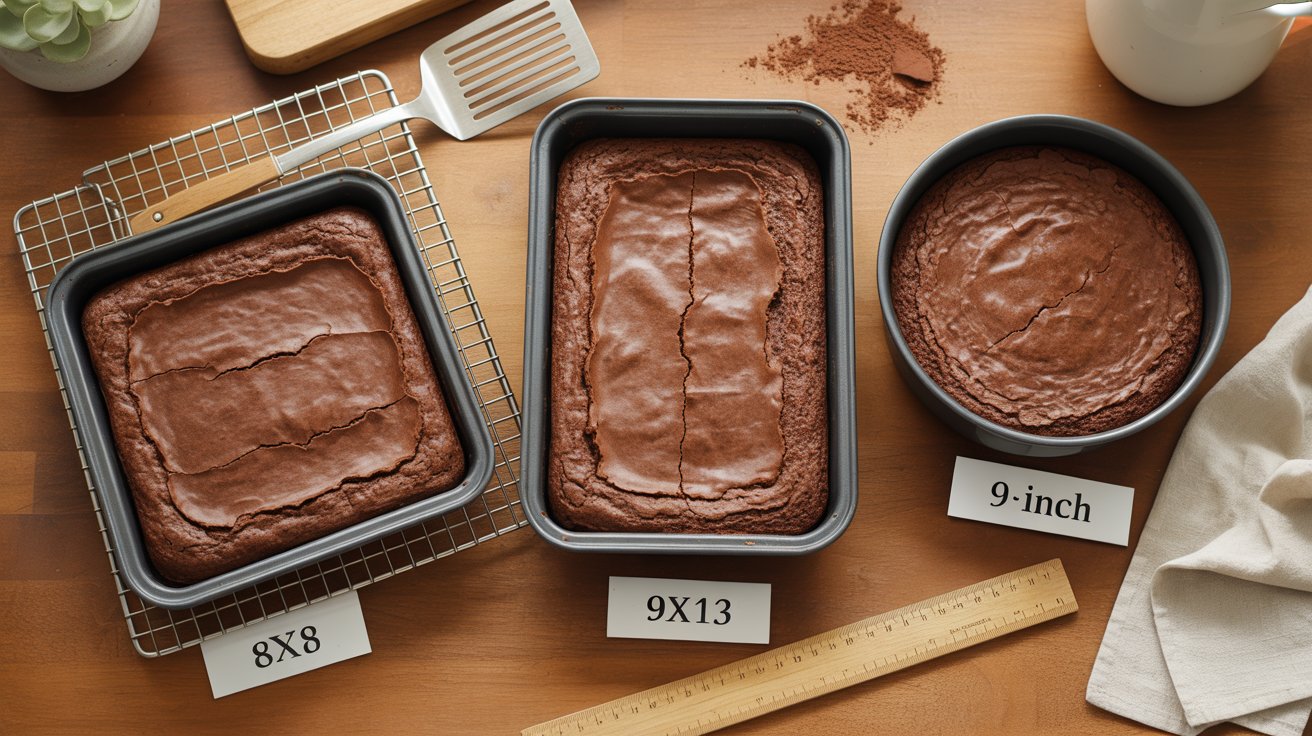
Are you tired of guessing which brownie pan size to use for your recipes? Choosing the right pan can change everything—from how your brownies bake to how they taste and look.
Whether you want thick, fudgy squares or thin, chewy slices, knowing the perfect pan size is key. This Brownie Pan Size Chart will help you pick the ideal pan every time, so your brownies turn out just the way you want.
Keep reading to make baking easier and more delicious!
Common Brownie Pan Sizes
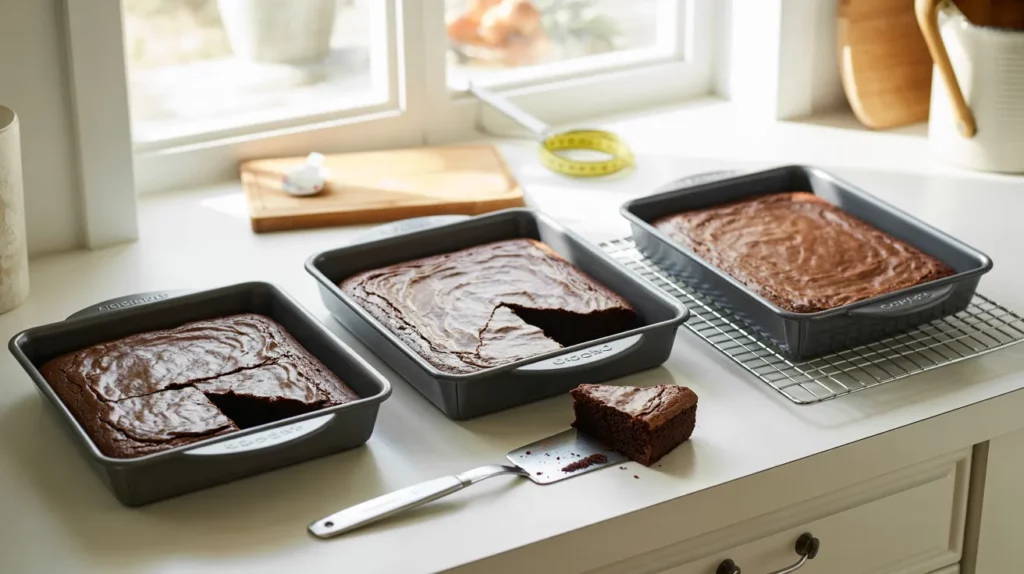
Brownie pans come in different sizes and shapes. Each size affects baking time and the texture of brownies. Knowing common pan sizes helps you choose the right one for your recipe. It also ensures even baking and perfect brownie thickness.
Square Pans
Square pans are the most popular choice for brownies. Sizes often range from 8×8 inches to 9×9 inches. These pans create evenly baked brownies with a classic shape. They fit easily in most ovens and are great for standard recipes. Smaller square pans produce thicker brownies. Larger pans make thinner, more cakey brownies.
Rectangular Pans
Rectangular pans vary widely in size. Common sizes include 9×13 inches and 11×7 inches. These pans are ideal for making more brownies at once. They bake brownies faster because they spread batter thinner. Rectangular pans are perfect for parties or gatherings. The brownies come out with crisp edges and soft centers.
Round Pans
Round pans are less common but still useful. Typical sizes are 8-inch and 9-inch diameter. Round pans give brownies a unique look. Baking time may differ from square or rectangular pans. These pans work well for layered brownie cakes or special presentations. The edges may be softer, with a chewy center.
Brownie Pan Size Chart
| Pan Type | Dimensions | Brownie Thickness | Best For |
|---|---|---|---|
| Square Pan | 8×8 inch | Thick & fudgy | Dense brownies, rich texture |
| Square Pan | 9×9 inch | Medium thickness | Classic brownies, balanced texture |
| Rectangular Pan | 9×13 inch | Thin & chewy | Large batches, parties, crisp edges |
| Rectangular Pan | 11×7 inch | Medium–thick | Smaller batches, softer centers |
| Round Pan | 8 inch | Thick | Brownie cake, special presentations |
| Round Pan | 9 inch | Medium | Even baking, slicing into wedges |
Pan Size And Baking Time
Choosing the right pan size is key for perfect brownies. The size changes how heat moves through the batter. This affects how long the brownies need to bake. Using a pan too big or too small can change the texture and baking time. Understanding this helps you bake brownies that are moist and cooked evenly.
How Pan Size Affects Baking
Smaller pans make thicker brownies. These take longer to bake fully. Larger pans spread the batter thin. Thin batter cooks faster and can dry out. The pan’s depth controls how heat reaches the center. A deep pan needs more time for the middle to cook. A shallow pan cooks more quickly and may burn edges.
Adjusting Cooking Time
Change baking time based on pan size. Use shorter time for bigger pans. Increase time for smaller, deeper pans. Check brownies early to avoid overbaking. Insert a toothpick to test doneness. Adjust temperature slightly if needed for even cooking. Keep notes for future baking to get perfect results every time.
Portion Sizes For Different Pans
Understanding portion sizes helps serve brownies just right. Different pan sizes affect how many pieces you get. Knowing portion sizes ensures everyone enjoys the perfect bite. Choose your pan size based on how many servings you want. Below are common portion sizes for various brownie pans.
Small Bites
Small bites come from larger pans, like 9×13 inches. Cut brownies into 24 or 30 tiny squares. These fit well for parties or snacks. Small pieces let guests enjoy more variety. Perfect for kids or light treats.
Standard Squares
Standard squares usually come from 8×8 inch pans. Cut brownies into 16 equal pieces. Each piece is a good size for dessert. Not too big, not too small. Ideal for family dinners or casual gatherings.
Large Servings
Large servings come from smaller pans or fewer cuts. Use 8×8 or 9×9 inch pans and cut 9 or 12 squares. These pieces feel like a full treat. Great for those who want more brownie. Serve after meals or with coffee.
Choosing The Right Pan Material
Choosing the right pan material is key for baking perfect brownies. The material affects heat distribution and baking time. It can change the texture and crust of your brownies. Knowing each type helps you pick what suits your recipe best.
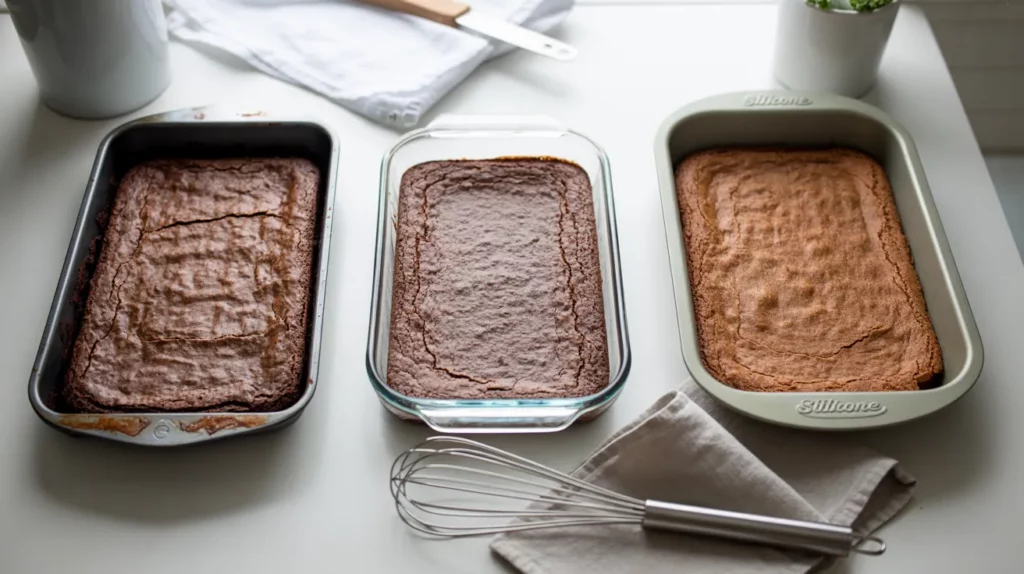
Metal Pans
Metal pans heat up quickly and evenly. They create a crisp edge on brownies. Dark metal absorbs more heat and browns faster. Shiny metal reflects heat and bakes slower. Metal pans are durable and common in many kitchens.
Glass Pans
Glass pans heat more slowly but keep heat longer. They bake brownies evenly and prevent hot spots. Brownies in glass may take a little longer to cook. Glass pans let you watch the browning through the sides. They are easy to clean and dishwasher safe.
Silicone Pans
Silicone pans are flexible and non-stick. They make it easy to remove brownies without breaking. Silicone heats unevenly and may need more baking time. These pans cool faster after baking. They are lightweight and easy to store.
Tips For Perfect Brownie Texture
Perfect brownie texture makes every bite special. Small changes in ingredients and baking affect the final result. Knowing how to control thickness, chewiness, and crispiness helps you bake brownies just right. These tips guide you to the best texture using the right pan size and baking time.
Thickness And Chewiness
Thicker brownies feel soft and chewy inside. Use a smaller pan for thicker brownies. Less surface area means more height and moisture inside. Baking time also matters. Bake a little less for moist, chewy brownies. Overbaking dries them out. Use an oven thermometer to check the temperature. That keeps brownies from getting too hard or dry.
Crispy Edges Vs. Gooey Centers
Crispy edges come from more heat on the sides of the pan. Metal pans give crispier edges than glass pans. For gooey centers, use a glass or ceramic pan. These heat more slowly and evenly. Let brownies cool in the pan. The centers stay soft and gooey as they cool. Don’t overbake. The edges will get crunchy, and the center will dry out.
Scaling Recipes For Different Pan Sizes
Scaling recipes for different pan sizes helps make the perfect brownies every time. It allows you to bake in any pan you have without wasting ingredients. You can adjust the amount of batter to fit your pan. This keeps the texture and baking time just right.
Understanding how to scale recipes saves money and reduces baking errors. It makes your brownies look and taste great, no matter the pan size. Follow simple methods to change recipe amounts easily.
Doubling And Halving Recipes
Doubling a recipe means using twice the ingredients. This works well for larger pans. Halving a recipe means using half the ingredients. Use this for smaller pans.
Measure ingredients carefully to keep the right balance. Baking powder and soda amounts may need slight changes. Mixing time can stay the same for doubled recipes. Check brownies often while baking. Adjust time based on pan depth.
Using Volume Measurements
Volume measurements help compare pans easily. Calculate the pan’s volume by multiplying length, width, and height. Use this to find how much batter fits inside.
Match the recipe volume to your pan size. Pour batter slowly to avoid overflow. Use measuring cups for accuracy. This method works well for round, square, and rectangular pans. It helps keep baking times consistent.
Cleaning And Maintenance Of Brownie Pans
Keeping your brownie pans clean and well-maintained helps them last longer. Proper care stops brownies from sticking and keeps the pan in good shape. A clean pan also makes baking easier and more fun. Follow simple steps to protect your pans and enjoy perfect brownies every time.
Preventing Sticking
Use a thin layer of butter or oil before pouring the batter. This creates a smooth surface and stops brownies from sticking. You can also use parchment paper to line the pan. It makes removing brownies simple and keeps the pan clean. Avoid metal utensils that can scratch the pan’s surface.
Long-lasting Care
Wash your brownie pan with warm, soapy water right after use. Use a soft sponge or cloth to avoid scratches. Never use harsh cleaners or steel wool. Dry the pan completely before storing it. Store in a dry place to stop rust and damage. Regular care keeps your pan ready for the next batch.
Frequently Asked Questions
What Are Common Brownie Pan Sizes?
Common brownie pan sizes include 8×8, 9×9, and 9×13 inches. Smaller pans yield thicker brownies, while larger ones create thinner slices. Choosing the right pan size affects baking time and texture, so match your recipe to the pan size for best results.
How Does Pan Size Affect Brownie Baking Time?
Smaller pans usually require longer baking times because batter is thicker. Larger pans bake faster as batter spreads thinner. Adjust baking time according to pan size to avoid undercooked or overcooked brownies. Always check for doneness with a toothpick near the end.
Can I Use Different Pan Sizes For Brownie Recipes?
Yes, but you must adjust baking time and temperature. Smaller pans need longer baking; larger pans need less time. Also, consider batter thickness to maintain texture. Using a pan size chart helps convert recipes accurately and achieve consistent results.
What Pan Size Is Best For Fudgy Brownies?
An 8×8 inch pan works well for fudgy brownies. It keeps batter thick, ensuring moist and dense texture. Avoid larger pans if you want rich, gooey brownies. Adjust baking time slightly if you change pan size for perfect fudginess.
Conclusion
Choosing the right brownie pan size makes baking easier and better. You get the perfect brownie thickness every time. This chart helps you pick pans for any recipe. No guesswork, no wasted batter. Baking brownies becomes more fun and less stressful.
Try different sizes to find what suits your taste best. Enjoy delicious brownies with the right pan every time. Simple, clear, and helpful for all bakers.
