
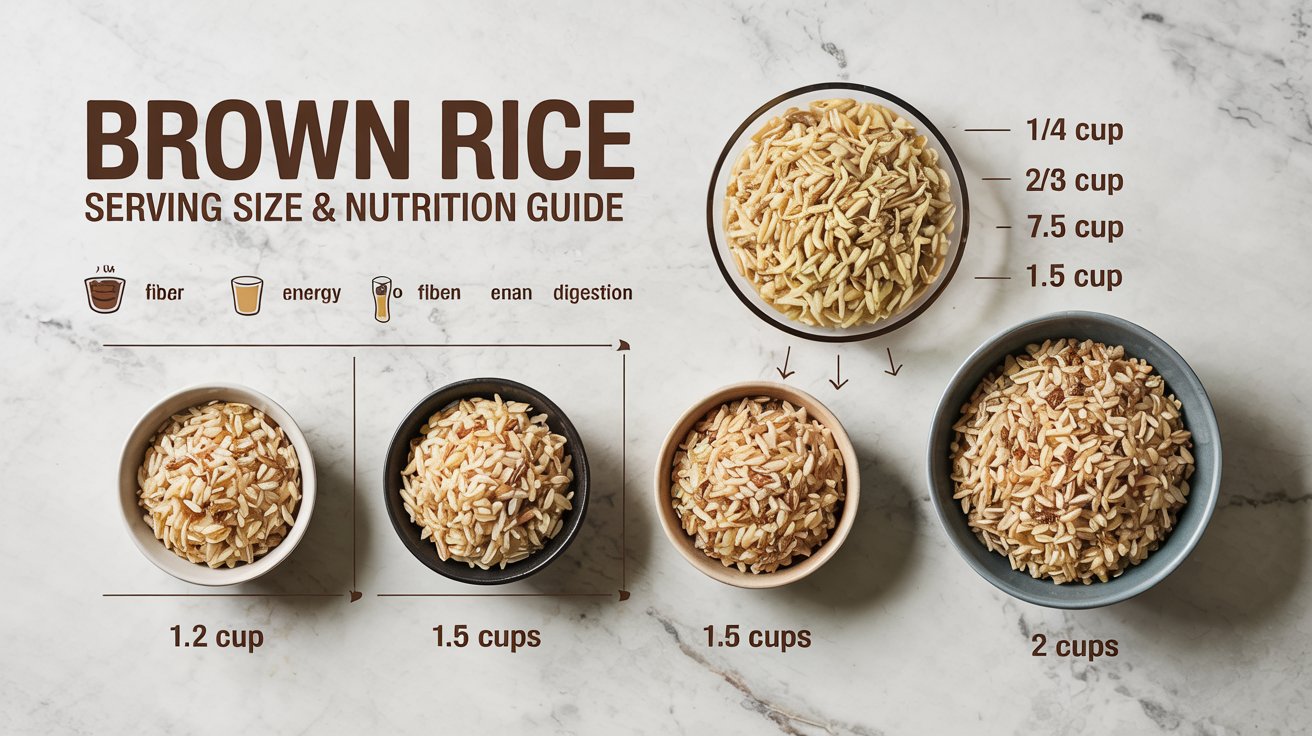
Brown rice is often seen as the healthier alternative to white rice—nutty in flavor, rich in fiber, and packed with nutrients. But when it comes to portioning, many people aren’t sure how much is actually considered one serving. Understanding the brown rice serving size helps you balance your meals, manage calories, and get the most nutritional benefit without overeating. Let’s break it down in a simple, practical way.
Why Brown Rice Serving Size Matters
Brown rice is a whole grain, which means it contains more fiber and nutrients than refined grains. While that makes it a great choice for health, portion size still matters.
Eating too much can increase calorie and carbohydrate intake, while too little may leave you hungry. The right serving size helps:
- Maintain balanced meals
- Support weight management
- Control blood sugar levels
- Provide steady energy
Because brown rice is more filling than white rice, you may need slightly less to feel satisfied.
Standard Brown Rice Serving Size
Brown rice serving sizes are usually measured after cooking, using cups or grams.
Brown Rice Serving Size Chart
| Serving Type | Cooked Rice (Volume) | Weight (Approx.) | Calories (Approx.) |
|---|---|---|---|
| Small Serving | 1/2 cup | 100–120g | 100–120 kcal |
| Standard Serving | 1 cup | 180–200g | 200–220 kcal |
| Large Serving | 1.5 cups | 270–300g | 300–330 kcal |
| Extra Large | 2 cups | 350–400g | 400–450 kcal |
These values may vary slightly depending on cooking method and moisture content.
Choosing The Right Serving Size
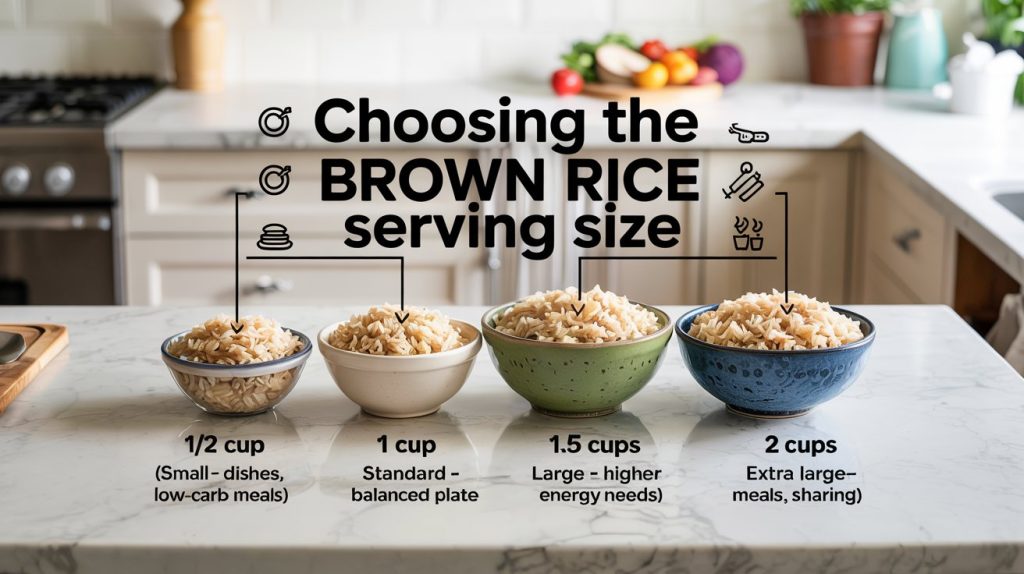
The ideal portion depends on your diet and meal type:
- 1/2 Cup (Small): Great for side dishes or low-carb meals
- 1 Cup (Standard): Most common serving for a balanced plate
- 1.5 Cups (Large): Suitable for higher energy needs
- 2 Cups (Extra Large): Best for heavy meals or sharing
If you’re pairing brown rice with protein and vegetables, 1 cup cooked is usually the perfect balance.
Brown Rice Vs. Uncooked Measurement
Like other types of rice, brown rice expands during cooking—usually about 2.5 to 3 times its original size.
Brown Rice Conversion Chart
| Uncooked Rice | Cooked Rice Yield |
|---|---|
| 1/4 cup | ~3/4 cup cooked |
| 1/2 cup | ~1.5 cups cooked |
| 1 cup | ~2.5–3 cups cooked |
Measuring uncooked rice helps you plan portions more accurately.
Brown Rice Serving Size And Nutrition
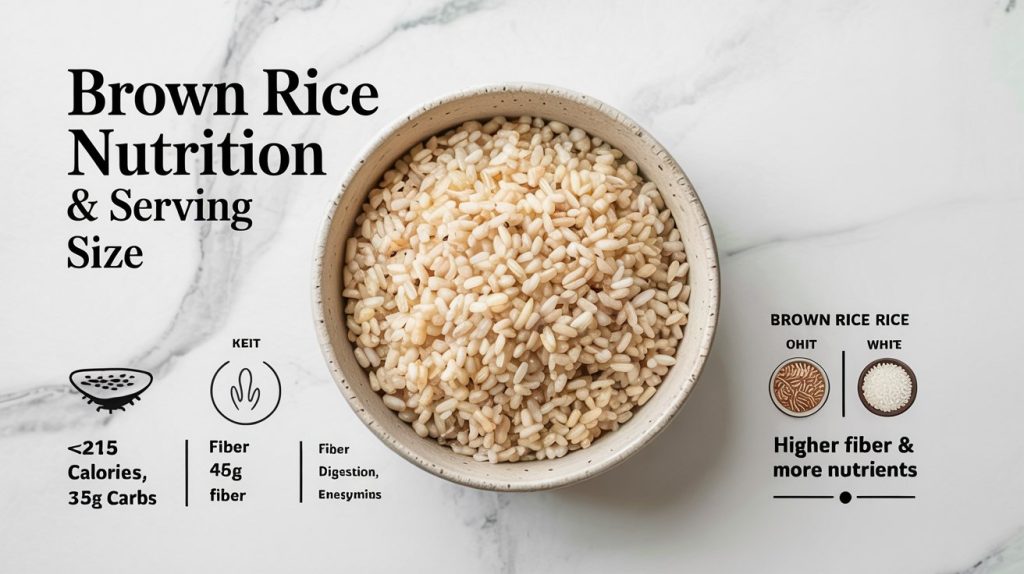
Brown rice is known for its nutritional benefits:
- Higher in fiber than white rice
- Contains vitamins and minerals like magnesium and B vitamins
- Helps with digestion and fullness
For example:
- 1 cup cooked brown rice: ~215 calories, 45g carbs, 3–4g fiber
Because of its fiber content, brown rice keeps you full longer, which can help with portion control.
Visual Guide: Brown Rice Serving Size
Here’s a quick reference for everyday meals:
| Serving Size | Best Use | Portion Tip |
|---|---|---|
| 1/2 Cup | Side dish | Light and balanced |
| 1 Cup | Main meal | Standard healthy portion |
| 1.5 Cups | High-energy meals | For active individuals |
| 2 Cups | Large portions | Consider splitting |
Tips For Measuring Brown Rice
- Use measuring cups or a scale: Accuracy matters
- Cook in batches: Easier to portion later
- Fluff after cooking: Prevents compact servings
- Store leftovers properly: Refrigerate for later use
- Plan ahead: Brown rice takes longer to cook than white rice
Consistent measuring helps maintain portion control and nutrition.
Common Mistakes When Serving Brown Rice
- Overestimating portions: Brown rice is filling, so smaller amounts may be enough
- Not accounting for expansion: Cooking too much uncooked rice
- Ignoring balance: Too much rice, not enough protein or vegetables
- Eyeballing servings: Leads to inconsistent portions
Avoiding these mistakes helps create healthier, more balanced meals.
How Brown Rice Serving Size Affects Meals
The amount of brown rice you serve can change the entire meal. Too much can make a dish feel heavy, while too little might not provide enough energy.
A balanced plate usually includes:
- 1 portion of brown rice
- 1 portion of protein
- Plenty of vegetables
This balance supports both nutrition and satisfaction.
Brown Rice In Healthy Diets
Brown rice is popular in many healthy eating plans:
- Weight loss diets: Controlled portions help manage calories
- Diabetic diets: Lower glycemic impact than white rice
- Athlete diets: Provides sustained energy
- Plant-based diets: A key source of complex carbohydrates
Its versatility makes it easy to include in a variety of meals.
Frequently Asked Questions
What Is One Serving Of Brown Rice?
One serving is typically 1 cup of cooked brown rice, or about 180–200 grams.
Is Brown Rice Healthier Than White Rice?
Yes, brown rice has more fiber and nutrients.
How Much Uncooked Brown Rice Makes 1 Cup Cooked?
About 1/3 cup uncooked rice yields roughly 1 cup cooked.
Can I Eat Brown Rice Every Day?
Yes, as part of a balanced diet and in proper portions.
Is 2 Cups Of Brown Rice Too Much?
It can be, depending on your calorie needs. It’s best for larger appetites or high-energy diets.
Brown rice serving size may seem like a small detail, but it plays a big role in nutrition, portion control, and meal balance. By understanding the right portion, you can enjoy its health benefits while keeping your meals satisfying and well-balanced every day.
