
Broccoli is one of those vegetables that effortlessly elevates any meal, packed with nutrients and a delightful crunch. Whether you’re tossing it in a stir-fry, steaming it for a side dish, or throwing it in a hearty soup, broccoli brings color and flavor that makes every dish feel special and satisfying.
In this guide, you’ll find a comprehensive serving size chart for broccoli, including different preparations like raw, steamed, and roasted. Expect to see prep times and serving recommendations to help you incorporate broccoli into your meals easily.
Standard Broccoli Serving Sizes
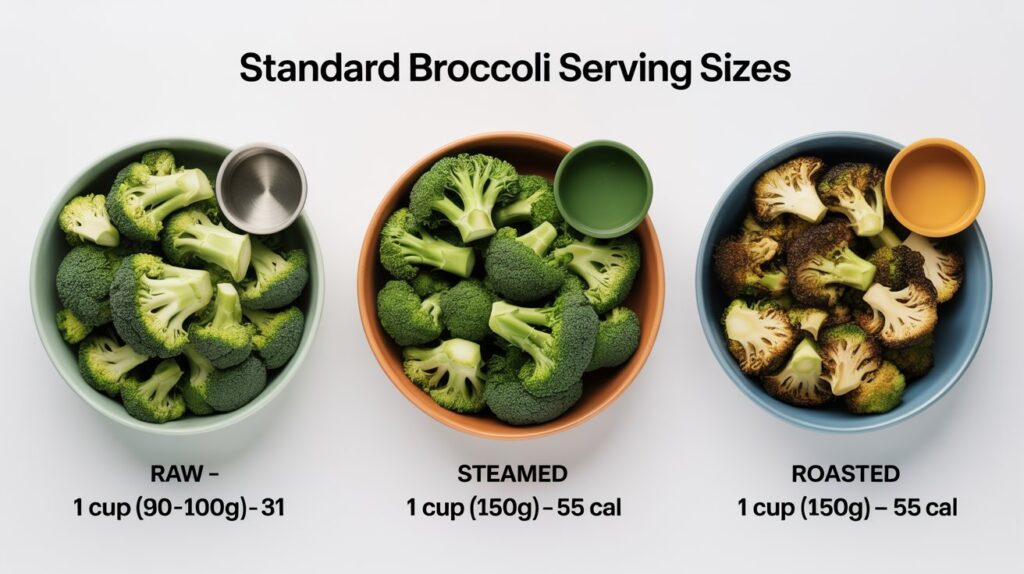
| Preparation | Volume | Weight | Calories |
|---|---|---|---|
| Raw florets | 1 cup | ~90–100g | ~31 kcal |
| Steamed | 1 cup | ~150–160g | ~55 kcal |
| Roasted | 1 cup | ~150g | ~55–60 kcal |
Broccoli Origin and Significance
Broccoli, a member of the cruciferous family, has a rich history and significant nutritional benefits that make it an important vegetable in diets worldwide. Understanding its origins and health contributions can enhance your appreciation for this versatile vegetable and inform your serving choices.
Cultural Background
Originating in the Mediterranean region, broccoli has been cultivated for over 2,000 years. It was first developed in Italy, where it became a staple, and has since spread globally, becoming popular in various cuisines. Here are some key points about its cultural significance:
- Broccoli is believed to have been brought to the United States by Italian immigrants in the 19th century.
- It is often celebrated in Italian and Mediterranean dishes, often paired with garlic and olive oil.
- Broccoli is associated with health and wellness, frequently promoted for its cancer-fighting properties.
Nutritional Benefits
This vibrant green vegetable is not just tasty; it’s packed with nutrients. Here’s a breakdown of its key nutritional advantages:
| Calories | 31 |
| Vitamin C | 135% of Daily Value (DV) |
| Fiber | 2.4g |
| Protein | 2.5g |
| Calcium | 4% of DV |
Incorporating this nutrient-dense vegetable into your meals can provide essential vitamins and minerals, supporting overall health. Remember, the way you prepare broccoli can impact its nutritional value, so it’s good to consider various serving sizes and cooking methods when planning your meals.
Standard Serving Sizes
Understanding the standard serving sizes for broccoli is essential for maintaining a balanced diet and ensuring you get the right nutrients. This section provides a detailed chart outlining recommended serving sizes for different preparations of broccoli, such as raw, steamed, and cooked. Knowing these measurements can help you incorporate broccoli effectively into your meals.
Raw Broccoli
- Standard serving size: 1 cup (91g) of raw broccoli florets
- This serving provides approximately 31 calories and is a great source of vitamins C and K.
Steamed Broccoli
- Standard serving size: 1 cup (156g) of steamed broccoli
- Steaming broccoli enhances its flavor while retaining nutrients, and this serving contains about 55 calories.
Cooked Broccoli
- Standard serving size: 1 cup (156g) of cooked broccoli (boiled or sautéed)
- This preparation method results in a tender texture and offers around 55 calories.
| Raw Broccoli | 1 cup (91g) | 31 |
| Steamed Broccoli | 1 cup (156g) | 55 |
| Cooked Broccoli | 1 cup (156g) | 55 |
Chef’s tip: For a more flavorful dish, try adding a drizzle of olive oil and a sprinkle of salt after steaming your broccoli.
Measuring Serving Sizes
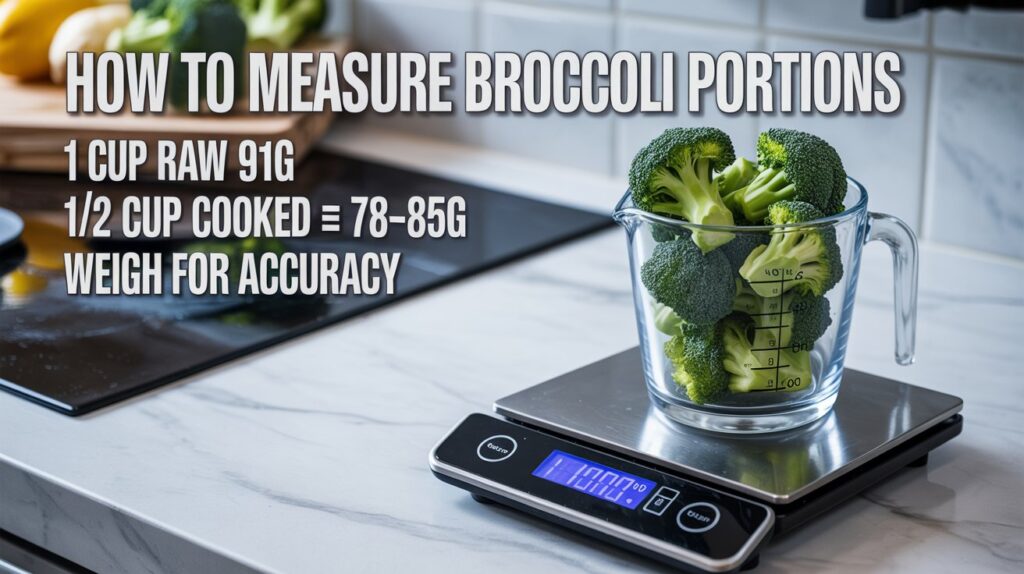
Understanding how to accurately measure broccoli serving sizes is essential for maintaining a balanced diet. Whether you enjoy your broccoli raw, steamed, or cooked, knowing the correct amounts helps in meal planning and ensures you’re getting the nutrients you need.
- Using Cups: For raw broccoli, a typical serving size is about 1 cup of florets, which is roughly 91 grams. To measure, break off the florets and fill a standard measuring cup, ensuring they are loosely packed without pressing down. This serving provides around 31 calories and is a good source of vitamins C and K.
- Using Weight: If you prefer to measure broccoli by weight, aim for approximately 100 grams for a standard serving. Use a kitchen scale for accuracy; place a bowl on the scale, zero it out, and then add the broccoli florets until you reach 100 grams. This method can be especially useful for recipes that require precise ingredient amounts.
Comparing Different Preparations
When broccoli is cooked, its volume decreases significantly. A serving size of steamed broccoli is typically around ½ cup (about 78 grams). This measurement helps account for the loss of water content during cooking, while still delivering the nutrients.
| Raw | 1 cup | 91g | 31 |
| Steamed | ½ cup | 78g | 27 |
| Cooked | ½ cup | 85g | 27 |
Pro tip: If you find that you have leftover broccoli, you can store it in an airtight container in the refrigerator for up to 3-5 days, maintaining its freshness.
Daily Vegetable Intake Recommendations
Understanding daily vegetable intake recommendations is crucial for maintaining a balanced diet, especially when it comes to nutrient-rich vegetables like broccoli. This section outlines how much broccoli you should aim to incorporate into your daily meals, tailored to both adults and children.
- Adult Recommendations: The general guideline for adults is to consume at least 2.5 to 3 cups of vegetables per day. Broccoli is an excellent choice, with a standard serving size being about 1 cup of raw broccoli (approximately 91 grams) or ½ cup cooked (about 78 grams). Aim to include broccoli as part of your daily intake to benefit from its fiber, vitamins, and antioxidants.
- Children Recommendations: For children aged 2 to 18, the recommended vegetable intake varies by age. Generally, children should eat 1 to 2.5 cups of vegetables daily. A good serving size for children is about ½ to 1 cup of raw broccoli, depending on their age and appetite. Serving broccoli in fun shapes or with dips can encourage kids to enjoy this nutritious vegetable.
Pro Tip: To maximize vegetable intake, try to fill half your plate with vegetables during meals, making broccoli a staple side dish alongside proteins and grains.
Cooking Methods for Broccoli
Understanding how different cooking methods affect broccoli can help you determine the right serving sizes for your meals. Each method influences not only the flavor and texture of the broccoli but also its nutritional content and how much you might want to serve. Here, we discuss steaming, roasting, and sautéing broccoli, highlighting their effects on serving sizes.
Steaming
Steaming broccoli is one of the healthiest cooking methods, preserving most of its nutrients. A standard serving size for steamed broccoli is about 1 cup (91g) of florets. To steam:
- Bring 1 inch of water to a boil in a pot with a steamer basket.
- Add the broccoli florets, cover, and steam for 4-5 minutes until bright green and tender-crisp.
- Check that it’s done by piercing a floret with a fork; it should feel tender but still firm.
Roasting
Roasting brings out a rich, nutty flavor in broccoli. The recommended serving size remains around 1 cup (91g), but the weight may vary slightly due to moisture loss. To roast:
- Preheat your oven to 425°F (220°C).
- Toss 1 pound (450g) of broccoli florets with 2 tablespoons olive oil, salt, and pepper.
- Spread in a single layer on a baking sheet and roast for 20-25 minutes until golden brown and crispy at the edges.
Sautéing
Sautéing is a quick method that maintains the vibrant color and crunch of broccoli. A typical serving size is also 1 cup (91g). Here’s how to sauté:
- Heat 2 tablespoons olive oil in a large skillet over medium-high heat.
- Add the broccoli florets and sauté for 3-4 minutes until they turn bright green and become tender yet crisp.
- For added flavor, include minced garlic for the last minute of cooking.
Chef’s tip: Always wash broccoli thoroughly before cooking to remove any dirt or debris.
| Steamed | 1 cup (91g) | 5 minutes |
| Roasted | 1 cup (91g) | 25 minutes |
| Sautéed | 1 cup (91g) | 4 minutes |
Incorporating Broccoli into Meals
Including broccoli in your daily meals can elevate both nutrition and flavor. This versatile vegetable can be easily integrated into breakfast, lunch, and dinner, helping you meet your daily vegetable serving goals while adding a delicious crunch.
- Breakfast Ideas: Start your day with a veggie-packed omelet. Whisk together 3 large eggs with a splash of milk and season with salt and pepper. Sauté ½ cup finely chopped broccoli in 1 tablespoon olive oil over medium heat for 3-4 minutes until bright green and tender. Pour the eggs over the broccoli and cook until set, about 4-5 minutes.
- Lunch Incorporation: Make a refreshing broccoli salad for lunch. Combine 2 cups of chopped raw broccoli florets with ½ cup diced red onion and ½ cup shredded carrots. Toss with ¼ cup Greek yogurt, 1 tablespoon apple cider vinegar, and salt and pepper to taste. This salad is not only filling but also provides a crunchy texture and vibrant flavors.
- Dinner Pairings: For dinner, roast broccoli to bring out its natural sweetness. Preheat your oven to 425°F (220°C). Toss 2 cups of broccoli florets with 2 tablespoons olive oil, 1 teaspoon garlic powder, and ½ teaspoon salt on a baking sheet. Roast for 15-20 minutes until the edges are crispy and golden brown. The smell will be irresistible!
Chef’s tip: Always cut broccoli into uniform pieces to ensure even cooking, preventing some pieces from becoming mushy while others remain crunchy.
Broccoli Serving Size Comparisons
Understanding serving sizes can greatly enhance meal planning and nutrition. In this section, we will compare broccoli serving sizes with those of other common vegetables like carrots, spinach, and cauliflower. This will help you visualize portions and incorporate these veggies into balanced meals effectively.
| Broccoli | 91g | 156g | 156g |
| Carrots | 128g | 55g | 61g |
| Spinach | 30g | 180g | 180g |
| Cauliflower | 107g | 130g | 130g |
As you can see from the chart, broccoli holds its own in serving sizes compared to other vegetables. One cup of raw broccoli weighs about 91 grams and expands significantly when steamed or cooked, making it a nutrient-dense choice for any meal. Keep these comparisons in mind to ensure you’re getting a variety of vegetables in your diet!
Common Misconceptions
Understanding broccoli serving sizes can be muddled with misconceptions, especially regarding cooking methods and preparation styles. Many home cooks may not realize how these factors influence serving size and nutritional value, leading to confusion in meal planning.
Overcooking
One common mistake is overcooking broccoli, which can reduce its nutritional value and alter serving sizes. Overcooked broccoli turns mushy and can lose vital nutrients. Here are some tips to avoid this:
- Steam or sauté broccoli for 3-5 minutes until bright green and tender-crisp.
- Check for doneness by piercing with a fork; it should be tender but still firm.
- Immediately transfer to an ice bath to halt the cooking process if you’re blanching it.
Raw vs. Cooked
Another misconception is the serving size difference between raw and cooked broccoli. Cooking reduces volume, making it easy to underestimate the actual serving size. Here’s a quick comparison:
| Raw Broccoli | 1 cup chopped (91g) |
| Steamed Broccoli | ½ cup cooked (78g) |
| Roasted Broccoli | ½ cup cooked (65g) |
By understanding these nuances, you can better gauge how much broccoli to prepare for meals, ensuring you get the most out of this nutritious vegetable without overindulging or wasting any. Happy cooking!
Quick Summary
| Prep Time | Cook Time | Total Time | Servings |
|---|---|---|---|
| 10 minutes | 5 minutes | 15 minutes | 4 servings |
- Measure accurately: Standard serving size is 1 cup chopped broccoli.
- Steam correctly: Steam for 3-5 minutes to retain nutrients.
- Season well: Add salt and lemon juice for enhanced flavor.
- Store properly: Keep in a sealed container in the fridge for up to 5 days.
- Mix it up: Combine with other veggies for a colorful plate.
- Tip: Blanch before freezing for optimal texture.
- Tip: Cut into uniform pieces for even cooking.
Frequently Asked Questions
Can I make this ahead of time? How to store and reheat?
You can prepare broccoli in advance and store it in an airtight container in the refrigerator for up to 3 days. To reheat, steam or microwave until heated through, about 1-2 minutes.
What can I substitute for broccoli?
If you need a substitute, you can use cauliflower or green beans as they provide a similar texture and cooking time. Just adjust the serving size accordingly based on your preference.
How do I know when it’s done?
Broccoli is done when it turns a vibrant green and is tender but still crisp, which usually takes about 5-7 minutes when steaming. You can also pierce it with a fork; it should go through easily without being mushy.
Can I freeze this? How long does it last?
Yes, you can freeze broccoli for up to 12 months if blanched first, which helps preserve its color and nutrients. After blanching, cool it quickly in ice water, drain, and store in freezer bags.
What if I don’t have a steamer?
If you don’t have a steamer, you can easily use a microwave or a pot with a small amount of boiling water, covering the broccoli with a lid. Just make sure to check it frequently, cooking for about 4-6 minutes until tender.
