
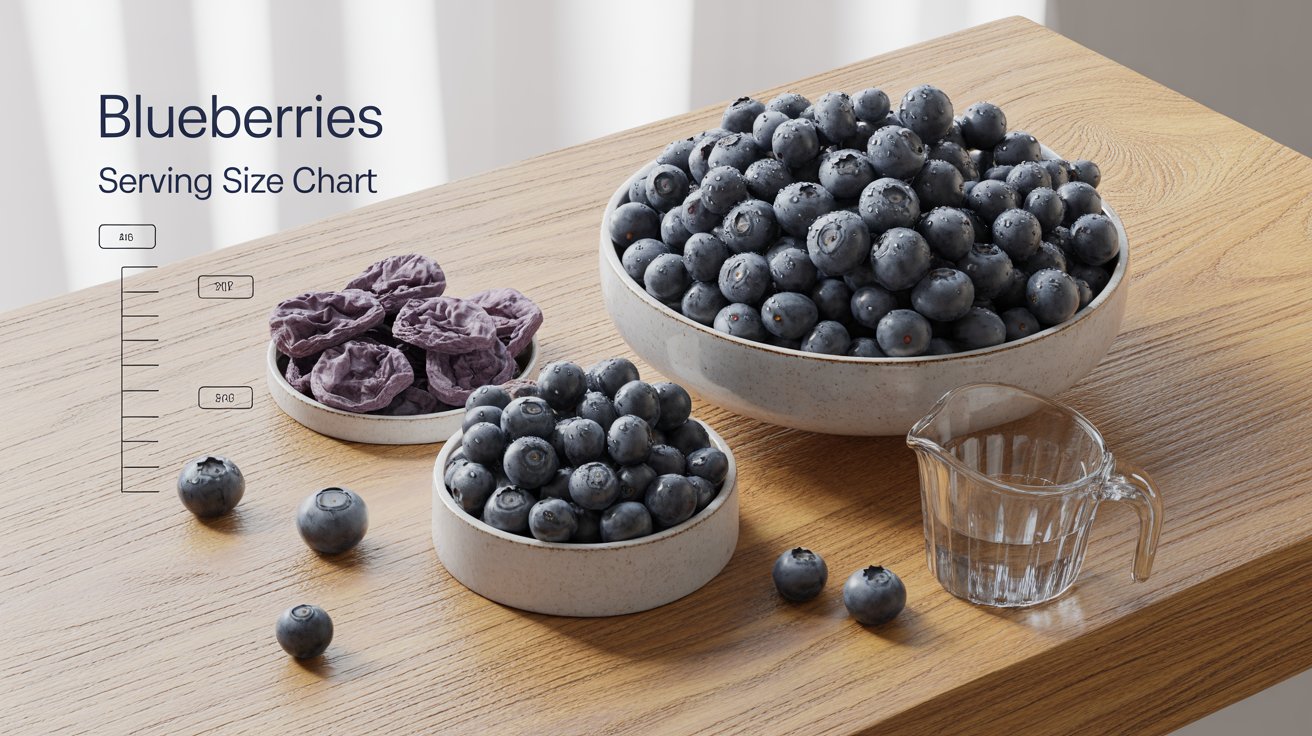
Blueberries are more than just a delicious snack. They are packed with vitamins, antioxidants, and fiber, making them a favorite for healthy eaters. But knowing how much to eat for different purposes—like snacking, baking, or meal prepping—can be confusing. Portion sizes can change based on whether blueberries are fresh, frozen, dried, or juiced. This article breaks down the blueberries serving size chart in a clear, easy-to-understand way. You’ll learn the recommended amounts for various uses, how to measure without a scale, and tips to get the most from every bite.
Standard Blueberries Serving Sizes
Blueberries are usually sold fresh, frozen, dried, or as juice. Each form has a different serving size because the water content changes.
| Type | Serving Size | Approximate Weight | Calories |
|---|---|---|---|
| Fresh | 1 cup | 148 grams | 84 |
| Frozen | 1 cup | 140 grams | 79 |
| Dried | 1/4 cup | 40 grams | 127 |
| Juice | 1/2 cup | 120 ml | 70 |
Fresh blueberries are most common. A standard serving is 1 cup, which is about 148 grams and contains just 84 calories. Frozen blueberries have a similar portion size, but they are slightly denser, so the weight is a bit less for the same volume.
Dried blueberries are more concentrated. A serving is 1/4 cup, but the calorie count is much higher because the water is gone. Blueberry juice is usually measured by the half-cup.
Blueberries Serving Size Chart
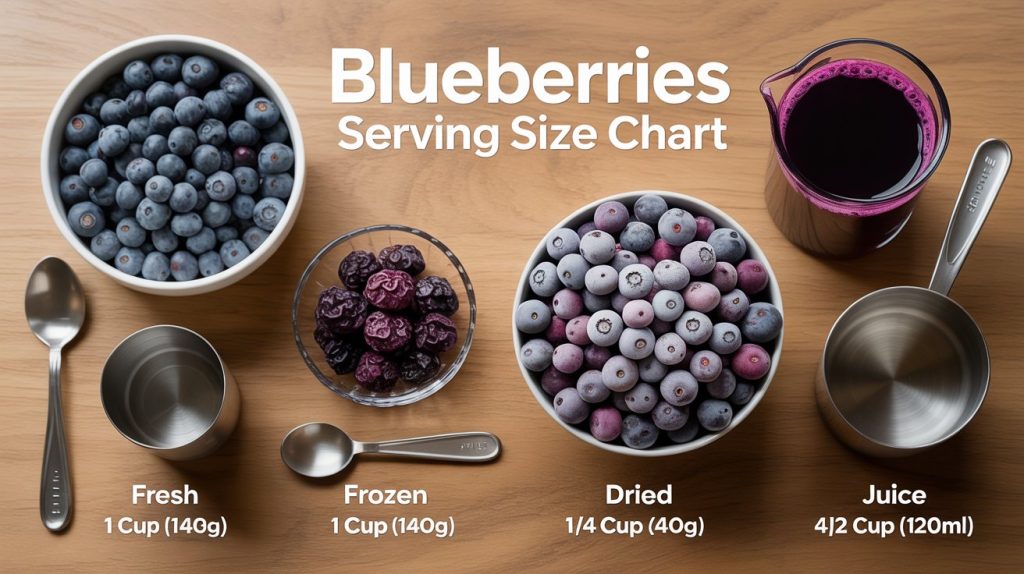
| Type | Serving Size | Weight | Calories |
|---|---|---|---|
| Fresh blueberries | 1 cup | ~148 g | 84 kcal |
| Frozen blueberries | 1 cup | ~140 g | 79 kcal |
| Dried blueberries | ¼ cup | ~40 g | 127 kcal |
| Blueberry juice | ½ cup | ~120 ml | 70 kcal |
✔ Recommended serving: 1 cup fresh blueberries
Serving Size By Purpose
People use blueberries in many ways. The right serving size depends on your goal—are you eating for a snack, making a smoothie, or baking?
Snacking
For a healthy snack, most nutritionists recommend 1 cup of fresh blueberries. This fits well in a small bowl, is easy to carry, and gives you a boost of fiber and antioxidants.
Baking
Recipes for muffins, pancakes, or pies often call for 1/2 to 1 cup of blueberries per batch. For a standard 12-muffin recipe, use 1 cup. If you want extra berries in each bite, you can add up to 1.5 cups, but be careful—too many berries can make baked goods soggy.
Smoothies
Smoothies usually need less fruit because you blend several ingredients together. 1/2 cup of blueberries is enough for one smoothie. If you like a stronger berry taste, you can add up to 3/4 cup.
Toppings
Blueberries are a great topping for cereal, oatmeal, or yogurt. A typical topping portion is 1/4 to 1/3 cup—enough for taste and color, without adding too many calories.
Meal Prep And Salads
If you meal prep salads for the week, aim for 1/2 cup of blueberries per serving. This adds sweetness and color without overpowering other flavors.
Nutrition Per 1 Cup of Blueberries
| Nutrient | Amount |
|---|---|
| Calories | 84 kcal |
| Carbohydrates | 21 g |
| Fiber | 3.6 g |
| Sugar | 15 g |
| Vitamin C | ~16% DV |
| Vitamin K | ~24% DV |
How To Measure Blueberries Without A Scale
Most people don’t weigh their blueberries. Here are some easy ways to measure the right serving size:
- 1 cup is about the size of a tennis ball.
- 1/2 cup fits in the palm of your hand.
- 1/4 cup is a small handful or about 2 tablespoons.
For dried blueberries, since they are sweeter and denser, use a measuring cup or spoon for accuracy.
How To Store Blueberries
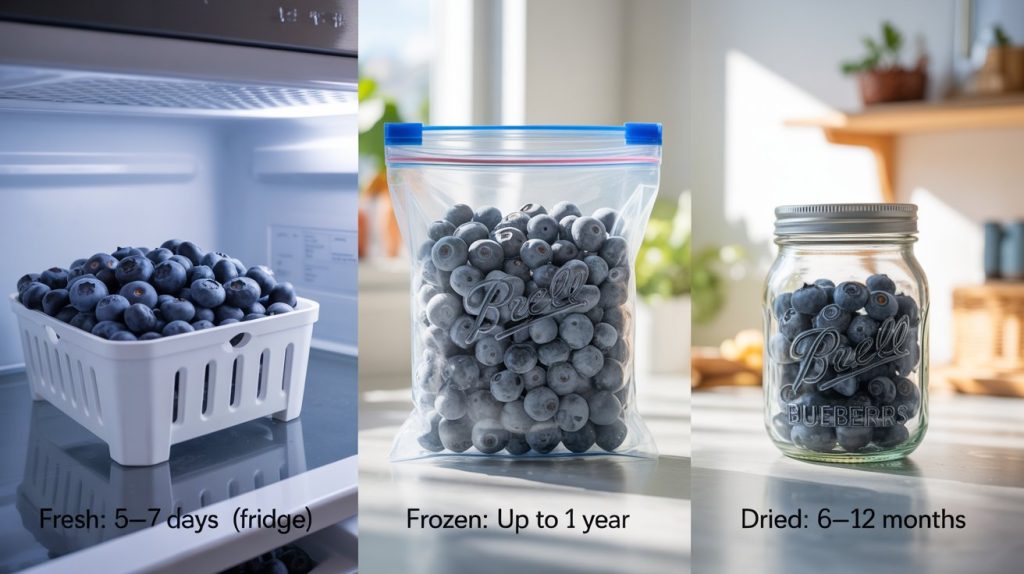
| Type | Storage Time |
|---|---|
| Fresh blueberries | 5–7 days (fridge) |
| Frozen blueberries | up to 1 year |
| Dried blueberries | 6–12 months |
Comparing Blueberry Serving Sizes With Other Fruits
It’s helpful to see how blueberries compare with other popular fruits.
| Fruit | Serving Size | Calories | Fiber (g) |
|---|---|---|---|
| Blueberries (fresh) | 1 cup (148g) | 84 | 3.6 |
| Strawberries (fresh) | 1 cup (152g) | 49 | 3.0 |
| Grapes | 1 cup (151g) | 104 | 1.4 |
| Banana | 1 medium (118g) | 105 | 3.1 |
You’ll see that blueberries have fewer calories than bananas and grapes, and more fiber than grapes. This makes them a great choice for both snacks and recipes.
Blueberry Serving Size Chart By Age And Diet
Not everyone needs the same amount of blueberries. The right serving can depend on age, activity level, or special diets.
| Group | Recommended Serving | Notes |
|---|---|---|
| Children (2-8 yrs) | 1/2 cup | Easy to chew, low sugar |
| Teens & Adults | 1 cup | Standard serving |
| Active Adults | 1 – 1.5 cups | More antioxidants for recovery |
| Low-Sugar Diet | 1/4 – 1/2 cup | Limit for blood sugar control |
| Seniors | 1/2 – 3/4 cup | Easy to digest, high nutrients |
Children may need less than adults because of their smaller stomachs. Active adults can enjoy more for energy and muscle recovery. For anyone watching sugar, such as people with diabetes, a smaller serving is best.
Practical Tips For Blueberry Portion Control
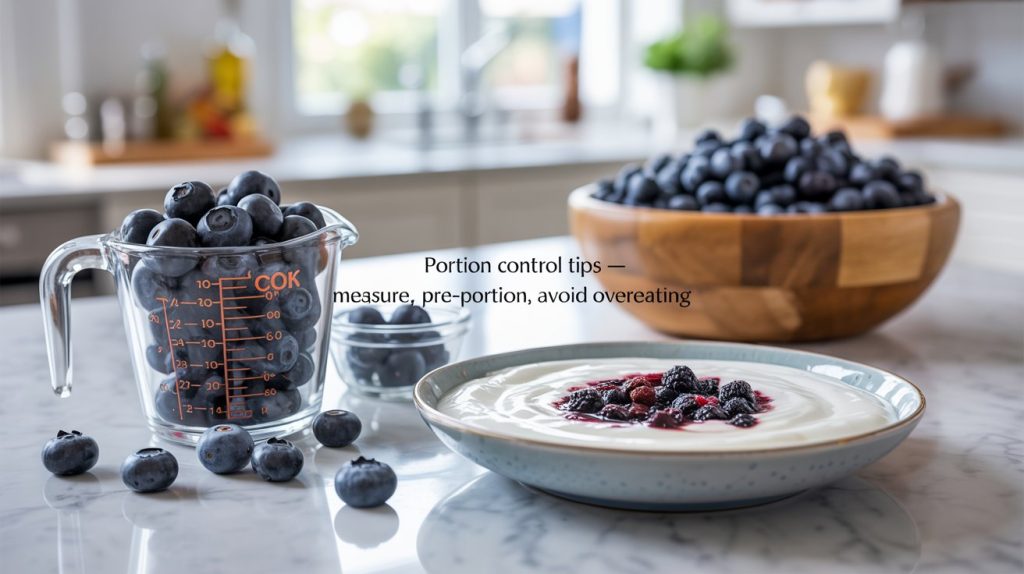
- Use a measuring cup the first few times. After that, you’ll recognize the right amount by sight.
- If you buy large containers, divide berries into single servings right away.
- For dried blueberries, remember they are high in sugar and calories.
- Try mixing blueberries with other fruits to control portions and add variety.
- Add them to salads or yogurt to stretch a small serving further.
A common mistake is to eat straight from the package—this makes it easy to lose track of how much you’ve eaten.
Non-obvious Insights
Many people forget that dried blueberries are much more calorie-dense than fresh. Eating a handful of dried blueberries is not the same as a handful of fresh ones. Also, portion size can change based on what you eat with your blueberries. If you add them to a sweet dessert, you might want a smaller serving to control sugar intake.
Another detail: when using blueberries in smoothies, the liquid from the berries helps thicken your drink. So, using frozen blueberries instead of ice cubes can improve texture and taste.
For more information on the nutritional benefits of blueberries, see this article from the Harvard T.H. Chan School of Public Health.
Frequently Asked Questions
How Many Blueberries Should I Eat Per Day?
Most health experts recommend 1 cup per day for adults as part of a balanced diet. This amount supports heart health and brain function.
Are Frozen Blueberries As Healthy As Fresh?
Yes, frozen blueberries keep most nutrients. They are picked and frozen quickly after harvest, so they remain a healthy choice all year.
Is It Okay To Eat Blueberries Every Day?
Yes, eating blueberries daily is safe and healthy for most people. They offer antioxidants, vitamins, and fiber. Just keep servings reasonable if you watch sugar intake.
How Many Blueberries Are In A Cup?
There are about 65-75 medium blueberries in one cup. The number can vary based on the berry size.
What Is The Best Way To Store Blueberries?
Keep fresh blueberries in the fridge. Wash them only before eating to prevent mold. Frozen blueberries should stay in the freezer in a sealed bag.
Blueberries are simple to enjoy, but knowing the right serving size helps you get all the benefits without overdoing it. Whether you snack, bake, or blend, now you can measure with confidence.
