
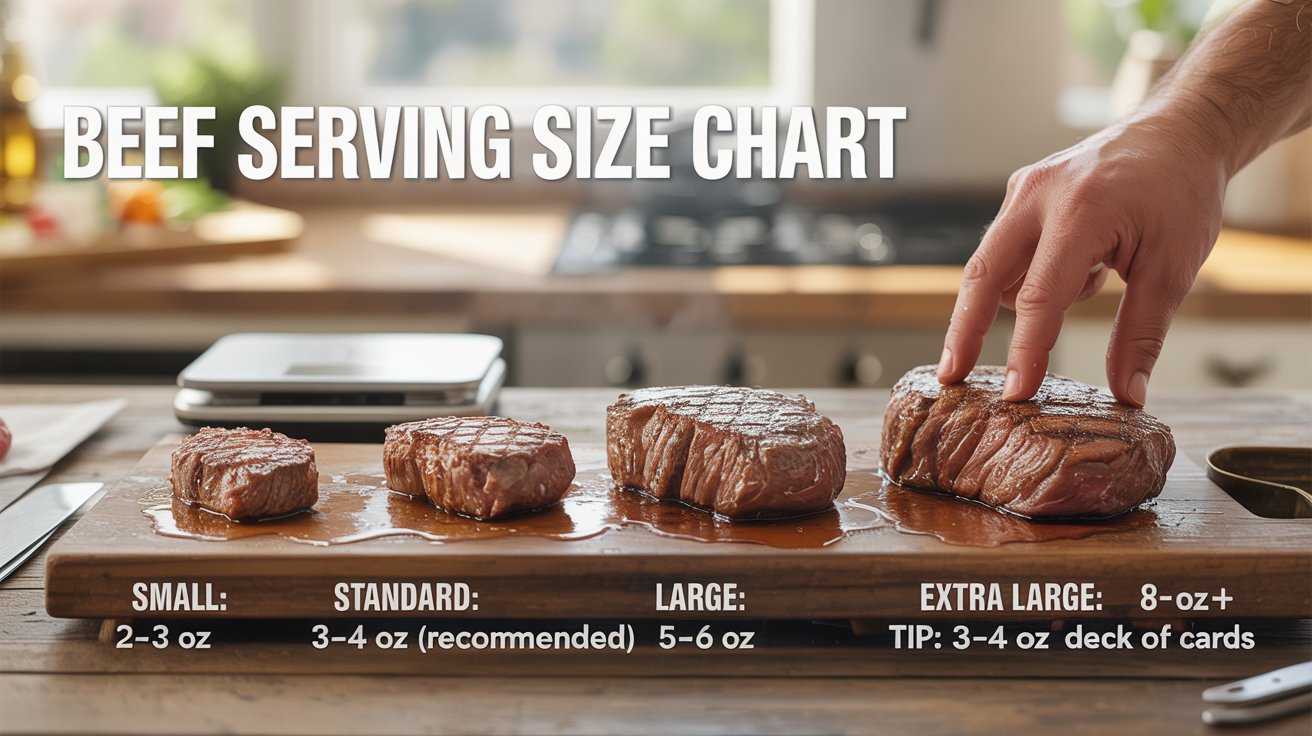
Beef is a rich, flavorful protein enjoyed in everything from steaks and burgers to stir-fries and roasts. But have you ever wondered how much beef is actually considered a proper serving? Some portions feel too small, while others can be overwhelming. Understanding a beef serving size guide helps you balance nutrition, portion control, and meal satisfaction. Whether you’re cooking at home or ordering at a restaurant, knowing the right serving size makes a big difference.
Why Beef Serving Size Matters
Beef serving size isn’t just about how much you eat—it directly impacts your health, nutrition, and overall meal balance. Beef is high in protein, iron, and essential nutrients, but it can also be high in saturated fat if consumed in large amounts.
Eating the right portion helps you:
- Maintain a balanced diet
- Control calorie intake
- Get enough protein without overeating
For home cooks, proper serving sizes also help with meal planning and reducing food waste.
Standard Beef Serving Sizes And Portions
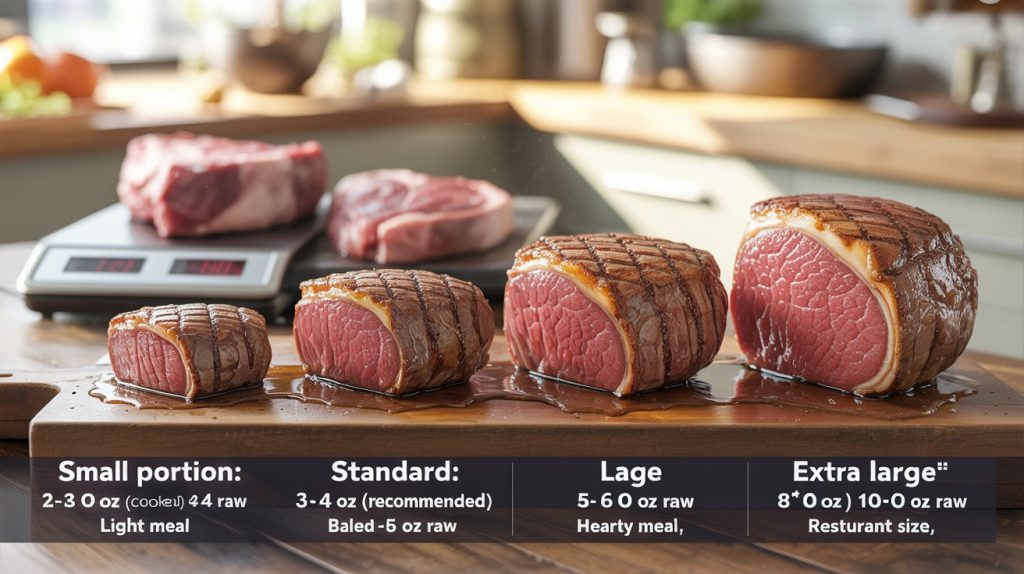
A standard serving of beef is usually measured by weight (cooked). Nutritional guidelines often recommend moderate portions for optimal health.
Beef Serving Size Chart
| Serving Type | Cooked Weight | Raw Weight (Approx.) | Portion Description |
|---|---|---|---|
| Small Portion | 2–3 oz (60–85g) | 3–4 oz (85–115g) | Light meal or salad topping |
| Standard Serving | 3–4 oz (85–113g) | 4–5 oz (115–140g) | Recommended portion size |
| Large Portion | 5–6 oz (140–170g) | 6–8 oz (170–225g) | Hearty meal |
| Extra Large | 8 oz+ (225g+) | 10 oz+ (280g+) | Restaurant-style portion |
Beef loses moisture and shrinks during cooking, which is why raw weight is higher than cooked weight.
Choosing The Right Beef Serving Size
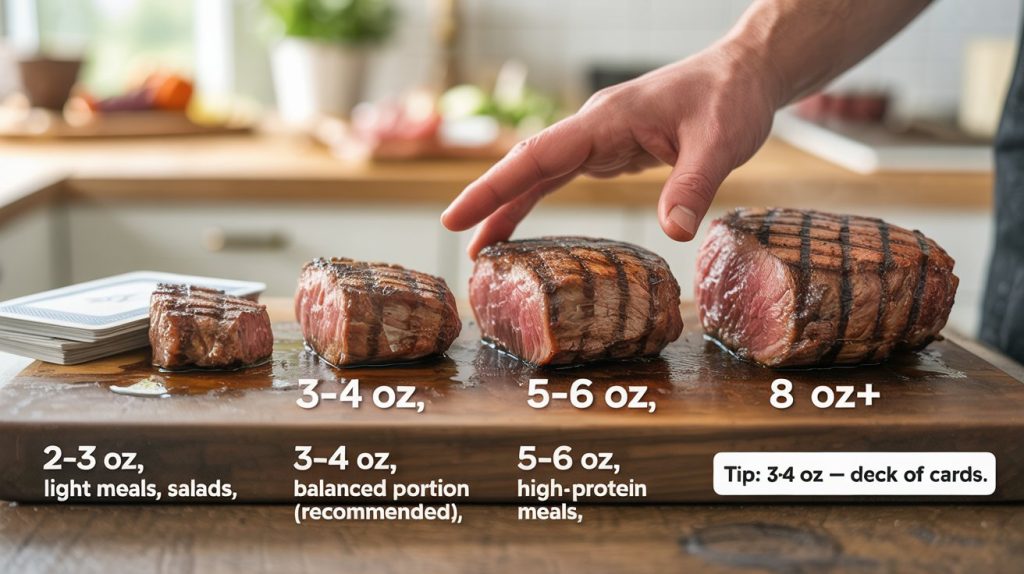
The best portion depends on your meal and dietary needs:
- 2–3 oz: Ideal for salads, wraps, or light meals
- 3–4 oz: Perfect for a balanced lunch or dinner
- 5–6 oz: Suitable for larger appetites or high-protein diets
- 8 oz or more: Common in restaurants, but often more than needed
A helpful tip: A 3–4 oz serving is roughly the size of a deck of cards.
Beef Serving Size Comparison: Home Vs. Restaurant
Portion sizes can vary greatly depending on where you eat.
Home vs Restaurant Portions
| Location | Typical Serving | Portion Control |
|---|---|---|
| Home | 3–5 oz | Easier to manage |
| Restaurant | 6–12 oz | Often oversized |
Restaurants often serve larger portions, which can lead to overeating if you’re not mindful.
Beef Serving Size And Nutrition
Beef is nutrient-dense, but portion size plays a key role in its health impact.
For example, a 3 oz cooked serving of lean beef contains:
- ~180–250 calories
- ~22–26g protein
- Important nutrients like iron, zinc, and B vitamins
Larger portions increase calories and fat, especially with fattier cuts like ribeye or ground beef.
Visual Guide: Beef Serving Size
Here’s an easy way to estimate portions without a scale:
| Serving Size | Visual तुलना | Best Use |
|---|---|---|
| 3 oz | Deck of cards | Balanced meals |
| 5–6 oz | Palm of hand | Hearty meals |
| 8 oz | Large smartphone | Restaurant portions |
Visual comparisons help when you don’t have measuring tools.
Tips For Measuring And Cooking Beef
- Use a kitchen scale: Most accurate way to measure portions
- Trim excess fat: Reduces calories and improves health value
- Let it rest after cooking: Helps retain juices
- Choose lean cuts: مثل sirloin or tenderloin for healthier meals
- Plan portions ahead: Avoid cooking more than you need
Consistency in portioning leads to better cooking results and nutrition.
Common Mistakes When Choosing Beef Serving Size
- Oversized portions: Eating more than your body needs
- Ignoring cooking shrinkage: Raw beef looks larger than cooked
- Choosing fatty cuts: Increases calorie intake quickly
- Not balancing meals: Too much meat, not enough vegetables
Being mindful of these mistakes helps you create healthier meals.
How Beef Serving Size Affects Your Meal
The portion of beef you choose changes the entire meal experience. Smaller portions allow room for sides like vegetables and grains, creating a balanced plate. Larger portions may feel satisfying at first but can be heavy and less nutritious overall.
Balancing beef with other food groups ensures a more enjoyable and healthy meal.
The Evolution Of Beef Portion Sizes
In the past, beef portions were smaller and more balanced with other foods. Over time—especially in restaurants—portion sizes have increased significantly. Today, many servings are double or even triple the recommended amount.
Understanding proper serving sizes helps bring meals back to a healthier balance.
Frequently Asked Questions
What Is The Recommended Serving Size Of Beef?
A standard serving is 3–4 oz of cooked beef.
How Much Raw Beef Equals One Serving?
About 4–5 oz of raw beef equals 3–4 oz cooked.
Is 8 Oz Of Beef Too Much?
For most people, yes—it’s larger than the recommended portion.
Can I Eat Beef Every Day?
It’s best to eat beef in moderation and include other protein sources.
How Can I Measure Beef Without A Scale?
Use visual cues like a deck of cards or the palm of your hand.
Beef serving sizes may seem simple, but they play a key role in your health, nutrition, and meal satisfaction. Whether you’re grilling a steak or preparing a quick dinner, understanding the right portion helps you enjoy beef in a balanced and mindful way every time.
