
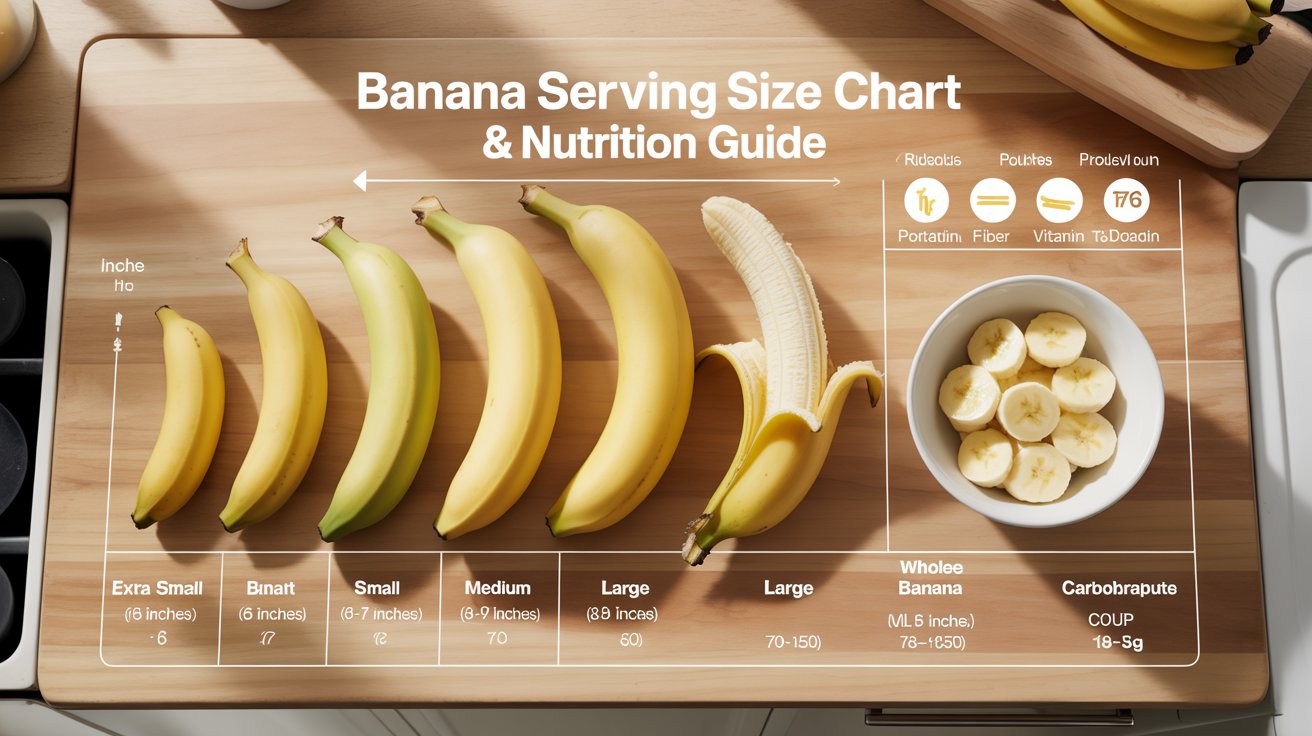
Bananas are one of the most popular fruits in the world—convenient, naturally sweet, and packed with nutrients. But bananas come in different sizes, and portion size can affect your calorie and sugar intake. Understanding a banana serving size chart helps you enjoy bananas while keeping your diet balanced.
Why Banana Serving Size Matters
Bananas are rich in carbohydrates and natural sugars, which provide energy—but portion size still matters.
Knowing the right serving size helps you:
- Manage calorie and sugar intake
- Balance fruit with other foods
- Meet your daily nutrition goals
Even healthy fruits like bananas should be eaten in proper portions.
Standard Banana Serving Sizes And Portions
Bananas are usually measured by size (length/weight) or by number of bananas.
Banana Serving Size Chart
| Banana Size | Length (Approx.) | Weight (Edible) | Calories | Carbs |
|---|---|---|---|---|
| Extra Small | <6 inches | 80g | 70–75 | 18–20g |
| Small | 6–7 inches | 100g | 85–90 | 22–23g |
| Medium (Standard) | 7–8 inches | 115–120g | 100–105 | 25–27g |
| Large | 8–9 inches | 135g | 120–125 | 30–31g |
| Extra Large | 9+ inches | 150g+ | 130–150 | 33–35g |
👉 A medium banana is considered one standard serving.
Choosing The Right Banana Serving Size
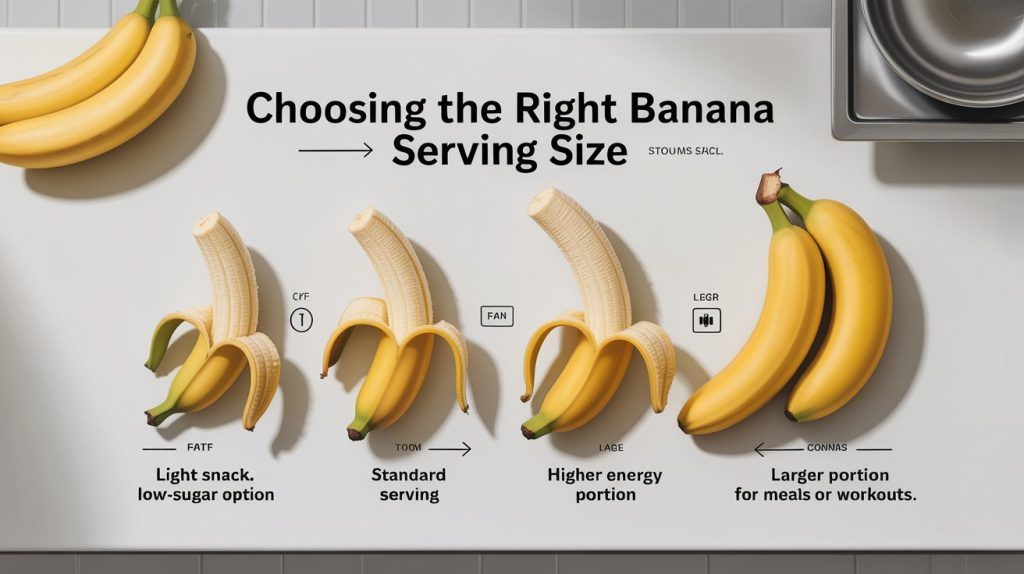
The best portion depends on your needs:
- ½ banana: Light snack or low-sugar option
- 1 medium banana: Standard serving
- 1 large banana: More energy for active individuals
- 2 bananas: Larger portion, often for meals or workouts
For most people, 1 medium banana is ideal.
Banana Serving Size Comparison: Whole vs Sliced
Bananas can be eaten whole or sliced.
Whole vs Sliced Banana
| Form | Serving Size | Notes |
|---|---|---|
| Whole | 1 banana | Easy to measure |
| Sliced | 1 cup | About 1–1.5 bananas |
Slicing can make portions look larger, so measuring helps.
Banana Serving Size And Nutrition
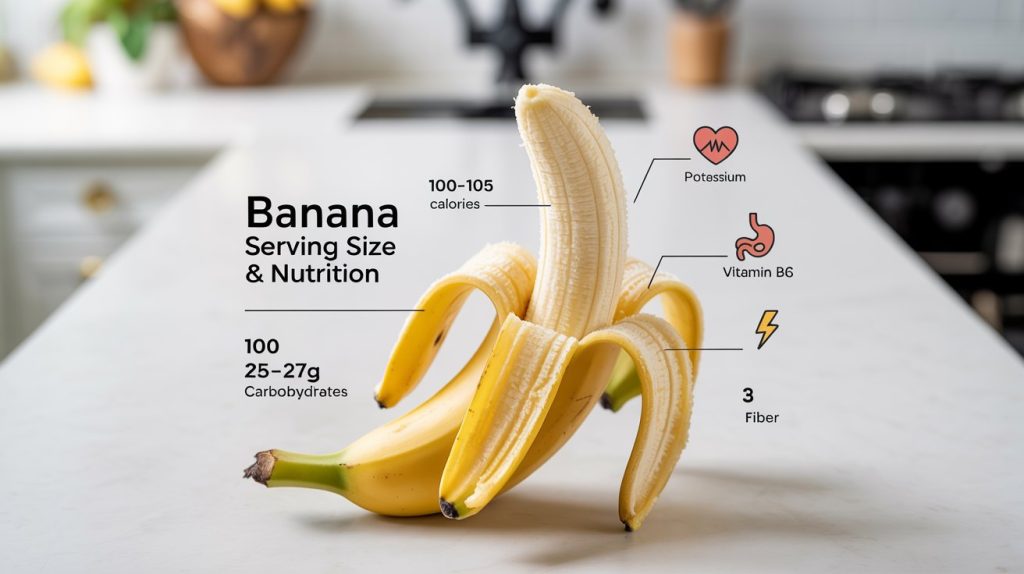
Bananas are rich in:
- Potassium
- Vitamin B6
- Fiber
A medium banana typically contains:
- 100–105 calories
- 25–27g carbohydrates
- 3g fiber
They’re great for energy and digestion.
Visual Guide: Banana Serving Size
Here’s a simple way to estimate portions:
| Serving Size | Visual Comparison | Best Use |
|---|---|---|
| ½ banana | Half fruit | Light snack |
| 1 banana | Hand-sized fruit | Standard serving |
| 2 bananas | Two fruits | Larger portion |
Visual cues make portioning easy.
Tips For Managing Banana Portions
- Stick to one banana per serving: Keeps intake balanced
- Pair with protein: Like peanut butter or yogurt
- Use half in smoothies: Controls sugar
- Choose smaller bananas: For lower calories
- Avoid overeating: Easy due to taste and convenience
Small habits help maintain balance.
Common Mistakes When Eating Bananas
- Eating multiple bananas at once: Adds extra sugar
- Ignoring size differences: Large bananas have more calories
- Using in high-sugar recipes: Increases total intake
- Not balancing meals: Missing protein or fats
Being mindful improves your diet.
How Banana Serving Size Affects Your Diet
The portion of banana you eat impacts your calorie and carbohydrate intake. A standard serving fits well into a balanced diet, while larger portions can increase sugar intake quickly.
Balancing bananas with other foods ensures better nutrition.
The Popularity Of Bananas
Bananas are one of the most widely consumed fruits globally due to their affordability, convenience, and health benefits. They’re commonly eaten as snacks, in smoothies, or as part of breakfast.
Frequently Asked Questions
What Is A Standard Serving Size Of Banana?
One medium banana.
Is Half a Banana Enough?
Yes, for a light snack or lower-calorie option.
Can I Eat Bananas Every Day?
Yes, in moderate portions.
Are Large Bananas Higher In Calories?
Yes, larger bananas contain more calories and carbs.
How Do I Measure Banana Without Tools?
Use size—one medium banana equals one serving.
Banana serving sizes may seem simple, but they can impact your nutrition. By understanding the banana serving size chart, you can enjoy this healthy fruit in the right amount while keeping your meals balanced and satisfying.
