
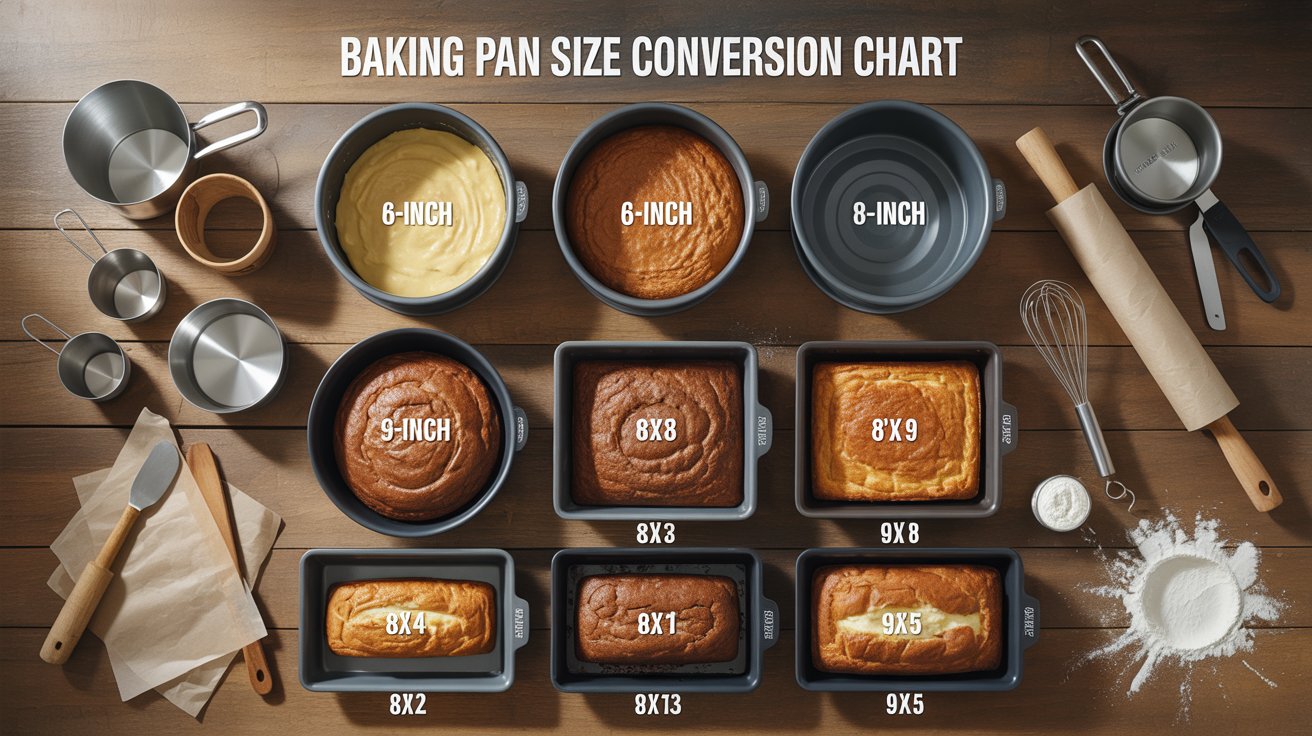
Understanding baking pan sizes is essential for every home cook who wants consistently delicious results. Whether you’re whipping up a rich chocolate cake or a savory lasagna, using the right pan ensures even baking and the perfect texture. No one wants a soggy bottom or an overcooked edge!
This guide provides a comprehensive baking pan size conversion chart with exact measurements, plus tips on adjusting recipes for different pan sizes. Expect to find details on prep time, cook time, and servings for your favorite dishes.
Baking Pan Types Explained
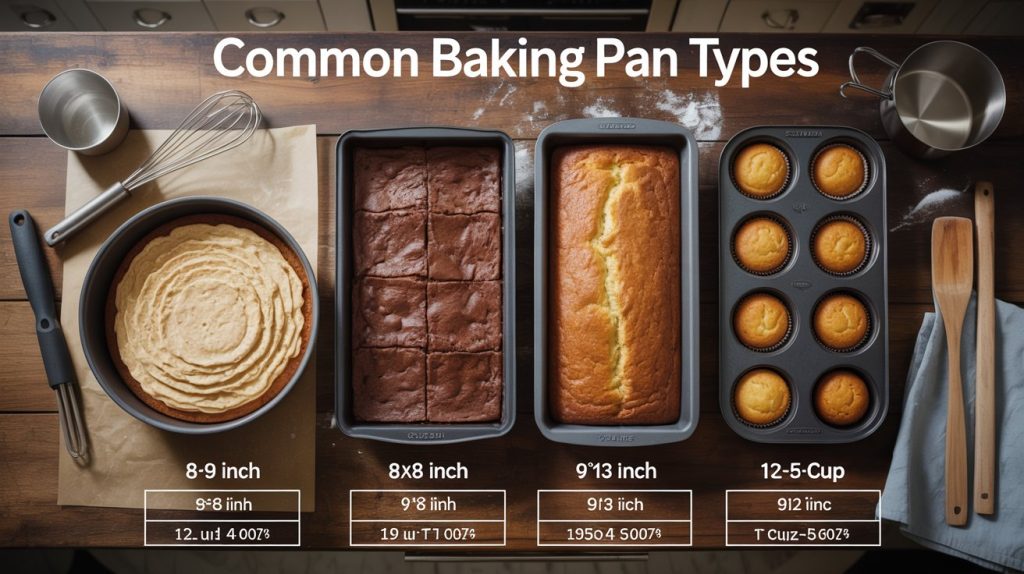
Understanding the different types of baking pans is essential for achieving the best results in your baking endeavors. Each pan type serves a unique purpose and can affect the cooking time, texture, and overall outcome of your recipes. Let’s break down some of the most common baking pans you’ll encounter in the kitchen.
Round Pans
Round pans, typically used for cakes, come in various sizes such as 8-inch and 9-inch diameters. They are perfect for making layer cakes or cheesecakes. When using round pans, baking times generally range from 25 to 35 minutes at 350°F (175°C), depending on the batter thickness.
Square Pans
Square pans, usually 8×8 inches or 9×9 inches, are excellent for brownies, bars, and coffee cakes. The straight edges help achieve even baking. Expect baking times similar to round pans, around 25 to 35 minutes at 350°F (175°C).
Rectangular Pans
Rectangular pans, such as 9×13 inches, are versatile and often used for casseroles, sheet cakes, and lasagna. They generally require a baking time of 30 to 40 minutes at 350°F (175°C).
Loaf Pans
Loaf pans, commonly 9×5 inches, are great for bread, pound cakes, and meatloafs. They take longer to bake, usually around 50 to 60 minutes at 350°F (175°C), and should be checked for doneness with a toothpick.
Muffin Tins
Muffin tins come in standard (12-cup) and mini (24-cup) sizes. Ideal for muffins and cupcakes, they usually bake for 15 to 20 minutes at 350°F (175°C). Ensure they are filled about two-thirds full for the best rise.
Chef’s tip: Always grease your pans or line them with parchment paper to prevent sticking and ensure easy removal.
Baking Pan Size Chart
Understanding various baking pan sizes and their conversions is essential in ensuring your baked goods turn out perfectly every time. Whether you are adapting a recipe or choosing the right pan for your dish, having a comprehensive reference can save you from common baking mishaps.
Round Pan Sizes
| Pan Type | Dimensions | Volume |
|---|---|---|
| 6-inch round | 15 cm | 3 cups |
| 8-inch round | 20 cm | 6 cups |
| 9-inch round | 23 cm | 8 cups |
| 10-inch round | 25 cm | 10 cups |
| 12-inch round | 30 cm | 14 cups |
Square Pan Sizes
- 8″ x 8″ (20 cm x 20 cm) – Holds 8 cups
- 9″ x 9″ (23 cm x 23 cm) – Holds 9 cups
- 10″ x 10″ (25 cm x 25 cm) – Holds 10 cups
Rectangular Pan Sizes
- 9″ x 13″ (23 cm x 33 cm) – Holds 14 cups
- 10″ x 15″ (25 cm x 38 cm) – Holds 16 cups
- 11″ x 15″ (28 cm x 38 cm) – Holds 18 cups
Loaf Pan Sizes
- 8″ x 4″ (20 cm x 10 cm) – Holds 6 cups
- 9″ x 5″ (23 cm x 13 cm) – Holds 8 cups
- 10″ x 5″ (25 cm x 13 cm) – Holds 9 cups
Keep this chart handy to ensure you select the right pan for your baking needs. Choosing the correct size can influence baking times and the final outcome of your dish, so it’s worth double-checking before you start mixing your ingredients!
Volume and Capacity Details
This section provides essential information on the volume and capacity of various baking pans. Understanding these measurements is crucial for ensuring that your recipes turn out perfectly, as pan size can significantly affect baking times and results.
Volume Measurements
Here’s a quick reference for common baking pan sizes along with their approximate volumes:
| 8-inch round | 2 | 2-layer cake |
| 9-inch round | 2.5 | 2-layer cake |
| 9×5-inch loaf | 2 | 1 standard loaf |
| 9×13-inch rectangular | 3 | Sheet cake |
| 10-inch springform | 3.5 | Cheesecake |
Weight Conversions
When converting recipes, keep in mind that different ingredients have different weights. Here’s a brief guide to help you adjust your recipe based on pan size:
- For every 1 cup of batter, approximately 0.5 quarts is needed for baking.
- For cakes, if using a smaller pan, reduce the baking time by about 5-10 minutes.
- For larger pans, expect to increase baking time by 10-15 minutes.
Pro Tip: Always check for doneness by inserting a toothpick in the center; it should come out clean or with just a few crumbs.
Recipe Adjustment Tips
Understanding how to adjust recipes based on different baking pan sizes is essential for achieving the desired results. Whether you’re switching from a round pan to a square one or altering the depth of your batter, knowing how to scale ingredients and adjust baking times will ensure your baked goods come out perfectly every time.
- Scaling Ingredients: When changing pan sizes, you often need to adjust the ingredient quantities based on the volume of the new pan. For example, if you’re moving from a 9-inch round pan (approximately 63 square inches) to an 8-inch square pan (64 square inches), you might not need to change the recipe much. However, if you switch to a 10-inch round pan (approximately 78 square inches), consider increasing the ingredients by about 25% to maintain the right texture and flavor.
- Baking Time Adjustments: Larger pans typically require longer baking times, while smaller pans will bake faster. As a general rule, for a thicker batter in a smaller pan, add about 5-10 minutes to the overall baking time. Conversely, for a thinner batter in a larger pan, start checking for doneness 5-10 minutes earlier. Always use a toothpick inserted into the center; it should come out clean or with a few moist crumbs for perfect results.
- Check Visual Cues: During baking, watch for visual cues. The edges of your cake should start pulling away from the sides of the pan, and the top should be golden brown. If you notice the top browning too quickly, cover it loosely with aluminum foil to prevent burning.
- Adjust for Depth: If you’re using a pan that’s deeper or shallower than your recipe calls for, be aware that deeper pans may require additional baking time while shallower pans may need less. Always keep an eye on your baked goods and refer to the visual cues for best results.
Common Baking Mistakes
Using different baking pan sizes can lead to common mistakes that affect the outcome of your baked goods. Understanding how to properly adjust for overfilling and underbaking is crucial for achieving that perfect bake every time.
Overfilling Pans
- Know the capacity: Each pan size has a specific volume. For example, a standard 9-inch round cake pan holds about 6 cups (1.4 liters) of batter. If a recipe is designed for a smaller pan, overfilling can cause batter to overflow, creating a mess in your oven.
- Leave adequate space: Always leave about 1-2 inches of space at the top of the pan. This allows the batter to rise without spilling over. If you find yourself with excess batter, consider using a muffin tin for cupcakes or a smaller pan for additional cakes.
Underbaking Issues
- Check for doneness: Each pan size affects baking time. A 9×13-inch pan usually requires 25-30 minutes at 350°F (175°C), while a smaller 8-inch pan might need only 20-25 minutes. To avoid underbaking, always perform the toothpick test: insert a toothpick in the center, and if it comes out clean or with a few crumbs, it’s done.
- Adjust baking time: If you switch to a larger pan, expect to increase the baking time by 5-10 minutes. Conversely, if using a smaller pan, reduce time accordingly. Keep an eye on the color and smell; cakes should be golden brown and have a pleasant aroma.
Selecting the Right Pan
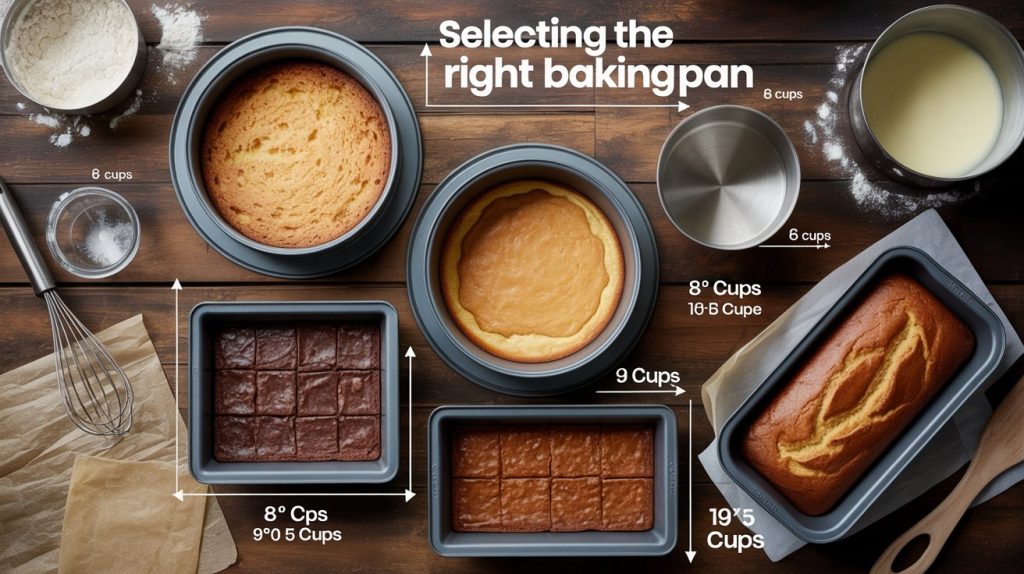
Choosing the right baking pan is essential for achieving the best results in your baked goods. The size and shape of the pan can affect cooking times, texture, and overall appearance. Here’s a breakdown of the best pans for cakes, brownies, and bread, along with some useful tips.
Best Pan for Cakes
- Round Cake Pans: 8-inch or 9-inch (20-23 cm) are ideal for layered cakes. Use two pans for even baking.
- Square Cake Pans: 8-inch (20 cm) or 9-inch (23 cm) are great for single-layer cakes and coffee cakes.
- Rectangular Cake Pans: 9×13 inches (23×33 cm) work well for sheet cakes and brownies.
Best Pan for Brownies
Brownies benefit from a pan that allows for even heat distribution.
- 8×8 inch (20×20 cm) square pan: Perfect for thick, fudgy brownies.
- 9×13 inch (23×33 cm) rectangular pan: Ideal for thinner, chewy brownies.
Best Pan for Bread
The type of bread you’re making determines the best pan to use.
- Loaf Pans: Standard 9×5 inches (23×13 cm) for most bread recipes.
- Round Pans: 8-inch (20 cm) for round loaves or artisan-style bread.
Chef’s tip: Always grease your pans well to prevent sticking, especially with cakes.
| 8-inch Round | 6 cups |
| 9-inch Round | 8 cups |
| 9×13 Rectangular | 14 cups |
Always check your recipe for specific pan size recommendations and adjust baking times as necessary. Remember to test for doneness with a toothpick; it should come out clean or with a few moist crumbs!
Visual Guide to Pans
This section serves as a visual reference for various baking pans, including round, square, and loaf pans. Understanding these pan types and their dimensions is crucial for successful baking, as it allows you to adjust recipes accordingly and avoid baking mishaps.
Round Pan Images
- 8-inch round pan: Holds approximately 6 cups (1.4 liters) – Ideal for cakes.
- 9-inch round pan: Holds approximately 8 cups (1.9 liters) – Commonly used for layered cakes.
- 10-inch round pan: Holds approximately 10 cups (2.4 liters) – Great for larger cakes or deep-dish pies.
Square Pan Images
- 8-inch square pan: Holds approximately 8 cups (1.9 liters) – Perfect for brownies and bar cookies.
- 9-inch square pan: Holds approximately 10 cups (2.4 liters) – Versatile for cakes and casseroles.
- 10-inch square pan: Holds approximately 12 cups (2.8 liters) – Suitable for larger recipes.
Loaf Pan Images
- 8½ x 4½-inch loaf pan: Holds approximately 6 cups (1.4 liters) – Standard size for bread and quick loaves.
- 9 x 5-inch loaf pan: Holds approximately 8 cups (1.9 liters) – Commonly used for larger bread recipes.
“Remember to adjust baking times based on the pan size. A larger pan will require a longer baking time, while a smaller pan will cook faster.”
Quick Summary
- Prep Time: 10 minutes
- Cook Time: N/A
- Total Time: 10 minutes
- Servings: N/A
| Pan Size | Dimensions | Volume |
|---|---|---|
| 9×13 inch | 22.9 x 33 cm | 3 quarts |
| 8×8 inch | 20.3 x 20.3 cm | 2 quarts |
| 9-inch round | 22.9 cm | 2.5 quarts |
- Know your sizes: Always use the correct pan size for even baking.
- Adjust baking time: Smaller pans may require less baking time.
- Check for doneness: Use a toothpick to test if your cake is ready.
- Grease pans: Ensure proper greasing to prevent sticking.
- Use conversions carefully: Different shapes can affect cooking times and results.
Frequently Asked Questions
Can I make this ahead of time? How to store and reheat?
You can prepare your batter or dough ahead of time and store it in the refrigerator for up to 24 hours. When ready to bake, let it sit at room temperature for about 30 minutes before using it.
What can I substitute for a 9×13-inch pan?
If you don’t have a 9×13-inch pan, you can use two 8-inch square pans or one 11×7-inch pan as alternatives, adjusting the baking time slightly as needed.
How do I know when it’s done?
200°F (93°C) for most baked goods.
Can I freeze this? How long does it last?
You can freeze baked goods for up to 3 months if wrapped tightly to prevent freezer burn. Thaw them overnight in the refrigerator before reheating.
What if I don’t have a specific size pan?
If you lack a specific size pan, you can use a different size, but adjust the baking time accordingly — larger pans will bake faster while smaller pans may take longer; keep an eye on it!
