
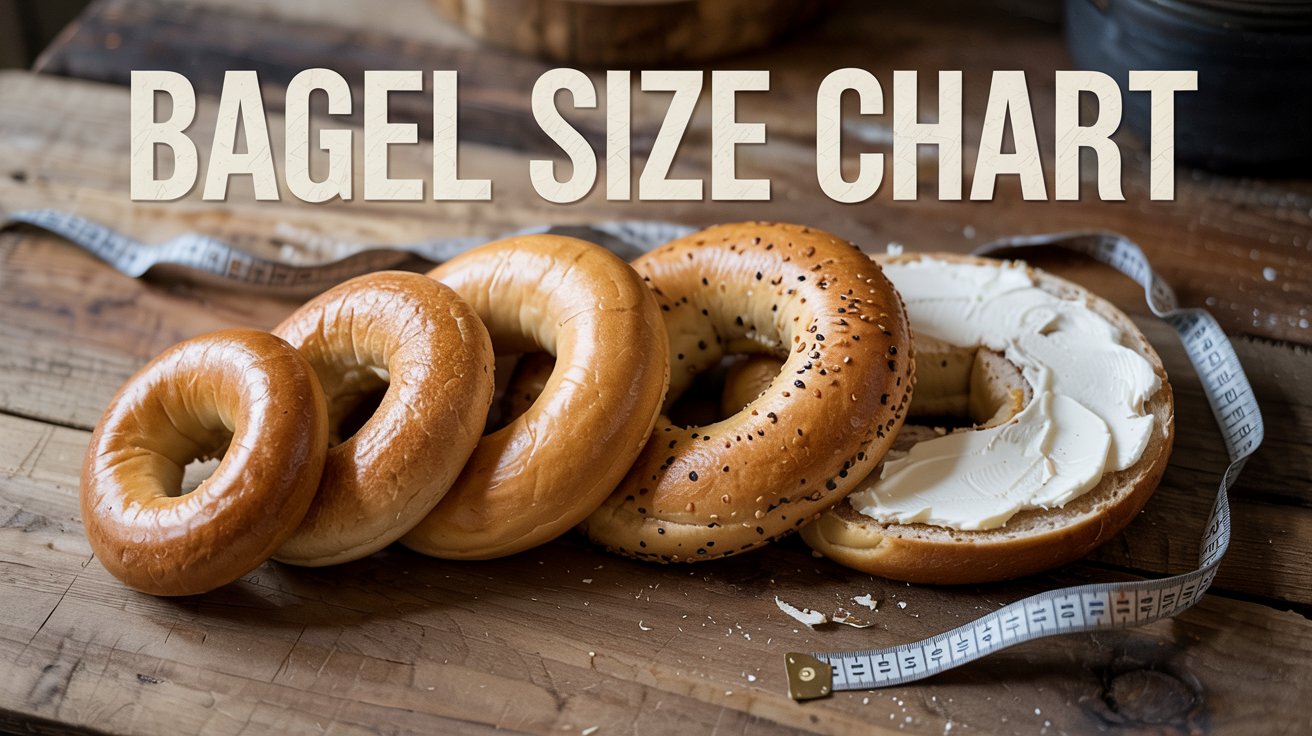
Bagels are more than just a breakfast food—they’re a tradition, a comfort, and sometimes a meal on their own. But have you ever wondered why some bagels feel just right in your hand while others seem too large or too small? Understanding the bagel size chart helps both home bakers and shop owners create the perfect bagel for any occasion. Let’s explore what these sizes mean, how they affect your eating experience, and why choosing the right size matters more than you might think.
Why Bagel Size Matters
Bagel size is not just about how much you eat. It affects texture, flavor balance, and the way toppings sit. Smaller bagels often have a chewier bite and more crust, while larger ones can feel softer inside but might become too doughy. For cafes, choosing a consistent bagel size is key for pricing and customer satisfaction.
Home bakers also benefit by knowing the right size for their oven and serving needs. For people counting calories or carbs, size directly impacts nutritional value. A typical medium bagel can have twice as many calories as a mini version. So, knowing the standard sizes is helpful for both enjoyment and health goals.
Standard Bagel Sizes And Weights
Bagels come in several standard sizes. These are measured by weight (before baking) and diameter (after baking). Here’s a look at the most common bagel sizes you’ll find in shops and bakeries.
Bagel Size Chart
| Bagel Size | Weight (Unbaked) | Diameter (Baked) | Calories (Approx.) |
|---|---|---|---|
| Mini | 40–50g | 3–3.5 in | 100–130 |
| Standard/Medium | 85–100g | 4–4.5 in | 220–270 |
| Large | 120–140g | 5–5.5 in | 320–400 |
| Extra Large/Deli | 170–200g | 6–7 in | 480–550 |
These numbers may vary a bit depending on the recipe and moisture in the dough. Still, they offer a strong baseline for comparing bagel sizes.
Choosing The Right Bagel Size
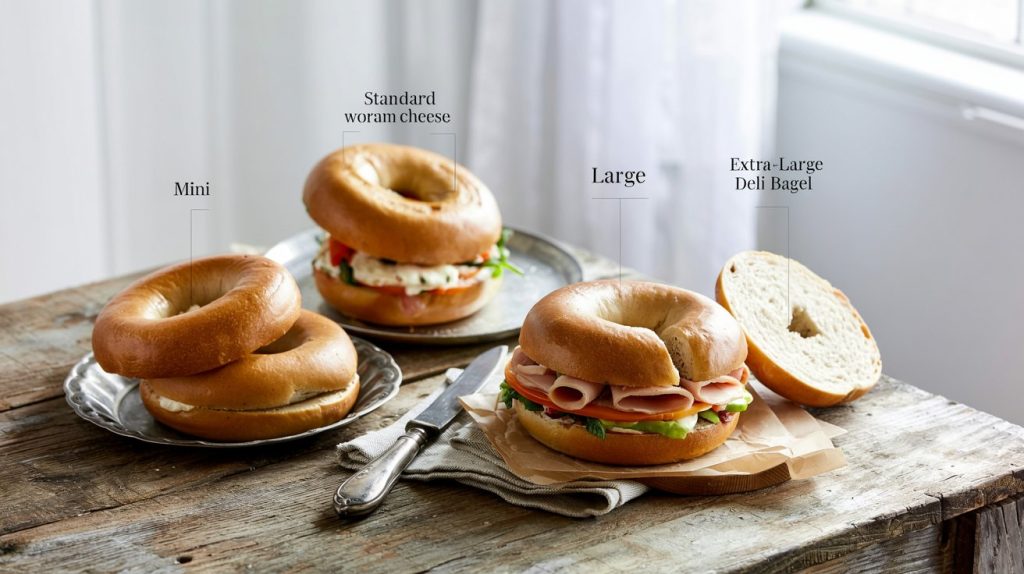
The “best” bagel size depends on your purpose. Here are some things to consider:
- Mini Bagels: Great for snacks, parties, or kids’ lunches. They also work well for appetizer platters.
- Standard/Medium Bagels: The most common choice for breakfast. Fits a generous spread of cream cheese and works for sandwiches.
- Large Bagels: Ideal for hearty sandwiches or for sharing. Sometimes used for bagel pizzas.
- Extra Large/Deli Bagels: Found in delis or specialty shops. They’re for serious appetites and often split between two people.
If you’re baking at home, remember that dough rises and expands in the oven. Shaping a 90g dough ball will usually give you a “standard” bagel after baking.
Bagel Size Comparison: Bakery Vs. Supermarket
Not all bagels are created equal. Bagels from a bakery tend to be denser and smaller than those from supermarkets, which often add more air for a softer texture and larger appearance.
Bakery vs Supermarket Bagel Size
| Source | Typical Weight | Texture | Average Diameter |
|---|---|---|---|
| Traditional Bakery | 85–100g | Chewy, dense | 4–4.5 in |
| Supermarket | 110–130g | Softer, light | 5–5.5 in |
If you want an authentic New York-style chew, aim for the bakery sizes. For a lighter bite, supermarket bagels might be what you prefer.
Bagel Size And Nutrition
Bagel size isn’t just about fullness—it changes the nutrition, too. The larger the bagel, the more carbohydrates, calories, and sugar you’ll consume. For people with diabetes or those watching calories, mini or medium bagels are smarter choices.
For example, a standard 100g bagel has about 50g of carbs. An extra-large can reach 90g or more. Also, remember that toppings (like cream cheese or lox) add extra calories.
Visual Guide: Bagel Size Chart
Sometimes, it’s easier to compare bagel sizes side by side. Here’s a quick chart for reference:
| Bagel Size | Best Use | Serving Suggestion |
|---|---|---|
| Mini | Snacks, platters | 1 per person |
| Medium | Breakfast, lunch | 1 per person |
| Large | Sandwiches | 1 per large meal |
| Extra Large | Sharing, deli specials | 1 for 2 people |
Credit: www.nybagels.com.au
Tips For Measuring And Shaping Bagels
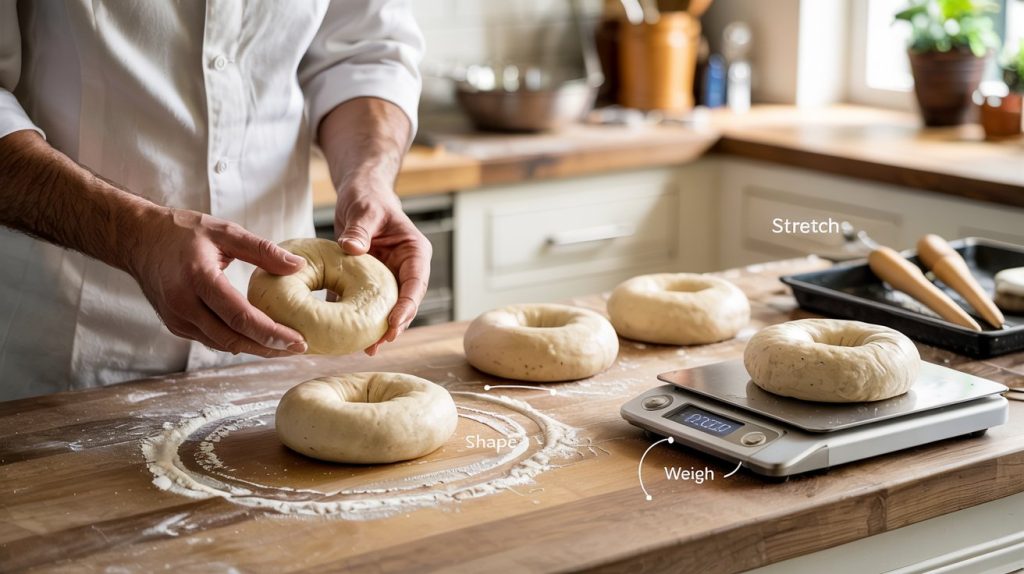
- Weigh your dough: Use a kitchen scale for accuracy. This ensures every bagel bakes evenly.
- Uniform shaping: Roll dough balls to the same size, then poke a hole in the middle and stretch gently.
- Account for oven spring: Bagels expand by about 20-25% during baking. Start a little smaller than your target size.
- Practice makes perfect: The more you shape and bake, the better your bagels will look and taste.
Many home bakers forget to weigh their dough, leading to uneven sizes and baking times. Consistency is key for both visual appeal and taste.
Common Mistakes When Choosing Bagel Size
- Overestimating appetite: Large bagels can feel overwhelming and may go to waste.
- Mismatched toppings: Mini bagels don’t hold as much filling, so they’re not best for heavy sandwiches.
- Ignoring nutrition: Bigger is not always better—especially if you’re watching your diet.
Choosing the right size makes your bagel enjoyable from the first to the last bite.
How Bagel Size Affects Toppings
The size of your bagel affects how much topping you can add. On a mini bagel, a thin layer of cream cheese is enough. On a large or extra-large bagel, you can pile on smoked salmon, tomatoes, and more. But too much topping on a small bagel will fall off or make it soggy.
The History Behind Bagel Sizes
Traditionally, bagels were smaller. In Eastern Europe, a bagel was closer to today’s “mini” or “medium” size. As bagels became popular in North America, especially in cities like New York and Montreal, they grew larger. Today, some delis serve bagels nearly double the size found in the early 1900s.
For more on the fascinating history of bagels, you can visit this Wikipedia page.
Frequently Asked Questions
What Is The Standard Size Of A Bagel?
A standard bagel weighs about 85-100g and measures 4-4.5 inches in diameter after baking.
How Many Calories Are In A Medium Bagel?
A medium bagel usually contains 220-270 calories, not including toppings.
Can I Make Mini Bagels At Home?
Yes, making mini bagels is easy. Use about 40-50g of dough for each and reduce baking time slightly.
Do Bagel Sizes Vary By Region?
Yes, bagel sizes can differ. New York bagels are typically larger and chewier, while Montreal bagels are smaller and denser.
Why Do Supermarket Bagels Seem Bigger Than Bakery Bagels?
Supermarket bagels often contain more air and moisture, making them larger and softer than denser, chewier bakery bagels.
Bagel sizes may seem like a small detail, but they can change your experience, your nutrition, and your enjoyment. Whether you’re baking at home or choosing from the bakery shelf, understanding the bagel size chart helps you make the right choice every time.
