
Bacon is a crispy, flavorful favorite that shows up in breakfasts, sandwiches, and even salads—but how much bacon is actually considered a proper serving? It’s easy to eat more than intended, especially when it’s so tasty. Understanding a bacon serving size helps you enjoy it while keeping your meals balanced and your nutrition in check.
Why Bacon Serving Size Matters
Bacon is rich in flavor, but it’s also high in fat, sodium, and calories. Portion size plays a big role in how it fits into a healthy diet.
Choosing the right serving size helps you:
- Control calorie and fat intake
- Balance your plate with other foods
- Avoid overeating processed meats
Even small portions can deliver strong flavor, so you don’t need much to enjoy it.
Standard Bacon Serving Sizes And Portions
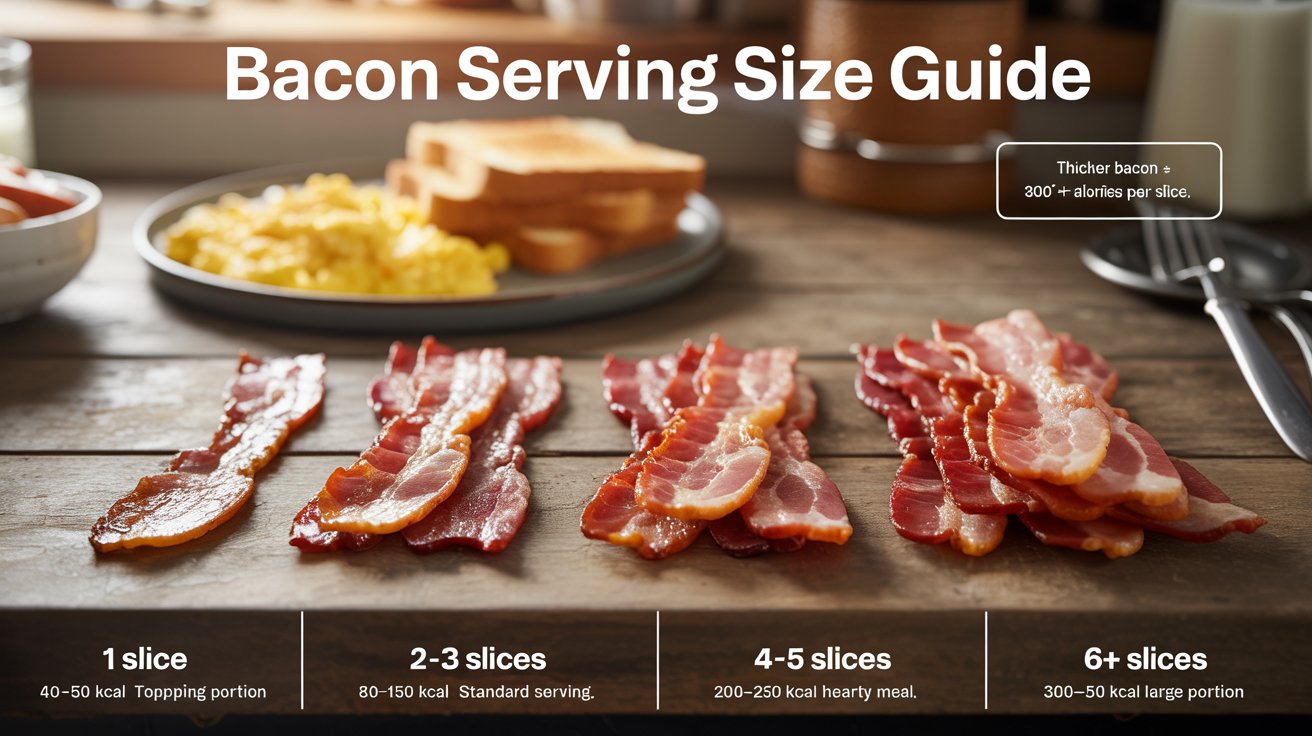
Bacon is usually measured by number of slices or weight (cooked). Here’s a general guide:
Bacon Serving Size Chart
| Serving Type | Number of Slices | Cooked Weight (Approx.) | Calories |
|---|---|---|---|
| Small Portion | 1 slice | 8–10g | 40–50 |
| Standard Serving | 2–3 slices | 16–30g | 80–150 |
| Large Portion | 4–5 slices | 35–50g | 200–250 |
| Extra Large | 6+ slices | 60g+ | 300+ |
These values may vary depending on thickness and cooking method.
Choosing The Right Bacon Serving Size
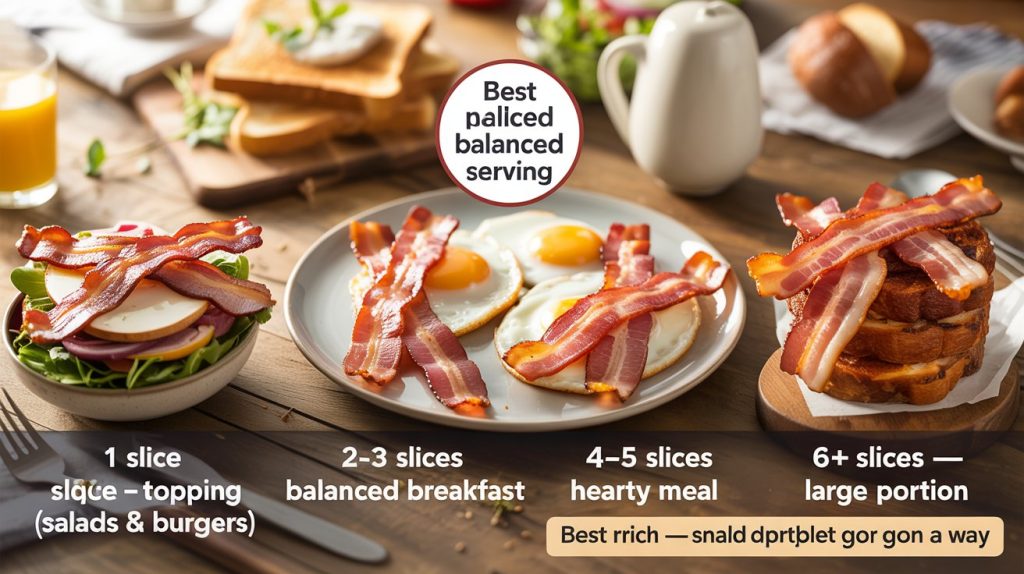
The best portion depends on how you’re using bacon:
- 1 slice: Great as a topping for salads or burgers
- 2–3 slices: Ideal for a balanced breakfast
- 4–5 slices: Suitable for hearty meals
- 6+ slices: Often more than needed for one serving
Because bacon is rich, even a small amount can add plenty of flavor.
Bacon Serving Size Comparison: Thin Vs Thick Cut
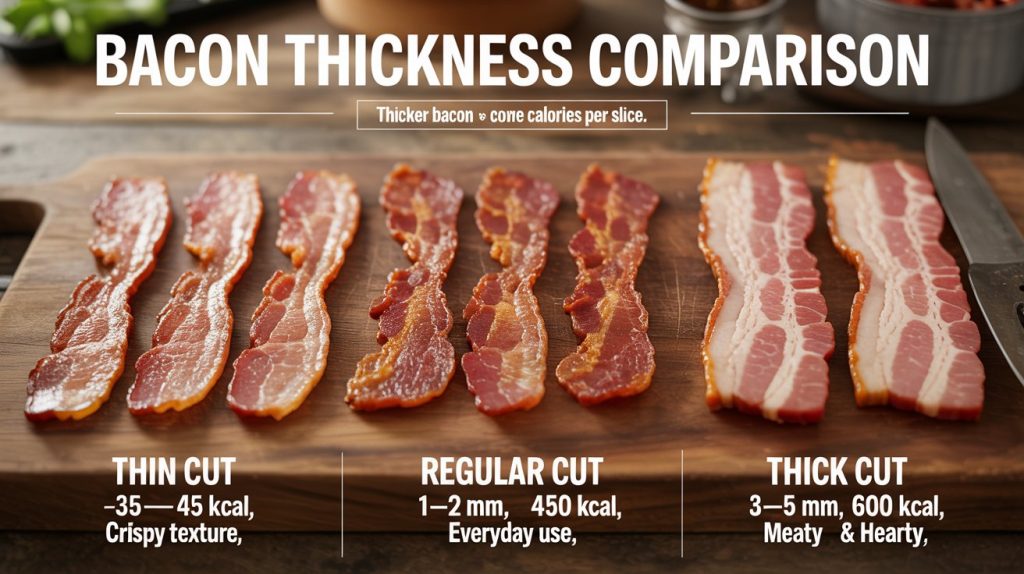
Not all bacon slices are the same. Thickness changes portion size and nutrition.
Thin vs Thick Cut Bacon
| Type | Slice Thickness | Calories per Slice | Best Use |
|---|---|---|---|
| Thin Cut | ~1 mm | 35–45 | Crispy texture |
| Regular Cut | 1–2 mm | 40–50 | Everyday use |
| Thick Cut | 3–5 mm | 60–80 | Meaty, hearty bites |
Thick-cut bacon may require fewer slices for the same serving size.
Bacon Serving Size And Nutrition
Bacon is calorie-dense and high in sodium, so portion control is important.
A 2–3 slice serving typically contains:
- 80–150 calories
- 7–12g fat
- 300–500mg sodium
Eating larger portions can quickly increase your intake of saturated fat and salt.
Visual Guide: Bacon Serving Size
Here’s an easy way to estimate portions:
| Serving Size | Visual Idea | Best Use |
|---|---|---|
| 1 slice | Single strip | Topping |
| 2–3 slices | Small stack | Breakfast |
| 4–5 slices | Full plate portion | Hearty meal |
Visual cues help you portion without measuring tools.
Tips For Measuring And Cooking Bacon
- Count slices: Simple and effective for portion control
- Cook evenly: Use medium heat for crisp texture
- Drain excess fat: Place on paper towels after cooking
- Choose leaner cuts: Reduces fat content
- Bake instead of fry: Can be less messy and more consistent
Proper cooking improves both taste and nutrition.
Common Mistakes When Choosing Bacon Serving Size
- Eating too many slices: Easy to overconsume
- Ignoring thickness: Thick cuts have more calories
- Adding bacon to every meal: Increases fat and sodium intake
- Not balancing meals: Too much bacon, not enough vegetables
Being mindful helps you enjoy bacon without overdoing it.
How Bacon Serving Size Affects Your Meal
Bacon is often used as a flavor enhancer rather than the main protein. A small amount can elevate dishes like eggs, salads, or sandwiches. Larger portions can dominate the meal and make it heavier.
Using bacon in moderation keeps your meals balanced and enjoyable.
The Popularity Of Bacon In Modern Diets
Bacon has become increasingly popular in modern cuisine, appearing in everything from breakfast plates to gourmet dishes. While it adds great flavor, portion control is key to maintaining a healthy diet.
Frequently Asked Questions
What Is A Standard Serving Size Of Bacon?
Typically 2–3 slices of cooked bacon.
Is One Slice Of Bacon Enough?
It can be enough as a topping or flavor addition.
Does Thick-Cut Bacon Change Serving Size?
Yes, fewer slices are needed because each slice is larger.
Can I Eat Bacon Every Day?
It’s best to eat bacon in moderation due to its fat and sodium content.
How Can I Make Bacon Healthier?
Choose leaner cuts, limit portions, and pair with vegetables.
Bacon serving sizes may seem small, but they have a big impact on your nutrition and overall meal balance. By understanding the bacon serving size chart, you can enjoy its rich flavor while keeping your diet on track.
