
Almonds are a nutritious, satisfying snack packed with healthy fats, protein, and fiber. But because they’re calorie-dense, it’s easy to eat more than you realize. Understanding an almonds serving size chart helps you enjoy their benefits while keeping your portions balanced.
Why Almond Serving Size Matters
Almonds are considered a “healthy fat,” but they still contain a lot of calories in a small amount.
Knowing the right serving size helps you:
- Control calorie intake
- Manage fat consumption
- Avoid overeating أثناء snacking
Even small handfuls can quickly add up if not measured.
Standard Almond Serving Sizes And Portions
Almonds are usually measured in ounces (oz), grams, or number of almonds.
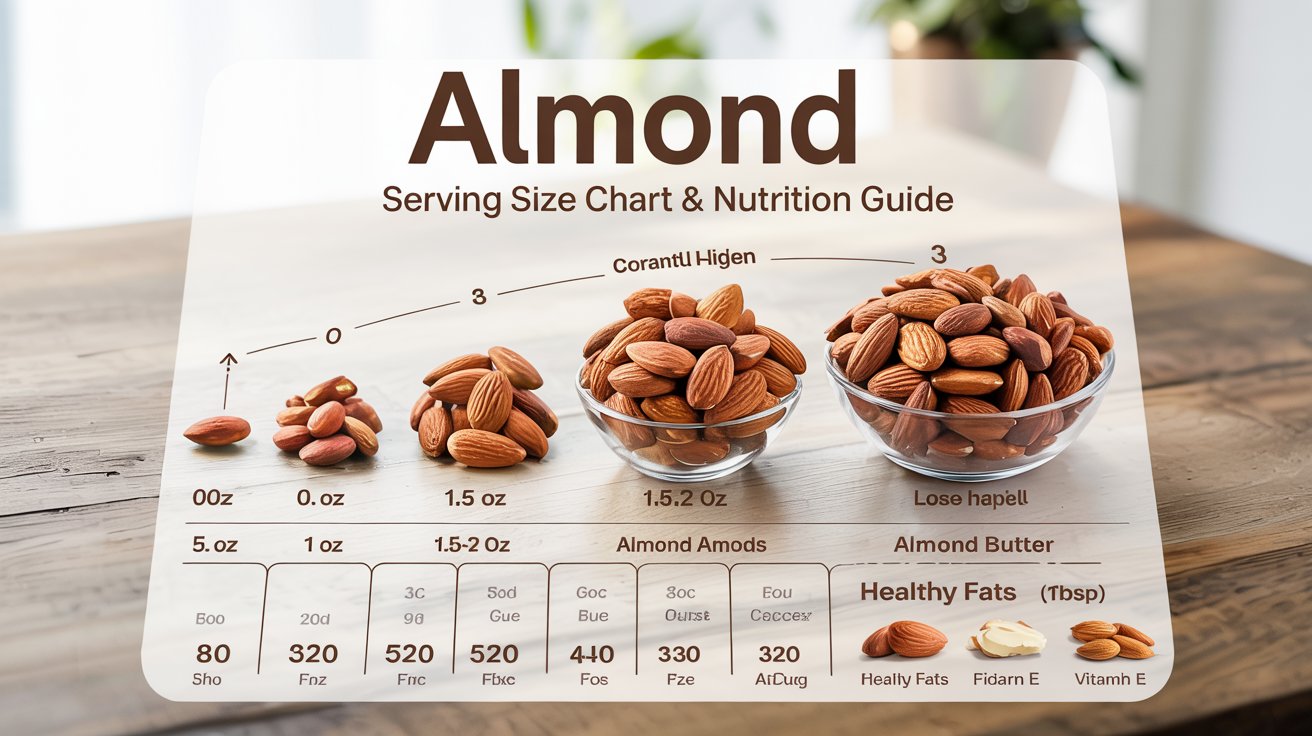
Almonds Serving Size Chart
| Serving Type | Amount | Weight (Approx.) | Number of Almonds | Calories |
|---|---|---|---|---|
| Small Portion | ½ oz | 14g | 10–12 almonds | 80–90 |
| Standard Serving | 1 oz | 28g | 20–24 almonds | 160–170 |
| Large Portion | 1.5–2 oz | 40–56g | 30–45 almonds | 240–320 |
| Handful (Loose) | ~1–1.5 oz | 28–40g | 20–35 almonds | 160–250 |
👉 A 1 oz serving (about 23 almonds) is the most commonly recommended portion.
Choosing The Right Almond Serving Size
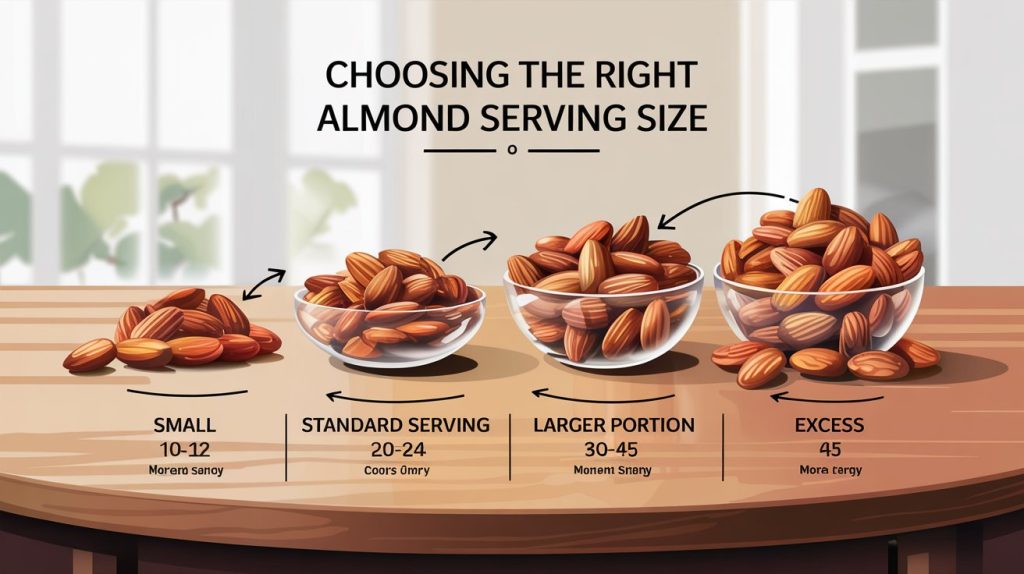
The best portion depends on your needs:
- ½ oz: Light snack
- 1 oz: Standard serving for most people
- 1.5–2 oz: Larger snack or energy boost
- More than 2 oz: Often more than needed
For most people, 1 oz per serving is ideal.
Almond Serving Size Comparison: Whole vs Almond Butter
Almonds can be eaten in different forms, which affects portion size.
Whole Almonds vs Almond Butter
| Form | Serving Size | Notes |
|---|---|---|
| Whole Almonds | 1 oz | Easy to count and portion |
| Almond Butter | 1–2 tbsp | More calorie-dense |
Almond butter is easier to overconsume, so measuring is important.
Almond Serving Size And Nutrition
Almonds are rich in:
- Healthy fats
- Protein
- Fiber
- Vitamin E
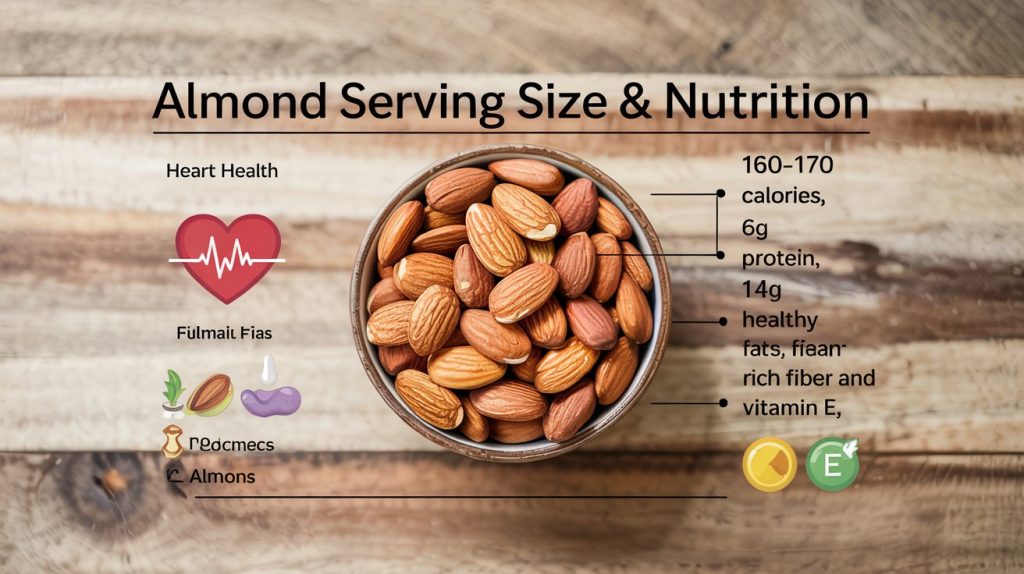
A 1 oz serving typically contains:
- 160–170 calories
- 6g protein
- 14g healthy fats
They are filling and support heart health.
Visual Guide: Almond Serving Size
Here’s a simple way to estimate portions:
| Serving Size | Visual Comparison | Best Use |
|---|---|---|
| ½ oz | Half handful | Light snack |
| 1 oz | Small handful | Standard serving |
| 2 oz | Two handfuls | Large portion |
Visual cues help prevent overeating.
Tips For Controlling Almond Portions
- Count almonds: Aim for about 20–24 per serving
- Use small containers: Portion ahead of time
- Avoid eating from the bag: Easy to overeat
- Choose unsalted almonds: Lower sodium
- Pair with fruit or yogurt: Balanced snack
Simple habits help maintain portion control.
Common Mistakes When Eating Almonds
- Overeating healthy snacks: Calories still count
- Ignoring portion sizes: Handfuls can vary
- Using too much almond butter: Very calorie-dense
- Snacking mindlessly: Leads to excess intake
Being mindful helps you stay balanced.
How Almond Serving Size Affects Your Diet
The portion of almonds you eat directly affects your calorie and fat intake. A standard serving fits well into a healthy diet, while larger portions can quickly increase daily calories.
Balancing almonds with other foods ensures better nutrition.
The Popularity Of Almonds
Almonds are widely consumed around the world due to their health benefits and convenience. They’re commonly eaten as snacks or added to meals, desserts, and salads.
Frequently Asked Questions
What Is A Standard Serving Size Of Almonds?
About 1 oz or 20–24 almonds.
Is A Handful Of Almonds One Serving?
Yes, but it can vary—better to count them.
Can I Eat Almonds Every Day?
Yes, in moderate portions.
Are Almonds Good For Weight Loss?
Yes, when eaten in controlled amounts.
How Do I Measure Almonds Without a Scale?
Count about 23 almonds or use a small handful.
Almond serving sizes may seem small, but they play a big role in your nutrition. By understanding the almonds serving size chart, you can enjoy this healthy snack while keeping your portions balanced and under control.
