
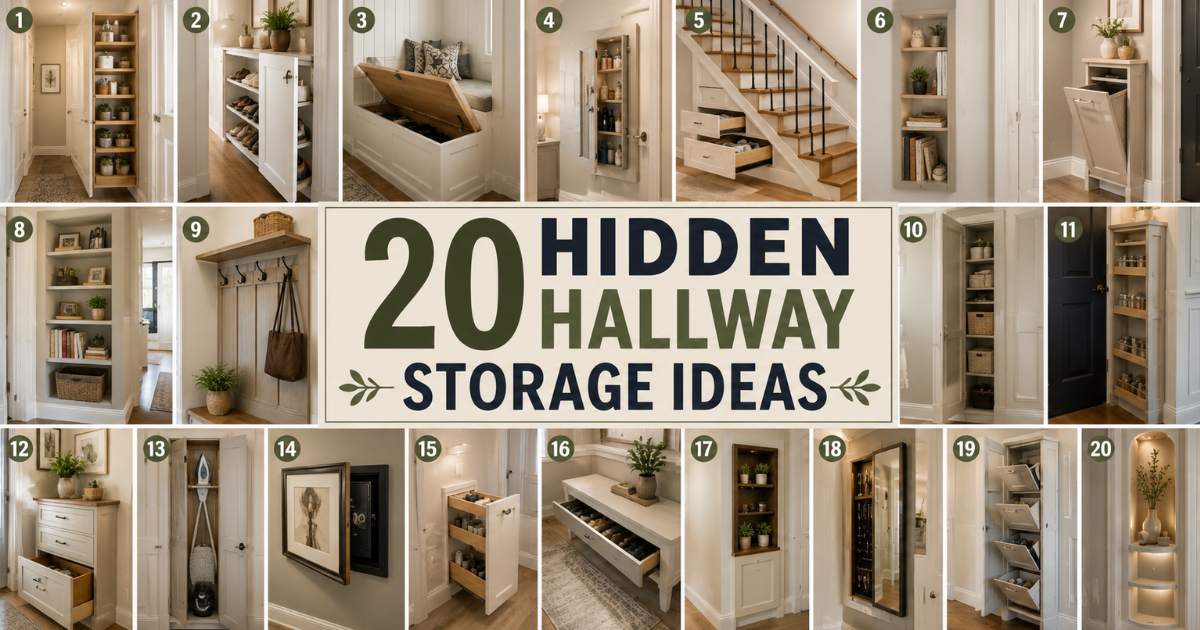
From my own experience, hallways are the first place that start to feel messy—and the hardest to fix. Shoes pile up, bags have nowhere to go, and adding cabinets often makes the space feel even tighter. Hidden hallway storage completely changed that for me. When storage is built into the walls instead of added on, the hallway instantly feels wider, calmer, and more intentional.
In this list of 20 hidden hallway storage ideas, you’ll see how flush panels, mirrors, slim pull-outs, and ceiling-height solutions turn overlooked hallway walls into quiet, functional storage. These ideas prove that even the narrowest corridors can stay organized—without visible clutter or bulky furniture.
1. Flush Wall Panels with Hidden Hallway Storage

Why It Works
- Turns narrow hallways into usable space: Storage is built into the wall, not added on top of it.
- Keeps the hallway visually calm: Flush panels hide clutter completely.
- Works in tight layouts: No protruding cabinets to block movement.
Design Tip
Match panel color and trim lines exactly with the wall so the storage disappears.
Pro Tip
Use this storage for low-use items like documents, spare cables, or seasonal accessories.
2. Hidden Shoe Storage Behind a Slim Hallway Bench

Why It Works
- Adds seating without adding clutter: Shoes hide beneath the bench.
- Keeps entryways organized: Everyday footwear stays close but unseen.
- Perfect for small homes: One element serves two functions.
Design Tip
Choose a bench with a lift-up or pull-out base that aligns with the wall finish.
Pro Tip
Store daily-use shoes at the front and occasional pairs deeper inside.
3. Mirror-Front Hallway Storage Cabinet

Why It Works
- Makes the hallway feel larger: Mirrors visually expand narrow spaces.
- Hides practical storage: Bags, keys, and accessories stay out of sight.
- Blends storage with décor: Looks like a simple mirror, not a cabinet.
Design Tip
Use a frameless or slim-frame mirror to keep the look clean and modern.
Pro Tip
Add hooks and small shelves inside to maximize vertical space.
4. Hidden Hallway Storage Disguised as Wall Paneling

Why It Works
- Turns decoration into function: Paneling opens to reveal storage.
- Keeps long hallways visually consistent: No visible breaks or clutter.
- Works in modern and classic interiors: Paneling adapts to many styles.
Design Tip
Align panel seams with existing molding or wall details.
Pro Tip
Use this storage for items you don’t need daily to maintain the hidden effect.
5. Ceiling-Height Hallway Storage with Push-to-Open Doors

Why It Works
- Maximizes vertical space: Storage goes up instead of out.
- Keeps floors and walls clear: Doors stay flush when closed.
- Adds serious capacity without bulk: Ideal for coats, bags, or supplies.
Design Tip
Use tall doors in neutral tones so the hallway feels taller, not heavier.
Pro Tip
Store frequently used items at eye level and rarely used ones higher up.
6. Slim Pull-Out Hallway Cabinet Hidden Between Walls

Why It Works
- Uses ultra-narrow gaps: Perfect for spaces that feel too tight for standard cabinets.
- Keeps daily essentials organized: Umbrellas, scarves, or cleaning sprays slide out neatly.
- Disappears when closed: Looks like a simple wall strip, not storage.
Design Tip
Use a handle-less pull with a matching wall finish to keep it invisible.
Pro Tip
Store lightweight, tall items so the pull-out stays balanced and easy to use.
7. Hidden Hallway Storage Behind a Full-Length Wall Mirror

Why It Works
- Combines function and illusion: The mirror hides storage while making the hallway feel wider.
- Perfect for grab-and-go items: Keys, sunglasses, and bags stay close.
- Avoids visual clutter: No hooks or shelves on display.
Design Tip
Choose a side-hinged mirror with a slim frame for a clean, built-in look.
Pro Tip
Add shallow shelves inside so items don’t stack and get lost.
8. Hallway Storage Hidden Inside Decorative Wall Slats

Why It Works
- Turns texture into function: Slatted walls slide or open to reveal storage.
- Keeps the hallway visually interesting: Storage hides behind design detail.
- Feels modern and intentional: Nothing looks added later.
Design Tip
Use vertical slats in wood or MDF that match nearby doors or flooring.
Pro Tip
Reserve this storage for low-use items to keep the mechanism effortless.
9. Hidden Hallway Storage Above Door Frames

Why It Works
- Uses overlooked vertical space: The area above doors becomes functional storage.
- Keeps eye-level walls clean: Storage stays out of direct sight.
- Ideal for rarely used items: Seasonal décor or backup supplies fit perfectly.
Design Tip
Use push-to-open doors in the same wall color to blend seamlessly.
Pro Tip
Label storage boxes inside so retrieval stays quick and stress-free.
10. Concealed Hallway Storage Behind a Fold-Down Wall Panel

Why It Works
- Keeps storage completely hidden: The panel looks like a solid wall when closed.
- Provides quick access: Fold-down action reveals shelves instantly.
- Works well in tight corridors: No swinging doors to block movement.
Design Tip
Match panel seams with wall lines or trim for a clean architectural look.
Pro Tip
Limit contents to lightweight items to keep the panel smooth and safe to open.
11. Recessed Hallway Wall Storage with Flush Doors

Why It Works
- Uses wall depth instead of floor space: Storage sits inside the wall, keeping walkways clear.
- Maintains a seamless hallway look: Flush doors make storage nearly invisible.
- Ideal for narrow corridors: Nothing protrudes or interrupts movement.
Design Tip
Paint the doors the exact same color as the wall to fully blend them in.
Pro Tip
Use this storage for documents, tools, or backup household items you don’t need daily.
12. Hidden Hallway Storage Behind Vertical Wood Panels

Why It Works
- Turns texture into function: Decorative panels conceal practical storage.
- Keeps the hallway visually warm: Wood adds character without clutter.
- Feels custom and architectural: Storage looks intentionally designed.
Design Tip
Align panel spacing with nearby doors or trim for visual consistency.
Pro Tip
Store items by category so opening one panel reveals only what you need.
13. Slim Ceiling-Level Hallway Cabinets with Push-to-Open Doors

Why It Works
- Uses unused upper wall space: Storage goes up, not outward.
- Keeps eye-level walls clean: Visual clutter stays out of sight.
- Adds quiet storage capacity: Perfect for seasonal or backup items.
Design Tip
Use matte finishes in light tones so the cabinets don’t feel heavy overhead.
Pro Tip
Keep a small step stool nearby for easy and safe access.
14. Hidden Hallway Storage Disguised as a Long Wall Ledge

Why It Works
- Looks decorative, works hard: The ledge opens to reveal shallow storage.
- Keeps essentials close: Mail, wallets, or keys stay hidden but accessible.
- Adds function without cabinets: Perfect for minimalist homes.
Design Tip
Choose a ledge depth that stays visually slim when closed.
Pro Tip
Limit contents to flat items so the ledge maintains its clean profile.
15. Concealed Hallway Storage Behind Fabric Wall Panels

Why It Works
- Softens narrow hallways: Fabric panels reduce the hard, boxy feel.
- Hides storage beautifully: Panels lift or slide open to reveal compartments.
- Adds a hotel-like calm: Storage feels quiet and intentional.
Design Tip
Use neutral or textured fabric that complements flooring and doors.
Pro Tip
Keep storage depth shallow so panels sit flat and aligned.
16. Hidden Hallway Storage Inside Door-Width Wall Panels

Why It Works
- Uses full wall height efficiently: Storage fits inside tall panels without crowding the hallway.
- Keeps the corridor visually calm: Panels read as part of the wall, not cabinetry.
- Adds serious capacity discreetly: Ideal for coats, bags, or household supplies.
Design Tip
Match panel seams with door frames or wall joints to keep everything seamless.
Pro Tip
Store frequently used items at mid-height and rarely used ones higher or lower.
17. Concealed Hallway Storage Behind Sliding Wall Art Panels

Why It Works
- Blends storage with décor: Artwork slides aside to reveal hidden compartments.
- Keeps walls visually interesting: Storage doesn’t feel utilitarian.
- Perfect for narrow spaces: Sliding motion avoids swing clearance.
Design Tip
Use lightweight frames and smooth tracks so the artwork moves effortlessly.
Pro Tip
Store small, valuable items here to keep them discreet and protected.
18. Hidden Hallway Storage Inside a Built-In Wall Column

Why It Works
- Disguises storage as structure: The column looks architectural, not functional.
- Uses awkward wall breaks wisely: Perfect for corners or load-bearing zones.
- Keeps clutter completely out of sight: No visible openings.
Design Tip
Finish the column in the same material as the surrounding wall or trim.
Pro Tip
Use adjustable shelves inside to adapt storage over time.
19. Hallway Storage Hidden Behind a Folding Wall Screen

Why It Works
- Creates soft separation: The screen hides storage while adding texture.
- Keeps items accessible: Folding panels open without blocking movement.
- Adds visual interest: Storage feels styled, not hidden.
Design Tip
Choose slim, lightweight panels so the screen doesn’t feel bulky.
Pro Tip
Reserve this storage for occasional-use items to keep the system light and tidy.
20. Concealed Hallway Storage Integrated with Wall Lighting Panels

Why It Works
- Combines light and storage: Wall lighting hides access panels cleverly.
- Keeps the hallway bright and clutter-free: No visible cabinets or shelves.
- Feels modern and high-end: Storage is completely disguised.
Design Tip
Use LED panel lighting with concealed access seams for a clean finish.
Pro Tip
Store flat or lightweight items so the lighting panels stay aligned and secure.
Why Hidden Hallway Storage Creates Calm, Functional Homes
Hidden hallway storage works because it respects movement, space, and visual balance. Instead of adding cabinets that interrupt flow, these solutions disappear into walls, panels, and design features—keeping corridors open and easy to navigate. From daily essentials to seasonal items, everything has a place without being on display. In homes where first impressions matter and space is limited, hidden hallway storage transforms transitional areas into quiet, efficient design features that support everyday living without visual noise.
