
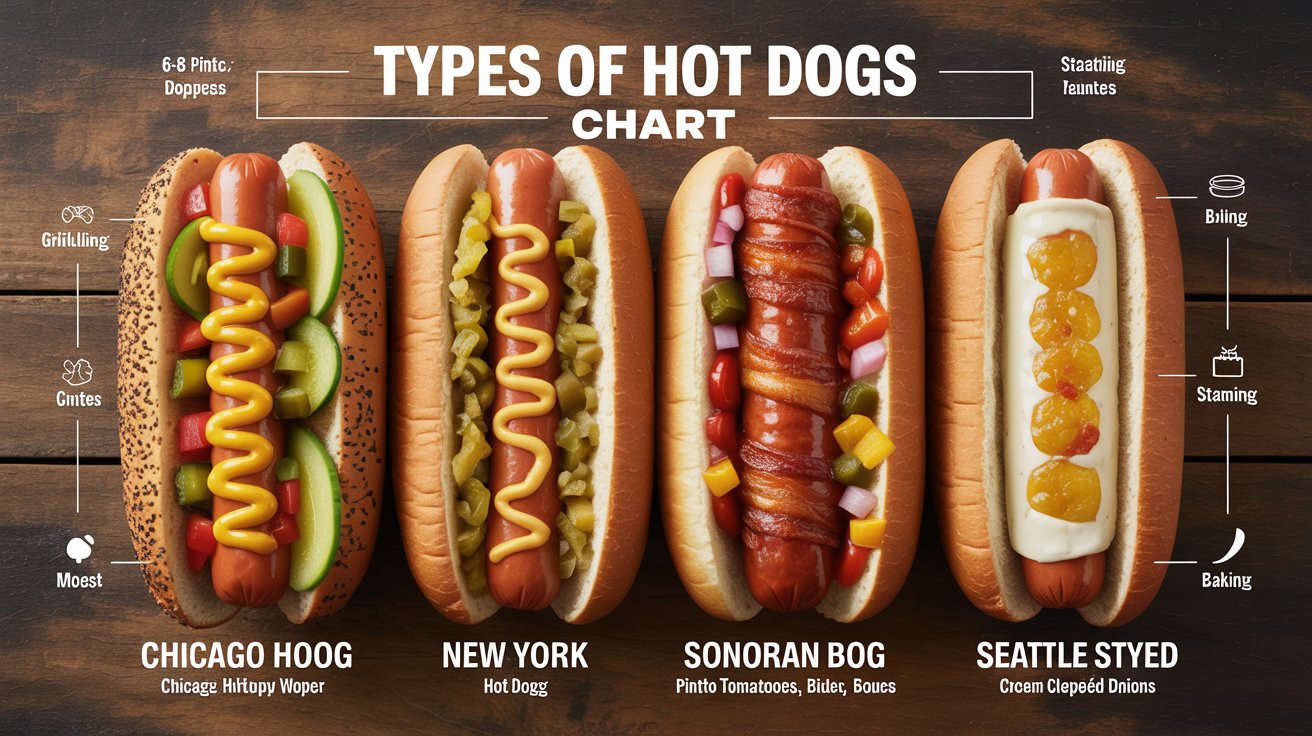
If you’re a fan of hot dogs, get ready to elevate your game! This chart showcases a variety of hot dog types that are perfect for any occasion—whether you’re hosting a backyard barbecue, enjoying a casual weeknight dinner, or just craving a comforting snack. Each style has its own unique twist that will make your mouth water!
Key details: Total time: 30 minutes, Difficulty level: Easy, Servings: 4.
History of Hot Dogs
The history of hot dogs is rich and deeply intertwined with cultural traditions across various regions. Understanding their origins helps us appreciate the diversity in preparation and toppings that characterize hot dogs today.
- Origin Stories: The concept of encased meats can be traced back to ancient civilizations, with sausages appearing in various cultures. However, the modern hot dog is believed to have originated in Germany, where sausages known as “dachshund sausages” gained popularity. German immigrants brought these sausages to the United States in the 19th century, leading to the eventual creation of the hot dog as we know it today.
- Cultural Impact: Hot dogs quickly became a staple in American cuisine, particularly at baseball games and barbecues. Their association with summer celebrations and street food culture solidified their place in American hearts. Each region developed its own variations, from Chicago’s loaded toppings to New York’s classic mustard and sauerkraut, showcasing local flavors and preferences.
Types of Hot Dogs Chart
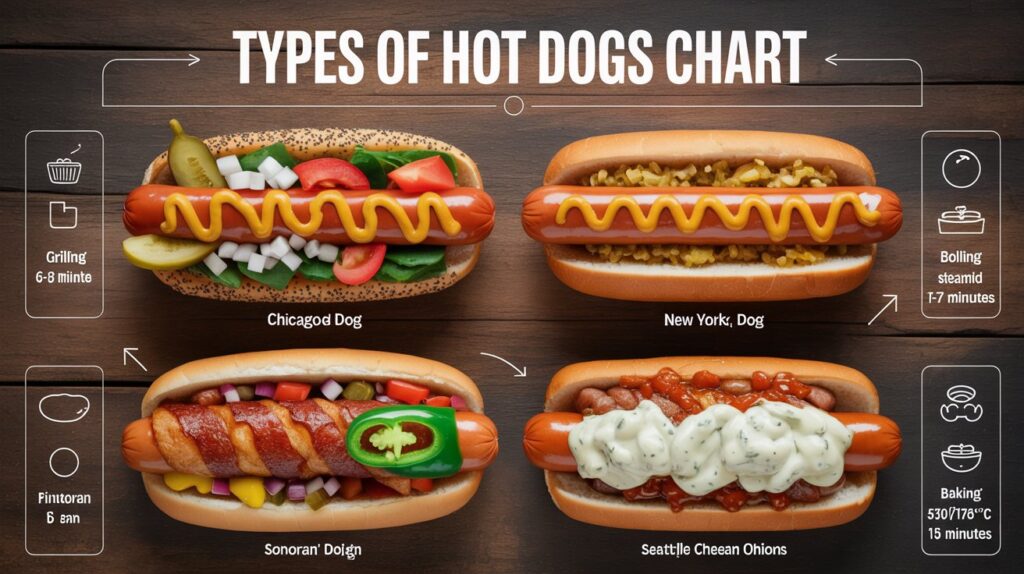
This section presents a visual representation of various types of hot dogs, showcasing their regional styles, preparation methods, and unique characteristics. Understanding these distinctions makes it easier to choose the perfect hot dog for your next cookout or gathering.
Regional Styles
- Chicago-style: A poppy seed bun with all-beef frankfurter, topped with yellow mustard, chopped onions, sweet pickle relish, tomato slices, a pickle spear, and sport peppers.
- New York-style: A steamed bun with a beef frank, served with a simple topping of yellow mustard and sauerkraut.
- Sonoran hot dog: Wrapped in bacon and grilled, served in a bolillo bun with pinto beans, onions, tomatoes, and jalapeño sauce.
- Seattle-style: A grilled hot dog topped with cream cheese and your choice of sautéed onions or jalapeños.
Preparation Methods
Chef’s tip: For a smoky flavor, grill your hot dogs over medium heat for 6-8 minutes, turning occasionally until well-charred.
| Grilling | Cook over direct heat until charred and juicy, about 6-8 minutes. |
| Boiling | Submerge in simmering water for 5-7 minutes until heated through. |
| Steaming | Steam for 5-10 minutes for a plump texture and flavor. |
| Baking | Bake in a preheated oven at 350°F (175°C) for 15-20 minutes. |
Common Toppings Overview
This section highlights the popular toppings that can elevate your hot dog experience, showcasing both classic favorites and unique additions. Understanding these toppings not only enhances flavor but also allows you to customize your hot dog to suit your taste preferences or regional specialties.
Classic Toppings
- Mustard: 1 tablespoon yellow mustard
- Ketchup: 1 tablespoon ketchup
- Relish: 1 tablespoon sweet pickle relish
- Onions: 2 tablespoons finely chopped raw onions
- Sauerkraut: ¼ cup sauerkraut, warmed
- Chili: ½ cup chili (for a chili dog)
Unique Additions
- Jalapeños: 2-3 slices pickled jalapeños for a spicy kick
- Coleslaw: ¼ cup creamy coleslaw for a crunchy texture
- Avocado: ¼ avocado, sliced or mashed, for creaminess
- Cheese: 1 slice cheddar or pepper jack cheese, melted
- Fried Egg: 1 fried egg for a breakfast twist
Chef’s tip: To prevent sogginess, add toppings just before serving your hot dog.
| Mustard | 1 tablespoon |
| Ketchup | 1 tablespoon |
| Relish | 1 tablespoon |
| Coleslaw | ¼ cup |
Hot Dog Ingredients Breakdown
Understanding the ingredients that go into hot dogs is essential for both flavor and texture. Different types of hot dogs are made from various meats and can also cater to vegetarian diets, allowing everyone to enjoy this classic treat. Below is a breakdown of common ingredients used in hot dogs, including meat types and vegetarian alternatives.
| Beef | 100% beef | Common for traditional hot dogs; rich flavor |
| Pork | 100% pork | Often blended with beef for a savory taste |
| Poultry | Chicken or turkey | Lighter option; often lower in fat |
| Vegetarian | Plant-based protein | Made from soy, wheat, or pea protein |
| Seasonings | Salt, pepper, garlic powder | Enhances flavor; important for balance |
- For gluten-free options, check labels on vegetarian hot dogs for hidden gluten.
- If you’re watching fat intake, opt for poultry hot dogs, which are typically leaner.
- Don’t hesitate to experiment with homemade hot dogs using your choice of meat and spices!
Preparation Methods Explained

This section outlines two popular cooking techniques for preparing hot dogs: grilling and boiling. Each method offers a unique flavor and texture, making it essential to choose the right one based on your preference and the type of hot dog you’re using.
Grilling Hot Dogs
Grilling adds a smoky flavor and crisp texture to hot dogs, making them a favorite for cookouts. Preheat your grill to medium heat at around 350°F (175°C). Here’s how to do it:
- For 4 hot dogs, place them directly on the grill grates.
- Cook for about 6-8 minutes, turning occasionally until they are heated through and have grill marks.
- The hot dogs should be slightly browned, and the skin should have a nice snap when bitten into.
Chef’s tip: Brush the hot dogs lightly with olive oil before grilling to enhance their flavor and prevent sticking.
Boiling Hot Dogs
Boiling is a quick and easy method that helps retain moisture. Bring a pot of water to a rolling boil (around 212°F or 100°C). Follow these steps:
- Add 4 hot dogs to the boiling water. You can also add 1 tablespoon of your favorite seasoning for extra flavor.
- Boil for 4-5 minutes until they are heated through and plump.
- The hot dogs will look swollen and may float to the surface, indicating they are ready.
Common mistake: Do not overboil the hot dogs, as this can cause them to split and lose flavor.
| Preparation Method | Cooking Time | Texture |
|---|---|---|
| Grilling | 6-8 minutes | Crispy and smoky |
| Boiling | 4-5 minutes | Moist and tender |
Hot Dog Cooking Methods
| Method | Temperature | Time |
|---|---|---|
| Grilling | ~350°F (175°C) | 6–8 min |
| Boiling | ~212°F (100°C) | 4–5 min |
| Steaming | medium steam | 5–10 min |
| Baking | 350°F (175°C) | 15–20 min |
Grilling adds the most flavor and texture.
Pro Tips for Perfect Hot Dogs
Creating the perfect hot dog goes beyond just choosing the right type; it’s also about how you cook and serve them. Here are some essential tips to ensure your hot dogs are delicious, perfectly cooked, and served at the ideal temperature.
Cooking Times
- Grilling: Preheat your grill to medium heat (about 350°F or 175°C). Grill the hot dogs for 6-8 minutes, turning occasionally, until they are nicely charred and heated through. You’ll know they are ready when they have a beautiful golden-brown color and a slight snap when bitten into.
- Boiling: Bring a pot of water to a boil and add the hot dogs. Boil for about 5-7 minutes. They should be plump and heated through, with steam escaping from the ends. Avoid overcooking as they can burst!
- Microwaving: Place hot dogs on a microwave-safe plate and cover with a paper towel to retain moisture. Microwave on high for 30-45 seconds per hot dog. They should be hot and steamy, but check to ensure they don’t get rubbery.
Serving Temperature
- Ideal Serving Temperature: Hot dogs should be served at around 140°F (60°C). Use a food thermometer to check the internal temperature; this ensures they are hot enough to be safe and tasty.
- Resting: Allow hot dogs to rest for a minute after cooking. This helps redistribute the juices and makes for a juicier bite. The hot dog should feel warm to the touch but not so hot that it burns your fingers.
- Common Mistake: Avoid serving cold hot dogs directly from the fridge. They should always be heated to the proper temperature for the best flavor and texture.
Hot Dog Variations
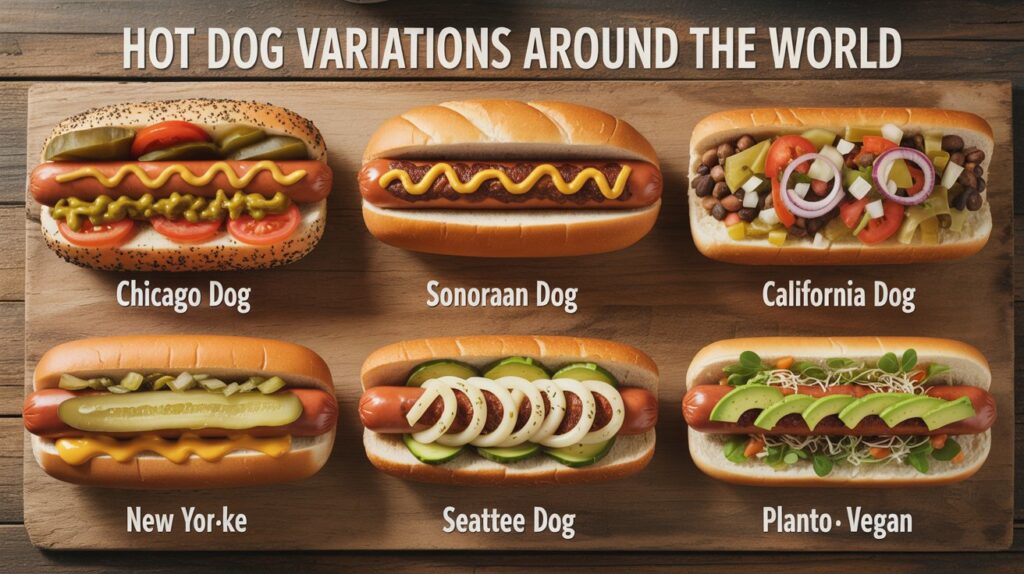
Hot dogs are not just a simple street food; they come in a variety of styles and preparations that reflect regional tastes and dietary preferences. Understanding these variations can elevate your hot dog game, whether you’re grilling at a backyard barbecue or trying something new at home.
Regional Variations
- Chicago Dog: A steamed poppy seed bun topped with yellow mustard, chopped onions, bright green relish, a pickle spear, tomato slices, and sport peppers. Never add ketchup!
- New York Dog: A boiled sausage served on a bun, topped with spicy brown mustard and sauerkraut.
- Sonoran Dog: A bacon-wrapped hot dog served in a bolillo roll, topped with pinto beans, onions, tomatoes, and a variety of salsas.
- Seattle Dog: A grilled hot dog topped with cream cheese and sautéed onions or jalapeños, often served in a toasted bun.
- California Dog: A hot dog topped with avocado, sprouts, and salsa, reflecting California’s fresh and health-conscious vibe.
Popular Hot Dog Styles
| Style | Bun Type | Key Toppings | Cooking Method |
|---|---|---|---|
| Chicago-style | poppy seed bun | mustard, relish, tomato, pickle, peppers | steamed |
| New York-style | soft bun | mustard, sauerkraut | boiled |
| Sonoran dog | bolillo roll | bacon, beans, salsa | grilled |
| Seattle dog | toasted bun | cream cheese, onions | grilled |
| Chili dog | classic bun | chili, cheese, onions | grilled |
Vegan Options
If you’re looking for plant-based alternatives, there are excellent vegan hot dogs available that mimic the flavor and texture of traditional sausages. Look for brands that use ingredients like pea protein or tofu for a satisfying bite. Here are some popular options:
- Tofurky Hot Dogs: Made with soy protein, these are a classic choice for a meatless hot dog experience.
- Field Roast Smoked Apple Sage: A flavorful option that brings a unique twist with apple and sage seasoning.
- Beyond Meat Hot Dogs: These have a great texture and flavor, perfect for grilling.
Chef’s tip: Always check the package for cooking instructions, as vegan hot dogs can differ in preparation!
Serving Suggestions
Pairing the perfect sides and beverages with your hot dogs can elevate your meal from ordinary to unforgettable. Below are some delicious side dishes and beverage options that complement various types of hot dogs beautifully.
Side Dishes
- Classic Coleslaw: A refreshing, crunchy counterpart to any hot dog. Combine 4 cups shredded cabbage, 1 cup shredded carrots, ½ cup mayonnaise, 2 tablespoons apple cider vinegar, and salt to taste. Mix well and let it rest for at least 30 minutes.
- Potato Salad: Creamy potato salad works nicely with grilled dogs. Boil 2 pounds of potatoes until fork-tender, then mix with ½ cup mayonnaise, 2 tablespoons mustard, 1 diced onion, and 2 hard-boiled eggs. Chill for at least 1 hour before serving.
- Grilled Corn on the Cob: Brush 4 ears of corn with 2 tablespoons melted butter and sprinkle with salt. Grill over medium heat (350°F or 175°C) for 10-15 minutes, turning often until charred and tender.
Beverage Pairings
Choosing the right drink can enhance your hot dog experience:
- Craft Beer: A hoppy IPA pairs well with spicy toppings, while a smooth lager complements classic styles.
- Lemonade: A refreshing homemade lemonade balances the richness of hot dogs. Mix 1 cup fresh lemon juice with 1 cup sugar and 4 cups water, stir until dissolved, and serve chilled.
- Soda: Classic colas or root beer are nostalgic companions that bring a touch of sweetness to your meal.
Pro Tip: Experiment with different combinations of sides and drinks for each type of hot dog to find your unique favorite!
Quick Summary
| Prep Time | Cook Time | Total Time | Servings |
|---|---|---|---|
| 10 minutes | 15 minutes | 25 minutes | 4 servings |
- Choose the right type: Familiarize yourself with various hot dog types like beef, pork, and turkey.
- Prep toppings: Gather essential toppings like mustard, relish, and onions for a flavorful finish.
- Cooking method: Grill or boil the hot dogs for 7-10 minutes until heated through.
- Check doneness: Ensure the internal temperature reaches 165°F for safety.
- Serve immediately: Place hot dogs in buns and add toppings right away.
- Tip 1: Score hot dogs lightly before cooking to enhance flavor and texture.
- Tip 2: Toast the buns for a crispy touch that elevates the dish.
Frequently Asked Questions
Can I make this ahead of time? How to store and reheat?
You can prepare the hot dogs ahead of time and store them in an airtight container in the refrigerator for up to 3 days. To reheat, simply microwave for 30-60 seconds or warm them on a stovetop for a few minutes until heated through.
What can I substitute for a bratwurst?
If you don’t have bratwurst, you can substitute with Italian sausage for a similar flavor profile. Just make sure to adjust the cooking time as needed, usually around 10-15 minutes less.
How do I know when my hot dogs are done?
Your hot dogs are done when they reach an internal temperature of 165°F (74°C) and are heated thoroughly. They should be plump and have a nice grill mark if grilled, indicating they’re ready to eat.
Can I freeze hot dogs? How long do they last?
You can freeze hot dogs for up to 2 months if they’re properly wrapped in freezer-safe packaging. Just make sure to thaw them in the refrigerator before reheating for the best texture.
What if I don’t have a grill to cook the hot dogs?
If you don’t have a grill, you can easily cook hot dogs on a stovetop using a skillet over medium heat for about 5-7 minutes or boil them in water for 5 minutes. Both methods will give you delicious results without a grill!
